REVIEW · AQABA
Wadi Rum: Morning or Sunset Jeep Tour
Book on GetYourGuide →Operated by Malgorzata Chełkowska-Dorna · Bookable on GetYourGuide
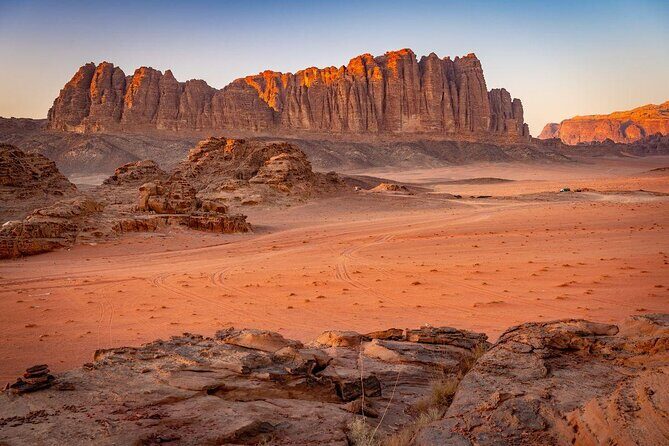
Wadi Rum looks like a movie. This half-day jeep tour packs the main red-desert sights, plus a real Bedouin touch with cardamom tea brewed on a campfire. I love that the guide is a desert native who can explain what you’re seeing in plain, personal terms, not just facts on a screen. I also love the way the timing works, especially for the sunset option that ends up at a gorgeous spot with time to linger.
One thing to plan around: there is no cell phone coverage in the desert, so you’ll want to be ready at pickup and follow your guide’s lead once you’re out there.
In This Review
- Key highlights you’ll actually feel
- The sweet spot: why 4 hours in Wadi Rum works
- Morning vs sunset: picking the right light and mood
- Starting point in Wadi Rum Village: what to expect at pickup
- Lawrence’s Spring: the first walk and the quick “wow”
- Al Ramal red sand dune: the stop built for climbing and photos
- Little Bridge: tea, shopping, and the “slow down” break
- Khazali Canyon: rock textures and a bit of free time
- Lawrence’s House: history, guided visit, and context
- Mushroom Rock and Um Frouth Rock Arch: finishing with big silhouettes
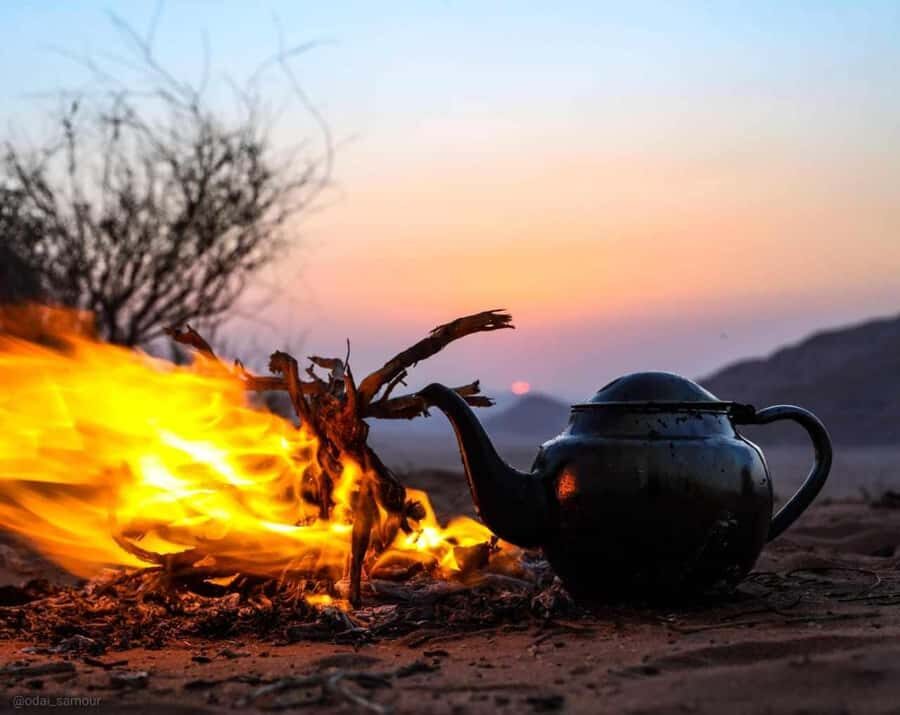
- Bedouin tea on campfire: more than a drink break
- Price and value: what $46 really covers
- Guide quality is the difference-maker here
- What to bring so you stay comfortable (and safe-ish)
- Who should book this jeep tour, and who shouldn’t
- Should you book this Wadi Rum morning or sunset jeep tour?
Key highlights you’ll actually feel
- A Bedouin guide who grew up in the desert and can talk through the meaning of the sights
- Tea brewed with cardamom, served repeatedly along the route (not just once)
- Stops tied to UNESCO heritage plus a The Martian filming location
- Real time to walk, climb, and take photos instead of a nonstop drive-through
- Morning or sunset timing, so you can match the experience to your energy and light
- Private group style, with easy communication before you go (WhatsApp is mentioned in confirmations)
The sweet spot: why 4 hours in Wadi Rum works
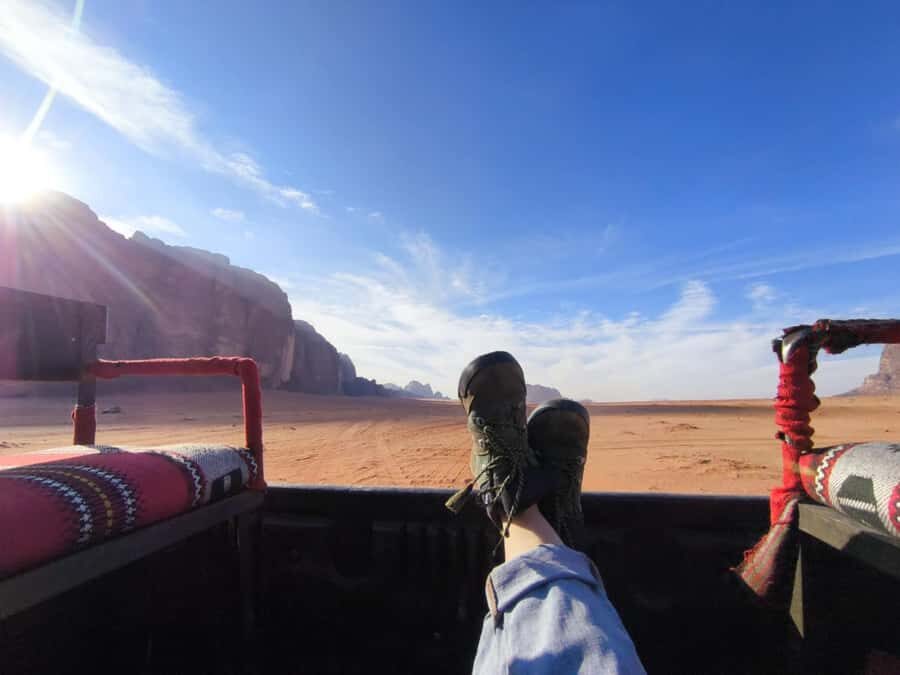
Wadi Rum is big. Distances feel long and the roads are rough in places, so a half-day tour makes sense if you want the highlights without burning your whole day. At $46 per person for a 4-hour outing, you’re paying for vehicle time, guiding, and a set route that hits the most recognizable rock-and-sand areas.
This isn’t a lecture tour. You move by SUV/jeep from stop to stop, with short photo breaks and longer moments where you can get out, stretch your legs, and look around. The best part is that the guide controls the pace. Several experiences I’ve read about mention time to explore without feeling rushed, and that matters here, because good photos and good memories take a minute.
You can also read our reviews of more evening experiences in Aqaba

Morning vs sunset: picking the right light and mood
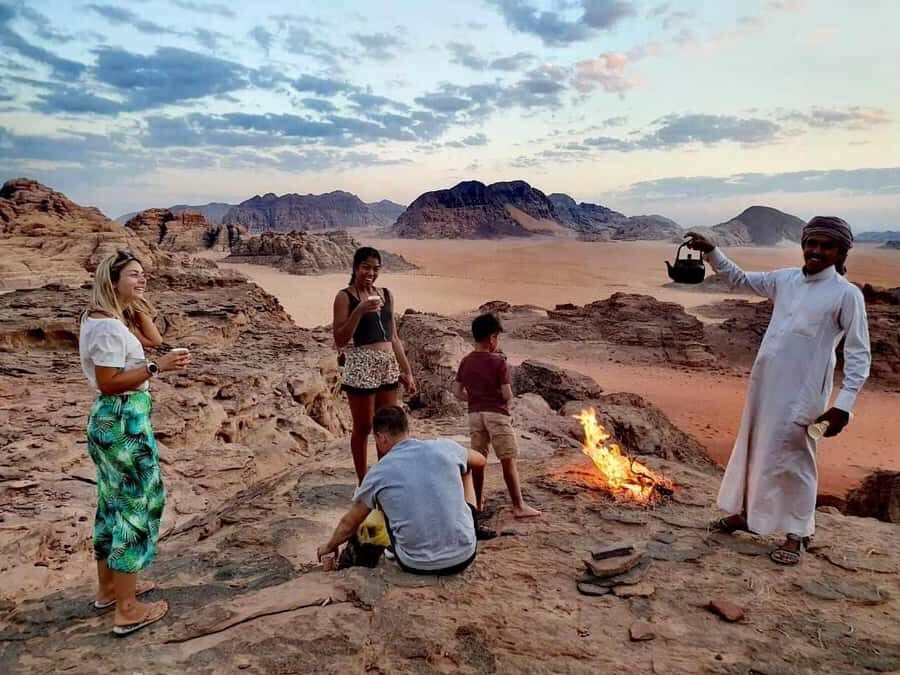
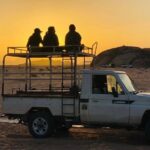
You get two choices: a morning tour (9:00–13:00) or an afternoon tour (14:30–18:30). The afternoon format ends with sunset from a scenic spot, which is a very different vibe than morning light.
Morning is ideal if:
- you want the desert earlier, when it can feel calmer
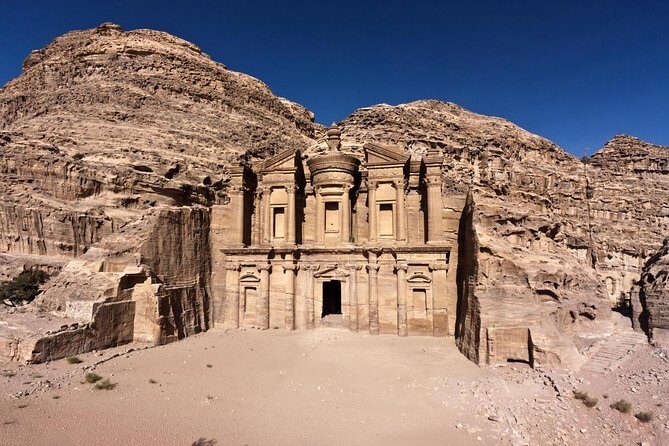
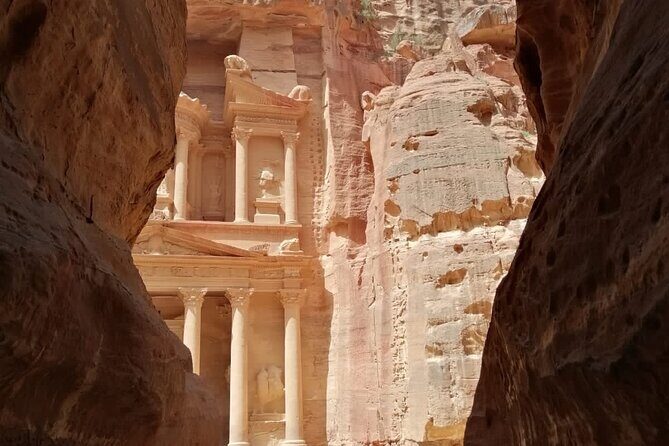
- you prefer to keep the rest of your day open for Petra, Amman, or a relaxed dinner
- you like photos with less harsh late-day glare
Sunset is ideal if:
- your main goal is that end-of-day desert moment
- you’re happy to stay slightly flexible with timing as the day winds down
- you want the tea-and-fire feeling right when the colors change
One practical note: even though the tour is listed as 4 hours, in real life it can run a bit long when guests are enjoying the sunset from the dune or rock viewpoints.
Starting point in Wadi Rum Village: what to expect at pickup
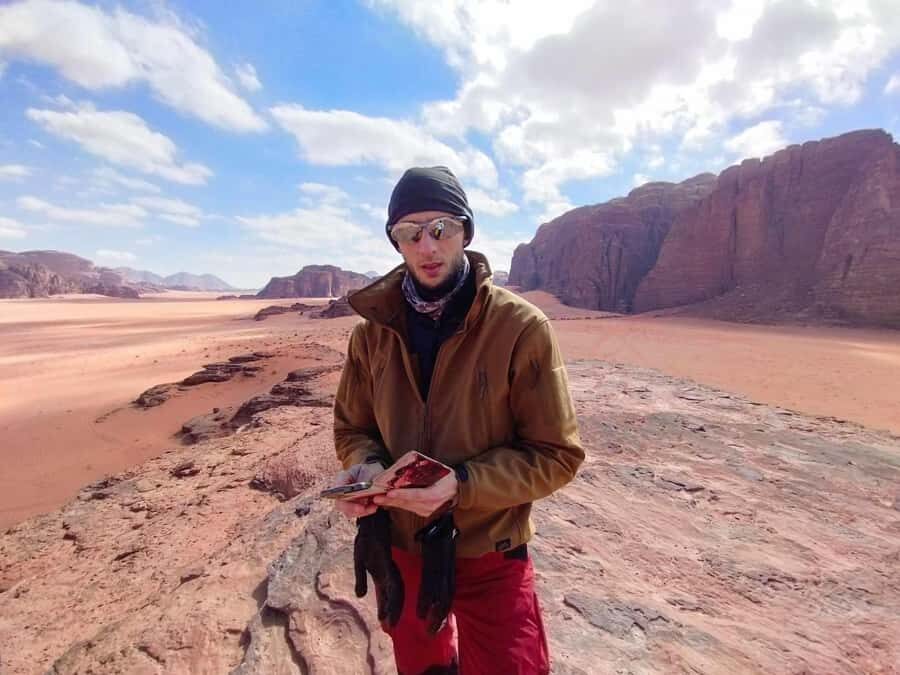
You’ll be picked up at Wadi Rum Village. From there, you’ll travel by jeep/SUV to the first stops. The experience includes transfer from Wadi Rum Village to the Wadi Rum Rest House area, which is useful if you’re staying somewhere near the village and want a straightforward meeting point.
Because there’s no cell coverage in the desert, you should double-check your pickup time and exact location before you head out. Once you’re on the route, the guide is your main point of contact.
Lawrence’s Spring: the first walk and the quick “wow”
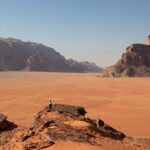
Your first main stop is Lawrence’s Spring. Expect a photo stop plus a short walk and scenic views on the way. This is a good early moment because it gives you that immediate sense of scale: red rock, open desert, and the feeling that you’ve stepped into a different world.
What I like about starting here is the pacing. You’re not thrown into the toughest hiking right away. You get moving, you get oriented, and you get a chance to understand what the guide will reference later.
If you’re bringing a camera or phone (when it has service), this is a strong place for early shots. The walking portion is short enough that most people can handle it, as long as you wear comfortable shoes.
Al Ramal red sand dune: the stop built for climbing and photos
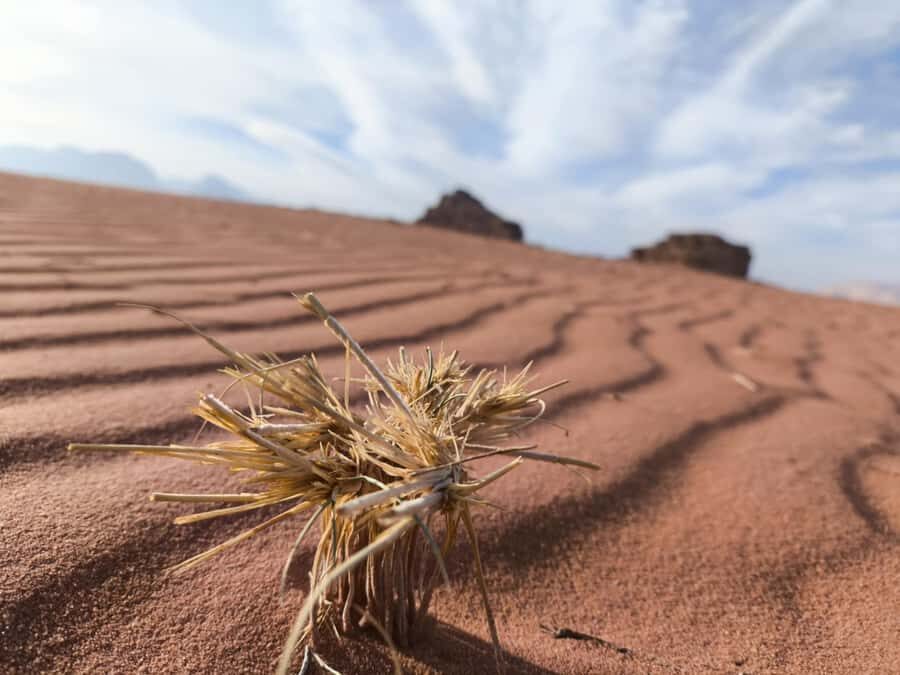
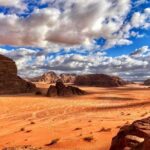
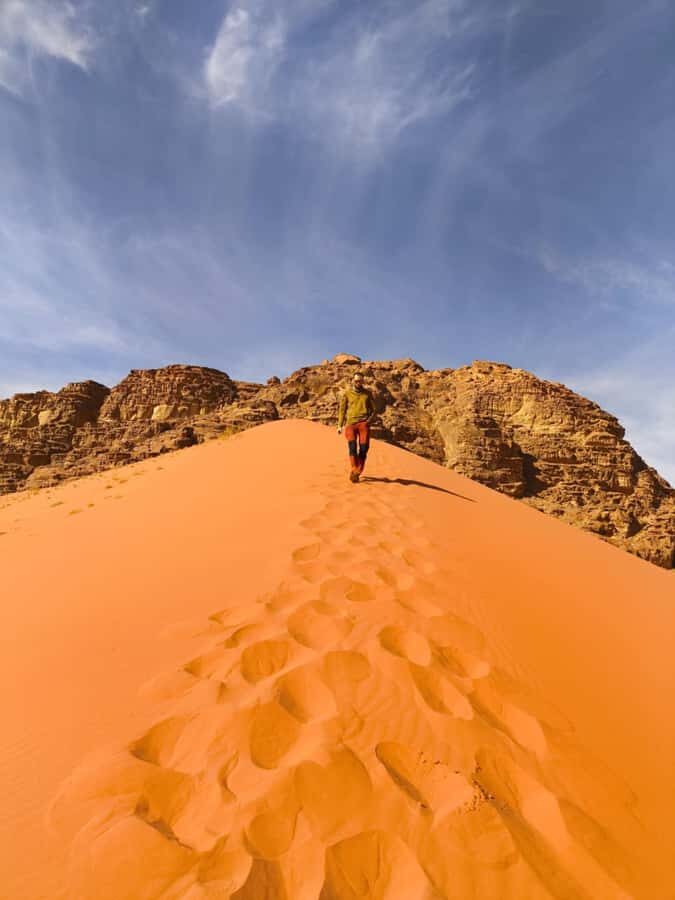
Next comes Al Ramal Red Sand Dune, with a longer break: photo stop, walk, and time to explore for about an hour. This is the part of Wadi Rum that people picture when they imagine red desert.
This is where you’ll want to:
- get your bearings fast
- walk up for wider views
- take your time finding angles for photos
Even if you don’t climb high, the dune itself is photogenic from multiple angles. In some experiences, guides also offer extra activities at later stages, and it’s not unusual for the dune to be where energy peaks. One guest mentioned sandboarding or sledding with a sandboard at a later stop, so if you’re hoping to try something like that, bring curiosity and ask your guide what’s possible when you’re there.
The dune stop is also a good place to slow down and feel how quiet the desert can get.
A few more Aqaba tours and experiences worth a look
Little Bridge: tea, shopping, and the “slow down” break
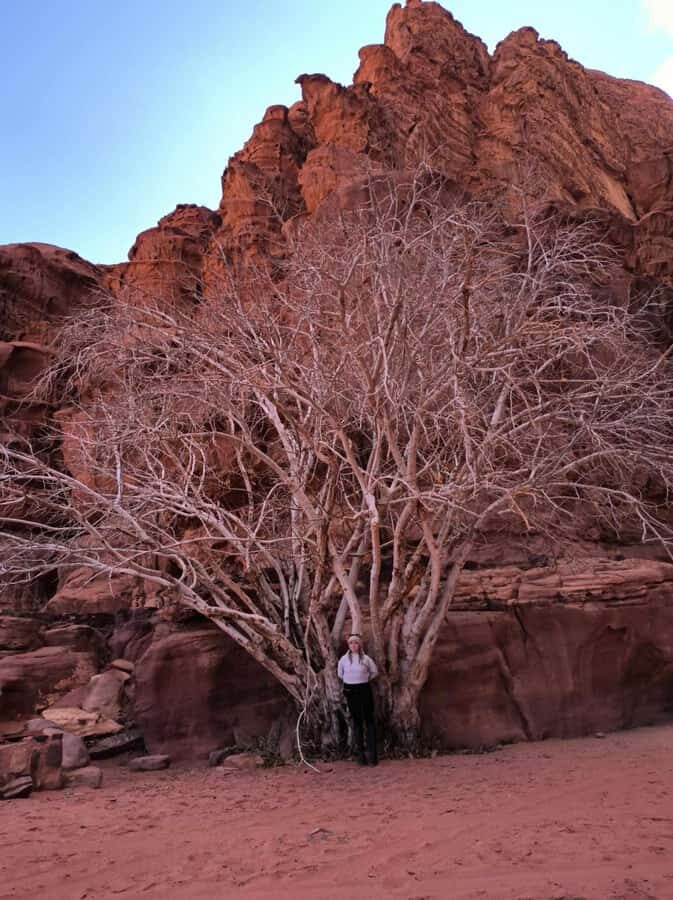
At Little Bridge, you’ll get another photo stop plus a break that includes tea, sightseeing, shopping, and walking for about 25 minutes. This is the kind of stop where the guide can show you small features that you might miss on your own.
Why this matters: Wadi Rum isn’t just one big view. It’s lots of interesting shapes—bridges, arches, canyons—and the small ones are often the best for close-up photos.
Tea here is part of the rhythm. Bedouin tea is typically served multiple times throughout the tour, and cardamom is specifically highlighted as part of the hospitality. It’s not fancy in a museum way. It’s hospitality made practical: warmth, sweetness, and a breather while the desert does its thing around you.
Khazali Canyon: rock textures and a bit of free time
Khazali Canyon is a different mood from the dunes. You’ll have a photo stop plus free time, with sightseeing and scenic views on the way for about 30 minutes.
Canyons like this give you:
- narrower, more dramatic sightlines
- rock texture that shows up clearly in photos
- a bit of a natural filter between you and the open desert
This stop is also where you’ll appreciate the “not rushed” pacing. Free time means you can move at your own speed—quick photos, then a slower look, or the other way around.
If you like guided explanations but also want autonomy, canyon time hits that balance.
Lawrence’s House: history, guided visit, and context
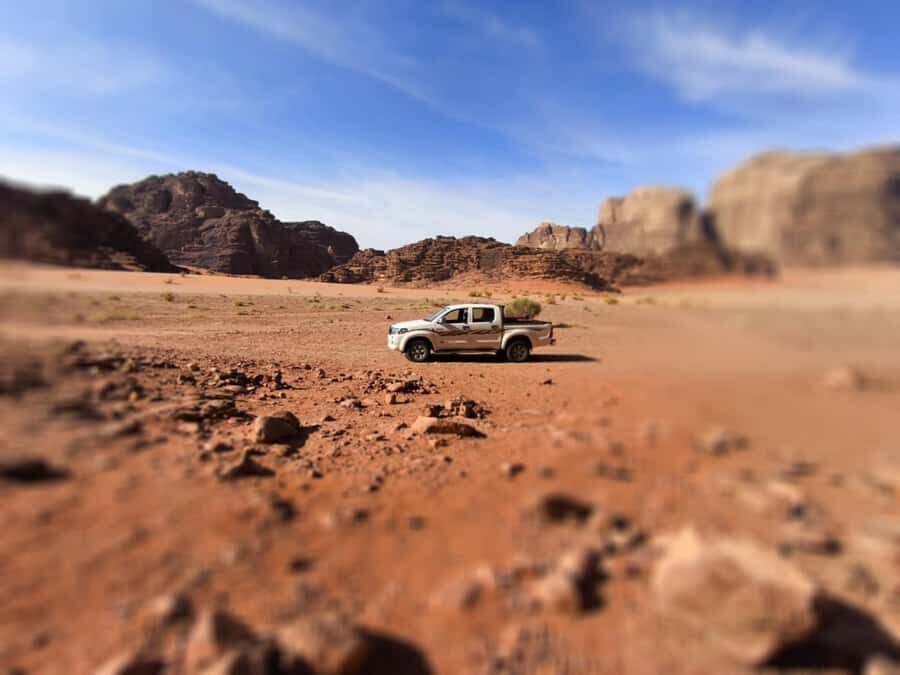
Then you reach Lawrence’s House, with a photo stop and a guided visit for about 30 minutes. This stop is one of the best places to connect the dots between the terrain and the stories people associate with Wadi Rum.
Even if you know little going in, a good guide helps you understand why this region keeps showing up in accounts and films. The experience also highlights UNESCO heritage and The Martian filming location, and the best part of having context while you’re standing in the same scenery is that it changes how you look at everything around you.
Guides named in confirmations include Mamdouh and Abdullah. Guests repeatedly point out that these guides are patient, friendly, and happy to answer questions about Bedouin life and local history. If you’re the type who likes to ask why something is important, this is a solid place to do it.
Mushroom Rock and Um Frouth Rock Arch: finishing with big silhouettes
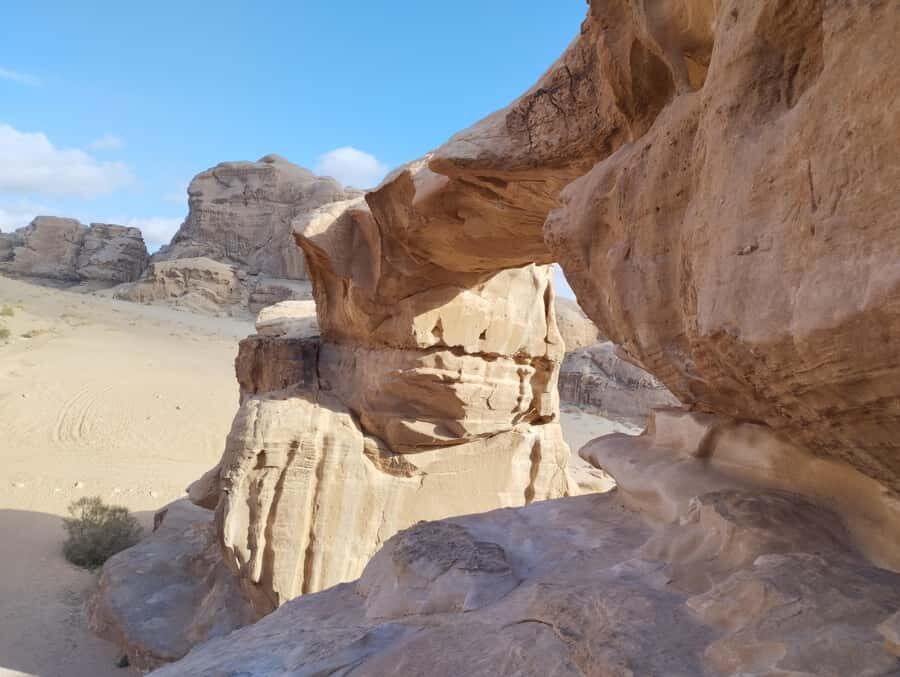
Later you stop at Mushroom Rock, a break built around photos and sightseeing. After that, you’ll go to Um Frouth Rock Arch for another break with photo stops, sightseeing, and scenic views on the way for about 30 minutes.
This ending sequence is smart. By the time you reach the arch and the rock formations, you’ve already built mental maps:
- you know where the dunes fit into the bigger terrain
- you know what canyon time feels like
- you’ve already had tea and breaks to keep fatigue low
So the final rock silhouettes land better. You’re not just grabbing photos; you’re comparing shapes, noticing changes in color and light, and letting the scenery sink in.
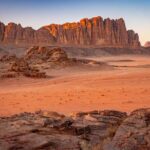
For the afternoon option, sunset often makes this part feel almost cinematic. Even one extra stop-minute can matter when you’re trying to catch the exact moment the sky softens.
Bedouin tea on campfire: more than a drink break
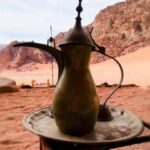
Tea isn’t a bonus here. It’s part of the experience. You’ll be offered tea on the tour, including the typical Bedouin tea made on a campfire, and the hospitality is specifically tied to cardamom.
In practical terms, tea does three things:
- It gives you warmth and a breather when you’re active.
- It breaks the drive rhythm so the desert doesn’t feel like constant motion.
- It turns the experience from sightseeing into something human.
Multiple guests mention tea at nearly every stop, so expect it to show up repeatedly. If you’re thinking you’ll only get a tiny sip, plan for more of a proper pause. One guest even described a sunset tea gathering in open desert after sunset, which is exactly the kind of calm you can’t replicate on a quick drive past a viewpoint.
Price and value: what $46 really covers
At $46 per person, this half-day tour is priced like a serious “best of” outing rather than a long expedition. You’re paying for:
- jeep/SUV transport between major sites
- a live guide (English and Arabic)
- drinks: tea and water
- and transfer from Wadi Rum Village to the rest-area point used for pickup
Lunch is included only if you choose the lunch option. Reviews include examples of lunch being organized with help from the guide, and guests also mention large portions when lunch is selected. So if you’re doing the morning tour and you tend to get hungry early, choosing lunch can be a smart way to avoid scrambling later.
One extra cost you need to know: the entrance fee to the Wadi Rum Conservation Area is JD 5, and it is not included. That’s the main add-on to budget for when comparing total cost.
Kids under 9 are free, which makes this a decent family activity if your kids can handle a vehicle day with a few short walks.
Guide quality is the difference-maker here
What makes this tour consistently rate so high is not just the scenery. It’s how the guide works with the desert.
The experience is led by a Bedouin who has lived in the desert since birth. In practice, guests repeatedly mention:
- friendliness and hospitality
- clear explanations at each stop
- patience with extra time for walking and photos
- the ability to answer questions about Bedouin lifestyle
- help with getting good pictures
Names that come up often include Mamdouh (spelled a few ways in confirmations) and Abdullah. I’d treat guide selection as part of your value equation. With a good guide, you’ll understand why each rock formation matters and how the terrain fits together. Without that, you’d still see Wadi Rum, but you’d lose some of the meaning.
What to bring so you stay comfortable (and safe-ish)
Wadi Rum is active, even on a half-day schedule. For this tour, bring:
- comfortable shoes for sand and rock steps
- sunglasses
- comfortable clothes
- a headscarf
Also, plan for phone reality: no cell coverage once you’re in the desert. That means your photos are great, but your navigation and messaging will not be reliable. Save any key details and screenshots before you leave the village area.
If you get motion-sensitive, the rough terrain between stops can feel bumpy. Taking it slow when stepping out helps. And when you climb up a dune or rock, treat it like a photoshoot: go steady, look where you place your feet, and keep water handy.
Who should book this jeep tour, and who shouldn’t
This is a good fit if you want:
- the main Wadi Rum highlights in a short time
- a guided route with time to explore on your own
- repeated tea breaks and a more personal desert feel
- a guide who knows the area deeply and answers questions
It may not be a match if:
- you need wheelchair access. The tour is not suitable for wheelchair users.
- you’re traveling with an infant under 1 year, since it’s not suitable for babies under that age.
If you’re traveling solo, this tour can also work well. One guest described feeling safe with the guide, and having a local host handling the route is a big comfort factor in a place without cell coverage.
Should you book this Wadi Rum morning or sunset jeep tour?
If you have only a half day in Wadi Rum, I think this is an easy yes. You get the iconic stops, the tea-and-fire hospitality, and a guide who can explain the terrain in a human way. The sunset option is especially worth it if you care about the ending moment and want that softer, cinematic sky.
Book it if:
- you want a well-paced highlights route in 4 hours
- you like the idea of cardamom tea stops during the day
- you want a mix of driving, guided viewing, and free time
Skip (or choose a different format) if:
- you can’t handle walking on sand/rock surfaces
- you need wheelchair access
- you’re hoping for long stays at only one viewpoint instead of a route that covers multiple formations
Do a quick budget check for the JD 5 conservation entrance fee, pack the basics (especially shoes and a headscarf), and you’ll be set for a very memorable red-desert day.