REVIEW · AQABA
Stargazing Adventure in Jordan
Book on Viator →Operated by RumSky Adventure · Bookable on Viator
Wadi Rum at night changes your space-view. This astronomer-led outing uses low-light desert skies and a 20-minute talk, then sends you into the night twice: once learning the sky by eye and once using GPS telescopes. It is built so you do not just stare up—you learn what you are looking at and how to track it.
I love the camp pickup system. It takes the hassle out of getting to a dark observing spot and means you avoid desert night driving. The other big plus for me is the structure: two 35-minute sessions with professional guidance, then a final photo using a time-exposure technique. One possible drawback is that the experience is timed and shared. If you want long, quiet one-object viewing, or if conditions are poor, the laser-led “find it fast” part and the telescope targets may feel a bit basic.
In This Review
- Key things to know before you go
- Why Wadi Rum’s darkness is the real star of the show
- Pickup in Disi Area and what the 1 hour 30 minutes really feels like
- The 20-minute astronomy presentation: where your night vision gets its plan
- Group 1 under the green laser: constellations, zodiac, and finding direction
- Group 2 at the GPS telescopes: galaxies, nebulae, planets, and moons
- Switching groups halfway: why the structure makes the whole thing work
- Price and value in Aqaba: is $30 worth it?
- Weather reality check: what to do when the sky does not cooperate
- Who should book RumSky Adventure in Wadi Rum
- Should you book this stargazing tour or skip it?
- FAQ
- What is the duration of the stargazing experience?
- Where does the pickup happen?
- What happens during the 20-minute astronomy presentation?
- How is the group split during the sky viewing?
- What can you see with the telescopes?
- Is bottled water included?
- Is cancellation allowed if the weather is bad?
Key things to know before you go
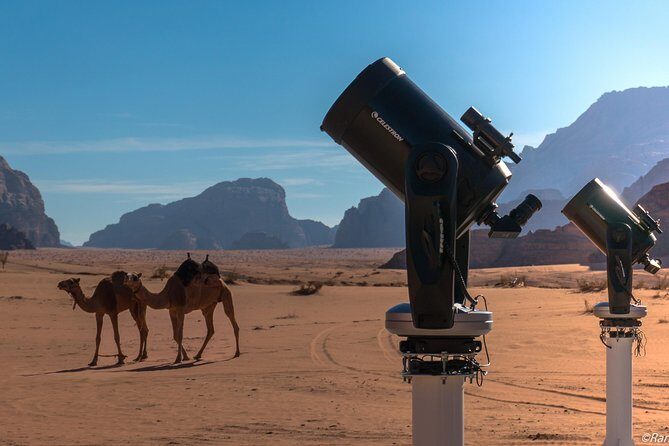
- Two guided sky sessions: naked-eye constellation finding, then GPS telescope viewing
- Green laser + candle track helps you get oriented quickly in the dark
- Astronomy presentation on a large screen before you step outside
- Group switch halfway through so everyone gets both types of viewing
- Time-exposure group photo ends the show with sky objects captured on camera
Why Wadi Rum’s darkness is the real star of the show
Wadi Rum earns its reputation for stargazing because it keeps the sky dark. Less light pollution means you can actually see the smaller constellations and the faint-looking targets that make astronomy fun instead of frustrating. The tour leans into that advantage hard.
You start with a 20-minute astronomy presentation in a seated hall. That matters because it sets your eyes up for success. When you go outside, you are not guessing. You get direction-finding methods, rotation basics (daily and annual), and stories behind what you see. That story layer is not just decoration. It helps you remember the sky patterns and recognize them again later.
And then there is the second half: GPS-enabled telescopes. Even with a great desert sky, knowing where to aim saves time. Instead of spending your night hunting blindly, you get guided targets like galaxies, nebulae, planets, and moons.
You can also read our reviews of more tours and experiences in Aqaba.
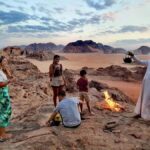

Pickup in Disi Area and what the 1 hour 30 minutes really feels like
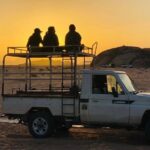
This is a short tour in the best way. The total time is about 1 hour 30 minutes, and the pace is designed for night sky attention spans. In winter, the pickup runs around 7:45 PM from camps in the Disi Area, and you will be picked up after dinner. In summer, times change, so you should confirm with the operator.
The schedule window on the local calendar runs Monday to Sunday, 5:00 PM to 11:30 PM. In practice, that means you can fit it into an evening plan, not just an all-night adventure.
Two practical benefits come from the pickup:
- You get round-trip transfers from most Wadi Rum camps, so you are not stuck figuring out transport in the dark.
- You show up ready to look up. No long drive where you arrive bleary and cold-eyed.
Also note the scale. The group cap is 120 travelers. That is not tiny, so you will experience it as a show with timing, not as a private stargazing session. Still, the tour splits you into two equal groups to keep things moving.
The 20-minute astronomy presentation: where your night vision gets its plan
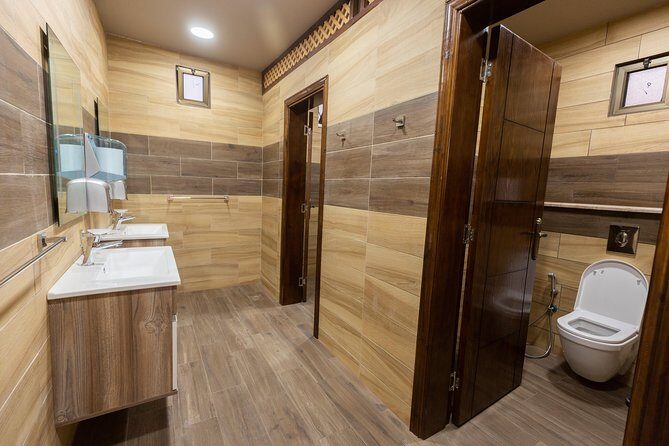
The tour begins with a 20-minute presentation on astronomy in a seated hall, with the topic delivered on a large screen. Even if you already love the stars, this part is where the tour becomes useful instead of just pretty.
Here is what you can expect the presentation to do for you:
- Give you a simple way to understand what you are seeing.
- Set up direction-finding so you do not spend the outside time orienting yourself.
- Frame the sky stories and terms so they click when you hear them again outdoors.
Think of it as your quick “user manual” for the desert sky.
If you are the type who enjoys the how and why (not only the wow), this is the section that pays off later. After the talk ends, you step out and the stargazing becomes more than pointing upward.
Group 1 under the green laser: constellations, zodiac, and finding direction
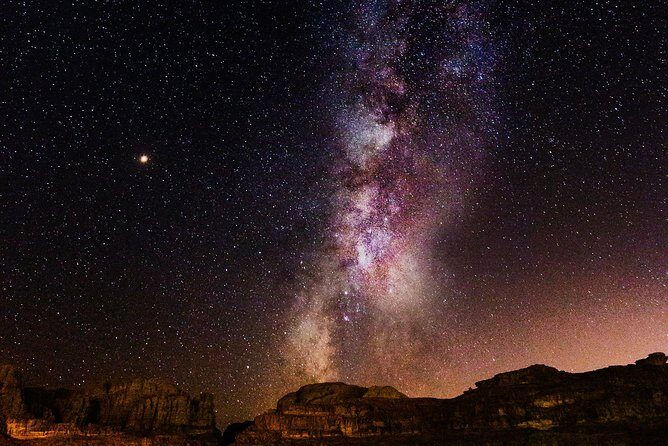
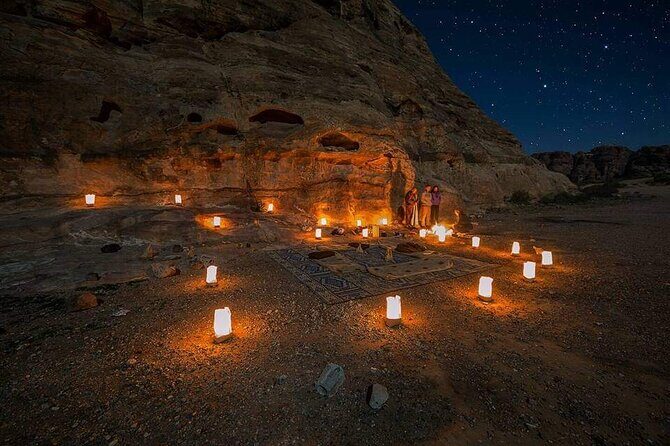
Once you are outside, Group 1 leads the first stargazing method. You follow the light of a green laser with a candle track. That visual guide is the practical trick that helps you spot patterns fast when the sky is dark and your eyes are still adjusting.
A professional astronomer walks you through:
- How to use the stars’ system to find directions at night
- The daily rotation and annual rotation of stars, so the sky makes sense over time
- Specific constellations and horoscopes as they apply to what you can see
This is also where the “stories behind the stars” becomes part of your night. You get mythologies from various cultures. It is not a memorization game. It is more like you learn why people cared about these sky shapes in the first place—then you see the shapes again for yourself.
One thing to consider: the laser-led session is about orientation and identifying major constellations. If your dream is a slow, detailed look at a single deep-sky target, this portion may feel straightforward. It is still valuable. You just want to set expectations: it is a sky-finding lesson, not an all-night astrophotography workshop.
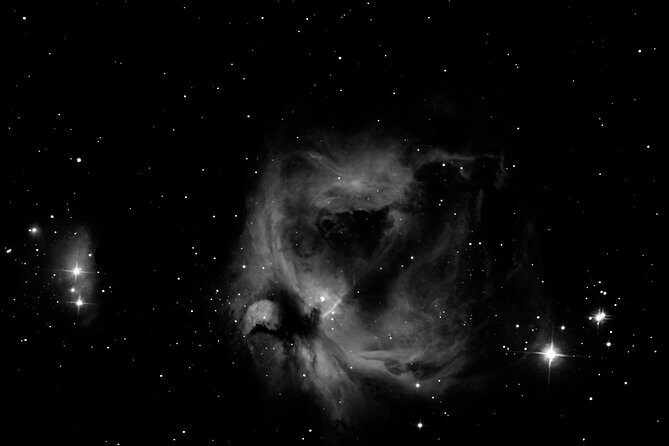
Group 2 at the GPS telescopes: galaxies, nebulae, planets, and moons
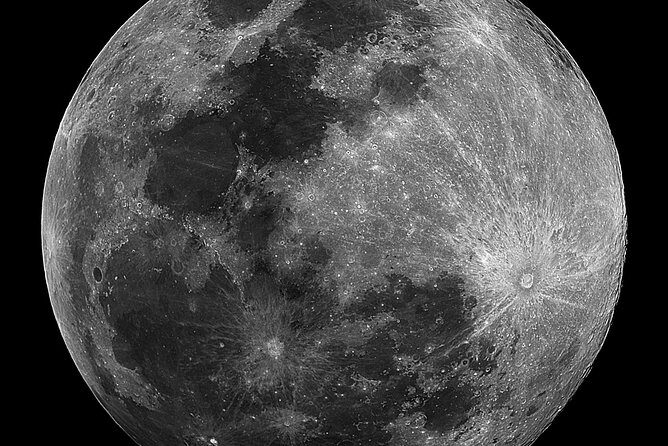
While Group 1 learns the sky by eye, Group 2 spends the next 35 minutes on large computerized telescopes with GPS systems. The GPS piece matters because it turns the telescope into a guided instrument. You are not stuck guessing where to aim.
Targets you can expect to look at include:
- Galaxies
- Nebulae
- Planets
- Moons
A professional astronomer guides this session as well, using the telescope time to show you deep-sky and solar system objects. This is the section that tends to thrill people who came specifically for dramatic “what am I seeing?” moments.
The biggest limitation here is also the simplest: what you can see depends on night conditions. The tour requires good weather, and cloudy or hazy skies can reduce what the telescope can show clearly. Even then, you still get the telescope experience and the guided explanations that help you interpret what you are seeing.
If you are the type who likes to learn how instruments work, this part can spark that interest. One comment I took seriously was that the telescopes are fantastic instruments. In other words, you are not just standing near a scope—you get the real viewing time.



Switching groups halfway: why the structure makes the whole thing work
At the middle of the show, Group 1 and Group 2 switch. That design is smart for two reasons.
First, it stops your night from being one-track. You get both:
- the human-sky method (constellations, direction, zodiac stories), and
- the instrument method (GPS telescopes pointed at specific targets)
Second, it helps you match your learning style. If you find yourself losing attention during one mode, the swap gives you a reset.
This also means the tour feels balanced. You are not stuck with only laser teaching or only telescope staring. The format helps most people walk away with at least one thing they can recognize later.
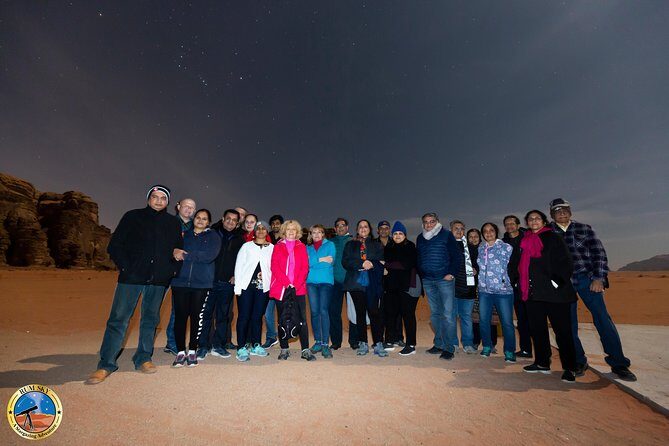
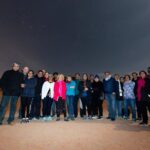
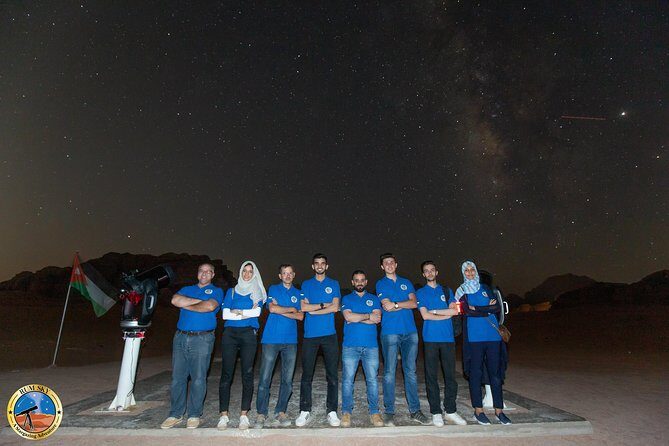
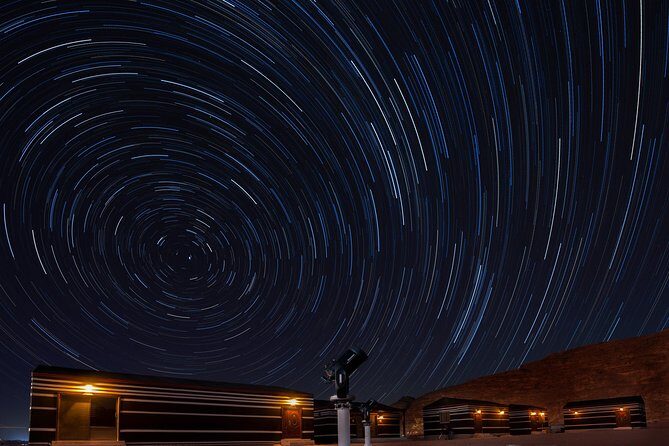
At the end, you take a group photo with a time-exposure technique that highlights sky objects. That final step is there for a reason: it gives you a lasting record of what you just learned to see.
Price and value in Aqaba: is $30 worth it?
The price is $30.00 per person, and it is a solid value for a guided, professional-led astronomy outing. You are paying for three distinct things bundled together:
- A presentation in a seated hall with a large screen
- Expert guidance both for naked-eye sky finding and for telescope viewing
- Included transport from most local camps (so the “getting there” part does not eat your budget)
Also, this tour tends to get booked ahead. On average, it is booked 34 days in advance. That signals demand, and it means you should not wait until the last day—especially in peak seasons.
Your money also buys a bit of peace of mind. You do not need desert night driving because transfers are part of the plan. That matters in Wadi Rum, where everything is dramatic at night, including the roads and the stakes.
One caution on value: because the tour is structured for groups (and capped at 120 travelers), it is not a private observing night. If you want to spend a long time on one target or want deep troubleshooting for photography gear, this is not built for that. But for most visitors, it is a great ratio of time, guidance, and what you can see.
Weather reality check: what to do when the sky does not cooperate
This is one of the few astronomy experiences that explicitly comes with a weather requirement: it needs good weather. If the sky does not cooperate, the tour is canceled and you are offered a different date or a full refund.
So how should you think about results?
- If the sky is clear, you get the full two-part show: laser-led constellation finding and guided telescope targets.
- If conditions are not great, both the naked-eye and telescope experiences can be limited in what they reveal.
There is also a mismatch risk between expectation and format. One less-than-perfect experience described the telescope and laser portions as underwhelming compared to expectations. That does not mean the tour is bad—it means you should set your expectations correctly. This is a guided program with time blocks. It is not a guaranteed “see everything” night, and it is not aimed at expert astronomers looking for specific research-level views.
If you want the night to feel great, go in ready to learn, accept guided timing, and let the clear-sky conditions do the heavy lifting.
Who should book RumSky Adventure in Wadi Rum
This tour fits best if you want structure and expert help. It is also a good fit if:
- you enjoy learning the stories behind the constellations and zodiac
- you want direction-finding skills, not just casual star staring
- you like using gear without needing to bring or operate complex equipment
- you are visiting Wadi Rum as part of a short trip and want a high-value night activity
It is also easy to join in practical terms. Most travelers can participate, and service animals are allowed.
If you are traveling with mixed interests—one person wants the stars explained and the other wants to see telescope targets—you have a built-in compromise because both groups happen in one evening.
Should you book this stargazing tour or skip it?
I think you should book if you want a guided stargazing night in Wadi Rum that does not require planning a transport puzzle or learning the sky from scratch. The pairing of constellation finding plus GPS telescope time, plus the professional astronomer explanations, is the main reason this is worth considering.
I would skip or hesitate if your priority is a long solo observing session or if you dislike group timing. This is a show with two 35-minute viewing blocks and a quick 20-minute prep talk. Also, you are dependent on weather, and the tour is designed around visibility.
If you are flexible, enjoy learning, and want a night where the desert sky actually feels understandable, this is an easy yes.
FAQ
What is the duration of the stargazing experience?
It runs for about 1 hour 30 minutes (approx.).
Where does the pickup happen?
The pickup is from local camps in the Disi Area. The winter pickup time is around 7:45 PM, and you are picked up after your dinner.
What happens during the 20-minute astronomy presentation?
You get an astronomy presentation on a large screen in a seated hall before you go outside for stargazing.
How is the group split during the sky viewing?
Guests are split into two equal groups. Group 1 does naked-eye stargazing aided by a green laser and candle track, while Group 2 uses large GPS-enabled telescopes. The groups switch halfway through.
What can you see with the telescopes?
Targets include galaxies, nebulae, planets, and moons.
Is bottled water included?
No. Water and soft drinks are available at a reasonable cost, but bottled water is not included.
Is cancellation allowed if the weather is bad?
Yes. You can cancel for a full refund up to 24 hours in advance. The experience also requires good weather, and if it is canceled due to poor weather, you will be offered a different date or a full refund.