REVIEW · AQABA
Private 2Day Jeep Tour with Overnight in Bedouin Camp in Wadi Rum
Book on Viator →Operated by Follow Wadi Rum Desert Tours · Bookable on Viator
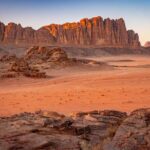
Wadi Rum is the kind of place that makes time feel slower. This private 2-day jeep experience is built for that mood, with lots of stops for photos, short walks, and Bedouin food around the big desert moments like sunset. I like that it mixes famous names (T.E. Lawrence links) with less obvious terrain, so you get variety without feeling like you’re rushing to tick boxes.
Two standout parts for me are the overnight Bedouin camp setup (barbecue cooked under the sand plus a real dinner spread) and the way the day is paced with frequent breaks for tea and water. One possible drawback: the schedule packs in many stops, so even though walks are usually short, you’ll still feel the desert rhythm—especially if you’re sensitive to heat or dusty trails.
In This Review
- Quick hits before you go
- Private 4×4 Jeep Through Wadi Rum: Why the comfort matters
- Day 1 Route: Wadi Rum Village to Lawrence’s Spring to the red dune summit
- Wadi Rum Village: an easy first step into the desert
- Lawrence’s Spring: cold water with a famous name
- Khazali Canyon and Mount Khazali: inscriptions and rock drawings
- The red sand dune: iron-red color and big panoramic reward
- Little Bridge, Lawrence House, and rock formations: where the photos happen
- Little Bridge: a short climb with a big look
- Lawrence House: inscriptions in the stones
- Al-Mashroom rock: erosion artistry plus a tea break
- Um Fruth rock bridge: the 360-degree climb
- Abu Khashaba Canyon Walk and the sunset show with Bedouin tea
- Abu Khashaba canyon walk: narrow, wild figs, bird sounds
- Sunset view point: mattresses, open fire tea, and the red-to-gold shift
- Bedouin camp overnight: dinner that actually feels like part of the desert
- Bedouin camp atmosphere and Sultan’s hospitality
- Warm shower and real comfort after the day
- Day 2 Plan: red and white dunes, springs, rock bridges, and final viewpoints
- Jabal Al-Qatar natural springs: a hidden water system in the rocks
- Desert Eyes rock bridge: climb for the big panoramic payoff
- Om Gada Canyon: walking the quieter, wilder side
- Wadi Sabet viewpoint: dunes that shift color as the day moves
- Price and value: what $140.95 per person buys you here
- Who this private jeep-and-camp tour is best for
- Should you book this 2-day Wadi Rum jeep camp trip?
- FAQ
- What is the duration of the private 2-day jeep tour?
- Where do I meet for the tour?
- What does the tour include for food during the overnight?
- Is the sunset included?
- How much is the tour and is it private?
- Are there optional activities on Day 2?
- What sightseeing stops are included on Day 1?
- What kind of walking is involved on the canyon stop?
- What is the cancellation policy?
Quick hits before you go
- Private jeep, only your group: You move through Wadi Rum without sharing the ride with strangers.
- Lawrence of Arabia connections: Stops include Lawrence’s Spring and Lawrence House.
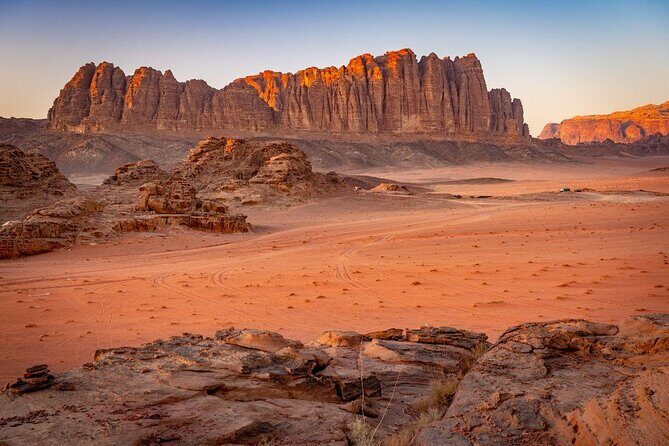
- Big nature set pieces in one loop: Red dunes, rock bridges, and canyon walks.
- Sunset tea time in the sand: You watch the light shift with Bedouin tea and comfortable seating.
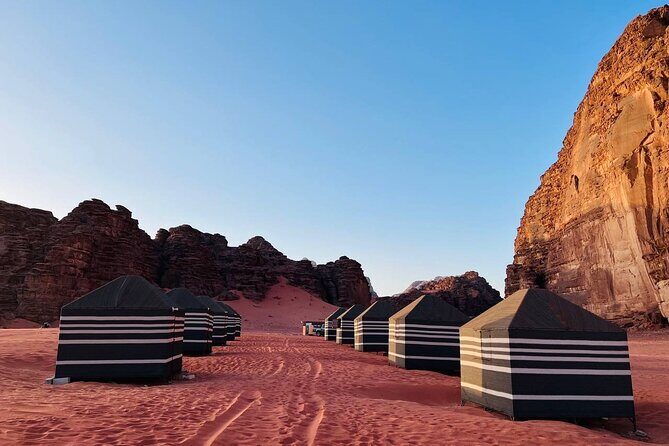
- Overnight in Bedouin camp: Dinner buffet, barbecue under the sand, and a shower in camp.
- Sultan’s camp hospitality: The camp host is repeatedly described as flexible and accommodating.
Private 4×4 Jeep Through Wadi Rum: Why the comfort matters
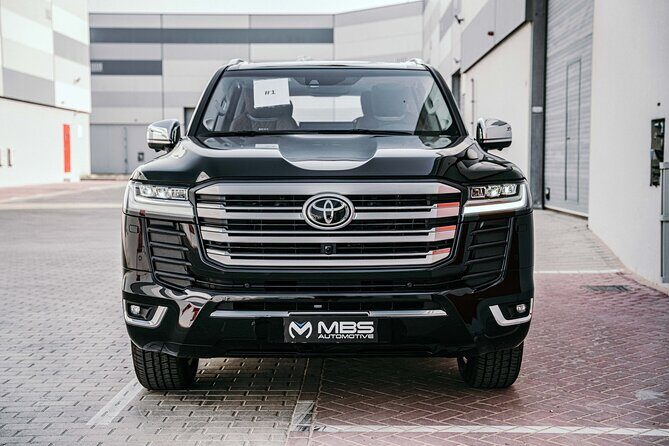
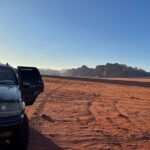
Wadi Rum works best when you don’t have to fight for a seat, join a loud group, or wait around while someone tracks down the rest of the bus. This is a private setup, so your guide can steer the day toward what you care about most: more photo stops, extra walking where it feels worth it, or simply more time sitting in silence where the desert does its job.
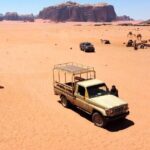
The jeeps are also a big part of the value. You’re not just visiting a single viewpoint—you’re driving between multiple rock formations, springs, canyons, and protected-area features. Even with a lot of stops, you’re not spending the day marching from one end of Wadi Rum to the other.
The only “cost” of this style is that it can feel full. You’ll likely be busy from late morning through sunset on Day 1, then again on Day 2 if you take the longer desert segment. If you prefer slow and quiet above all else, you’ll want to be intentional about when you say yes to the walks.
You can also read our reviews of more private tours in Aqaba
Day 1 Route: Wadi Rum Village to Lawrence’s Spring to the red dune summit
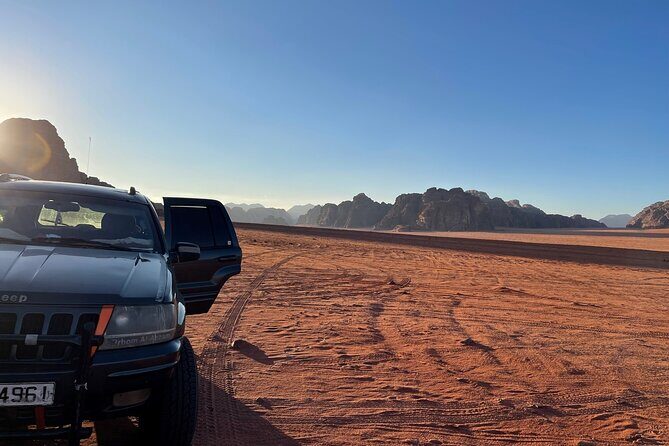
Day 1 starts at 8:30 am, and you meet at the entrance of the Wadi Rum village. From there, you jump into a 4×4 jeep for the first stretch of the day. This opening is practical: you get out quickly into the protected desert, and you also have time early on to walk around, sit down, and take photos without the sun being at full volume.
Wadi Rum Village: an easy first step into the desert
You’ll get time to explore and photograph, plus you can look at archaeological sites in a way that feels comfortable instead of rushed. The tour also builds in the stuff that keeps the experience from feeling chaotic—water, juices, coffee, and tea available during breaks.
A small consideration: because you’re meeting at the village entrance, the “desert quiet” takes a little time to fully kick in. The good news is that you’re in the jeeps fast, and you’re not stuck waiting around.
Lawrence’s Spring: cold water with a famous name
Next is Lawrence’s Spring (Ein Lawrence). This is tied to T.E. Lawrence, the famous figure connected to the Arab Revolution during World War I. The setting is simple and beautiful: cold water comes down from the mountain into a small pond, with weeds and small trees around it.
Why I like this stop for your first day: it gives your eyes a break from red rocks. It’s also one of those places where you don’t need to be a history expert to appreciate it—you just stand there and watch water do its thing.
Khazali Canyon and Mount Khazali: inscriptions and rock drawings
Then you head toward Khazali Canyon and Mount Khazali. Here, the appeal is the layered storytelling in the stone—Nabataean inscriptions and rock drawings linked to the Nabatean Kingdom, plus markings connected to Thamudiyya and Kufic.
Practical tip: plan on slowing down here. If you’re the type who enjoys reading details and taking your time with textures, this is a good moment to do it. If you’re not, you can still enjoy the canyon setting, but you might feel like the focus is on observation more than views.
A few more Aqaba tours and experiences worth a look
The red sand dune: iron-red color and big panoramic reward
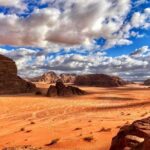
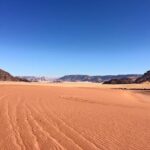
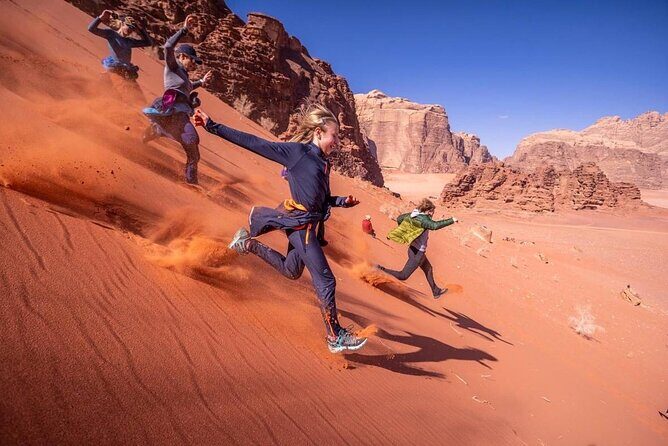
After that, you get to the famous Red Sand Dune area in the protected zone. The distinctive red color is tied to iron oxide. At the summit, you’re rewarded with panoramic views across the desert valley.
This is a “do it your way” stop. You can simply enjoy the view, or you can add action with options like sand-boarding or running down the dunes (depending on how your guide handles safety and conditions). The drawback is obvious: dunes punish bare socks and poor footwear. Bring shoes you trust on sand.
Little Bridge, Lawrence House, and rock formations: where the photos happen
Day 1 keeps rolling through the protected area, and this is where Wadi Rum’s visual identity really shows up: natural arches, isolated rocks shaped by erosion, and viewpoints that look different every hour.
Little Bridge: a short climb with a big look
Little Bridge is a natural arch formed by years of weathering, in the Khor El Ajram area. It’s only a few meters tall, but it gives you a satisfying view—and it’s described as easy enough for families with children.
If you want a less strenuous break that still feels dramatic, this is it. Just be ready for uneven footing.
Lawrence House: inscriptions in the stones
Next is Lawrence House, connected again to T.E. Lawrence (said to have stayed there in 1917). The archaeological site can be explored at your ease, and the extra detail that makes it interesting is that some stones used in the construction include ancient inscriptions.
This stop is great if you like the feel of a site where you can walk around and look closely. If you’re only chasing scenery, you may spend less time here than the rocks deserve.
Al-Mashroom rock: erosion artistry plus a tea break
Mushroom Rock is another signature sandstone formation. It’s carved over time by erosion forces. The tour adds tea and biscuits here, so it’s not just walking and looking—you also get a proper pause to reset.
This is one of those spots where the desert teaches patience. The rock is the point, but the light around it makes it change as you shift your position.
Um Fruth rock bridge: the 360-degree climb
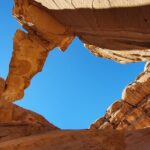
Then comes Um Fruth rock bridge, a natural arch rising about 15 meters from the desert floor. It’s one of the most photographed places in Wadi Rum, and you can climb up to enjoy 360° views.
This is one stop to take seriously if you’re not steady on your feet. The view is worth it, but don’t feel pressured to climb if you’re uncomfortable on sand and rock.
Abu Khashaba Canyon Walk and the sunset show with Bedouin tea
Two of the strongest emotional moments in Wadi Rum are where you lose the sky for a minute and then find it again. This tour does both.
Abu Khashaba canyon walk: narrow, wild figs, bird sounds
In Abu Khashaba Canyon, you walk through a narrow valley where cars can’t pass. The width is about 4 meters, and you’ll spend roughly 30 to 45 minutes walking. A standout detail here is the wild fig trees and contrasting greenery against red sands.
If you’re worried about being bored on a walk, this is a different kind of stop—quiet, shaded in parts, and full of small details like plant texture and bird chirps. The tradeoff: it’s still outdoors, so bring water and expect dust if the day is dry.
Sunset view point: mattresses, open fire tea, and the red-to-gold shift
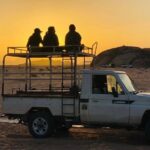
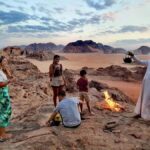
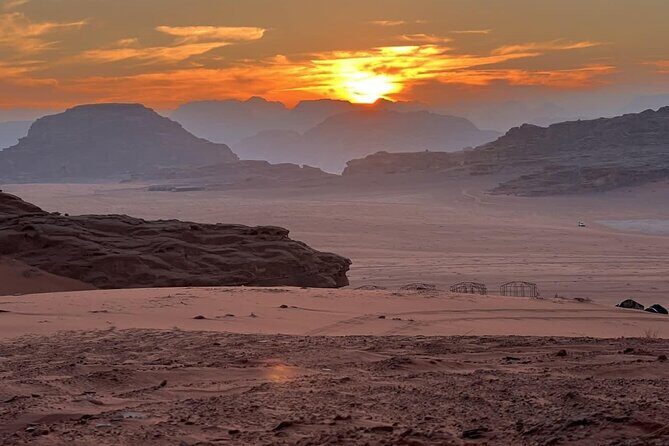
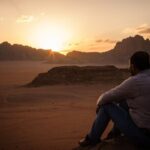
The sunset stop is built around a dedicated spot in the middle of the desert. When the sun starts dropping, you sit on a perfect viewing place while Bedouin tea is served and cooked on an open fire. Mattresses are provided for relaxation, and the whole experience is about taking the time to watch the light change across sand dunes and red mountains.
For me, this is where the tour earns its price tag. You’re not hustled; you’re staged for the moment. Even if you’ve seen desert sunsets before, this one has the feeling of being private with the landscape.
Bedouin camp overnight: dinner that actually feels like part of the desert
Night in Wadi Rum is not just lodging. It’s part of the show. The camp experience here is centered on food, warmth, and sky time.
Bedouin camp atmosphere and Sultan’s hospitality
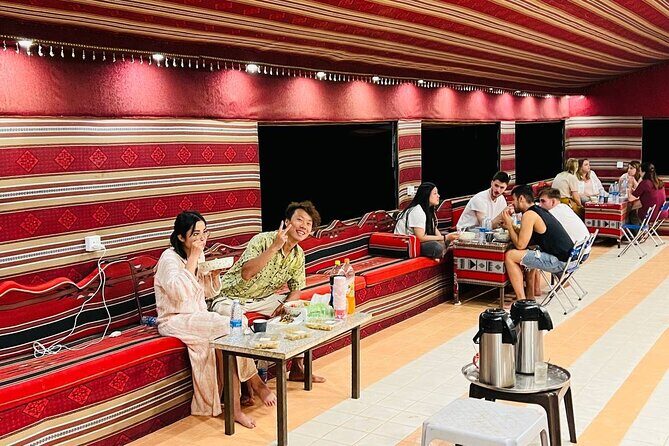
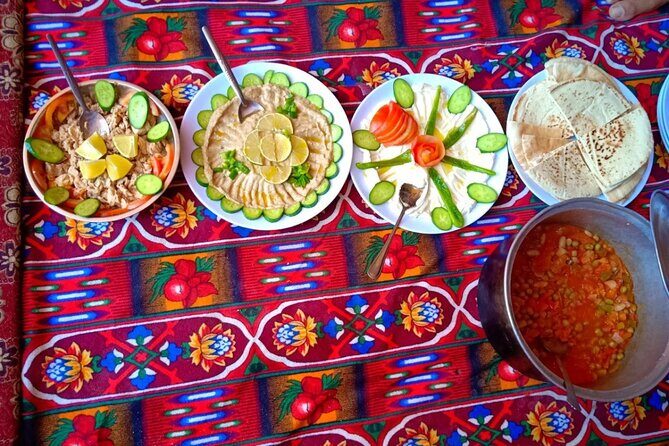
At camp, you’ll start the evening ritual with traditional barbecue cooked under the sand. Fresh salads, warm bread, and hummus are served alongside plenty of fresh beverages and warm Bedouin tea. Dinner then moves into an open buffet format, followed by relaxing around the fire.
One of the most praised parts from the people who’ve done this is the camp hospitality—especially the way Sultan is described as flexible and accommodating. That matters because Wadi Rum can be unpredictable in little ways, and being able to adjust without stress makes the night feel smooth instead of scripted.
Warm shower and real comfort after the day
After dinner, you can take a warm shower, then head to the large tent to relax. This is a big practical bonus. You’ve been outdoors all day, often in dust and sun, and coming back to a warm rinse changes the whole mood.
If you’re sensitive to cold at night, plan for it. The desert cools down fast after sunset, and while the camp gives you comfort, you’ll still want a warm layer.
Day 2 Plan: red and white dunes, springs, rock bridges, and final viewpoints
Day 2 starts with breakfast in camp, then you can choose to go further into the desert. There’s a segment called the red and white desert tour to the wildest area where red sand meets white dunes. It’s described as a four-hour option after breakfast if you still want to stay in the desert.
This is a key value decision point. If you feel good after Day 1, that extra scenery jump is worth it. If you’re tired, you may prefer to keep things lighter and focus on shorter walks later.
Jabal Al-Qatar natural springs: a hidden water system in the rocks
Next is Jabal Al-Qatar, described like a castle with many peaks. The science-y part is actually easy to understand in the field: limestone can absorb water, and when it meets impermeable granite, that water ends up surfacing as small natural springs.
You’ll walk for about five minutes and then discover the hidden springs. For photographers, this is a great angle: water + rock textures + desert light. For everyone else, it’s a reminder that the desert isn’t empty.
Desert Eyes rock bridge: climb for the big panoramic payoff
Then you reach the Desert Eyes rock bridge. After a brief climb, the viewpoint reward is panoramic and memorable, matching the way it gets its name.
This stop is all about the climb-to-view tradeoff. If you like active sightseeing but don’t want a full-day hike, this sits in a sweet spot.
Om Gada Canyon: walking the quieter, wilder side
In Om Gada Canyon, you walk through one of the most authentic and wild areas in Wadi Rum. The walk can last around 30 minutes up to an hour, based on your needs.
This is where Wadi Rum feels less like a checklist and more like a place you could wander all day—if the body has the energy. Bring comfortable footwear and be ready for red sand that grabs your shoes.
Wadi Sabet viewpoint: dunes that shift color as the day moves
Finally, there’s the Wadi Sabet viewpoint. It’s a panoramic spot where you can see the dunes stretching out and notice how the rock colors change through the day.
This ending makes sense: you finish with wide open views rather than another dense stop. It’s also a good moment to regroup and take a few last photos without feeling rushed.
The tour ends back at the meeting point.
Price and value: what $140.95 per person buys you here
At $140.95 per person for about two days, this isn’t a budget-only option. But it also isn’t just a long jeep ride. You’re paying for a private guide experience, multiple protected-area stops in a 4×4, meals that include a Bedouin lunch and a full dinner in camp, and an actual overnight.
The overnight is the big cost-swing. Many day trips get cheaper because they remove the camp layer. Here, you’re also getting the sunset ritual and the camp food experience, including barbecue cooked under the sand plus warm shower access.
The value gets even better if you’re someone who hates compromises—like sharing a jeep with strangers, missing stops because of group timing, or not having enough time to relax at sunset.
If your ideal trip is ultra-minimal, this may feel like a lot. If you want variety, comfort, and the full Wadi Rum rhythm, it’s priced like a full desert outing.
Who this private jeep-and-camp tour is best for
This works especially well if:
- You want a private experience and prefer your own group pace.
- You love big desert scenery but also enjoy short, meaningful walks.
- You care about food and the evening atmosphere as much as the sights.
- You like history connections like T.E. Lawrence without turning the day into a museum tour.
It might be less ideal if:
- You dislike structured days with many stops.
- You’re very heat-sensitive and need long breaks in shade beyond what’s built into the schedule.
- You want deep hiking. Most walks are short to moderate, but they do happen throughout Day 1.
Should you book this 2-day Wadi Rum jeep camp trip?
I’d book it if you want Wadi Rum to feel complete: jeep exploration, famous-name sites mixed with striking natural formations, and a night that includes real Bedouin food instead of just a place to sleep. The camp experience, especially the hospitality associated with Sultan, is a strong reason to choose this one—because it turns the evening into the highlight.
If you’re mainly chasing one thing—like only rock bridges or only long hikes—then you might prefer a more focused tour. But for most people, this is the kind of 2-day trip that makes Wadi Rum stick in your memory: sunrise-to-sunset views, tea breaks in the sand, and a camp night that feels part of the desert rather than pasted on.
FAQ
What is the duration of the private 2-day jeep tour?
The tour is listed as 2 days (approx.), starting at 8:30 am and ending back at the meeting point.
Where do I meet for the tour?
You meet at the entrance of the Wadi Rum village for the Day 1 start.
What does the tour include for food during the overnight?
Day 1 includes a Bedouin lunch, and you also get Bedouin dinner at camp. At the camp you’ll have barbecue cooked under the sand, salads, warm bread, hummus, Bedouin tea, and an open buffet dinner. A warm shower is also available.
Is the sunset included?
Yes. Day 1 includes a sunset tour with a designated sunset view point, Bedouin tea cooked on an open fire, and time to relax on provided mattresses.
How much is the tour and is it private?
The price is listed as $140.95 per person. It is a private tour/activity, meaning only your group participates.
Are there optional activities on Day 2?
After breakfast, there is an option to organize a red and white desert tour to the wildest part of Wadi Rum where red sand meets white dunes, listed as about four hours.
What sightseeing stops are included on Day 1?
Day 1 includes multiple protected-area stops such as Lawrence’s Spring (Ein Lawrence), Khazali Canyon/Mount Khazali, a red sand dune viewpoint, Little Bridge, Lawrence House, Mushroom Rock, Um Fruth rock bridge, Abu Khashaba Canyon walk, and the sunset view point.
What kind of walking is involved on the canyon stop?
The Abu Khashaba canyon walk is about 30 to 45 minutes and is done on foot through a narrow canyon. Other canyon walks on Day 2 can be shorter or longer depending on your needs.
What is the cancellation policy?
There is free cancellation. You can cancel up to 24 hours in advance for a full refund, and if you cancel less than 24 hours before the start time, the amount paid is not refunded.