REVIEW · AQABA
Full-Day Jeep Tour and Sleeping in cave Night Under the Stars
Book on Viator →Operated by Wadi Rum Bedouin Guide Tours · Bookable on Viator
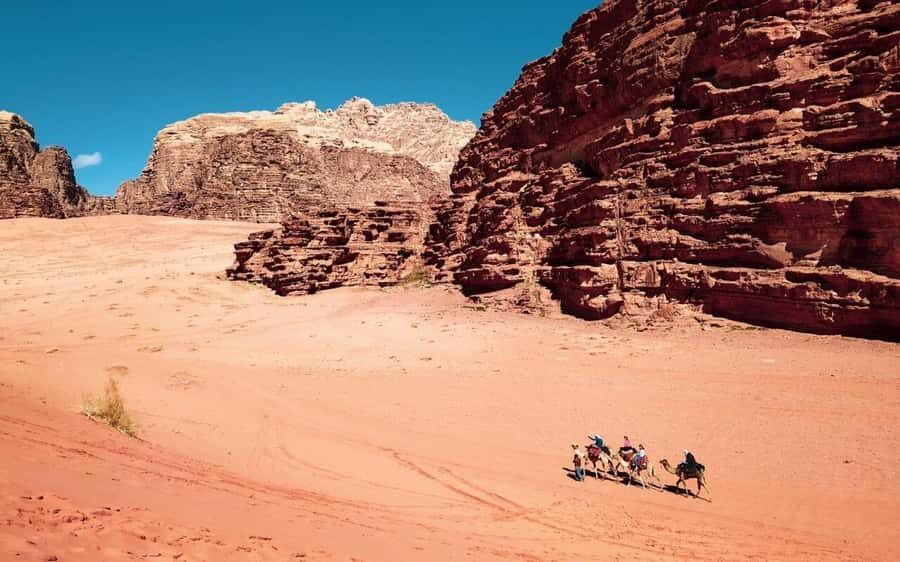
Wadi Rum hits you fast—then keeps hitting. This full-day Jeep tour shows you the big names and the weird rock shapes of the UNESCO-listed Wadi Rum Protected Area, with stops built around springs, canyons, petroglyphs, and iconic viewpoints. You start at 10:00 am and you’re back in the evening, with an optional upgrade for a traditional Bedouin cave or camp night under the stars.
I especially like that you get professional driving in a 4WD while you also get enough walking and scrambling to feel like you’re actually in the desert, not just watching it from the window. I also like the meals are part of the plan: lunch is included, and if you choose the overnight, you get dinner and breakfast, plus tea at camp.
One thing to consider: the day includes climbs and uneven ground. Some stops are easy (like Little Rock Bridge), but Um Frouth’s arch involves a more serious hike/scramble—so go in with realistic expectations for your feet and balance.
In This Review
- Key highlights to know before you go
- Why Wadi Rum feels different on a 4×4 day plan
- The 10:00 am start and how the day usually flows
- Lawrence’s Spring: views first, history second (but it’s there)
- Red sand dunes and the barefoot option at Al Ramal
- Khazali Canyon and the petroglyph stops that make you look twice
- Little Rock Bridge: the easy climb with real payoff
- Lunch in the desert: Gallaya, hummus, tuna, and bread
- Mushroom Rock: a quick stop that’s perfect for wandering eyes
- Um Frouth Rock Arch: the big one for sunset lovers
- White Desert near the Saudi border: the color switch at sunset time
- Abu Khasaba Canyon: fig trees, huge rocks, and a real walk
- The lower Um Frouth scramble: short, fun, and view-heavy
- Bedouin cave or camp overnight: dinner, breakfast, and stars that feel close
- Guides make the day: Bakar, Youssef, Ali, and Hadis
- Price and value: why $50 can feel fair here
- What to bring (so the desert feels fun, not stressful)
- Should you book this Jeep tour with a cave/camp night?
- FAQ
- FAQ
- How long is the tour?
- What time does the tour start?
- Where do we meet?
- Do I get lunch, and what’s included?
- What do I get if I upgrade to the overnight option?
- Is bottled water provided?
- Is sand-boarding included?
- Is there WiFi on board?
- Are there options for people who don’t want hard climbs?
- What if weather is bad?
Key highlights to know before you go
- A tight group size (max 15) keeps the ride fun and the stops manageable.
- Lawrence-style desert stops: Lawrence’s Spring and Lawrence’s House are built into the route.
- Petroglyphs and inscriptions at Khazali Canyon are the standout “slow down and look” moments.
- Two different bridge experiences: Little Rock Bridge is easier; Um Frouth Rock Arch is the big scenic payoff.
- Sand-boarding is free, included with the tour.
- Optional overnight in a Bedouin cave or camp adds dinner, breakfast, and serious stargazing time.
Why Wadi Rum feels different on a 4×4 day plan
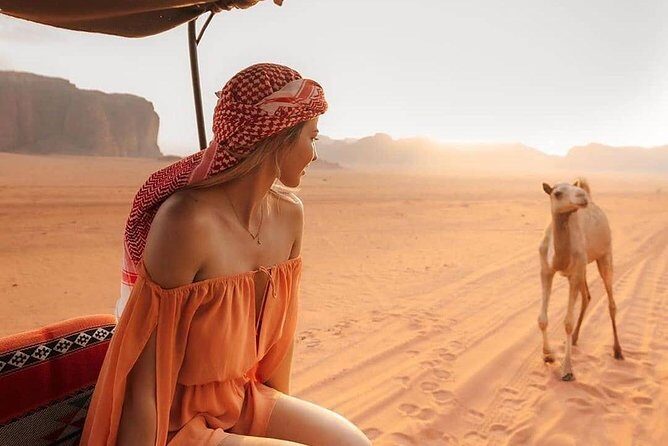
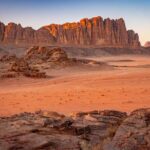
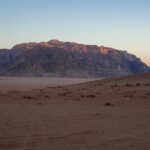
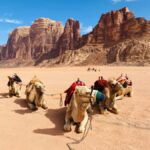
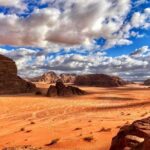
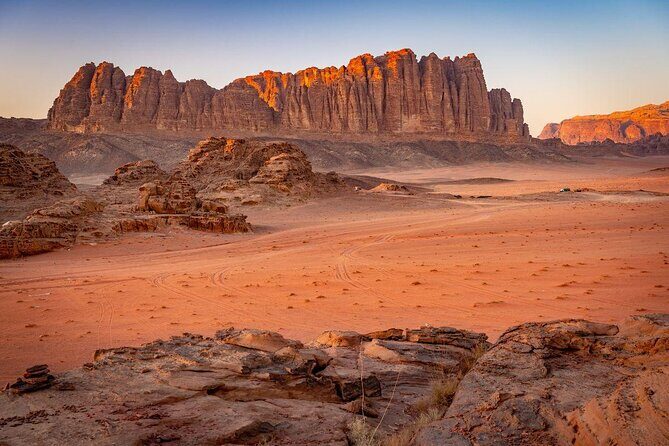
Wadi Rum is one of those places where the colors look unreal until you’re standing in them. The value of this tour is that it strings together major sights in a logical loop, so you spend more time seeing and less time figuring out logistics on your own.
I like that the day isn’t only photo stops. You get moments where your guide has a reason to stop—like petroglyph panels in Khazali Canyon—and then you get viewpoints that are worth the effort. If you’re into desert scenery, this is a “best-of” route that still feels specific, not generic.
You can also read our reviews of more evening experiences in Aqaba

The 10:00 am start and how the day usually flows
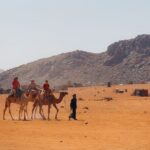
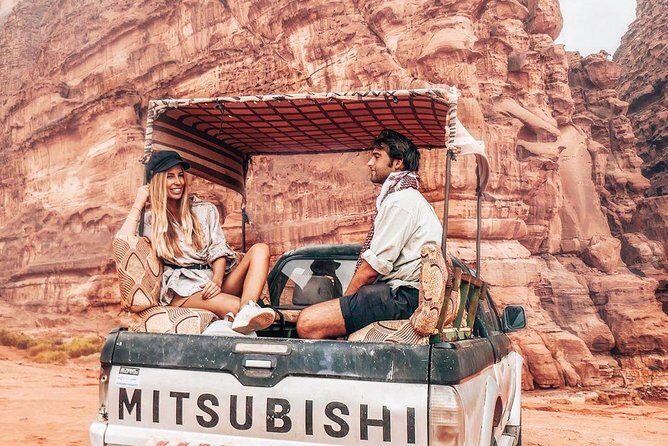
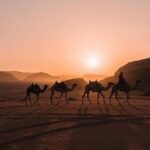
You meet at Wadi Rum Rest House in Wadi Rum Village, and the tour begins at 10:00 am. Most of the day is in 4WD—this matters because Wadi Rum sites are spread out and the terrain isn’t friendly to regular cars.
You’ll have a steady rhythm: drive, stop, short walk or scramble, tea/coffee break or photo time, then drive again. The full day typically runs about 8 hours up to around evening, and the overnight option adds camp time and breakfast the next morning.
Small groups help here. With a maximum of 15 people, you’re less likely to feel rushed at viewpoints, and it’s easier for the guide to keep track of who’s ready for which climb.
Lawrence’s Spring: views first, history second (but it’s there)

The morning begins at Lawrence’s Spring, a short scramble up to a spring area near a fig tree. The water pool itself is not the main story—it’s more of a stagnant puddle—but the desert views across the surroundings are the payoff.
This stop is named for T. E. Lawrence, and the tour connection is the way his writing described camels being watered and voices echoing through the area. In plain terms: you’re seeing a place linked to a famous story, in a setting that matches the mood of that story.
Practical tip: wear shoes you’re comfortable scrambling in. This isn’t a long hike, but it can be uneven.
Red sand dunes and the barefoot option at Al Ramal
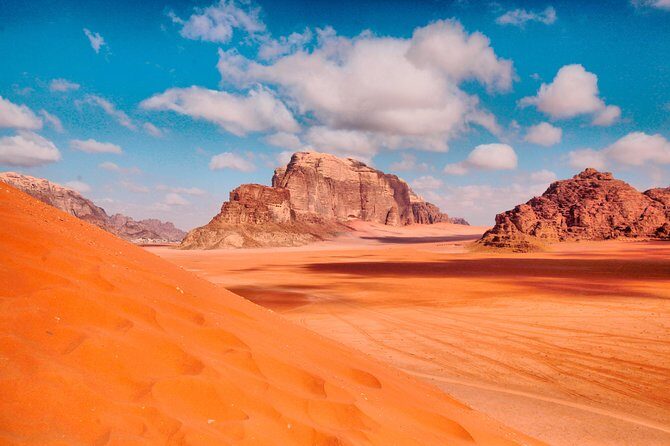
Next comes Al Ramal Red Sand Dune, also known as Al Hasany. It’s famous because it rises along a cliff side, almost like it’s part of the rock formation instead of sitting on the desert floor.
The sand’s red color comes from iron oxide, and the texture is soft enough that walking barefoot is a real option if you want that tactile desert moment. Even if you don’t go barefoot, this stop is great for photos and for getting that sense of scale—Wadi Rum is big.
Khazali Canyon and the petroglyph stops that make you look twice
If you only care about viewpoints, you might rush past Khazali. Don’t. Khazali Canyon holds petroglyphs in the cave walls showing humans and antelopes that are linked to Thamudic times. The narrow canyon format matters because the carvings are easier to notice when you’re close.
Then there’s Jebel Khazali, where inner walls carry Thamudic, Nabataean, and Islamic inscriptions, plus petroglyphs—especially the soles of feet carvings that may have had religious significance. This is also a spot that got documented by a French epigraphist, with observations published in the early 1930s.
This is one of the few parts of the day where the desert becomes a study room. If you enjoy that mix—scenery plus something written into stone—you’ll probably love this segment the most.
A few more Aqaba tours and experiences worth a look
Little Rock Bridge: the easy climb with real payoff
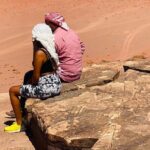
After the more “read and notice” moment of Khazali, you get Little Rock Bridge. It’s described as an easy climb, not dangerous, and a good fit if you’re traveling with kids or anyone who doesn’t love heights.
You’ll get wide desert views from the bridge, and the route is short enough that most people can manage it. It’s a smart stop because it gives you that iconic bridge feeling without forcing a major scramble.
If you’re deciding how hard to push later in the day, this is a good gauge. Doable now? You’ll likely be comfortable with the bigger arch later.
Lunch in the desert: Gallaya, hummus, tuna, and bread
Lunch is served at a desert stop with a menu that includes Gallaya, hummus, tuna, salad, Jordanian bread, and juice. The value here is not just food—it’s timing. Eating in the desert breaks up the day and gives you energy for the rest of the climbs and photo stops.
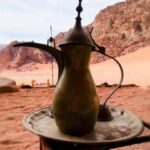
Plan to eat slowly. Even when the day feels like it’s moving, lunch is built in as a real pause. And you’ll usually have tea on hand throughout the day, which helps a lot when temperatures climb.
Mushroom Rock: a quick stop that’s perfect for wandering eyes
Mushroom Rock is one of those formations where nature makes the joke obvious. Rain and wind have carved sandstone into a mushroom-like shape over time.
This is a shorter stop, but it’s useful because it resets your brain between bigger sights. It’s also a good moment to take photos from multiple angles—your best angle changes as you move.
Um Frouth Rock Arch: the big one for sunset lovers
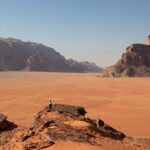
Now we get to the signature challenge: Um Frouth Rock Arch (described as the largest of three arches). The Burdah Rock Bridge is precariously perched about 80 m above the surrounding rock, and reaching the summit involves a more serious, precipitous hike.
This is the stop that can make or break the day for some people—not because it’s unsafe, but because it demands comfort with heights and footing. The reward is a classic one: the arch’s location makes it a terrific sunset spot.
If you’re even a little unsure about climbing, do Little Rock Bridge earlier and ask your guide for the best option based on your comfort. Don’t let pride write checks your legs can’t cash.
White Desert near the Saudi border: the color switch at sunset time
After the arches, the day shifts to the White Desert, located near the Saudi border, about 40 km south of Wadi Rum village. The sand is white rather than red, and the scenery is similar in shape and terrain but totally different in tone.
This stop also leans heavily toward sunset viewing. If you’ve had enough red dunes by then, the White Desert is your change of palette—one last “wait, this is real?” moment.
Abu Khasaba Canyon: fig trees, huge rocks, and a real walk
Abu Khasaba Canyon is one of the canyon walks you should treat as a proper leg-stretcher. It takes about an hour, with wild fig trees and desert bushes among huge rocks and red/yellow sand.
This stop is a reminder that Wadi Rum isn’t only “look from above.” You’ll be moving through tight terrain, which is great if you like walking that feels like you’ve entered a different kind of space.
Bring water seriously. Yes, bottled water is included, but your own pacing matters once you start walking inside a canyon.
The lower Um Frouth scramble: short, fun, and view-heavy
Near the end, you’ll hit a lower rock bridge that’s featured on many tours and is easier to scramble onto. The climbing takes about 5–15 minutes depending on experience, and the views are amazing.
This is a nice final stop because it gives you one more viewpoint option without demanding a huge commitment. If you’ve already done the main arch hike, this one can feel like a victory lap.
Bedouin cave or camp overnight: dinner, breakfast, and stars that feel close
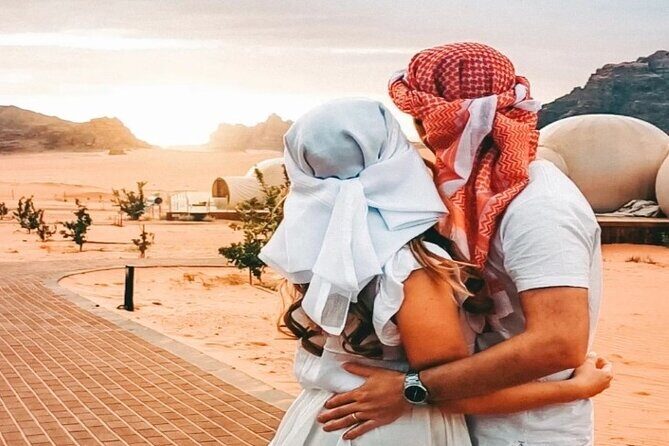
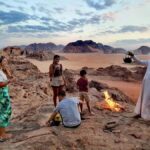
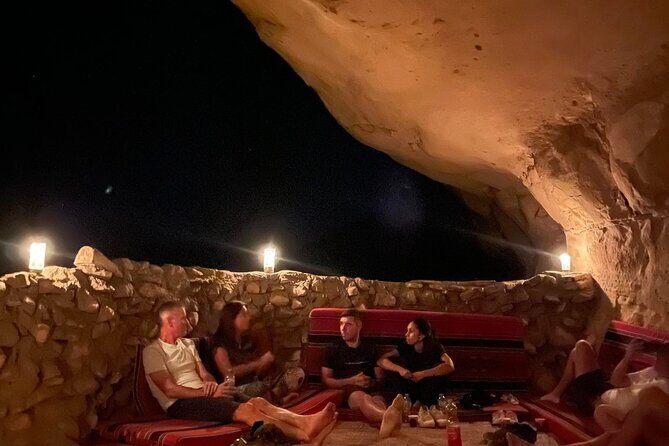
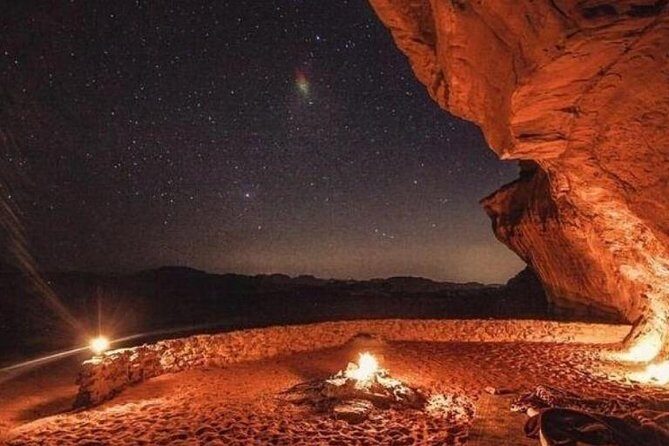
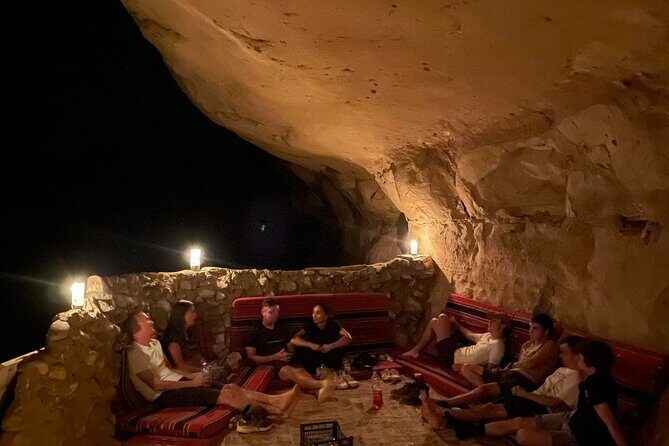
Choosing the overnight upgrade is the biggest difference-maker in this experience. You stay in a traditional Bedouin cave or tent camp, and you get dinner plus breakfast. You also get Bedouin tea during the day and at camp.
The star part is the obvious reason to book, but the real value is the pace shift. A day tour ends, but an overnight tour lets you experience the desert when the crowds fade and the air cools down.
Practical notes: the overnight details in the tour summary are “simple” by design. If you want glossy hotel comfort, you’ll be happier passing on the cave/camp upgrade. If you want atmosphere, warmth, and a night that feels truly in-place, it’s hard to beat.
Guides make the day: Bakar, Youssef, Ali, and Hadis
Most people remember the guide because they’re the ones connecting the rocks to stories. In the feedback I saw, names like Bakar/Bakhar, Youssef, Ali, and Hadis came up again and again—often praised for friendliness and humor, and for making the day feel like more than a checklist.
One recurring theme: guides adjust the routine when needed. If you’ve already seen a stop, or if your group’s energy doesn’t match the plan, you might find the route tweaks to fit. That flexibility matters on a day where you’re walking and scrambling for hours.
Also, some guides communicate in a way that’s easy to follow. If English is important for you, ask when you book, and look for operators that list clear language support in their materials.
Price and value: why $50 can feel fair here
At $50 per person, this tour sits in the budget-friendly zone for Wadi Rum. The real value is what you get inside that price: bottled water, lunch, coffee/tea, and even free sand-boarding, plus the option to upgrade to dinner and breakfast for the overnight stay.
The parts you’re paying for aren’t just “driving around.” You’re paying for someone to navigate the desert route, manage timing, and keep your stops meaningful—especially the petroglyph and inscription areas. For a UNESCO site where everything is far apart, that added structure is worth something.
If you’re choosing between day-only and overnight: the overnight upgrade is usually worth it because it turns the trip from scenic to atmospheric. Stars are great, but so is the fact that you’re not rushing out before the desert calms down.
What to bring (so the desert feels fun, not stressful)
You’ll be outdoors for a long day with sand and rock. Pack like you want to stay comfortable for the full loop, not just for the big photo stops.
- Good grip shoes for scrambling and canyon walking
- Sun protection (hat + sunscreen)
- A layer for evening cooling
- Sunglasses and a small towel
- Your own extra water if you tend to drink a lot
- Cash for drinks if you decide you want extras (tea/coffee are provided, but cold drinks are mentioned as an option)
Also, don’t count on WiFi. The tour doesn’t offer it on board, so plan your day off-screen.
Should you book this Jeep tour with a cave/camp night?
Book it if you want a full Wadi Rum day with major highlights and you like guided structure. The route is built around the famous Wadi Rum anchors—Lawrence’s Spring, Lawrence’s House, canyons and petroglyphs, and the big arch views—so you don’t leave feeling like you missed the point.
Book the overnight option if you want the emotional payoff: dinner, breakfast, tea, and a night where the stars are part of the story. This is the choice that makes Wadi Rum feel like more than a day trip.
Skip or think twice if you strongly dislike heights or you don’t want scrambling. Little Rock Bridge is designed to be easier, but Um Frouth’s main arch involves a more intense hike.
FAQ
FAQ
How long is the tour?
It runs from about 8 hours up to 1 day, depending on the exact flow and conditions.
What time does the tour start?
The start time is 10:00 am.
Where do we meet?
You meet at Wadi Rum Rest House in Wadi Rum Village, Jordan.
Do I get lunch, and what’s included?
Lunch is included on the day tour option. The lunch menu includes Gallaya, hummus, tuna, salad, Jordanian bread, and juice.
What do I get if I upgrade to the overnight option?
The overnight upgrade includes dinner and breakfast, plus an overnight stay in a traditional Bedouin cave or tent camp.
Is bottled water provided?
Yes. Bottled water is included.
Is sand-boarding included?
Yes, sand-boarding is offered for free.
Is there WiFi on board?
No WiFi is available on board.
Are there options for people who don’t want hard climbs?
Yes. Little Rock Bridge is described as easy and not dangerous. Um Frouth’s arch involves a more serious hike, so it’s best to choose based on your comfort with heights.
What if weather is bad?
This experience requires good weather. If it’s canceled due to poor weather, you’ll be offered a different date or a full refund.