REVIEW · AQABA
4 Hour Jeep Tour (morning or sunset) – Wadi Rum Desert Highlights
Book on Viator →Operated by Wadi Rum Desert Dreams · Bookable on Viator
Wadi Rum by Jeep hits different. This half-day loop mixes off-road desert driving with real Bedouin culture stops, from Lawrence’s Spring to canyon inscriptions and big photo bridges. You cover the big highlights without losing an entire day to logistics.
I especially like the small group limit of 15 and the fact that tea (plus bottled water) is built into the experience. One thing to keep in mind: the quality of the guiding you get can vary, including how strong English explanations are, depending on the guide.
In This Review
- Key highlights I’d plan around
- Jeep tour value in Wadi Rum: why 4.5 hours feels like the sweet spot
- Where you start matters: meeting at the Wadi Rum Rest House
- Wadi Rum Village: a quick reset before the desert moves in
- Lawrence’s Spring: the oasis stop you don’t want to rush
- Khazali Canyon (Jebel Khazali): inscriptions and caravan traces
- The big-photo trio: red sand dune, Little Bridge, and Umm Fruth
- Red sand dune climb (the famous one)
- Little Bridge: shorter climb, big satisfaction
- Umm Fruth Rock Bridge: the 15-meter photo moment
- Canyon walk or sunset viewpoint: pick your desert mood
- Morning: Abu Khashaba Canyon walk
- Sunset: a dedicated viewpoint
- Bedouin tea and guides: what makes this tour feel real
- What to bring so the climbs don’t ruin your day
- Pace and group size: why 15 matters on a Jeep route
- Price and value check: is this a good use of money?
- Who should book this, and who should think twice
- Should you book the 4-hour Wadi Rum Jeep highlights tour?
- FAQ
- How long is the 4 Hour Jeep Tour in Wadi Rum?
- What does the tour cost, and does it include anything?
- How many people are on the tour?
- Where do I meet, and where do I end?
- Does the tour run in the morning and at sunset?
- What are the stops I should expect?
- Is the visitors center transfer included?
- What happens if weather is poor?
Key highlights I’d plan around
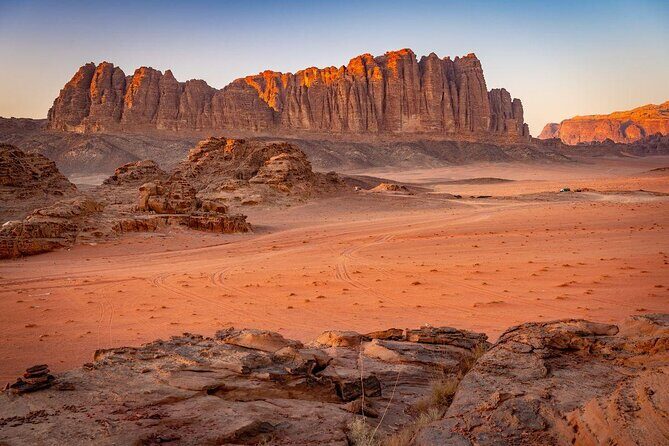
- 15-person max keeps the route feeling personal, not chaotic
- Lawrence’s Spring offers an oasis moment and Thamudic inscriptions from a viewpoint climb
- Khazali Canyon is where you really see carved/preserved stories in the rock, not just views
- Red sand dune + bridges means photos, short climbs, and a true desert workout for your calves
- Two different versions: Abu Khashaba canyon walk in the morning, or a sunset viewpoint if you choose evening
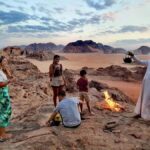
- Tea stops give you a break and a chance to slow down in Bedouin tents
Jeep tour value in Wadi Rum: why 4.5 hours feels like the sweet spot
Wadi Rum is big. If you try to do it with too little time, you feel like you’re only scratching the surface. If you do it with too much time, you risk spending half the day waiting around for the next “perfect moment.” This tour sits in a practical middle.
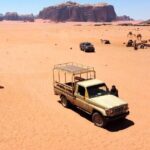
At about 4 hours 30 minutes, you get a compact route that still hits the signature places people come for. And the Jeep access matters here—getting off the main track is part of why the scenery feels so dramatic.
The price is $46.41 per person. For what you get—transport through the protected area highlights, guided stops, and tea/water—it can feel like good value, especially because you’re not paying extra for entry tickets at the stops listed. Still, the final “value feeling” depends on how much you care about learning details versus just photographing dunes.
You can also read our reviews of more evening experiences in Aqaba


Where you start matters: meeting at the Wadi Rum Rest House
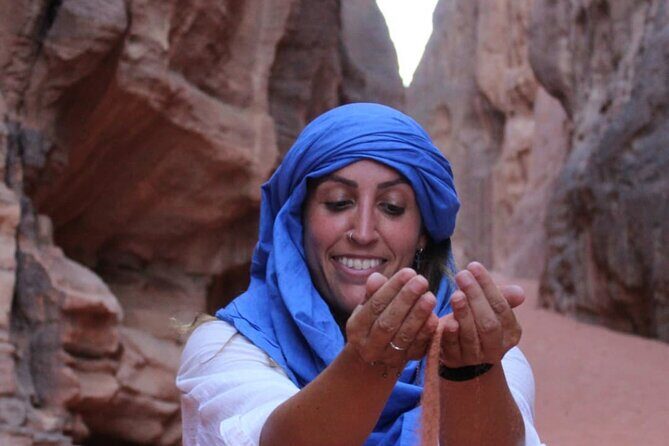
You meet at the Wadi Rum Rest House in Wadi Rum Village, then you’re returned there at the end. That’s helpful because you’re not constantly getting shuffled between pickup points.
The morning option runs with a start around 10:00. If you book the sunset version, the timing shifts, but the structure stays similar—same style of Jeep loop with a different final experience (sunset viewpoint instead of canyon walk).
One practical note: the tour includes transfer to and from Wadi Rum Village. If you’re staying closer to a visitors center area, you may need an extra transfer option there (it’s listed separately as 10 JOD).
Wadi Rum Village: a quick reset before the desert moves in
Your first stop is the village area at the Rest House zone, where you can spot a supermarket and souvenir shop. It’s a small but useful breather point before the driving starts—good for grabbing snacks, water, or a last-minute souvenir if that’s your thing.
Once the group is together and greeted, the Jeep tour begins. Expect the day to move quickly after this—this is a highlights route, not a slow, wandering day.
Lawrence’s Spring: the oasis stop you don’t want to rush
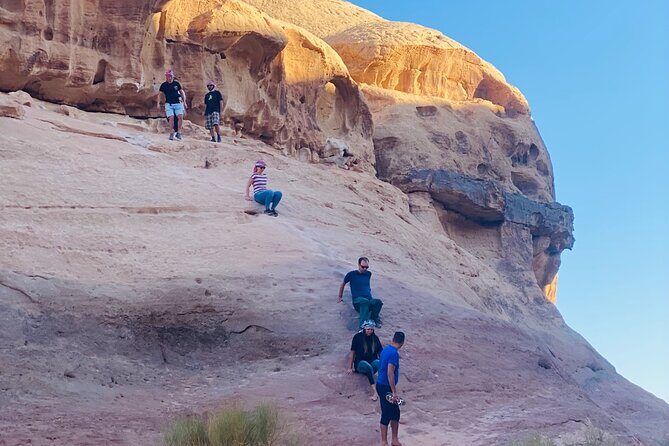
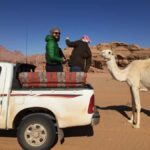
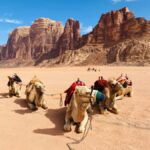
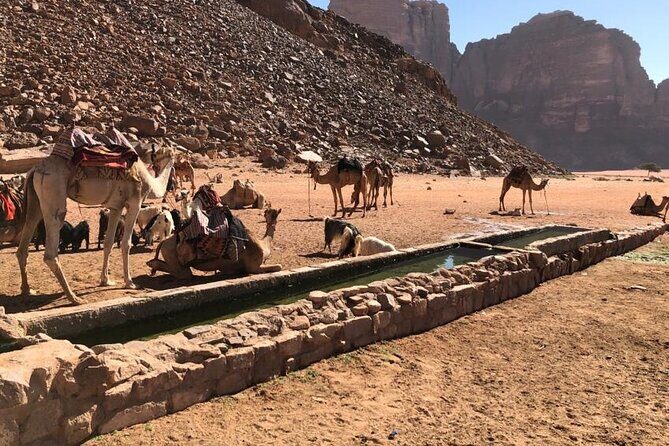
Lawrence’s Spring is one of those places where the desert suddenly makes sense. You’ll see cool water flowing through the area and greenery that looks almost unreal against red rock and sand. It’s also a natural gathering spot for camels, so you may watch them nearby as you take a breather.
Here’s what I think is the smart move: don’t only hang out at the waterline. The tour also offers the option to climb up for views and more inscriptions, including Thamudic-origin marks. That little effort pays off with wider sightlines over the desert valley.
If your group is chatty and curious, this is a great stop for questions. Guides tend to explain how these springs supported herds and nomadic routes—so the oasis becomes more than a photo background.
Khazali Canyon (Jebel Khazali): inscriptions and caravan traces
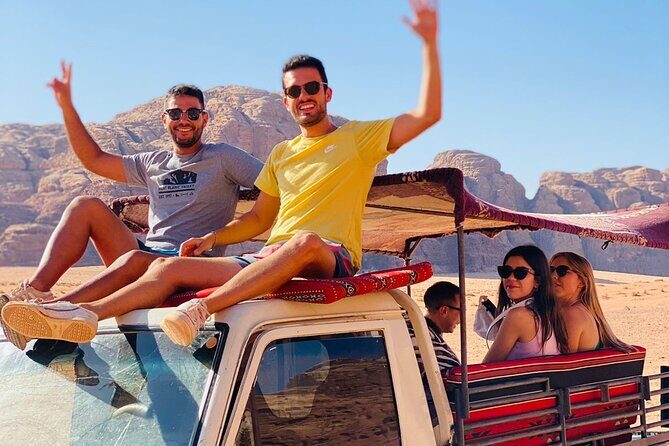
Khazali Canyon is where Wadi Rum stops feeling like a set and starts feeling like a living archive. From the outside it looks like a normal mountain, but once you enter the canyon between split rock faces, you’re in a narrow corridor of time.
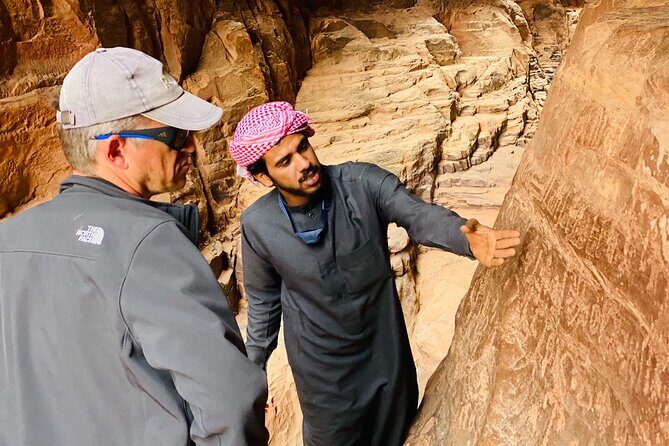
You can see traces connected to merchants traveling between Egypt and Damascus, and pilgrims passing through toward Mecca. And in the rock itself you’ll find different layers of writing and marks—Thamudic, Nabatean, and Islamic inscriptions, plus petroglyphs showing humans, animals, and even soles of feet.
This is also one of the stops where guiding quality matters. If your guide explains the meaning behind what you’re looking at, the canyon feels richer. If your guide is more focused on logistics and less on explanation, you’ll still enjoy it, but the “why it matters” may not land as strongly.
A few more Aqaba tours and experiences worth a look
The big-photo trio: red sand dune, Little Bridge, and Umm Fruth
This tour packs three iconic “climb for the view” stops into a tight rhythm. That’s great for seeing a lot—but it’s also why your footwear and energy level matter.
Red sand dune climb (the famous one)
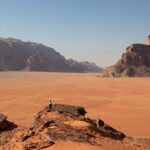
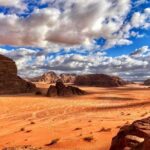
The red sand dune is the star climb. The color comes from iron oxide, and the top gives you classic panoramic views over the valley. The caution is that the sand is soft and hard to walk on, so what looks like an easy slope can turn into a calf burner.
For getting back down, the tour notes running or sandboarding. Even if you don’t do sandboarding, you’ll see locals or guides using faster routes than just walking.
Little Bridge: shorter climb, big satisfaction
The Little Bridge is formed in the Khor El Ajram area. It’s only a few meters high and generally described as an easy climb, so it’s a good pick if you want bridge photos without a major vertical effort.
This stop also includes a nice rest moment after the climb: sweet tea in a Bedouin tent. That’s where you can pause, cool down, and browse souvenirs without feeling rushed.
Umm Fruth Rock Bridge: the 15-meter photo moment
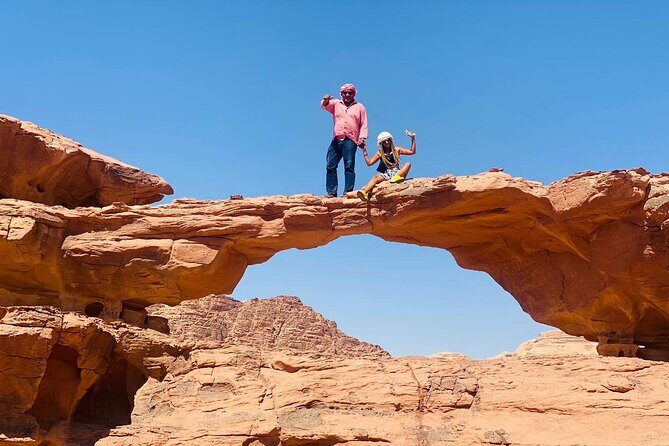
Umm Fruth Rock Bridge is the one most people recognize as the “wow, how did you get up there” shot. It’s about 15 meters high and is described as the most famous bridge in Wadi Rum. It’s not framed as a historical site, but as a photo and viewpoint stop.
The tour style here is smart: your guide stays on the ground to take your picture while you climb. Locals run up and down with ease, but tourists may find the climb a bit challenging—small holes are made to help make the route easier.
If you’re the group type that wants photos without controlling the camera every second, this setup is a plus.
Canyon walk or sunset viewpoint: pick your desert mood
Stop 7 splits the tour into two options.
Morning: Abu Khashaba Canyon walk
If you take the morning version, you get a canyon walk in Abu Khashaba Canyon. It’s a deep, narrow valley with tall walls, and you’ll notice greenery here—trees and plants that create a contrast with the red sand. You also hear birds, and the tour notes bottles hung to collect rainwater so birds can drink.
The walk takes about 30 to 45 minutes, and you’ll be picked up on the other side. That “walk with a finish point” format usually feels easier than doing a backtrack hike in sand.
Sunset: a dedicated viewpoint
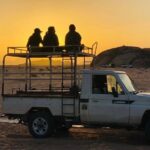
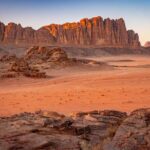
If you take the sunset tour, you skip the canyon walk and go to a secluded sunset viewpoint. Wadi Rum is famous for its sunsets, and this option is designed to maximize your time looking out at the valley when the light turns dramatic.
Even if you’re not a serious photographer, sunset is one of the easiest ways to appreciate Wadi Rum without needing extra explanation.
Bedouin tea and guides: what makes this tour feel real
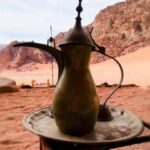
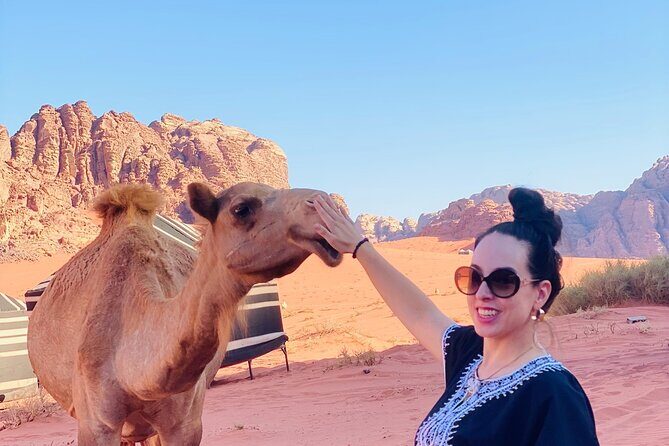
The tour includes bottled water and tea, and that’s not just a perk—it’s part of the pace. Wadi Rum can feel relentless if you’re only moving from spot to spot, so a tea pause helps you reset your senses.
Guides also shape how “cultural” the tour feels in practice. I saw several strong guide references in the experience write-ups. Tamir stood out for helpful answers and a solid run of 6–7 stops. Frhag was praised for not rushing and for explaining history and trivia at each location. Bakhir was noted for careful driving and assistance, including helping a parent get off the Jeep safely.
Other names pop up too—Yasser and Yasr came up as friendly and hospitable. In real terms: if you end up with one of these more talkative guides, you’ll likely leave with more context than just photos.
One caution from the same set of experiences: English ability isn’t guaranteed to be consistent. Some guides communicate clearly; others may explain less. If you care about the narrative side, I’d still book—but I’d also come in ready to enjoy the visuals and let explanations be a bonus.
What to bring so the climbs don’t ruin your day
Even without listing a bunch of gear, there are a few basics that make this tour more comfortable.
- Wear shoes with grip. Sand and rock here can be slick or uneven.
- Bring sun protection. You’ll be outside for multiple stops, including a dune climb.
- Plan for a snack and decent energy. One write-up specifically advised eating a healthy meal in advance so you can keep up with the exploration.
If you’re sensitive to steps or climbing, Little Bridge is often the easiest of the bridge stops. Umm Fruth is the toughest photo climb in this route, so pace yourself and use the guide’s photo plan to avoid rushing.
Pace and group size: why 15 matters on a Jeep route
With a maximum of 15 participants, you’re usually not fighting the line at every photo stop. Smaller groups also mean the guide can spend a little more time at each location instead of constantly herding people to stay on schedule.
Still, this is a highlights circuit. Expect a steady flow: brief orientation, a photo moment or short climb, then onward. If you want long lounging times at each site, you might feel it’s a bit fast.
The good news is that the itinerary includes “time windows” at key places—Lawrence’s Spring, Khazali Canyon, dunes, bridges, and the walk/viewpoint—so it’s not just stop-and-go for everything.
Price and value check: is this a good use of money?
Let’s be practical. For $46.41, you’re paying for:
- off-road Jeep transportation through Wadi Rum’s major highlight areas
- guided stops across multiple signature locations
- included tea and bottled water
- a tour capped at 15 people for a more personal feel
What you’re not paying for here includes entry tickets listed as free at each stop in the details. You also might pay for an extra transfer if you’re not already in the Wadi Rum Village area.
The best value is when you want a “great hits” day without planning a private route. If you’re traveling with friends or family and want a shared experience that still feels organized, this tour fits.
If, however, you only want one or two sites and hate any walking/climbing at all, you might prefer a more focused option. But for most first-timers, this is a strong way to get oriented in Wadi Rum.
Who should book this, and who should think twice
This tour is a great fit if you:
- want a half-day overview of Wadi Rum’s major highlights
- like the idea of tea with Bedouin-style hospitality
- enjoy short climbs and photos, including the bridge shots
- want a small-group experience rather than a big bus of people
It might be less ideal if:
- you’re extremely sensitive to sand walking or climbs (Umm Fruth is the more demanding climb)
- you expect highly detailed English narration at every stop. Some guides explain deeply; others focus more on driving and timing.
If you choose the sunset option, you’re also buying into the idea that light and timing matter. That’s usually a good bet in Wadi Rum.
Should you book the 4-hour Wadi Rum Jeep highlights tour?
I’d book it if you want a smart introduction to Wadi Rum with real desert driving and a route that hits Lawrence’s Spring, Khazali Canyon, dunes, and bridge viewpoints. The included tea/water and the small group cap are real quality signals.
I’d be a bit more cautious if your top priority is constant in-depth explanations in English. If that’s you, I’d still go—just know the canyon inscriptions and bridges will carry most of the value even when the spoken details are lighter.
Choose the morning version if you want movement and bird-filled canyon contrast. Choose sunset if you want the payoff moment with panoramic valley views.
FAQ
How long is the 4 Hour Jeep Tour in Wadi Rum?
It’s listed as about 4 hours 30 minutes.
What does the tour cost, and does it include anything?
The price is $46.41 per person, and it includes bottled water and tea, plus transfer to and from Wadi Rum Village.
How many people are on the tour?
The group is capped at a maximum of 15 travelers.
Where do I meet, and where do I end?
You meet at the Wadi Rum Rest House in Wadi Rum Village. The tour ends back at the same meeting point.
Does the tour run in the morning and at sunset?
Yes. You can book either a morning option or a sunset option, and the tour handles the final stop differently.
What are the stops I should expect?
The highlights include Wadi Rum Village, Lawrence’s Spring, Khazali Canyon, a red sand dune, Little Bridge, Umm Fruth Rock Bridge, and then either a canyon walk in Abu Khashaba or a sunset viewpoint.
Is the visitors center transfer included?
No. A visitors center transfer is not included and is listed as an extra 10 JOD.
What happens if weather is poor?
This experience requires good weather. If it’s canceled due to poor weather, you’ll be offered a different date or a full refund.