REVIEW · AQABA
Full Day Jeep Tour with Overnight in beduin Camp Stay! (All Meals Included)
Book on Viator →Operated by Wadi Rum Zain Tours · Bookable on Viator
Wadi Rum feels like a giant set. This full-day jeep tour in Aqaba takes you through famous Wadi Rum highlights, then slows down for a real Bedouin camp overnight with meals handled. I like the mix of big views and small details, and I like that a local guide (often Ahmad) keeps the stops organized and human. One thing to plan for: you’ll do some short climbs and walk on loose sand and rock, so comfortable shoes and a basic “go with it” attitude matter.
The day is built around classic Wadi Rum photo moments, but it’s also about why people stayed here in the first place. I like that you stop for places like Lawrence’s Spring and the Thamudic and Nabatean inscriptions, not just dune posing. The group stays small (max 19), so it’s not a stampede experience, even when the desert is busy.
Time-wise, it starts at 10:00 am and runs up to about a day, ending back at the meeting point in Wadi Rum Village. If you hate waiting around for stops that are mostly short photo pauses, consider that most viewpoints are about 30 minutes each.
In This Review
- Key things that make this Wadi Rum tour worth your time
- From Aqaba to Wadi Rum Village: the day starts right
- Stop by stop: what you’ll actually do in Wadi Rum
- Wadi Rum Village: meeting point, then straight into the dunes
- Lawrence’s Spring: camels, cool water, and Thamudic inscriptions
- Jebel Khazali and Khazali Canyon: inscriptions and old travel routes
- Al Ramal Red Sand Dune: climb it, then respect the sand
- Wadi Rum Protected Area: the day’s “small wonders”
- Lawrence’s House: the story-built stop on top of a remote site
- Um Frouth Rock Arch and the phone-photo moment
- White Desert, Mushroom Rock, and Abu Khashaba Canyon: variety when the light changes
- Jabal Burdah and the Burdah Rock Bridge hike: sunset is the goal
- Sunset Viewpoint: tea, fire, and the desert going quiet
- Overnight Bedouin camp: the part that makes it feel real
- Price and value: is $95 a fair deal?
- What could bother you (and how to handle it)
- Who this Wadi Rum jeep tour + camp overnight is best for
- Should you book this Wadi Rum jeep + Bedouin camp overnight?
- FAQ
- What’s the price for the full day jeep tour with overnight?
- How long does the tour last?
- What time does the tour start?
- Where do I meet the guide?
- What’s included in the price?
- How big is the group?
- Do I get a mobile ticket?
- Is good weather required?
- Can I bring a service animal?
- What is the cancellation window?
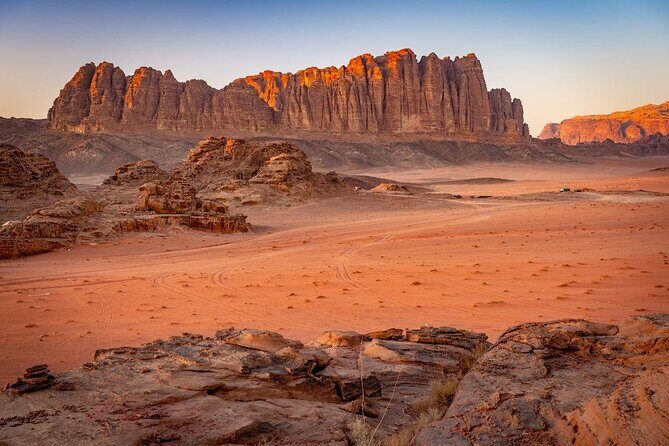
Key things that make this Wadi Rum tour worth your time
- A real Bedouin camp overnight with all meals included
- Local guiding with names like Ahmad showing up in real guest experiences
- Iconic Wadi Rum stops such as Lawrence’s Spring, Red Sand Dune, and the White Desert
- Food cooked over open fire during the day, plus tea moments at sunset
- A maximum group size of 19 so you can actually hear the guide
- Multiple rock arches and canyon walks for variety beyond sand
From Aqaba to Wadi Rum Village: the day starts right
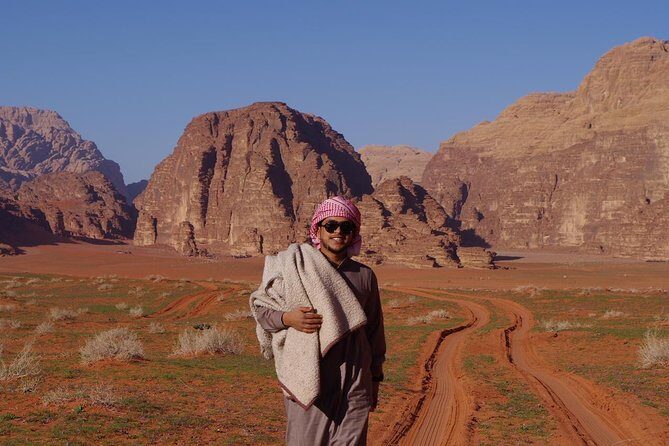
Even though this is sold from Aqaba, your meeting point is in Wadi Rum Village at the Rest House area. The start time is 10:00 am, which is a good middle ground: late enough to avoid an early scramble, early enough to still catch daylight for the big climbs.
What I like about this setup is that you’re not stuck transferring all over the place. You meet, you get paired with your guide and your jeep group, and then the desert handling begins. A few guides are mentioned in guest experiences—Ahmad is the one that comes up most often, with other guide names like Abdullah, Uthman, and Suleiman appearing too—so you’re not going in blind.
Also note the “group size” reality: this is capped at 19 travelers. That’s big enough to meet people, but small enough that the guide can still manage photos and the easy chaos of a desert schedule.
Practical heads-up: plan your water and snacks timing around your stops. The tour includes meals, but the pauses are usually timed for sights, not for long wandering. If you want a slower pace, you’ll need to pace yourself physically during the climbs, and accept that some places are “see it, shoot it, move on.”
A few more Aqaba tours and experiences worth a look

Stop by stop: what you’ll actually do in Wadi Rum
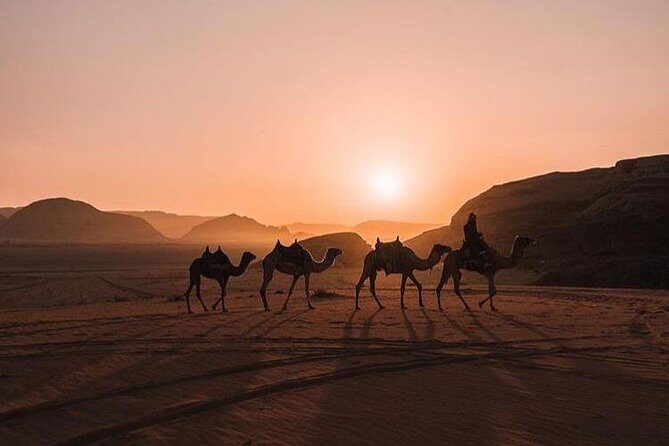
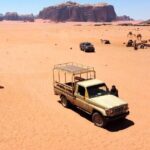
This is where the day earns its keep. Wadi Rum isn’t just dunes; it’s springs, carvings, canyons, rock bridges, and different shades of sand that change with the light. You’ll hit many of the top protected-area highlights, and the itinerary keeps bouncing between them so you don’t get stuck in one kind of scenery.
Wadi Rum Village: meeting point, then straight into the dunes
You start around 10:00 am at the Rest House meeting point in Wadi Rum Village. From there, your jeep heads out into the desert. This first segment is about getting you oriented—where the major formations sit, what kind of terrain you’ll be walking on, and how your guide plans the day.
You’ll also get repeated opportunities for photos. In Wadi Rum, the “best” angle often depends on shade and wind, so those small stops really matter. If you’ve got a camera, charge it fully and bring extra memory or space. The desert days can burn through bursts fast.
Lawrence’s Spring: camels, cool water, and Thamudic inscriptions
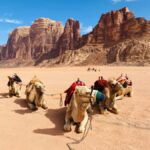
At Lawrence’s Spring, you’ll find a natural water source where camels and herds used to gather. The cool water runs down the mountains into troughs, and the scene feels like an oasis in the middle of sand—small trees, moss, and a pocket of green.
This stop has two “modes.” One is relaxed: hang out by the water like people with herds did long ago. The other is more physical: climb up for sweeping views of the desert around you. If you do the climb, keep your expectations realistic—this is a short hike in an area where loose ground can slow you down.
The historical layer is a big part of why this stop is memorable. You’ll also see Thamudic-origin inscriptions in the area. Those markings add context that goes beyond the postcard. You’ll come away understanding that Wadi Rum was a travel corridor long before it became a tourism circuit.
Jebel Khazali and Khazali Canyon: inscriptions and old travel routes
Khazali Canyon is one of the stops I’d call “worth leaving the jeep for.” You move through a canyon between split mountains and get a guided look at Thamudic, Nabatean, and Islamic inscriptions, plus petroglyph-style carvings of humans, animals, and even soles of feet.
Why I think this works: inscriptions aren’t always easy to “get” on your own. With a guide, you’re not just staring at random marks—you’re learning how the same stone can reflect different eras of people passing through and living around the land.
Toward the end of the canyon, there are man-made rock-cut basins for water. That’s another strong reminder that “desert” doesn’t mean “empty.” It means water and routes matter even more.

Al Ramal Red Sand Dune: climb it, then respect the sand
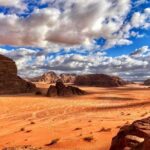
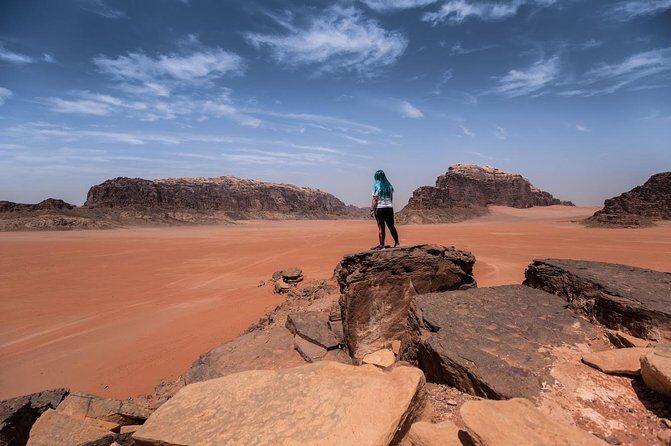
Al Ramal is the iconic red dune in Wadi Rum, known for its reddish hue from iron oxide. The climb sounds simple until you step into it. Soft sand slows your pace, and you feel it more than you expect.
That’s also why it’s fun. Locals often watch visitors struggle in a friendly way, and you’ll feel the desert’s rules on your legs. Once you reach the top, you get panoramic views across the valley—big horizon lines and layered tones that make Wadi Rum look like it’s been edited for color.
If you’re feeling bold, your guide may suggest coming down by running or using a sandboard style approach. Just keep control. Wadi Rum is full of slipping surprises, and you’ll want to go home with your knees intact.
Wadi Rum Protected Area: the day’s “small wonders”
After the famous dune moments, the itinerary shifts into a set of protected-area stops that keep your eye busy and your day from feeling repetitive.
Little Bridge (Khor El Ajram area) is one of those. It’s called Little Bridge, but it’s not a super-high climb, so it can work for people who want an accessible challenge. You’ll climb up, take photos, and then come back down. After that, you relax and enjoy tea back at a tent area where souvenirs and local conversation may be part of the stop.
Then there’s Traditional Bedouin Lunch, cooked over an open fire. This is a highlight for me, because it’s not just food—it’s the way you eat when you’re away from roads. You’ll likely see a simple spread like bread, hummus, yogurt, fresh vegetables, and local treats. Your menu can vary, but the “warm meal, prepared on fire, in the desert” part is the core value.
If you’re the type who likes to understand local routines, pay attention during cooking. The pacing feels different out there, and you’ll get that “this is how it’s done” vibe without needing a lecture.
Lawrence’s House: the story-built stop on top of a remote site
Lawrence’s House is built on the remains of a Nabataean building, set in a remote area with uninterrupted views over red sand dunes. It’s not about ruins in a classic “museum” way; it’s about a location that carries legend.
You’ll learn about the idea that T. E. Lawrence stayed here during the Arab Revolt. Even when little of the original structure remains, the viewpoints and the old building footprint make the stop land.
There’s also a practical visual tradition: Bedouins used piles of stones as road markings. You might notice those stone stacks as you move upward. They’re useful landmarks and also a quiet “systems thinking” lesson about travel in harsh terrain.
Um Frouth Rock Arch and the phone-photo moment
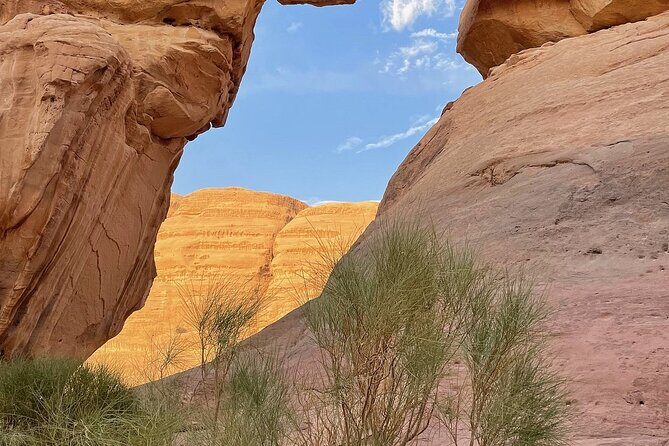
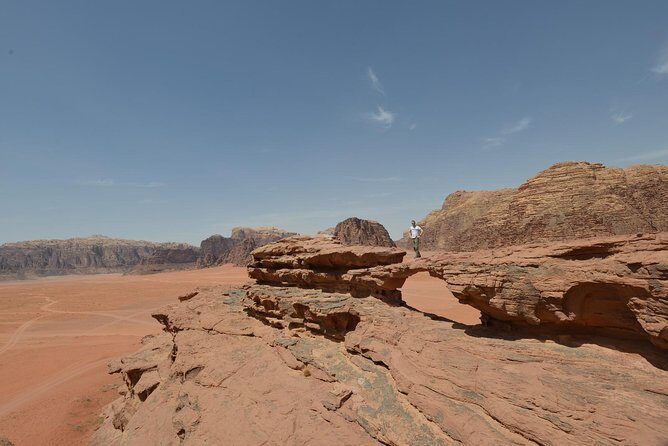
Next comes rock arches and photo climbs. Um Frouth Rock Arch is a natural bridge with breathtaking views. The ascent can be challenging, but footholds are created to help tourists climb safely.
Bring your patience for photos. From the top, you’ll want to capture the arch framing desert lines. Your guide can help with the positioning so you get the shot without turning it into a dangerous scramble.
If you’re traveling with older knees or low mobility, consider moving at your pace and skipping a summit climb. The views are still worth it from the right angle and distance, and your comfort matters more than a single “perfect” photo.
White Desert, Mushroom Rock, and Abu Khashaba Canyon: variety when the light changes
The White Desert is a contrast stop. White sand creates a different visual world, and it makes Wadi Rum’s red tones look even brighter in the distance. Wildlife and local flora may be spotted depending on timing, but even without that, the color change alone makes this worth it.
Mushroom Rock is a wind-and-rain shaped sandstone feature carved into a mushroom form. It’s a fun photo stop, and it also gives you temporary shelter from sun. You might see how Bedouins used these formations for centuries—not as a “big attraction,” but as part of the usable desert.
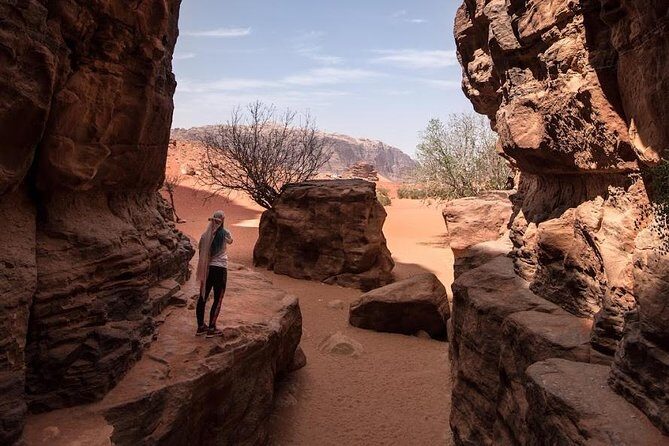
Then comes Abu Khashaba Canyon, a shorter walk through a deep valley with wild fig trees, desert bushes, rocks, red and yellow sands, and bird sounds in the background. You’ll likely see a peaceful micro-oasis feeling inside canyon walls. There are even bottles that locals hang to collect rainwater for birds, which shows you this area isn’t only scenic—it’s cared for.
If you like places where you can hear nature instead of only jeep engines, this is your breather stop. It’s also a good place to slow down and hydrate.
Jabal Burdah and the Burdah Rock Bridge hike: sunset is the goal
One of the more serious efforts on the itinerary comes with Jabal Burdah and the Burdah Rock Bridge. The arch is described as Rum’s largest, and it sits high—about 80 meters above the surrounding rock.
During the jeep part of the tour, you’ll make a stop nearby to admire it from a distance. Then, later, there’s a hike to the summit that’s challenging but rewarded with what’s described as one of the best sunsets you’ll ever see.
This is the moment where you want to be mentally ready for uneven ground. Wear shoes that grip, keep water with you when possible, and plan to move slow uphill. If the hike feels too much, you’ll still get value from the earlier viewpoint.
Sunset Viewpoint: tea, fire, and the desert going quiet
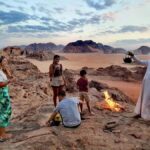
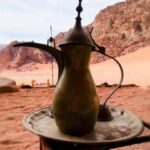
The tour ends the day at a secluded sunset viewpoint. You’ll find a panoramic spot, then sweet tea prepared on the fire. The description mentions relaxing on a comfy mattress or soft sand.
A quick note based on how this service runs: fire atmosphere can vary. One response indicates a fireplace isn’t included in every tour and depends on specific requests. So treat the fire-tea moment as a likely highlight, not a guaranteed guarantee.
Then you settle into the camp experience.
Overnight Bedouin camp: the part that makes it feel real
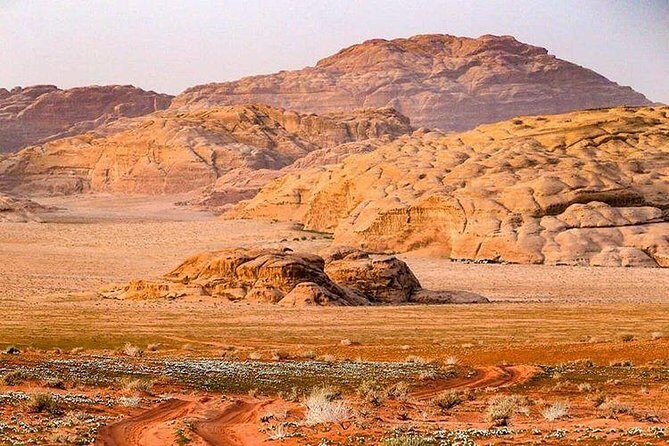
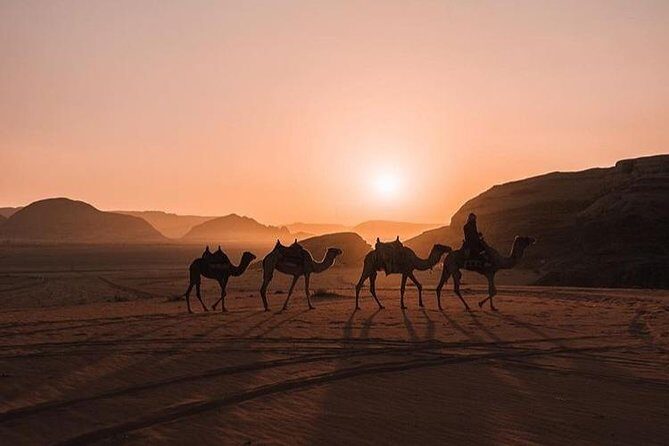
The overnight in a Bedouin camp is the main reason this tour feels different from a straight “sights-and-skyline” day trip. It’s not just sleep—it’s the change in rhythm when the jeeps go away.
Your camp experience includes meals, and in guest experiences you’ll hear about lots of food, Bedouin-style cooking, and evening downtime around the group. People also mention bread baked in a traditional way during the stay, plus general warm hospitality like tea and water provided during the day without extra charges.
Some guest experiences include cultural moments like Bedouin dance, games such as cards, and the idea that the evening is about connection more than performance. Even if the exact program varies by group and camp, the core is consistent: quiet desert night, shared meals, and a sense of being in the place rather than passing through it.
If you’re hoping for cell reception, set expectations low. The value here is the opposite of constant screens.
Price and value: is $95 a fair deal?
At $95 per person, this is priced like a midrange adventure, and the value comes from the package.
You’re paying for:
- 4×4 transport across multiple protected-area stops
- a local guide managing logistics and storytelling
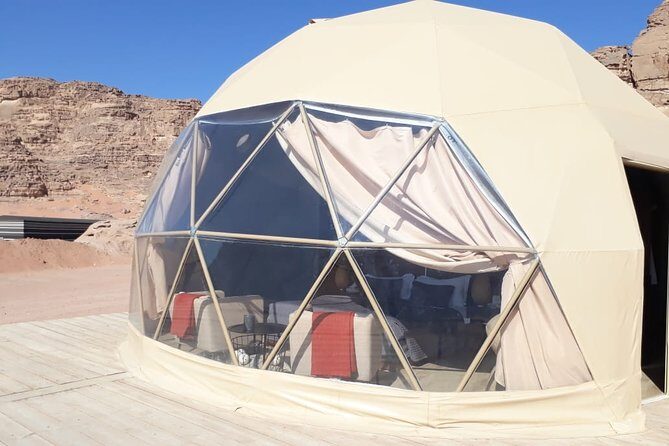
- a Bedouin camp overnight
- all meals included, including a traditional lunch cooked over open fire and tea moments
In other words, you’re not paying separately for transport + food + camp. For many people, that’s the best part: you can spend your energy on the desert instead of juggling expenses and timing.
Booking wise, this tends to be reserved about 31 days in advance on average, so if you’re going in high season or with specific dates, lock it earlier rather than later.
What could bother you (and how to handle it)
This tour is strong, but desert tours always have a few realities.
- Loose sand and short climbs: Some stops involve climbing up for views and photo angles. If you have knee or balance issues, take it slow and ask your guide for options.
- Time at each stop: Many sights are around 30 minutes. That’s enough for photos and a look around, not enough to linger.
- Language and pacing: Guides are locals and some English can vary by person. The good news is that the best guides communicate through effort and repetition, and the group stays small.
- Fire expectations: Evening fire atmosphere may vary by requests, so don’t count on it as an every-time certainty.
If you can accept those tradeoffs, you’ll likely end up happy.
Who this Wadi Rum jeep tour + camp overnight is best for
This tour is a great match if you:
- want a one-day + one-night Wadi Rum plan without planning anything
- like guided stops with historical touches like Thamudic, Nabatean, and Islamic inscriptions
- enjoy the physical reality of desert travel (jeep days, then walking days)
- want real camp hospitality rather than a quick “turn and burn” sunset
It’s also a strong fit for couples and small friend groups because the vibe is social but not crowded. Solo travelers often like this kind of schedule because you get the sights plus built-in conversation.
If you want zero exertion, or you hate hikes and climbing on rocks, this may frustrate you. In that case, you might prefer a lighter desert option.
Should you book this Wadi Rum jeep + Bedouin camp overnight?
If you’re choosing between “see Wadi Rum” and “feel Wadi Rum,” book this. The big reason is the overnight camp with meals handled, plus a route that hits famous sights and adds story through inscriptions and canyon features.
Do book this if your idea of a great day is: jeep rides, short climbs, open-fire lunch, and a sunset that’s worth the effort. Skip it only if you need a low-activity schedule or you’re sensitive to uneven ground. Otherwise, this is the kind of Wadi Rum plan that stays with you after the photos fade.
FAQ
What’s the price for the full day jeep tour with overnight?
The price is $95.00 per person.
How long does the tour last?
The duration is listed as 8 hours to 1 day (approx.).
What time does the tour start?
The start time is 10:00 am.
Where do I meet the guide?
You meet at the Rest House in Wadi Rum Village (Wadi Rum Village, Jordan).
What’s included in the price?
This tour includes exploring Wadi Rum in a four-wheel-drive vehicle, a local guide, an overnight stay in a traditional Bedouin camp, and all meals.
How big is the group?
The maximum group size is 19 travelers.
Do I get a mobile ticket?
Yes, it includes a mobile ticket.
Is good weather required?
Yes. The experience requires good weather, and if it’s canceled due to poor weather you’ll be offered a different date or a full refund.
Can I bring a service animal?
Service animals are allowed.
What is the cancellation window?
You can cancel up to 24 hours in advance for a full refund. If you cancel less than 24 hours before the start time, the amount paid is not refunded.