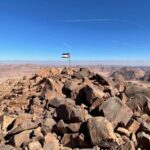
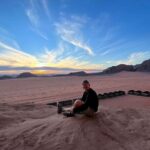
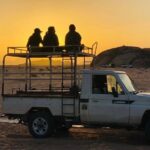
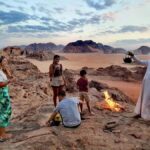
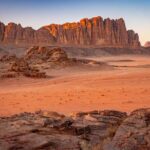
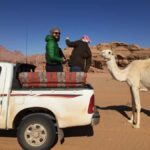
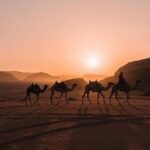
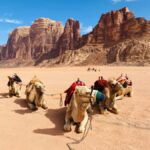
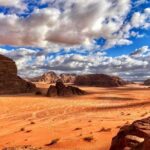
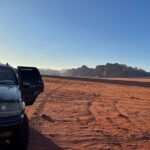
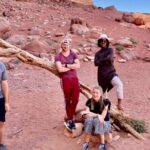
Wadi Rum looks otherworldly, and this tour gets you close fast. You ride in the back of the jeep so you feel the desert wind, then you hike through canyon cuts and signature rock formations on a tight, half-day loop aimed at views and sunset timing. The best part is how quickly it turns from scenery to people and daily Bedouin life—with tea stops and friendly guides along the way.
I like that it’s a small group (max 6), which means you’re not stuck waiting for a long line of jeeps at every viewpoint. I also like the mix of motion and walking: jeep time for the big panoramas, and short hikes for the “how did they even find this?” rock bridges and canyon passages.
The main thing to consider is physical comfort: you’ll be walking in canyons and climbing around uneven desert ground, so bring sensible shoes and expect a bit of effort rather than a sit-and-snap photo stroll.
In This Review
- Key highlights worth your time
- Riding the jeep from Wadi Rum Village: the vibe and the value
- Lawrence’s Spring and the early-route wow factor
- Khazali canyon, Little Bridge, and Um Frouth: where the walking pays off
- Jebel Khazali and the sunset moment that anchors the trip
- Camp time, Bedouin dinner add-ons, and what you should expect
- Small-group style: how it feels when you’re not herded
- Price check: is $75 actually fair for what you get?
- What to bring (so the tour feels easy, not annoying)
- Who this half-day jeep and hiking tour is best for
- Should you book it?
- FAQ
- How long is the Half-Day Jeep and Hiking Bedouin Tour?
- Where does the tour start?
- Where does the tour end?
- What stops and sights are included?
- Is there walking or hiking?
- Does the tour include sunset?
- Are admission tickets included?
- Is there a limit on group size?
- Can I add a night in the desert at a Bedouin camp?
- Is there free cancellation?
Key highlights worth your time
- Back-of-jeep riding gives you that close-to-the-rock feeling, not just window sightseeing
- Lawrence’s Spring area plus sand dune views for that classic Wadi Rum look
- Canyon walking at spots like Khazali canyon and the bridge formations
- Sunset focus, with timing built around when you arrive (10am vs 1pm)
- Bedouin camp option, and if you want dinner by fire or an overnight, it’s available for an extra charge
- Friendly, responsive operators—you may recognize names like Mohammed, Ahmed, Faraj, Khaled, Sabbah, and Morgane from prior guests’ experiences
Riding the jeep from Wadi Rum Village: the vibe and the value
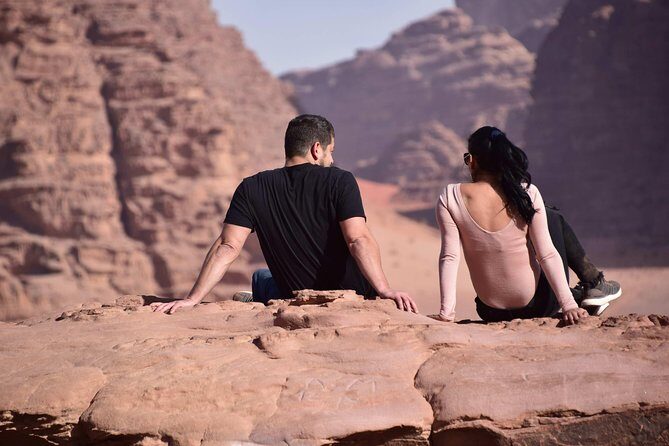
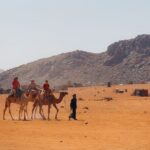
This is the kind of tour that starts making sense the moment you leave Wadi Rum Village. You’re not just traveling through Wadi Rum; you’re inside it. Riding in the back of the jeep changes the whole feel. You’re higher up, the desert air hits harder, and the rock walls and canyons suddenly feel like they’re right there with you, instead of sitting off in the distance.
Price-wise, $75 per person for a 4 to 5 hour half-day is pretty reasonable when you compare it to what self-driving would really cost in a place like this (vehicle rental, fuel, and the time to find the best corners). The tour structure also helps you avoid decision fatigue: you show up, you get a planned route, and you spend your energy on enjoying the scenery and the walking—not on routing and logistics.
Another value point: small-group size (up to 6). That usually means less waiting, fewer stops “at the speed of the slowest person,” and more chance your guide can tailor pace to the group. The reviews you’ll see for this operator repeatedly mention professionalism and kindness from people on the team like Mohammed, Ahmed, and others, which matters because Wadi Rum is all about being in the right places at the right time.
Possible drawback: because the ride includes a hike component and uneven ground, this isn’t ideal if you want an entirely flat, easy route the whole time.
You can also read our reviews of more hiking tours in Aqaba

Lawrence’s Spring and the early-route wow factor
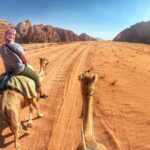
If you come at the 1pm timing, Lawrence’s Spring is one of the first big “set the tone” stops. Even if you’ve seen Wadi Rum photos before, this is where you start understanding why people call it dramatic. You move through zones with canyons, varied rock formations, and those wide desert views that stretch until your eyes get tired in a good way.
Lawrence’s Spring is also one of the few stops where the tour clearly ties to a known highlight area. The information here even notes the admission ticket is free for this stop, which is a small but real detail. It means you’re not paying extra on top of the tour price for that specific entrance.
On the ground, expect the day to shift between “look at this” and “put your feet here.” Guides often time the route so you’re not only looking outward but also moving through the desert’s textures—rock edges, canyon shadows, and sand stretches that change color as you move.
If you arrive in the morning (10am timing), the flow is similar in spirit, but the day’s structure changes afterward: after the tour ends, you continue on to a camp. The big takeaway for you is this: the route is built for visual impact first, then it hands off to camp time depending on your start time.
Khazali canyon, Little Bridge, and Um Frouth: where the walking pays off
The “half-day hiking” part is real enough that you should treat it like a mini outdoor outing, not a casual stroll. The route can include walking in Khazali canyon, plus stops like Little Bridge and Um Frouth Rock Bridge. These are the places where Wadi Rum shifts from pretty to memorable.
Here’s why these stops work so well on this tour:
- The canyon walking makes you experience the terrain, not just view it.
- The rock bridges create that instant “oh wow” moment because they look engineered by time and erosion.
- You get variety in a short period: sand dune visuals, then rock-and-shadow canyon movement.
The one consideration is footing. Canyon paths and bridge areas can involve uneven ground, stones, and short scramble-style sections. That doesn’t mean it’s extreme, but you’ll want sturdy shoes and a willingness to step carefully.
Also, consider your comfort with sun and wind. The route includes open desert stretches, and even on a half-day you can feel exposed. This is where it helps to travel prepared: sun protection and water (if your guide provides it or if you’re allowed to carry it) are your friends. Even when the tour includes tea moments, your body still needs hydration and basic comfort.
Jebel Khazali and the sunset moment that anchors the trip
Sunset is the tour’s emotional anchor. The itinerary info makes that explicit: you’ll walk through canyon areas and then head toward sunset, and it’s structured so the timing works if you start around 1pm.
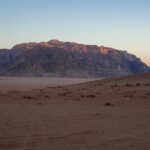
Jebel Khazali is a key part of that final stretch. This is where your earlier driving and hiking pay off because your last views tend to look better than the first ones. Light changes everything in Wadi Rum. Rock textures sharpen. Shadows deepen. The desert stops looking flat and starts looking layered.
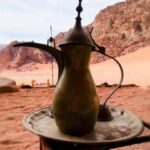
A detail that pops up in guest experiences: the tour doesn’t just hand you a sunset—it often includes warm tea/chai during or after the most scenic moments. That matters because it turns a visual experience into a “sit for a minute” moment. Tea gives you a natural pause, which is exactly what you want when the whole day is built around moving and watching.
One more practical note: sunset timing means your guide will keep the day moving. If you’re the type who needs lots of time to linger, build in extra patience. The upside is that sunset won’t be treated like an optional photo stop.
Camp time, Bedouin dinner add-ons, and what you should expect
This is where the tour can vary based on your chosen start time and any add-ons.
The information you have says that if you come at 10am, after the end of your tour you go to the camp. That implies your day can continue beyond the jeep-and-hiking portion. Guests in past experiences often describe time at a camp with traditional Bedouin food, sitting by the fire, and the feeling of chatting with people in a living desert setting.
That said, the data you provided is also clear about the overnight option: if you want to sleep in a Bedouin camp or under the stars, plus a Bedouin dinner cooked on fire, it’s possible for an extra charge. So if you want that full night experience, don’t assume it’s included in the standard half-day price.
For you, here’s the smart way to think about it:
- If you book this half-day, you’re buying the desert route plus canyon walking plus sunset-focused sightseeing.
- If you want the full “evening turns into night” version with camp dinner and sleeping arrangements, treat it as an upgrade and budget for it.
Also, watch for comfort details like tent setup and facilities. One past guest highlighted a clean tent with adequate facilities, which is a good sign if you decide to stay longer. On the “half-day only” version, camp time may be shorter, but the culture focus is still part of the overall package.
A few more Aqaba tours and experiences worth a look
Small-group style: how it feels when you’re not herded
A max of 6 travelers changes the experience in small, noticeable ways. You’re more likely to get a guide who can answer your questions on the spot and take you to the right spot at the right angle. You’re also less likely to lose time waiting while your group gathers, changes seats, or tries to coordinate who’s filming and who’s looking.
The team behind the operation includes people named in guest experiences like Mohammed, Ahmed, Faraj, Khaled, and Sabbah. There’s also mention of quick communication from Morgane. I can’t tell you which one you’ll meet, but it does show you the kind of service you can expect: friendly, practical, and tuned to how guests move through the desert.
Being near public transportation is also mentioned in the tour info. That’s helpful if you’re not renting a car in Aqaba and you want this to be one clean stop rather than a complicated day of transfers.
What you might like most: the guide doesn’t just drive you from point to point. The tour format supports interaction—tea, short conversations, and the feeling that you’re seeing how the area is used, not just checking boxes.
Price check: is $75 actually fair for what you get?
Let’s talk value in plain terms.
For $75 per person and about 4 to 5 hours, you’re paying for:
- Jeep transport through Wadi Rum terrain (including back-of-jeep riding)
- A guided route through major highlight areas such as Lawrence’s Spring and Jebel Khazali
- Canyon walking and stops at formations like Khazali canyon and rock bridges
- A sunset-focused schedule
- A small-group setup (max 6), which is often where value really lives
If you compare this to cheaper options that don’t include a solid route plan, what you often lose is time and expertise. In Wadi Rum, that can mean seeing “something” but not necessarily the best version of the place. This tour’s structure is aimed at the payoff moments—sand dune visuals, canyon walking, and then sunset.
Where value may soften: if you want full camp dinner and an overnight, the data indicates you’ll pay an extra charge for that. So if your heart is set on sleeping under the stars, price your plan as a two-part decision: half-day tour first, then the overnight add-on.
What to bring (so the tour feels easy, not annoying)
The provided details don’t list gear requirements, so I’ll stick to common-sense advice that fits the way this tour is described—jeep riding plus canyon walking plus sunset time.
Bring:
- Closed-toe shoes with grip for rocky, uneven walking
- A hat and sun protection; the desert doesn’t negotiate
- A light layer; desert air can cool near sunset
- A small camera plan, because you’ll want photos at Lawrence’s Spring and during the bridge moments
If you’re starting at 1pm, assume the later part of the tour may feel cooler but the earlier riding can be hot. If you start at 10am, you’ll likely have more daylight for the walk pieces before camp time.
One more practical thought: since you ride in the back of the jeep, secure personal items. You don’t want your phone sliding around while you’re trying to frame that sunset shot.
Who this half-day jeep and hiking tour is best for
This is a strong fit if you:
- Want a short, high-impact Wadi Rum day without committing to a full multi-day trek
- Like a mix of driving and walking
- Care about a sunset moment rather than rushing through everything before sunset
- Prefer a smaller group (max 6) and more personal guidance
It may be less ideal if you:
- Want a fully flat itinerary with minimal walking
- Have mobility limitations that make uneven canyon ground difficult
- Are looking for a “do it on your own” style experience (this tour is route-driven and guided)
If you’re traveling as a couple, small family group, or solo traveler who likes meeting people without being in a crowd, this size and format works well. The Bedouin-culture angle also helps if you want more than scenery—you want a human desert connection.
Should you book it?
Book this tour if you want Wadi Rum in one concentrated half-day: back-of-jeep desert riding, canyon walking with bridge highlights, and a sunset finish that feels planned rather than random. The pricing also makes sense for what’s included, especially with the small-group cap and a route built around big “wow” stops like Lawrence’s Spring and Jebel Khazali.
I’d lean toward booking sooner rather than later if you’re in Aqaba and you want your time to feel efficient. And if you’re tempted by the overnight option, decide now whether you want the full Bedouin night experience—because that’s where your day can turn into a different kind of memory.
FAQ
How long is the Half-Day Jeep and Hiking Bedouin Tour?
The tour runs about 4 to 5 hours.
Where does the tour start?
It starts at Wadi Rum Village, Jordan.
Where does the tour end?
The activity ends back at the meeting point.
What stops and sights are included?
You’ll visit places including Lawrence’s Spring, Sand Dune, Khazali canyon, Little Bridge, Um Frouth Rock Bridge, and Jebel Khazali, with time for sunset.
Is there walking or hiking?
Yes. The tour includes walking in canyon areas as part of the route.
Does the tour include sunset?
Yes. The schedule is built around sunset after the walking portions.
Are admission tickets included?
The tour information notes Lawrence’s Spring has admission ticket free and Jebel Khazali admission ticket included.
Is there a limit on group size?
Yes. The maximum group size is 6 travelers.
Can I add a night in the desert at a Bedouin camp?
Yes. Sleeping in a Bedouin camp or under the stars and having dinner cooked on fire is possible, but it’s an extra charge.
Is there free cancellation?
Yes. You can cancel up to 24 hours in advance for a full refund.