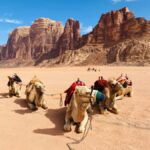
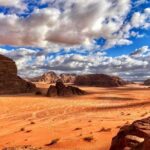
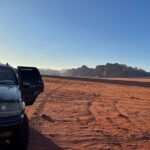
Wadi Rum by jeep feels like time travel. This full-day tour in the Wadi Rum Protected Area is interesting because you hit a lot of named landmarks in one outing, from Nabatean Temple stops to the Great Dune, then finish with sunset in the desert. I especially like the private setup for your group and the included Bedouin lunch, which turns a sightseeing day into something more human than just photo stops. One thing to plan for: the Wadi Rum entrance fee (admission ticket) isn’t included, so your total day cost may be a bit higher than the headline price.
You start in Wadi Rum Village at 9:30 am and spend about 7 hours out on the tracks. The route covers Lawrence Spring, the Ancient Map, Anfeshyah inscriptions, Lawrence House, Mushroom Rock, Burdah Rock Bridge, Abu-Khashabah Canyon, plus Um-Frouth Bridge and The Little Bridge—so you’re moving through both rock features and classic sand-dune viewpoints.
The ride is described as comfort-focused with a private vehicle, and that matters because the desert day can get bumpy. Bring a little patience for dust and heat, and you’ll get a lot more enjoyment out of every stop.
In This Review
- Key highlights that matter
- Price and value: what $109 actually buys you
- Starting in Wadi Rum Village at 9:30: how to plan your day
- What the private jeep day feels like in practice
- Your itinerary, stop by stop: what to look for (and what to expect)
- Wadi Rum Protected Area: starting point for all the famous stops
- Nabatean Temple and Lawrence Spring: ruins plus a classic viewpoint
- The Ancient Map and Anfeshyah inscriptions: reading the desert with your eyes
- The Great Dune and Mushroom Rock: the big photo moments
- Lawrence House and Burdah Rock Bridge: stories meeting geology
- Abu-Khashabah Canyon, Um-Frouth Bridge, and The Little Bridge: finishing with variety
- Sunset in the desert: why the timing matters
- Bedouin lunch: more than fuel for the road
- What you’ll likely need: comfort basics that make the day better
- Who should book this Wadi Rum jeep tour?
- A quick note on the one likely drawback
- Should you book this tour?
- FAQ
- What’s the duration of the Wadi Rum jeep tour?
- What time does the tour start in Wadi Rum?
- What’s included in the price?
- Is the Wadi Rum entrance fee included?
- Where do I meet the tour?
- Is this a private tour or shared group?
- Does the tour include sunset?
- Can I cancel for a full refund?
Key highlights that matter
- Seven hours, many named stops: You’re not doing a quick drive-by; you’re seeing the big checklist of Wadi Rum points.
- Lawrence of Arabia sites on the same day: Lawrence Spring and Lawrence House keep the famous connections close together.
- Rock features and bridges: Burdah Rock Bridge, Um-Frouth Bridge, and The Little Bridge give you variety beyond dunes.
- Bedouin lunch included: You eat as part of the day, not as an afterthought.
- Bottled water included: Small detail, big help in the desert.
- Private tour for your group: You’ll get a more flexible, personal pace than with larger groups.
Price and value: what $109 actually buys you
At $109 per person for roughly 7 hours, this is a very workable price for a full-day Wadi Rum circuit—especially because the tour is set up around a private experience. You also get lunch and bottled water, which nudges the value higher than tours that only promise a ride and some vague stops.
The one cost item to watch is that the Wadi Rum entrance fee is not included (the listing notes the admission ticket/entrance fee). So when you budget, think: jeep time + lunch + water, plus an extra entry fee at the start of the day. If you’re comparing options, always compare the all-in price, not the sticker number.
Also note: there’s mention of group discounts, but the tour itself is private for your group. That means the price is best when you’ve got enough people to share the cost comfortably (family trip, small group of friends, or two couples).
You can also read our reviews of more guided tours in Aqaba
Starting in Wadi Rum Village at 9:30: how to plan your day
This tour starts at 9:30 am in Wadi Rum Village (meeting point pins are listed as HCG9+XW and HCG9+XWV). Starting in the morning is practical here. The desert can warm up fast, and earlier driving generally means more comfortable time on the stops—especially at the larger viewpoints like the Great Dune.
Because the tour ends back at the meeting point, you can plan the rest of your day in Aqaba without needing a complicated pickup or a second transfer.
One practical tip: wear shoes you don’t mind getting dusty. You’re visiting rocks, bridges, and viewpoints, and Wadi Rum has a way of turning shoes into souvenir dust collectors.
What the private jeep day feels like in practice
The tour is designed for a private group, and that usually translates into two good things. First, you can keep a steadier rhythm without getting stuck waiting for a big crowd. Second, you’re less likely to feel rushed at stops when it’s time for photos or a quick walk around a rock feature.
Stops are planned and named, so you’re not wondering what’s coming next. The day moves across a mix of:
- rock features (Temple, Lawrence House, Mushroom Rock)
- inscriptions and ancient markings (Anfeshyah inscriptions, Ancient Map)
- bigger visual moments (Great Dune)
- natural shapes you can spot from far away (bridges and canyon areas)
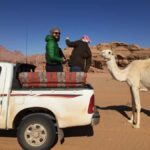
And yes, one father and son trip shared that the day began in the village with tea hosted by a Bedouin family, then shifted to riding on the back of a pickup before heading out. That tells me the experience can feel locally guided, not just vehicle-to-vehicle. You may still experience the desert by jeep, but the human welcome can matter as much as the driving.
Your itinerary, stop by stop: what to look for (and what to expect)
Below is what each named stop means for your day. I’ll keep it practical: what you’ll actually be seeing, and why it’s worth the stop.
Wadi Rum Protected Area: starting point for all the famous stops
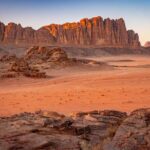
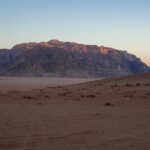
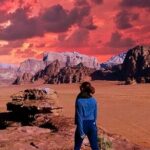
You begin in the Wadi Rum Protected Area area itself, where the terrain does the storytelling. Expect a mix of sand, rock forms, and wide open sightlines that make each viewpoint feel like its own scene.
This is also where you start building your mental map. Once you’ve seen the first couple of landmarks, the rest of the route makes more sense, and you’ll notice how the stops connect visually and geographically.
A few more Aqaba tours and experiences worth a look
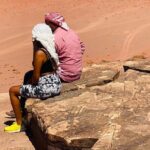
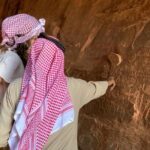



Nabatean Temple and Lawrence Spring: ruins plus a classic viewpoint
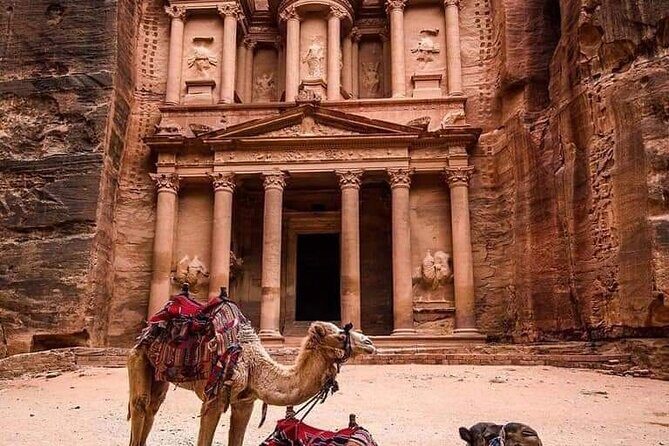
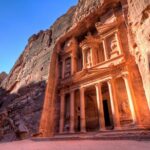
The Nabatean Temple is the kind of stop where the name cues you in: you’re going to see temple ruins tied to the Nabatean world. It’s one of those places where even a short pause can feel meaningful because the structures sit in the same kind of desert setting that people associate with the region.
Next comes Lawrence Spring. This is the kind of stop that helps the day feel more than scenic driving. It ties directly into the Lawrence-of-Arabia connection, and it’s the sort of spot where you can understand why the desert appears in so many stories—people came here for water and shelter, not just adventure.
The Ancient Map and Anfeshyah inscriptions: reading the desert with your eyes
The Ancient Map and Anfeshyah inscriptions are all about “look closer” energy. You’re not walking through a museum. You’re finding marked surfaces in the rocks and imagining what it meant for people long ago.
Practical tip: when you reach inscription or map-style stops, slow down and give yourself time. The shapes can be easier to spot when you’re not standing quickly for a single photo. This is a great moment for your guide to explain what you’re seeing—since those marks can be subtle at a distance.
The Great Dune and Mushroom Rock: the big photo moments
The Great Dune is the headline “wow” stop. Even if you’ve seen sand dunes elsewhere, Wadi Rum dunes have that dramatic, sculpted look. This stop is also where you’ll appreciate having a dedicated time slot, because the best dune moments usually come from being there when light and angles cooperate.
Mushroom Rock is a named rock formation, and that’s exactly why it’s fun: the shape is the point. It’s a quick but satisfying contrast after the sweeping feel of a giant dune. Think of it as a break from constant scanning—your eye finds the shape fast.
Lawrence House and Burdah Rock Bridge: stories meeting geology
Lawrence House is another stop tied to the Lawrence-of-Arabia story. It’s not just a name on a map—it’s a chance to connect the famous narrative to an actual setting in Wadi Rum. These Lawrence stops are great for anyone who likes seeing how stories map onto physical places.
Then you shift into geology with Burdah Rock Bridge. A bridge is one of those natural features you can spot from different angles as you approach. It also makes a nice “destination stop,” because you’ll likely spend a bit more time framing photos and looking at the shape.
Abu-Khashabah Canyon, Um-Frouth Bridge, and The Little Bridge: finishing with variety
By the time you reach Abu-Khashabah Canyon, the day feels more textured. Canyons change the sound and the feel of the space. Even without a long hike, they add depth compared to open dune stops.
Then you end with Um-Frouth Bridge and The Little Bridge. The word bridge gets used for a reason here: you’re looking at natural openings and spans formed by rock. Finishing with these bridge points is a smart move because they give you variety right before the day’s finale.
Sunset in the desert: why the timing matters
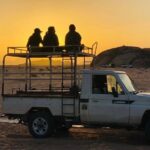
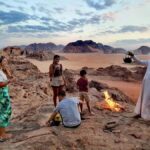
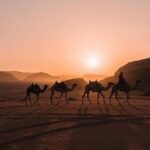
The tour includes sunset in the desert. This is the practical reason the schedule feels designed rather than random: dusk light can soften the harshness of the day and make rocks and sand look more detailed. Sunset also gives you a natural “wrap up” moment after hours of driving and stopping.
If you’re the type who likes photos, plan on spending a little time after the first clear sightline. Even small angle shifts can change how a rock or bridge reads in the light.
Bedouin lunch: more than fuel for the road
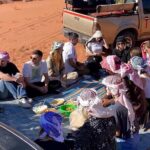
Lunch is included, and it’s Bedouin lunch. For a desert day, that matters because it keeps you from hunting for food later. It also often changes the tone of the tour: you’re not just collecting sights—you’re taking a pause that’s part of local routine.
One father and son experience specifically mentioned being taken to a local Bedouin family’s house and served local tea as part of the welcome. While that might not be the same for every departure, it’s a strong signal of how this kind of tour can feel personal. At minimum, having a scheduled lunch helps you avoid the classic desert mistake: getting too tired and too hungry before you reach the best light.
What you’ll likely need: comfort basics that make the day better
The tour includes bottled water, but you’ll still want to be prepared. Here’s what I’d bring for an easier day, based on how the route is structured around rocks, dunes, and long time outdoors:
- Sun protection (hat + sunscreen). Desert sun is no joke.
- Light layers. Even when it’s warm, mornings and evenings can feel cooler.
- Dust management. Sunglasses and a scarf can help if the wind kicks up.
- Comfortable footwear. You’ll be on uneven ground at rock features.
And yes, expect a bumpy ride. Even with a private, comfort-focused setup, you’re driving through desert tracks, not city streets.
Who should book this Wadi Rum jeep tour?
I’d call this a good match if you want:
- a full day with multiple Wadi Rum highlights
- a private, more flexible feel for your group
- the combo of iconic views (like the Great Dune) and named rock formations and bridges
- lunch handled for you, not something you figure out on the spot
It also fits well for families and mixed-age groups who want a structured itinerary without needing to plan out separate stops and transport.
If you’re someone who hates waiting around, the private nature helps. You’re not stuck behind a line of people at every stop. If you love photography, the mix of dunes, rock shapes, inscriptions, and bridges will keep your camera busy.
A quick note on the one likely drawback
The biggest drawback is the extra entry cost. The Wadi Rum entrance fee (admission ticket) isn’t included, and that can surprise people who compare only the base price. The second consideration is desert timing: since you’re outdoors for about 7 hours, you’ll want to take sun and water seriously even though bottled water is included.
Should you book this tour?
If your goal is a single, well-organized Wadi Rum jeep day that hits the major named sights—plus a Bedouin lunch and sunset—this is a solid booking. The rating is a strong 5 with 8 reviews, and the private structure plus included lunch and water makes it easier to justify than many half-day options.
Book it if you want your day in Wadi Rum to feel guided, efficient, and worth the time it takes to get there from Aqaba. Skip it only if you’re trying to keep costs ultra-low or you prefer a more free-form route where you pick just a couple of stops and linger.
FAQ
What’s the duration of the Wadi Rum jeep tour?
The tour is listed at about 7 hours.
What time does the tour start in Wadi Rum?
The start time is 9:30 am.
What’s included in the price?
Lunch and bottled water are included.
Is the Wadi Rum entrance fee included?
No. The admission ticket / Wadi Rum entrance fee is not included.
Where do I meet the tour?
Meeting point is listed in Wadi Rum Village, with coordinates shown as HCG9+XW and HCG9+XWV.
Is this a private tour or shared group?
It’s a private tour/activity, so only your group participates.
Does the tour include sunset?
Yes, sunset in the desert is included as part of the experience.
Can I cancel for a full refund?
Yes. You can cancel up to 24 hours in advance for a full refund. If you cancel less than 24 hours before the start time, the amount paid is not refunded.