REVIEW · AQABA
Wadi Rum: Camel Ride with tea and Bedouin Guide
Book on GetYourGuide →Operated by Malgorzata Chełkowska-Dorna · Bookable on GetYourGuide
Camels move slower than your thoughts, and that helps. You get a camel ride through Wadi Rum with a Bedouin guide, plus real time to look around (not just a quick photo stop). I also love the pause for Bedouin tea and water right in the desert, with mountain views that feel huge up close.
This is a simple plan that still feels special. A short jeep ride gets you to the camel spot, then you spend about an hour on the camels themselves. In small groups limited to 5, the guide can actually explain what you’re seeing in English or Arabic, and names like Mamdouh pop up a lot because he’s known for good conversation and practical guidance.
One consideration: cell service disappears once you’re out there, and the Wadi Rum Protected Area entrance fee (JD 5) isn’t included in the price. If you want to share photos instantly, this tour is not built for that.
In This Review
- Key highlights in plain terms
- Wadi Rum Camel Ride: How the 2 Hours Really Works
- Getting There From Wadi Rum Village: The Jeep Part You’ll Notice
- The Camel Ride Itself: Why 1 Hour Beats a Photo Stop
- Al Ramal Red Sand Dune Tea Break: The Pause That Makes It Worthwhile
- Your Bedouin Guide: Stories, Etiquette, and Real Talk
- Price and Value: What $53 Buys You (and What It Doesn’t)
- What to Bring (So You Don’t Have a Desert Problem)
- Who This Tour Suits Best
- Should You Book This Wadi Rum Camel Ride?
- FAQ
- How long does the tour last?
- How long is the camel ride?
- Is there a jeep transfer included?
- Where is the pickup location?
- Is the Wadi Rum Protected Area entrance fee included?
- What is included in the price?
- What drinks are provided during the tour?
- What languages does the guide speak?
- Is there cell phone coverage in the desert?
- What should I bring for the camel ride?
Key highlights in plain terms
- An hour on camel time: long enough to feel the rhythm, not just sit for a few minutes.
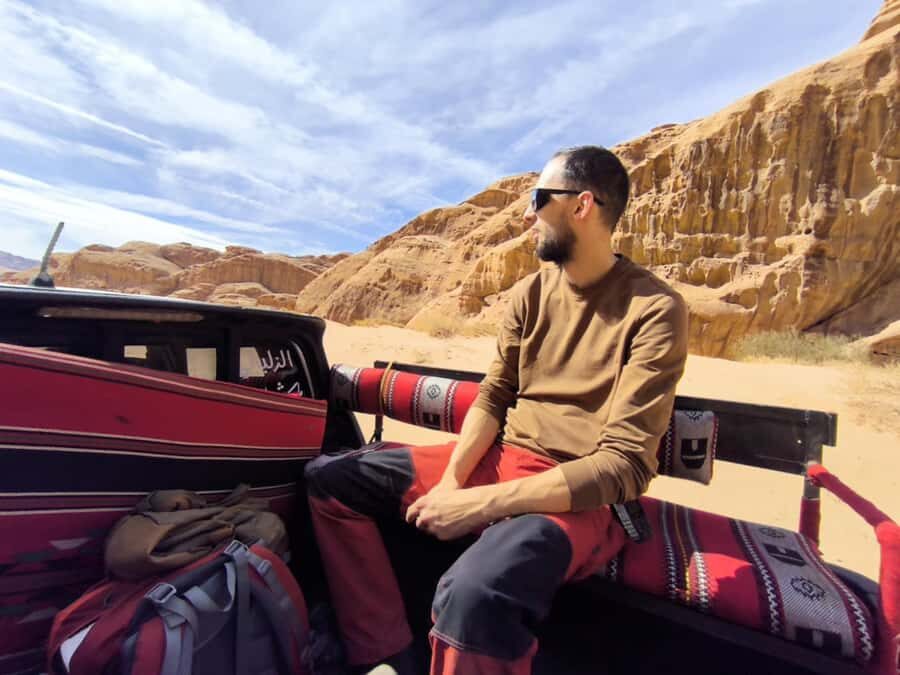
- Jeep transfer first: about 15 minutes by SUV so you spend energy where it counts.
- Al Ramal red sand dune break: tea break and a chance to stand, stretch, and look.
- Bedouin tea and water: you’re not just riding through the heat—you stop.
- Small group, max 5: easier pacing and fewer awkward delays.
- English or Arabic guide support: helpful if you want context, not silence.
Wadi Rum Camel Ride: How the 2 Hours Really Works
Wadi Rum does something funny to time. Two hours sounds short on paper, but the desert changes your pace fast. You start in Wadi Rum village, take a short jeep hop, then swap to camel—so the experience doesn’t blur together.
You’ll get a Bedouin guide with you throughout the camel portion. The ride itself is about an hour, which matters because you actually get a sense of direction and scale as you move across sand. The tea stop also breaks up the experience so you don’t feel like you’re doing one long stretch of sitting.
If you’re traveling with limited time, this is one of the more efficient ways to get the desert feel without committing to a full-day tour. Based on the strong average rating (4.8 out of 5 from 20 bookings), people tend to come away thinking it was worth the money for the time you spend out there.
You can also read our reviews of more guided tours in Aqaba


Getting There From Wadi Rum Village: The Jeep Part You’ll Notice
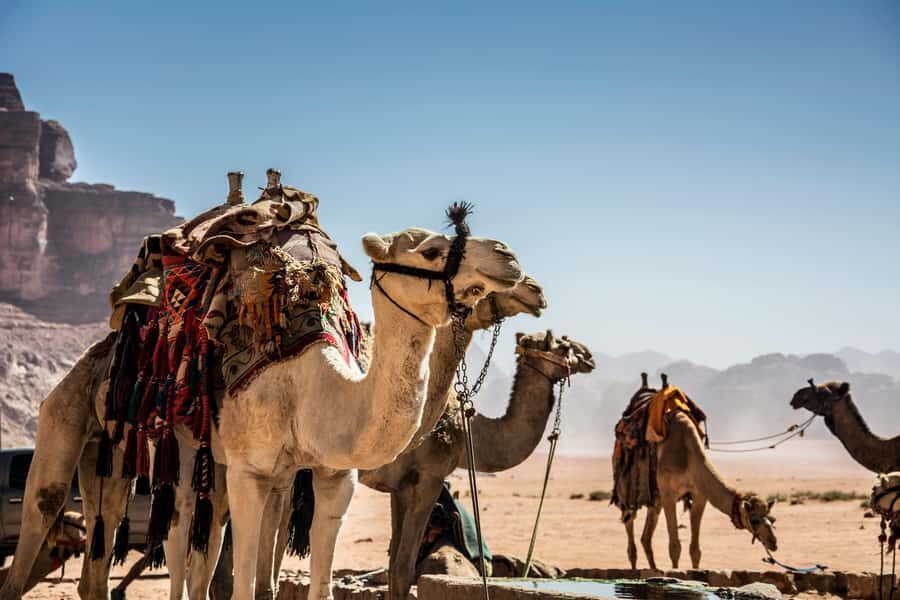
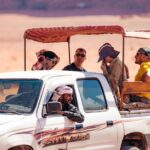
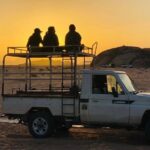
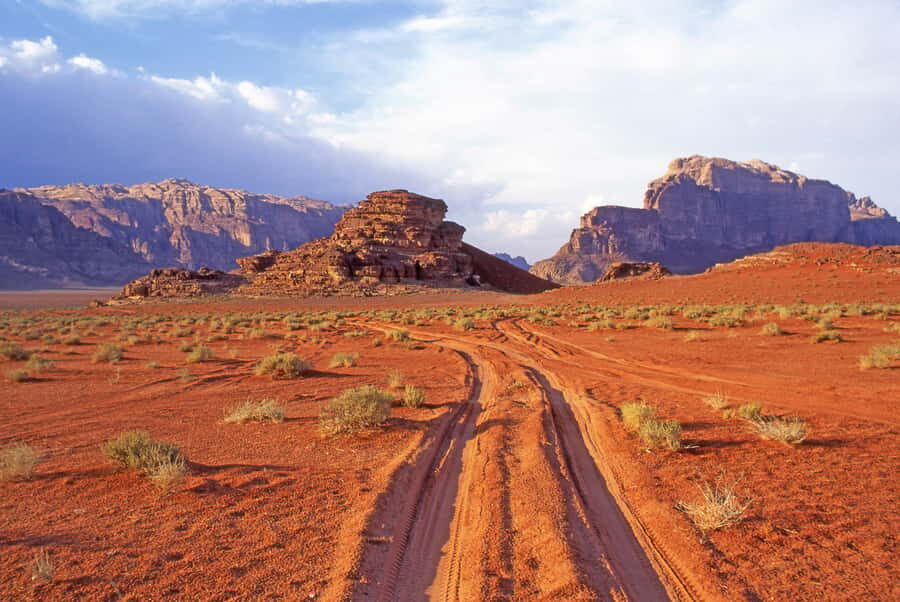
Your pickup is in Wadi Rum Village. From there, you ride in a jeep/SUV for about 15 minutes to reach the camel riding area.
This is one of those logistics choices that you’ll appreciate more than you expect. Instead of walking or figuring out transport, you just show up, meet your guide, and roll out. That short jeep segment also helps you get oriented quickly—especially if it’s your first time in Wadi Rum.
If you’re staying elsewhere inside the protected/restricted area, pickup can be arranged from a camp location. The tour can also pick you up from the Wadi Rum Visitor Center or Wadi Rum Village rest house. There’s even an option for pickup near Disah for an extra 20 JOD/jeep if your location needs it.
Practical note: it’s a desert. The ride is not about comfort first; it’s about getting you to the sand. Bring sunglasses and wear clothes you don’t mind getting a little dusty.
The Camel Ride Itself: Why 1 Hour Beats a Photo Stop
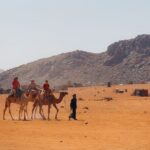
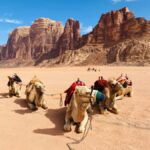
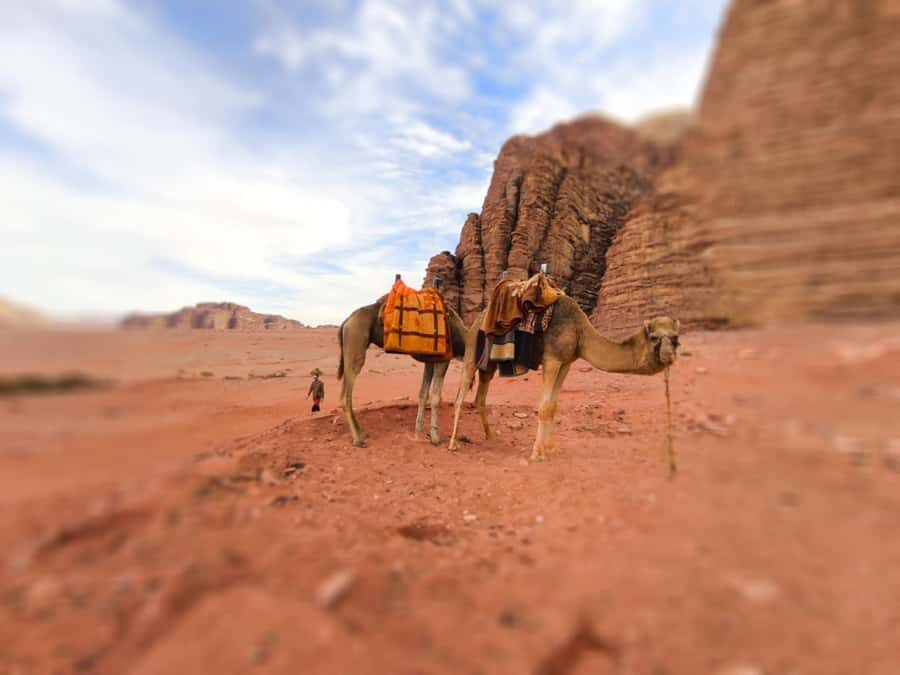
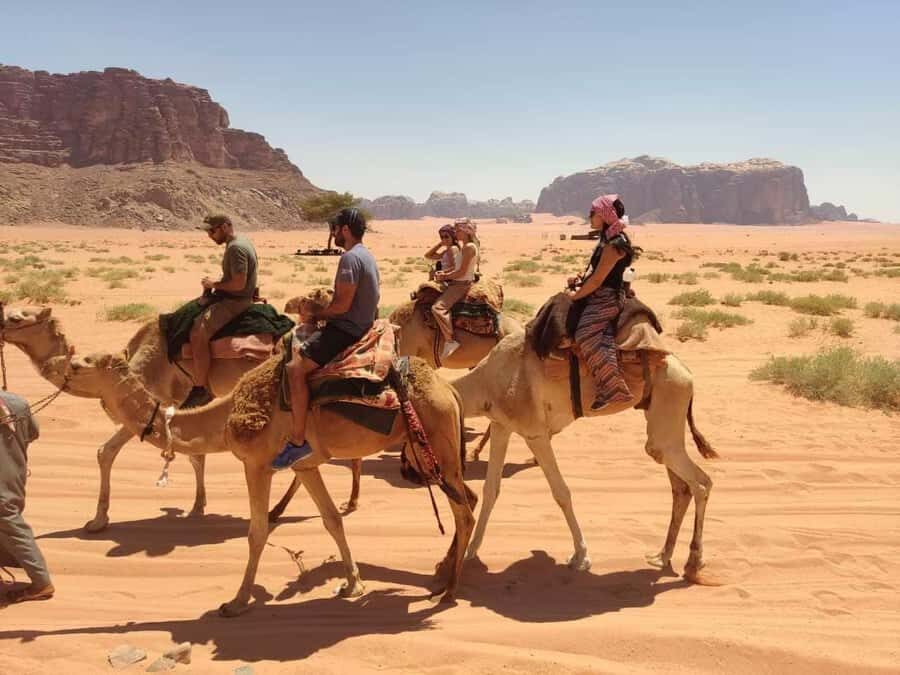
The best part of this outing is the hour on camel. This isn’t a quick “sit, smile, done” moment. You ride through the Wadi Rum desert with your Bedouin guide, and you’ll spend enough time moving to notice how the sand changes as you go—lighter areas, darker streaks, and the way mountains frame your view.
From the camel, you also get a higher vantage than you’d have on foot. People often underestimate how much easier it is to see formations when you’re sitting above the ground. It’s also a different kind of quiet. The camel’s rhythm is steady, and that gives you time to look without constantly adjusting your balance.
A few review-based realities you can expect: the camels are typically well cared for, and guides tend to keep things friendly and practical. If you happen to get a guide like Mamdouh, you’ll likely get clear English and a lot of useful context while you ride.
Who this camel time fits best:
- If you want that classic Wadi Rum moment without a full-day commitment.
- If you like “real” riding time, not a five-minute stunt.
- If you’re okay with basic physical effort (getting on, sitting, and staying balanced).
And who should think twice:
- If you’re very sensitive to bumps or you struggle with basic mounting/sitting, you might want a more straightforward transport-focused option instead.
Al Ramal Red Sand Dune Tea Break: The Pause That Makes It Worthwhile
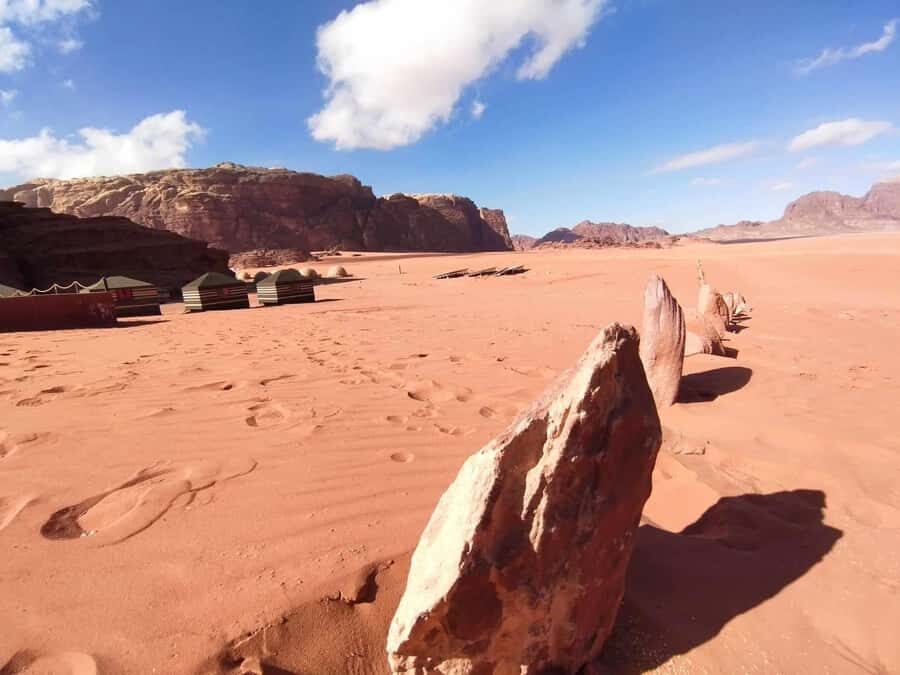
After the camel ride, you return to the jeep and drive back toward a red sand dune area called Al Ramal. This is where the tour slows down on purpose.
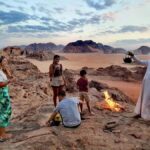
You get a break time of about 20 minutes, and tea is part of it. You’ll take in the desert views from the dune spot, and that short stop matters because it turns the ride into an experience—not just movement.
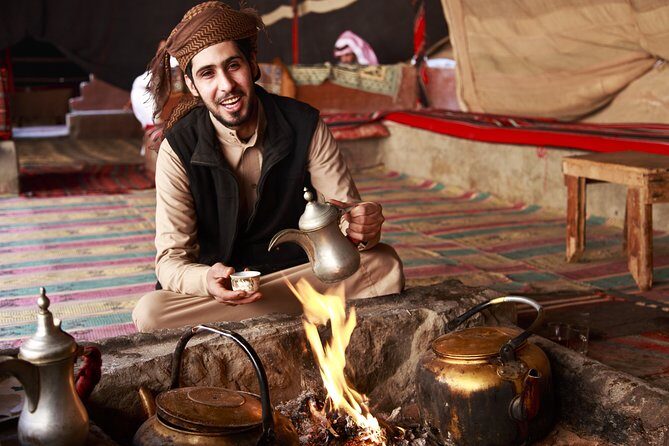
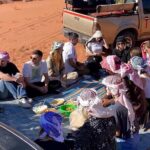
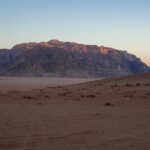
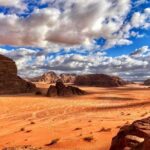
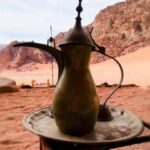
Tea in the desert is more than a drink. It’s a simple cultural pause, and it changes your relationship to the place. Instead of racing through sights, you sit, sip, and look long enough to see how light shifts over the sand and mountain edges.
It also helps with comfort. Even if you dress for the heat, you’ll usually appreciate a moment to cool down, hydrate with the provided water, and adjust any scarf or sunglasses.
If you’re hoping to get photos, this is your best window. The morning/afternoon light can look dramatic on red sand, and the calm break gives you time to find an angle.
Your Bedouin Guide: Stories, Etiquette, and Real Talk
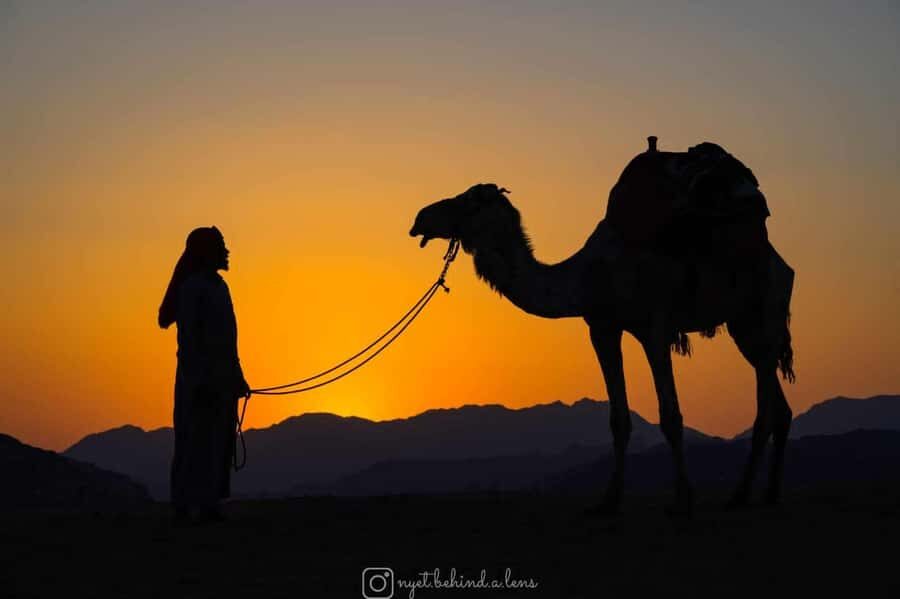
A big part of why this tour gets such strong feedback is the guide. You’re not just buying a ride—you’re getting someone who understands Wadi Rum and can point things out as you go.
The guide will be with you during the camel portion, and the tour supports English and Arabic. If English is your preference, you’ll typically have no trouble asking questions. You might also enjoy casual conversation—what you’re seeing, how the desert works, and what camels are like day to day.
One detail I like: the guide isn’t just there for safety and timing. They generally help you make sense of the view. That’s what turns a desert photo into an actual memory.
And yes, there’s still an unspoken rule: don’t treat the camel like a prop. Follow your guide’s cues, move carefully, and you’ll get a smoother ride and a better overall feel.




Price and Value: What $53 Buys You (and What It Doesn’t)
At $53 per person for about 2 hours, this is priced like a focused, short Wadi Rum experience: 1 hour camel ride with a Bedouin guide, tea and water, plus jeep transfer time.
What you should check before you book: the entrance fee to the Wadi Rum Protected Area costs JD 5 and must be paid at the Wadi Rum Visitor Center. That fee is separate from the tour price, so bring a little extra cash/planning for it.
Is it good value? Usually, yes, if you want the camel desert feel and a guided experience without spending all day in a vehicle. The small group size (max 5) also pushes the price toward “time with humans,” not just transportation.
If you already plan to do a longer jeep-only tour, the camel ride might feel like the more personal add-on. If you don’t want to do a full jeep route, this camel-first structure is a solid way to sample Wadi Rum without overcommitting.
What to Bring (So You Don’t Have a Desert Problem)
The tour gives you tea and water, but you’re responsible for comfort and basic protection. Bring:
- Sunglasses
- Comfortable clothes you can move in
- Headscarf (useful for dust and sun)
Also keep in mind:
- No cell phone coverage in the desert. Your phone may fail you right away. Download what you need before pickup, and accept that this is a disconnect moment.
Shoes matter too. The sand and dune surfaces aren’t designed for fragile footwear. Wear something stable and comfortable for short stops, even if the main ride is on the camel.
Who This Tour Suits Best
This camel ride is a good fit when you want the classic Wadi Rum experience with low hassle and a guided touch.
Best for:
- Couples, solo travelers, and small groups who want quality time with a guide.
- First-timers who need an easy introduction to Wadi Rum.
- People who prefer fewer hours in a jeep and more time actually on camel.
Maybe not ideal for:
- Anyone who expects cell service or constant updates.
- People who want a long, multi-stop jeep route with lots of different viewpoints (this is shorter and more camel-focused).
If you’re doing other Wadi Rum activities the same day, this one works well as the “signature desert moment” because it blends movement (camel) with a calmer pause (tea at Al Ramal).
Should You Book This Wadi Rum Camel Ride?
If your goal is to experience Wadi Rum in a way that feels personal and not rushed, I think this one is an easy yes. The hour on camel time is the headline, and the tea break is the detail that makes it feel complete.
Book it if:
- You want real riding time and a guide who can talk you through the desert.
- You’re traveling with limited time and want a clear 2-hour plan.
- You like small groups and a calm pace instead of a big convoy.
Consider alternatives if:
- You want lots of long-distance jeep exploring and many different stops.
- You need dependable phone coverage or constant connectivity.
One last practical tip: plan for JD 5 entrance at the visitor area, and dress like you’re going to be outside for real. Wadi Rum isn’t a showroom. It’s sand, sun, and silence—at least for a little while.
FAQ
How long does the tour last?
The total duration is about 2 hours.
How long is the camel ride?
The camel ride portion lasts around 1 hour.
Is there a jeep transfer included?
Yes. You travel by jeep/SUV (about 15 minutes) between Wadi Rum Village and the camel riding area, and then return by jeep.
Where is the pickup location?
Pickup is included from Wadi Rum Village. The tour can also pick you up from the Wadi Rum Visitor Center or from camps located in the Wadi Rum protected/restricted area.
Is the Wadi Rum Protected Area entrance fee included?
No. Entrance to the Wadi Rum Protected Area costs JD 5 and is paid at the Wadi Rum Visitor Center.
What is included in the price?
The tour includes a 1-hour camel ride with a Bedouin guide, Bedouin tea/drinks, and transfers from Wadi Rum Village rest house (or a camp in the protected area).
What drinks are provided during the tour?
Tea (Bedouin tea) and water are provided during the desert break.
What languages does the guide speak?
The live tour guide is available in English and Arabic.
Is there cell phone coverage in the desert?
No. There is no cell phone coverage in the desert.
What should I bring for the camel ride?
Bring sunglasses, comfortable clothes, and a headscarf.