REVIEW · AQABA
Wadi Rum Full Day Jeep Tour – Stargazing Overnight in a Cave – Traditional Food
Book on Viator →Operated by Wadi Rum Desert Dreams · Bookable on Viator
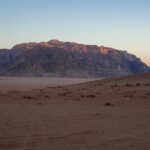
Wadi Rum changes at sunset. A full day in the desert by jeep, then an overnight stay outside a remote cave turns the whole trip into one long moment of awe, not just photos.
Two things I really like: the small-group pace (max 15) and the chance to sleep under the sky, not back in town. You also get traditional meals cooked in the desert, which makes the time feel personal instead of rushed.
One thing to consider: this is not a sit-and-watch tour. You’ll tackle soft sand climbs and some short walks, plus a couple bridge photo spots where footing matters, so plan on moderate physical effort.
In This Review
- Key things that make this tour worth it
- From Aqaba to Wadi Rum: the 10:00 start that sets the tone
- Lawrence Spring and Khazali Canyon: where Wadi Rum feels historical
- Lawrence Spring: an oasis that still acts like one
- Jebel Khazali / Khazali Canyon: inscriptions and caravan routes
- Red sand, bridges, and the best photo math in Wadi Rum
- Red Sand Dune: simple climb, tricky sand
- Little Bridge: easy height, good views
- Umm Fruth Rock Bridge: the big photo moment
- Mushroom Rock and the White Desert transition
- Lawrence’s House: piles of stones and caravan logic
- Burdah Rock Bridge: admire from distance unless you hike
- Bedouin lunch in open air and calm canyon walking
- Traditional Bedouin lunch: cooked outside, eaten with the views
- Abu Khashaba Canyon: green contrast and bird sounds
- Sunset viewpoint tea and the cave night built for stargazing
- Sunset viewpoint: fire tea and slow sitting
- Overnight outside the cave: sleeping gear included
- Sunrise breakfast at the cave and the return to Wadi Rum Village
- Breakfast timing and why mornings feel special here
- Price and value: what $123.76 really covers
- Who this tour suits best (and who should reconsider)
- Should you book it? My take
- FAQ
- Where does the tour start?
- How long is the experience?
- What time is breakfast served on day two?
- What’s included in the price?
- How many people are in the group?
- Do I need to bring sleeping gear?
- Is a visitors center transfer included?
- Is the tour suitable if I have limited mobility?
- What happens if the weather is bad?
- Can I cancel and get a refund?
Key things that make this tour worth it
- Small group size (up to 15): easier conversation with your guide and less waiting around.
- Classic Wadi Rum jeep circuit: you hit the headline sights in one day.
- Lawrence Spring stop: cool water oasis energy, plus camel hangout vibes.
- Bedouin tea at the sunset viewpoint: warm pause after a long day of desert scenes.
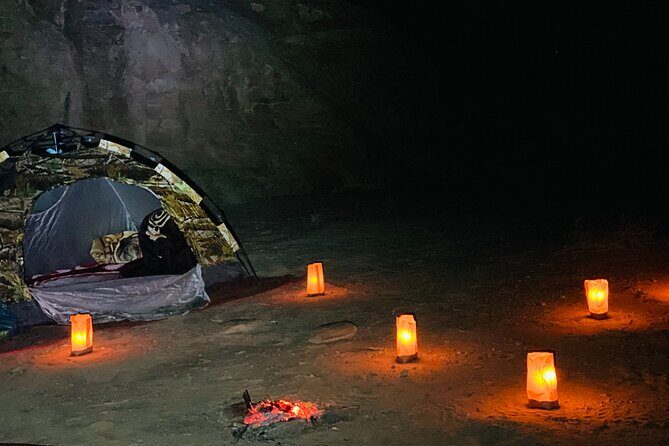
- Overnight in a cave area (outside): mattress and blankets provided for sleeping under the stars.
- Breakfast at sunrise: you start day two with views from the cave.
From Aqaba to Wadi Rum: the 10:00 start that sets the tone
This tour is based in the Wadi Rum area (starting at the Wadi Rum Rest House in the village). The start time is 10:00am, which is great because you’re already rolling before the desert heats up too much.
The meeting point is practical: Wadi Rum Village has a supermarket and souvenir shop, and the tour office is right around the corner from the rest house. You’ll also be using a mobile ticket, which keeps check-in simple. And yes, it’s near public transportation, so you’re not totally trapped if you’re moving from Aqaba on your own.
One small note that matters: there’s a transfer mention tied to the visitors center (it says you may need to book an extra transfer for 10 JOD). If you’re planning your own timing around Wadi Rum Village, it’s worth confirming where you’ll be coming from so you’re not scrambling on the day.
You can also read our reviews of more food & drink experiences in Aqaba



Lawrence Spring and Khazali Canyon: where Wadi Rum feels historical

Day one starts with classic Wadi Rum nature and then quickly turns into stories written into the rock.
Lawrence Spring: an oasis that still acts like one
The first key stop is Lawrence Spring. This is a natural water source with cool water flowing down the mountains into channels below—an oasis feel in the middle of red desert. It’s also described as a favorite spot for camels, so you often get that “why this place mattered” feeling fast.
What I like here is that it’s not just scenic. You also have the option to climb toward better views and see Thamudic inscriptions. That’s the kind of detail that turns a quick stop into something you remember.
If you’re thinking about camera time, bring patience. The water and moss create a striking contrast in color, and it’s a good place to slow down for a moment.
Jebel Khazali / Khazali Canyon: inscriptions and caravan routes
Next up is Jebel Khazali, specifically the canyon area between split mountains. From the outside, it looks like an ordinary mountain. Inside, it turns into a corridor of history with traces linked to merchants who traveled between Egypt and Damascus, plus pilgrims headed toward Mecca.
Expect to see Thamudic, Nabatean, and Islamic inscriptions, along with petroglyphs of humans, animals, and even soles of feet. There are also basins tucked deeper in.
The practical part: you’ll have about 30 minutes, so you can’t do it like a museum visit. But you can still get a real sense of why caravan travel shaped this region.
Red sand, bridges, and the best photo math in Wadi Rum
After the canyon, the tour pushes into the visual highlights—those famous red-sand scenes and rock bridges that make Wadi Rum instantly recognizable.




Red Sand Dune: simple climb, tricky sand
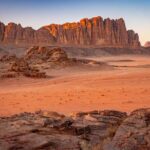
One of the main stops is the Red Sand Dune—Wadi Rum’s most famous one. It gets its red color from iron oxide. The climb looks straightforward until you’re on the soft sand. Then it’s tiring fast.
You’ll have about 1 hour here. If you want the fun option, the plan mentions the locals’ entertainment factor and notes that getting down can be done by running or sandboarding. Even if you don’t sandboard, plan to use the dune time for a slow climb, a summit view, and photos from different angles.
Little Bridge: easy height, good views
Little Bridge is near the Khor El Ajram area. It’s only a few meters high, so it’s easier than the big bridge stops. It’s a great option if you want the “bridge photo” without committing to a steep climb.
There’s also a practical comfort moment built in: after you come back down, there’s sweet tea waiting at the Bedouin tent. That matters because Wadi Rum can tire you faster than you expect, especially if the sand has you working for every step.
Umm Fruth Rock Bridge: the big photo moment
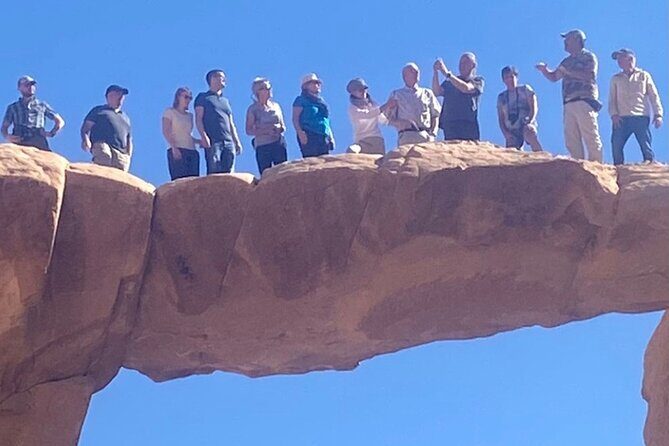
Then comes Umm Fruth Rock Bridge, a 15-meter-high natural bridge and the most famous bridge for enviable photos. The tour notes that the guide helps with the photo: your guide stays on the ground while you climb up. There are small holes in the rock to make the ascent a bit easier.
This is one of the stops where your comfort level matters. Your guide can help with timing and instructions, but you still need steady footing and a willingness to climb.
Mushroom Rock and the White Desert transition
Two additional stops shift the visual variety:
- Mushroom Rock: a playful formation shaped by erosion (lower part wearing out faster). It can also offer a bit of shelter, which is useful after hours in open sun.
- White Desert: farther south the terrain changes into white sand and a different rock vibe. It’s noted as less visited, which can mean more chances to spot wildlife and more plant life compared with the red desert areas. You’re watching the transition between red and white, and it’s one of those moments that makes Wadi Rum feel bigger than its postcards.
Lawrence’s House: piles of stones and caravan logic
Lawrence’s House ties Wadi Rum to “Lawrence of Arabia” and the Nabateans who founded the base over 2000 years ago. Even if you don’t come for the Hollywood connection, you’ll like this stop because it shows how the desert was navigated.
The view from the top is the main event, and the piles of stones below are described as road markings stacked by Bedouins in the past. It’s a small detail, but it makes the place feel lived-in by history.
Burdah Rock Bridge: admire from distance unless you hike
You’ll also stop close to Burdah Rock Bridge for a distant look from the jeep. The full climb to reach the bridge can take up to 4 hours, and that hike isn’t included with the jeep tour. If you want that bridge closer, it’s described as needing a separate hiking tour or a request.
For most people, the distant view still delivers the wow-factor. For hikers, it’s a cue to plan an add-on if you want the extra effort.
Bedouin lunch in open air and calm canyon walking
The best desert days don’t just move. They also pause. This tour builds in that rhythm.
Traditional Bedouin lunch: cooked outside, eaten with the views
The traditional Bedouin lunch stop is timed at about 1 hour. Your guide prepares food cooked outside on the fire. The menu changes daily, but you should expect a warm spread with vegetables, bread, hummus, yoghurt, and other local treats.
I really like this kind of meal in Wadi Rum because it does two things at once:
- You refuel properly after jeeping and climbing.
- You get a calmer social moment with the guide and the desert around you instead of just sprinting between sites.
There’s also time to either explore with a hike or simply sit and take in the surroundings while lunch finishes.
Abu Khashaba Canyon: green contrast and bird sounds
Next is Abu Khashaba Canyon, a deep narrow valley with tall mountain walls. The big value here is contrast: there’s described greenery, trees and plants, and lots of bird chirping—plus bottles hung to collect rainwater for birds.
Your walking window is 30 to 45 minutes. The tour notes your guide will pick you up on the other side, which helps you avoid the “walk back” scramble. Still, you’ll want comfortable shoes because canyon paths can be uneven even when the walk feels short.
Sunset viewpoint tea and the cave night built for stargazing
Day one ends with one of Wadi Rum’s main attractions: sunset. Then comes the part that makes this tour feel different from a normal day jeep ride.
Sunset viewpoint: fire tea and slow sitting
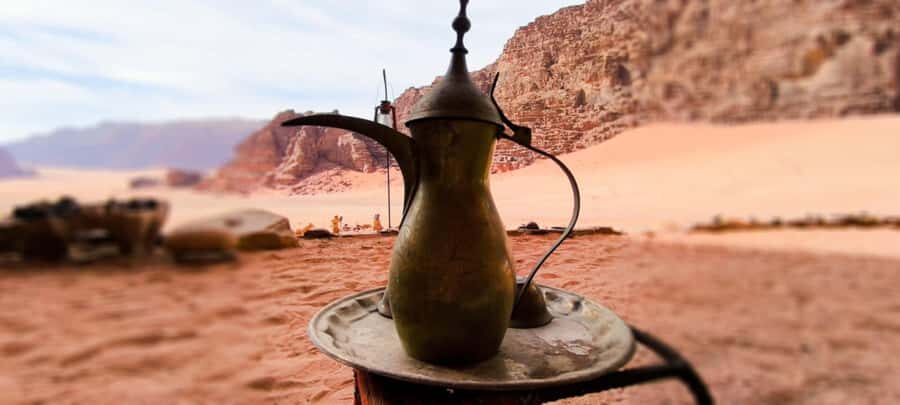
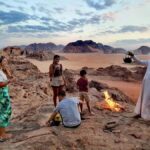
At the sunset viewpoint, you get about 1 hour. The goal is a secluded area with panoramic desert views while tea is prepared on the fire. You’ll sit on a mattress or in the sand, which is a smart detail. You’ll get comfortable enough to watch the sky change instead of standing for 20 minutes and missing the best colors.
Plan for temperature changes. Desert sunsets can cool quickly, and the tour is designed for you to sit still for a while.
Overnight outside the cave: sleeping gear included
The overnight is in a cave setting, described as outside, with a night aimed at stargazing. You’ll have dinner, breakfast, and your sleeping gear: mattress and blankets.
The practical advantage of including sleeping gear is huge. It saves you from packing extra bedding for a night that’s likely colder than you expect once the sun drops.
Also, because this is stargazing-focused, you’ll want to think in layers and keep your phone battery ready. The data says it requires good weather, so on clear nights you’ll get better sky visibility. On bad weather, the tour can be rescheduled or refunded.
One more detail I’d keep in mind from the vibe of the night: it can come with nighttime sounds like barking dogs. That’s not a dealbreaker; just don’t expect complete silence.
Sunrise breakfast at the cave and the return to Wadi Rum Village
Day two keeps things gentle. You wake up to the cave area with a panoramic Wadi Rum view and sunrise.
Breakfast timing and why mornings feel special here
Breakfast is usually served 07:00–08:00, with about 1 hour for the meal. This is a big reason to book a two-day experience instead of doing only the day tour: mornings in Wadi Rum are quieter, cooler, and calmer than midday.
Then you’ll be dropped back at the Rest House in Wadi Rum Village, usually around 09:00, with the tour ending back at the meeting point.
Price and value: what $123.76 really covers
At $123.76 per person, this tour isn’t cheap in the way a “basic” excursion can be. The value comes from what’s bundled.
Here’s what you get included:
- Full day jeep tour with multiple stops
- Dinner, breakfast, lunch
- Bottled water and tea across the experience
- Overnight in a cave area (outside) with mattress and blankets
- Transfer to and from Wadi Rum Village
Also, the group size caps at 15 travelers, which is meaningful in Wadi Rum. It reduces wait time at viewpoints and gives your guide more room to actually answer questions instead of rushing everyone through.
If you’re comparing your options, treat this as a “meals + desert transport + overnight setup” package. That framing usually makes the price feel more reasonable—especially if you’d otherwise have to figure out your own transport and evening plans.
Who this tour suits best (and who should reconsider)
This tour is a strong match if you want:
- A full itinerary that hits many Wadi Rum highlights without you driving or planning routes
- A real cultural-meets-nature experience, especially with the traditional lunch and tea moments
- The stargazing overnight setup (rather than sleeping in a hotel and calling it done)
- Small-group energy, so you’re not stuck in a crowd
It may be less ideal if:
- You don’t do well with sand climbs and uneven rock photo stops
- You dislike early mornings (you’ll be up for sunrise breakfast)
- You prefer a quieter, slower day with fewer active moments
The tour notes a moderate physical fitness level is recommended. That’s not “athlete only,” but it does mean you should be comfortable walking short distances on uneven terrain.
Should you book it? My take
I think this is a solid book if you want your Wadi Rum trip to feel like a story with an ending. The combination of jeep highlights in one packed day and the overnight cave + stargazing setup gives you two different sides of the desert.
Before you commit, sanity-check one thing: your comfort with short climbs and soft sand. If that’s fine, you’ll likely love how much you get in two days—especially the guide-led pacing, the desert tea pauses, and the full meal plan that keeps the day from turning into “buy something quick and go.”
If you want Wadi Rum only for photos, you might prefer a shorter day tour. But if you want the sky to be part of the memory, this one is built for that.
FAQ
Where does the tour start?
You meet at the Wadi Rum Rest House in Wadi Rum Village, Jordan. The tour usually begins around 10:00am.
How long is the experience?
It runs about 2 days (approx.) with a full day in Wadi Rum on day one and breakfast plus drop-off on day two.
What time is breakfast served on day two?
Breakfast is usually served around 07:00–08:00.
What’s included in the price?
The tour includes dinner, breakfast, lunch, bottled water and tea, plus the overnight in a cave (outside) with mattress and blankets, and transfer to and from Wadi Rum Village.
How many people are in the group?
The tour has a maximum of 15 travelers, and it’s described as a small-group experience.
Do I need to bring sleeping gear?
No. Mattress and blankets are provided for sleeping outside in the cave area.
Is a visitors center transfer included?
The information states that the visitors center transfer is not included and can be booked extra for 10 JOD.
Is the tour suitable if I have limited mobility?
It says travelers should have a moderate physical fitness level. Some stops involve climbs and walking on sand or rocks.
What happens if the weather is bad?
This experience requires good weather. If it’s canceled due to poor weather, you’ll be offered a different date or a full refund.
Can I cancel and get a refund?
Yes. You can cancel for free up to 24 hours in advance for a full refund. If you cancel less than 24 hours before the start time, it won’t be refunded.