REVIEW · AQABA
Wadi Rum: Explorer Jeep Tour PASS + Local Food + Optional Stay
Book on Viator →Operated by Wadi Rum Fire Camp · Bookable on Viator
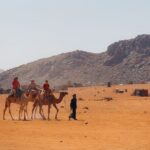
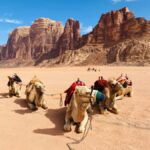
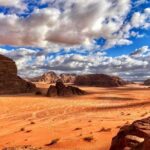
Wadi Rum hits like a movie set. This small-group 4WD tour is built for seeing more than a quick drive-by and includes an overnight camp option if you want the full desert night. You’ll roll past major Wadi Rum landmarks, stop for photos, and end the day with stargazing and campfire vibes.
One possible drawback: the English quality and how much your guide narrates can vary. Some groups get very interactive storytelling, while others may feel the guide keeps things more practical than chatty, so it helps to ask questions on the way out.
In This Review
- Key Points You’ll Care About
- Price and Logistics: Why $37.50 Is Actually Fair
- The Small-Group 4WD Advantage (7 People Means You Get to Ask Stuff)
- Lawrence’s Trail: Stops That Mix Photos, Footprints, and Famous Names
- Lawrence’s Spring (Start Point With Camel-Powered Drama)
- Al Ramal Red Sand Dune (Where You Earn the View)
- Khazali Canyon (Petroglyphs and Pilgrim Footprints)
- Little Arch (Short Climb, Big Reward)
- Lawrence’s House (Stone Stacks + Lunch in Shade)
- Mushroom Rock (A Funny Shape Worth a Stop)
- Burdah Canyon / Burdah Rock Bridge (See the Bridge Without the Top Climb)
- Abu Khasaba Canyon (A Real Little Walk Through a Tight Valley)
- Um Frouth Rock Arch (The Big Photo Moment With a Climb)
- Cow Rock (A Fun Shape and a Wind-Weather Lesson)
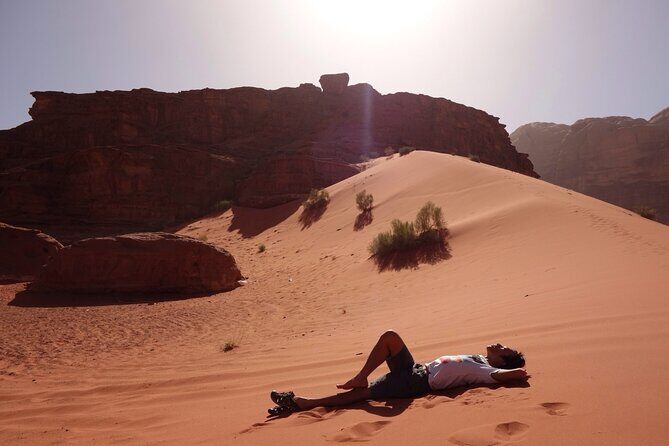
- Um Sabatah Sunset: Tea Over Fire + Recline Time
- The Overnight Camp Night: Dinner, Stars, and Two Sleeping Styles
- Sand-Cooked Buffet Dinner
- Stargazing With Stories and Firelight
- Sleep: Private Tent or Under Stars
- Food and Water: The Comfort Layer That Makes Desert Days Work
- Who This Tour Fits Best (And Who Might Want a Different Style)
- Should You Book This Wadi Rum Jeep Tour?
- FAQ
- What’s the Wadi Rum entrance fee, and is it included?
- Does this tour include meals?
- Is there a camp night, or is it only daytime?
- How many people ride in the jeep?
- Do I get sunset and tea?
- Can I get a refund if my plans change?
Key Points You’ll Care About
- Max 7 in the jeep for better questions and a less chaotic pace
- Nine to 12 historic stops across canyons, arches, and Lawrence sites
- Sandboarding try-out tied to the big dune time
- Sunset tea at Um Sabatah for the classic Wadi Rum color shift
- Optional Bedouin sleeping: private tent or under stars, plus a campfire night
- Value wins for budget travelers because meals and the driver/guide are included with the core tour
Price and Logistics: Why $37.50 Is Actually Fair
At $37.50 per person, this is priced like a budget-friendly way to get deep into Wadi Rum instead of just grabbing a couple of quick photo stops. The big value is that your ticket bundles an English-speaking guide and driver, water and hot drinks, and access to a string of key sights spread across the protected area.
Do note one catch: the Wadi Rum entrance fee is 7 JD per person, unless you’re covered by the Jordan Pass. Also, the experience is described as non-refundable and not changeable once you book, so make sure your dates are solid before you hit confirm.
If you’re coming from Aqaba, plan on a day that feels like it’s “in the desert first,” not “start with the town.” This tour is built around driving between sites and getting out for short hikes and viewpoints.
You can also read our reviews of more food & drink experiences in Aqaba



The Small-Group 4WD Advantage (7 People Means You Get to Ask Stuff)
Wadi Rum gets busy, so the fact that the jeep caps at seven travelers matters more than it sounds. With fewer people, you spend less time waiting at pull-offs and more time actually getting the shot, stretching your legs, and asking why a place matters.
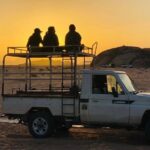
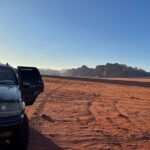
Most of the driving is done in a proper 4WD setup, and you’ll likely ride in an older-model Toyota-style jeep based on past rider reports. That’s not just nostalgia: rough desert roads feel less punishing when you’re in the right vehicle and the driver knows the terrain.
Bring this mindset: in Wadi Rum, the scenery is the headline, but the guide is what turns it into a story. If you want details on Thamudic inscriptions, Nabatean sites, or what you’re looking at on rock faces, ask directly—your guide can steer the explanation toward your interests.
Lawrence’s Trail: Stops That Mix Photos, Footprints, and Famous Names

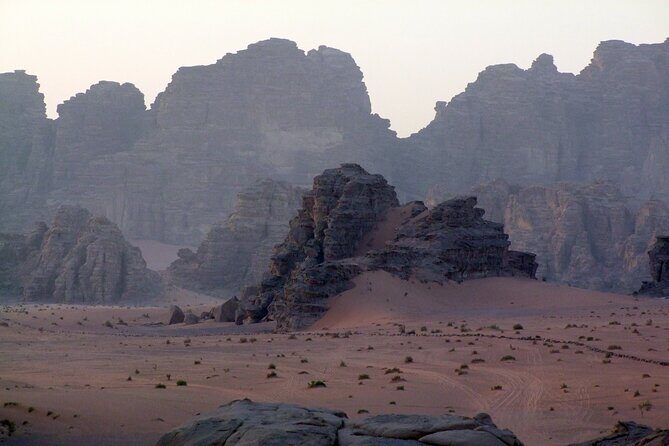
This route leans hard into Wadi Rum’s most recognizable landmarks, with enough variety that you shouldn’t feel like you’re repeating the same view.
Lawrence’s Spring (Start Point With Camel-Powered Drama)
You begin at Lawrence’s Spring, a natural water source referenced by T.E. Lawrence. It’s one of those rare moments where the desert shows something alive and green-ish—dwarf trees, moss, and an oasis feel where even camels come to drink.
Two ways this stop can play out: you can keep it quick and enjoy the water scene, or you can hike up for wider desert views and to look for Thamudic inscriptions higher on the slopes.
Practical tip: this is a good warm-up stop. If you’re sensitive to heat or want easy walking, stick to the main area and save energy for the longer canyon moments later.
Al Ramal Red Sand Dune (Where You Earn the View)
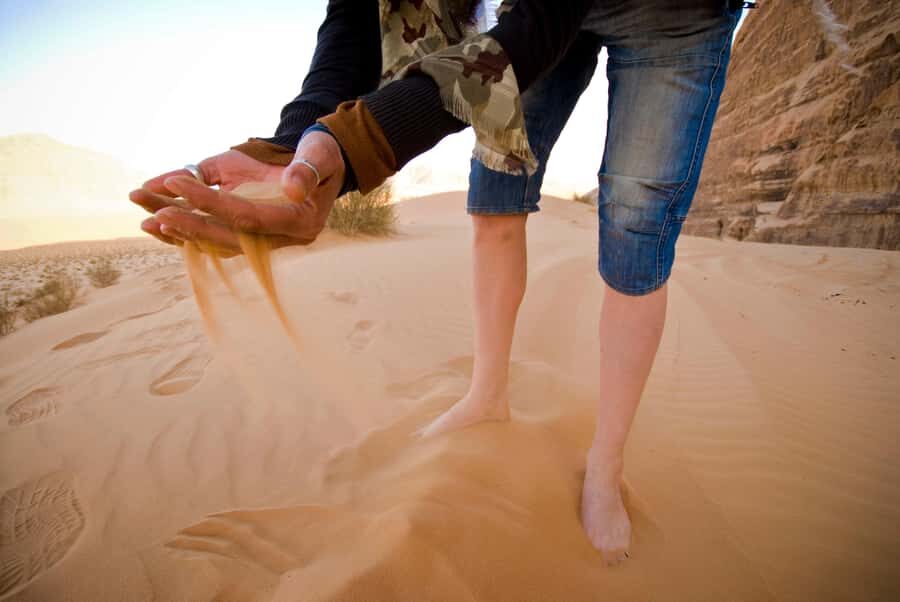
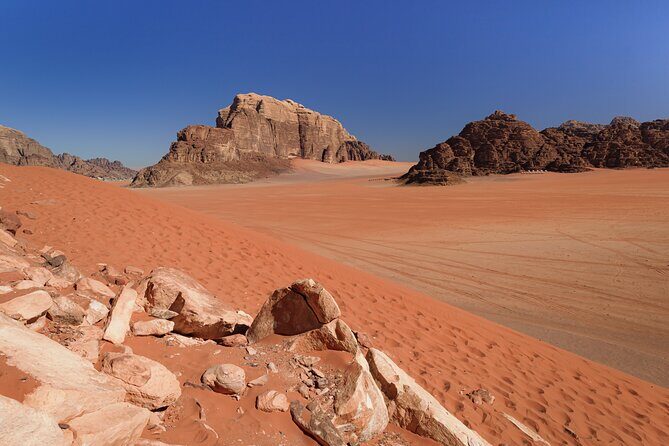
Next up is the Al Ramal red sand dune. This is the “climb and slide” stop—expect a climb that feels like a workout, then the fun of running down. The red color is tied to iron oxide in the sand, so yes, the dune is gorgeous for photos, but it also has science baked in.
From the highest point, the valley opens up into a panoramic scene. It’s the kind of place where you’ll understand why artists keep painting Wadi Rum.
Good to know: this is also where sandboarding may happen. If you want a try, don’t wait until you’re already tired—ask and get your equipment sorted early in the dune window.


Khazali Canyon (Petroglyphs and Pilgrim Footprints)
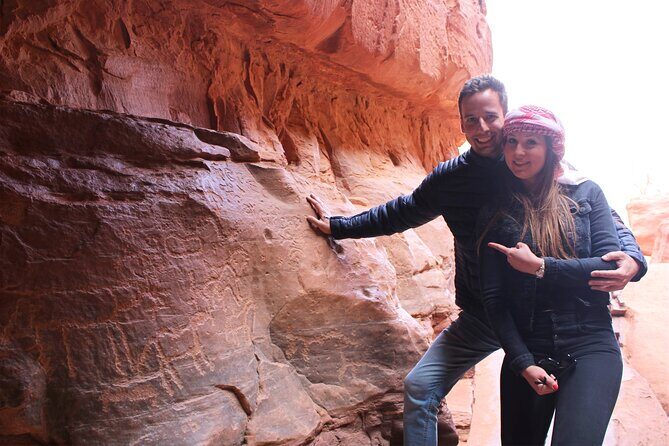
At Khazali Canyon, you’re walking into a crevice lined with ancient rock art and petroglyphs. This is one of the top “look closer” stops, because the markings span different periods—people and animals, plus inscriptions tied to Thamudic, Nabatean, and later historical eras.
The canyon is also associated with travel stories: footprints of pilgrims traveling toward Mecca and traders moving along old caravan routes. That means this stop isn’t just pretty rocks—it’s human history pressed into stone.
Wear shoes you can walk on without stress. The terrain can be uneven, and you want your footing for taking photos at the right angle.
Little Arch (Short Climb, Big Reward)
Little Arch is a natural bridge formation in the Khor al Ajram area. It’s “only a few metres high,” and the climb is generally easy, but it delivers a viewpoint that makes the effort feel worth it.
If you like quick wins—stands, frames, and a strong photo angle—this is one of your favorites. It also breaks up the day so you’re not only driving and only trekking.
Lawrence’s House (Stone Stacks + Lunch in Shade)
Then comes Lawrence’s House, a Nabatean-era stone structure tied to T.E. Lawrence. You’ll do a short ascent to a top viewpoint where you’ll see what feels like endless piles of stones.
Those stone stacks were used by Bedouins as road markers, which makes the place feel less like a museum and more like a functional landscape feature that people understood long ago.
Here’s where lunch lands. Your guide will find a shady spot for your break, and you’ll eat and sip tea. That “shade + food + tea” combo is one of the practical reasons this tour feels comfortable even when you’re surrounded by heat and sun.
Mushroom Rock (A Funny Shape Worth a Stop)
Mushroom Rock is a pedestal rock shaped by erosion—wider base, thinner top—like a mushroom silhouette. It’s a quick stop, but it’s also a nice breather. The form looks great in photos and can offer a bit of refuge from sun at the right angle.
Burdah Canyon / Burdah Rock Bridge (See the Bridge Without the Top Climb)
At Burdah Canyon, you’ll pull over to look at Burdah Rock Bridge. It’s known for its massive scale and wide vistas around it.
Important note: on this jeep route, you get a better look from the side of the road, but you don’t hike up to the top. That’s a plus if you want views without committing to a harder climb during your day.
Abu Khasaba Canyon (A Real Little Walk Through a Tight Valley)
Abu Khasaba Canyon is the “stretch your legs” stop—about a 1 km trek through narrow canyon space. The walk takes roughly 45 minutes, and it’s described as simple and beautiful, with plant life and bird song.
Because it’s enclosed, it can feel cooler than the open dune areas. Still, treat it like an actual walk: bring water, stay aware of footing, and don’t wear flip-flops if you want an easy time.
Your guide will meet you at the end of the walk, so you’re not on your own.
Um Frouth Rock Arch (The Big Photo Moment With a Climb)
Um Frouth Rock Arch is one of Wadi Rum’s most photographed spots. It includes a 20-minute-ish round-trip climb to a viewpoint, and while it may not be the most historically meaningful site, it’s prime for breathtaking valley photos.
If you don’t love climbing, plan carefully. Locals move fast here; tourists may find the route a bit more demanding than they expect. You’ll do best if you keep a steady pace and take a breath at the steep sections.
Cow Rock (A Fun Shape and a Wind-Weather Lesson)
At Cow Rock, you’ll see the formation that looks like a cow—round body with two legs. The point is not just the shape; it’s how erosion shaped it over time with wind and rains.
This is a good stop if you like geology and want one last viewpoint before the day builds toward sunset and camp.
Um Sabatah Sunset: Tea Over Fire + Recline Time
If you book the full-day option with the night, you’ll reach Um Sabatah for sunset. This is the highlight timing shift: the sunset stop is for the full-day experience, not the shortest departures.
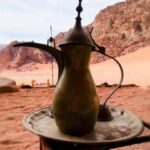
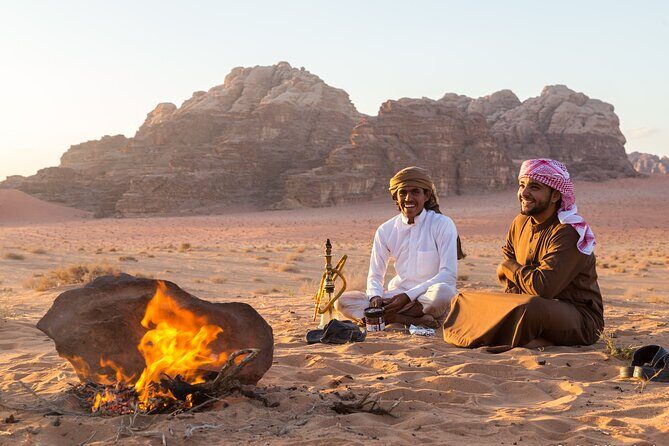
Your guide brings you to a secluded viewpoint, and as the sun drops you get Bedouin tea brewed over a fire. The experience is designed for slowing down—recline on the sand or a mattress and watch the desert glow change colors.
Practical note: it’s worth bringing warm layers for late-day. Even when daytime feels fine, desert evenings can cool down fast once the sun disappears.
The Overnight Camp Night: Dinner, Stars, and Two Sleeping Styles
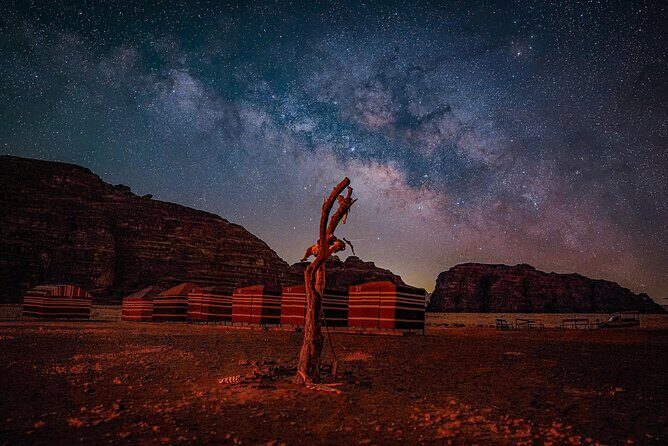
The optional stay is the part that turns this from a “great tour” into a true Wadi Rum memory. You’ll return to a camp located in the centre of the UNESCO-area protected zone and settle in for a long evening.
Sand-Cooked Buffet Dinner
Dinner is described as a customary buffet cooked using desert sand as a traditional cooking method. This matters because it’s not just a meal; it’s part of the local process that makes the camp feel like it belongs in Wadi Rum.
You’ll also have coffee and/or tea available as part of the included drinks.
Stargazing With Stories and Firelight
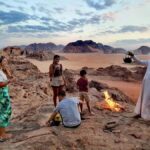
After dinner, the night shifts to stars and campfire time. You’ll sit near a bonfire for star watching, stories, and laughter that mixes people from different nationalities.
In at least one camp setup, there’s a common building with a fireplace that adds to the cozy factor—especially when temperatures dip.
Sleep: Private Tent or Under Stars
You can choose one night in a private Bedouin tent or sleep under stars inside the protected area. Sleeping under the stars is the more dramatic option, and it’s also the one where weather matters most.
One practical heads-up: if you’re going in winter or early spring, expect cold. Reviews note that rooms can run chilly, and blankets are provided, but you’ll want warm clothes anyway.
Food and Water: The Comfort Layer That Makes Desert Days Work
What I like here is that this tour includes the essentials without making you chase them down.
You’ll have bottled water, plus coffee and/or tea. The tour info also points to free access to water during the jeep time, so you’re not rationing yourself through the day.
For meals, lunch is tied to a proper break (with tea) during the day, and for the overnight option you’ll get dinner and breakfast in camp. That’s three meals during the full desert night experience.
One possible concern: meal quality can be basic depending on the camp run. Some riders have found lunch and breakfast less impressive than expected. If you’re picky, expect “traditional and filling” rather than fancy.
Who This Tour Fits Best (And Who Might Want a Different Style)
This works best for you if:
- You want more sights per hour than the typical short Wadi Rum drive
- You like a structured day with short walks and photo stops
- You want an authentic Bedouin camp night rather than just seeing a sunset from a viewpoint and leaving
- You’re traveling solo and want the day to feel easy to navigate with a small group
You might want to compare other options if:
- You want a lot of deep, continuous narration the whole time (some guides keep things more practical)
- You’re very sensitive to basic meal standards and need high-end food every stop
- You hate any physical effort at all—there are short climbs and at least one canyon walk
Should You Book This Wadi Rum Jeep Tour?
If your goal is to see real Wadi Rum—Lawrence’s sites, major arches, canyons, and at least one proper walk—this is a strong pick. The small group size, the string of stops, and the option for a night under stars or in a private tent are what make it feel like more than a standard sightseeing loop.
Book it if you want good value and a complete desert day, especially if sunset and stargazing matter to you. Just plan for desert temperature swings, wear shoes for uneven ground, and be ready to ask your guide questions if you want more story than logistics.
FAQ
What’s the Wadi Rum entrance fee, and is it included?
The Wadi Rum entrance fee is not included. It’s listed as 7 JD per person, or free if you have the Jordan Pass.
Does this tour include meals?
For the overnight option, you get three meals during the desert experience: lunch during the day, plus dinner and breakfast at the camp. Lunch is also described as optional in the inclusions, so double-check what’s included for your exact departure.
Is there a camp night, or is it only daytime?
It’s an optional stay. The tour can run from about 3 hours to up to 1 day, and the longer full-day version includes a night in a private Bedouin tent or under the stars.
How many people ride in the jeep?
The tour is capped at a maximum of seven travelers, with the activity also listed as having a maximum of eight.
Do I get sunset and tea?
Sunset at Um Sabatah is included with the full-day experience. You’ll also have Bedouin tea brewed over a fire during the sunset moment.
Can I get a refund if my plans change?
No. This experience is non-refundable and cannot be changed for any reason.