REVIEW · AQABA
Full-Day Jeep Tour in Wadi Rum with Overnight Stay
Book on Viator →Operated by Wadi Rum Quiet Village Camp · Bookable on Viator
Wadi Rum feels like a real-life movie set, and this tour gives you jeep access plus a true camp overnight. I like that the route mixes famous landmarks with lesser-visited geology, and I like the Bedouin-cooked meals that turn the day into more than just photo stops. One thing to plan around: a few climbs and scrambles are not for everyone, especially near rock bridges with no safety ropes.
You’re paying $85 for a full two-day experience in a protected desert area, not just a quick drive-and-leave. I’d also flag that guide quality can vary, so it’s smart to ask what you can expect from your specific guide for your group.
In This Review
- Key highlights worth waking up for
- Two days of Wadi Rum: what this jeep-and-camp combo really gives
- Lawrence’s Spring: how Wadi Rum keeps a few drops alive
- Khazali Siq and the canyon wall you can read
- “Little Bridge” and Lawrence’s House: landmarks with layers
- Bedouin-style lunch: the break that keeps the day from burning you out
- Mushroom Rock to Burdah Bridge: the geology tour gets fun
- Abu Khashaba canyon: hourglass walking and sand-scramble energy
- Um Frouth: big views, careful steps (no safety ropes)
- Sunset and zarb-night: the part that turns it into a memory
- Day 2: breakfast, then back to the village
- Price and value: is $85 enough for two days?
- How to decide if this fits you
- Should you book this Wadi Rum jeep tour with overnight stay?
- FAQ
- How much does the Wadi Rum jeep tour cost?
- How long is the tour?
- Where does the tour start and end?
- Is this a private tour or shared group?
- What is included during the tour?
- Is there a mobile ticket?
- Do I need good weather?
- Are service animals allowed?
Key highlights worth waking up for
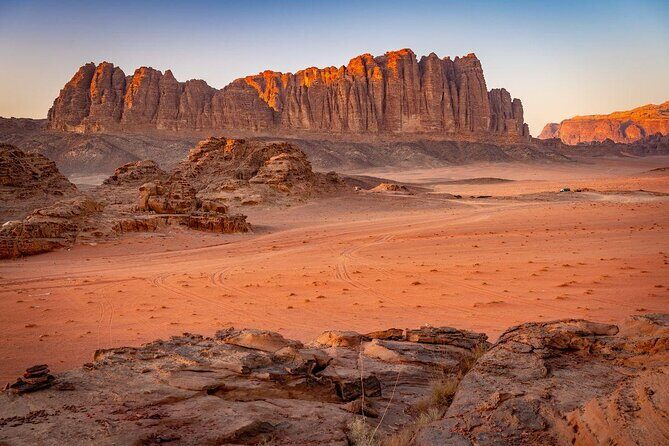
- Lawrence’s Spring: a rare “how the water works” stop, explained through the limestone-and-granite logic of desert springs
- Khazali Siq (Jebel Khazali): a canyon with Thamudic, Nabatean, and Islamic inscriptions plus petroglyphs
- Bedouin-style lunch: cooked by your guide while you rest among the mountains
- Burdah and Um Frouth rock bridges: big views, with the later climb needing careful footing
- Sunset timing + camp night: a planned sunset stop followed by zarb, tea, and music around the fire
- Private group: only your group participates, so you can move at a steadier pace
Two days of Wadi Rum: what this jeep-and-camp combo really gives
If you’re coming to Aqaba for Jordan’s desert, don’t just aim for a checklist. This format does something better: it strings together the geology, the ancient marks, and the day-to-night shift that makes Wadi Rum so different.
You’ll start in the Wadi Rum Village area and finish back at the same meeting point. The tour runs about 2 days, with a full day of jeep stops in the protected area, then breakfast and a drive back the next morning.
At $85 per person, the value comes from the “packaging” of day-long access plus an overnight stay in a traditional Bedouin camp setting. Admission tickets are included for the named stops, and you also get a Bedouin-style lunch during the day. In practice, that can add up if you were trying to arrange jeep time and entry points on your own.
The vibe from the camp side is also the point. The experience is guided by local hosts who focus on welcoming you as travelers and, ideally, leaving you feeling like part of the family. A lot of the praised moments in guest feedback are about hospitality and friendly help before you even reach the desert highlights.
A few more Aqaba tours and experiences worth a look

Lawrence’s Spring: how Wadi Rum keeps a few drops alive
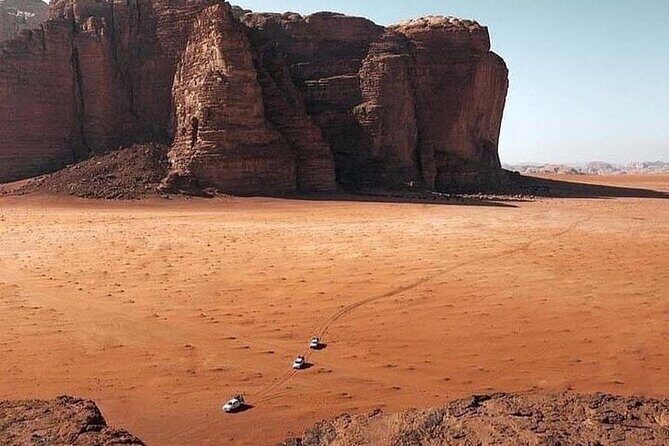
Day 1 kicks off with a meet-and-start at the camp. Then you head to Lawrence’s Spring, a set of small springs tucked in mountainous areas with limestone tops and granite bases.
Here’s the key idea you’ll want to understand as you look at the view: limestone can absorb rainwater. That water slowly travels downward until it meets granite, which can’t hold onto it. The result is water forced outward, forming small springs—mini oases where life can exist even in a wider desert that otherwise feels completely hostile.
From there, the scenery opens up across red sands toward Jebel Rum. You’ll also drive through dune slopes around Jebel Umm Ulaydiyya and reach Umm Fruth Rock Bridge, where you’ll see Bedouin-style tents—made with knitted camelhair—with carpets and cushions for sitting.
Why this stop matters: it gives you a “desert explanation,” not just desert views. Also, it’s a slower start that helps you read the terrain before you start climbing and scrambling.
Khazali Siq and the canyon wall you can read
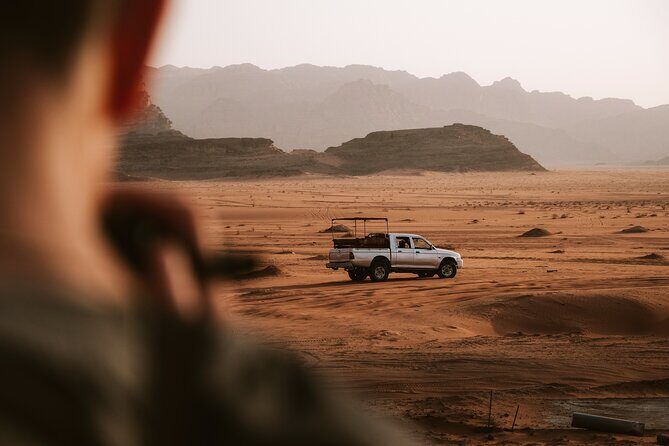
Next you move into the Wadi Rum Protected Area, where famous dune scenes live right in front of you. One of the stops centers on a dune in front of Khazali canyon—an easy-to-climb formation compared to some other options, and the kind that gives you big valley views.
Then the tour goes to Jebel Khazali, a peak within the protected area that opens into a narrow fissure about 100 meters long. This canyon wall is covered with Thamudic, Nabatean, and Islamic inscriptions, plus petroglyphs showing humans and animals. One especially striking detail is the petroglyph of soles of feet, which likely had religious significance.
A historical note you’ll hear at the site: in 1932, French epigraphist Savignac documented the engravings and published some of them a couple years later. Even if you don’t know epigraphy, the overall point is clear when you’re standing there: these marks didn’t appear for decoration. They’re evidence of people using, passing through, and meaning-making in a harsh place.
At the end of the canyon area, there are also man-made rock-cut basins used for water collection. That ties back to the spring you saw earlier: in Wadi Rum, water management is the difference between survival and empty sand.
“Little Bridge” and Lawrence’s House: landmarks with layers
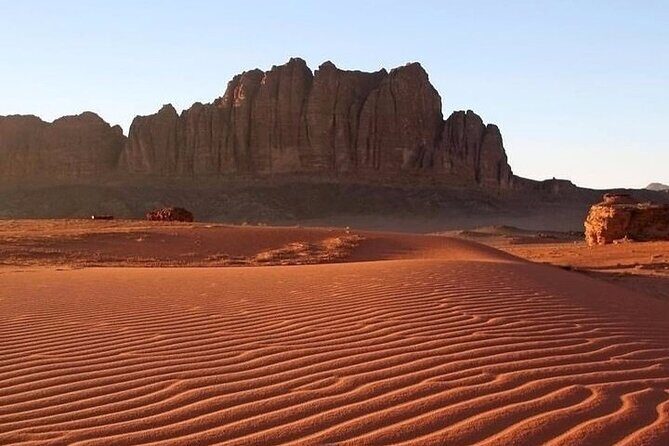
You’ll then visit Al Burj a’Sahrir, commonly called Little Bridge. It’s a landmark near the center of the Red Desert sites and offers views across a major valley intersection known as Khor al Ajram.
The bridge sits about 4 meters above the rocks and roughly 7 meters above the valley floor, which makes it relatively manageable compared with other rock-bridge climbs. Still, like most Wadi Rum terrain, you’ll want stable shoes and a careful pace.
From there, the tour moves to Lawrence’s House. You’ll hear the popular story that T. E. Lawrence reportedly slept here during his desert time. The deeper story is that the shelter actually rests atop an older structure built by the Nabateans more than 2,000 years ago, with the later British-era association happening around 1917.
This is one of those stops where your “tour head” should switch to “standing in the layers” mode. The name is a shortcut. The place itself is the real museum.
Bedouin-style lunch: the break that keeps the day from burning you out
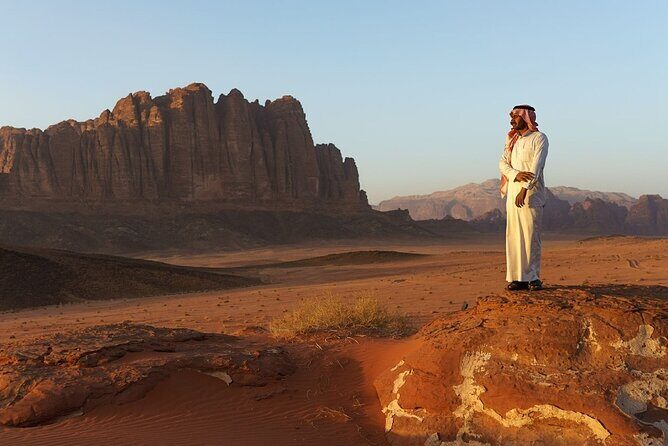
After the landmarks and canyon time, there’s a proper lunch stop with Bedouin-style food. The meal is cooked by your guide while you’re surrounded by dramatic mountains and red-sand surroundings.
This is not a throwaway break. Wadi Rum can feel deceptively close to being all “same scenery.” Lunch time is when your brain resets—shade, sitting, eating, and watching the light shift on the rock faces.
Practical note: plan to hydrate before and after lunch. Even if it doesn’t feel scorching, you’re still in open desert terrain.


Mushroom Rock to Burdah Bridge: the geology tour gets fun
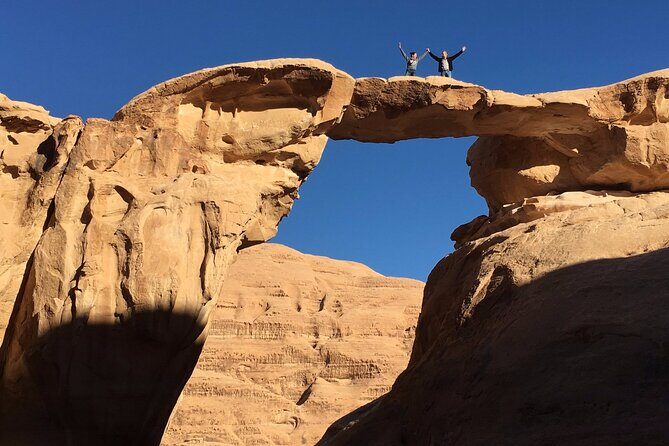
Next up is Mushroom Rock, also called a rock pedestal. The name isn’t poetic—it’s literal. The rock’s shape resembles a mushroom because of erosion and weathering patterns (and possibly other forces like glacial action or sudden disturbances, depending on the formation story).
Why you’ll like it: Wadi Rum is full of “big shapes,” but mushroom-like formations help you understand how wind and weather can carve rock into strange, almost intentional silhouettes.
Then comes Burdah Rock Bridge, which is described as the largest and most impressive rock arch in the protected area. The tour includes climbing up to the top to admire wide views in all directions.
This is where the day shifts from “look and learn” into “choose your footing and pace.” Take your time on the climb. The views are the payoff.
Abu Khashaba canyon: hourglass walking and sand-scramble energy
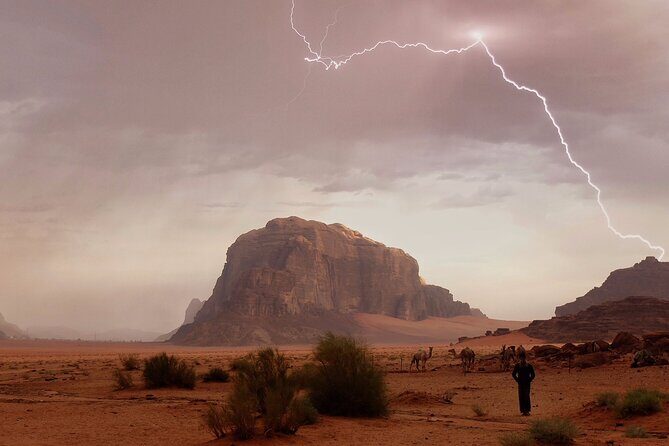
Another highlight is Abu Khashaba Canyon. Expect a red-and-yellow canyon with surprising greenery—desert bushes and trees—plus an hourglass shape with a narrow middle section.
To reach the narrowest part, you scramble up some rocks. It’s not described as a technical climb, but you will be on uneven surfaces. Once you get in, the walk feels like moving through a sculpted corridor. Over time, wind and rain formed shapes that can resemble animals and faces.
The walking time is set at about 45 minutes, which is a sweet spot: enough time to feel you did something, but not so long that you lose the group or gas out completely.
If you’re the type who likes getting a little dusty and earning the view, this is one of the stops you’ll remember.
Um Frouth: big views, careful steps (no safety ropes)
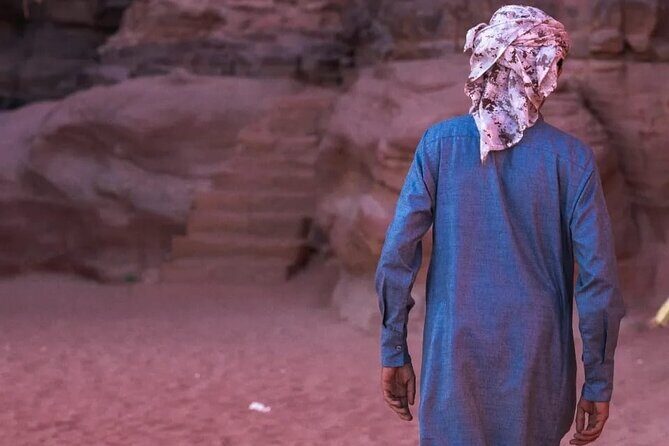
Later, you’ll head to Um Frouth Rock Arch, another bridge area where many people reach it by jeep, camel, or foot. In this tour, it’s reached by jeep.
The climb here isn’t described as difficult, but it comes with a big consideration: it may not be suitable for small children or differently abled visitors, and there are no safety ropes. The rock is wide and stable, but the instruction is still clear—watch your step.
So, for you: bring this mindset. If you have any balance concerns, plan to take it slow, stay with your guide, and don’t rush for photos.
Sunset and zarb-night: the part that turns it into a memory
Before wrapping up the day, there’s a stop for the best areas to enjoy sunset. This matters because the light in Wadi Rum doesn’t just make the sand look prettier—it changes how everything reads. Shadows deepen in the canyons, and the red turns warmer.
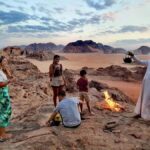
Then you’ll head to the camp. Overnight here is the core of the experience, and it’s built around Bedouin traditions. You’ll enjoy zarb, cooked under the sand, plus traditional music and Bedouin tea around a bonfire.
A few guests specifically praised how comfortable the camping setting felt and how good the spot was for shade. One review also mentioned an accommodation setup with a big room, private bathroom, and towels—so if you care about comfort details, it’s worth asking when you confirm what’s included for your exact camp arrangement.
At night, this is when Wadi Rum stops being a drive and starts being a place. The sky does what it does out in open desert, and the social part—tea and music—gives you something to do besides stare at sand.
Day 2: breakfast, then back to the village
After your desert night, the plan is simple. You’ll have breakfast, then the camp takes you back toward the village area.
The ride is short, about 15 minutes, and the tour ends back at the meeting point in Wadi Rum Village.
Price and value: is $85 enough for two days?
$85 per person is a good deal if you want:
- Two full desert days (not just a half-day loop)
- Jeep access across multiple protected-area landmarks
- Admission included for the listed stops
- A Bedouin-style lunch
- An overnight camp experience with food and evening tradition
It’s also priced like a real “experience packet,” which is what you want in remote places. In Wadi Rum, trying to piece together jeep time, entry points, and camp logistics separately can end up costing similar or more—plus it’s harder to manage.
The only time I’d think twice is if you’re extremely limited physically and want to avoid the bridge-area climbs and the canyon scramble. The tour notes that one of the bridge climbs isn’t suitable for small children or differently abled visitors, and that there are no safety ropes on that route.
How to decide if this fits you
You’ll likely enjoy this tour if:
- You want more than one signature Wadi Rum stop, packed into two days
- You like geology and want the “why” behind what you’re seeing (like the spring water logic)
- You want the full rhythm: jeep day + sunset + a camp night with zarb
You might want to consider a different option if:
- You’re worried about climbs/scrambles, especially the bridge climb with no safety ropes
- You prefer a very light itinerary with minimal walking and no scrambling
- You’re hoping for a very specific guide style (since one rating mentioned a guide problem while still praising the scenery)
One practical tip: the tour is often booked about 16 days in advance on average. If you’re traveling in peak season or on a tight schedule, booking earlier helps you lock in the experience you want.
Should you book this Wadi Rum jeep tour with overnight stay?
Yes—if your goal is to experience Wadi Rum as a place, not a drive-through. The best reason to book is the combination: desert landmarks across the protected area, a Bedouin-cooked lunch, and then the overnight camp with zarb, music, and tea. That’s what turns a “sightseeing day” into a story you’ll tell later.
Book with care if you or your group needs to avoid climbing and scrambling. Confirm expectations for the bridge areas ahead of time, and don’t hesitate to ask how your group will handle the no-rope sections.
If you want, tell me your group size, ages, and your comfort level with short scrambles, and I’ll suggest the most sensible way to choose a Wadi Rum option for your trip.
FAQ
How much does the Wadi Rum jeep tour cost?
It’s $85.00 per person.
How long is the tour?
The experience is listed as 2 days (approx.).
Where does the tour start and end?
It starts at Wadi Rum Village, Jordan and ends back at the meeting point.
Is this a private tour or shared group?
This is a private tour/activity. Only your group will participate.
What is included during the tour?
Admission tickets are included for the stops, there’s a Bedouin-style lunch cooked by your guide, and the overnight camp includes traditional zarb, music, and Bedouin tea around a bonfire.
Is there a mobile ticket?
Yes, it includes a mobile ticket.
Do I need good weather?
Yes. This experience requires good weather. If it’s canceled due to poor weather, you’ll be offered a different date or a full refund.
Are service animals allowed?
Yes, service animals are allowed.