REVIEW · AQABA
Lawrence’s House Jeep Tour (5 hours)
Book on Viator →Operated by VisitWadiRum · Bookable on Viator
Wadi Rum by jeep is a real switch-flip from everyday travel. This private 5-hour tour in Aqaba’s desert world mixes famous Lawrence-of-Arabia stops with hands-on walking breaks, so you’re not just riding past views. I like that it throws in both ancient sites (Nabatean and Thamudic inscriptions) and big photo moments (rock bridges and a soft red-sand dune).
Bedouin lunch plus coffee or tea is another winner because it makes the day feel complete, not like a rushed checklist. The one thing to factor in is that timing can tighten depending on when you start; one traveler noted an early cutoff that limited a sunset finish, and some jeeps aren’t brand-new, so comfort can vary.
In This Review
- Key highlights you’ll care about
- Wadi Rum, the Lawrence-of-Arabia connection, and why this route works
- The “5 hours” reality: private jeep pace, walking, and comfort
- Stop-by-stop: from Nabatean Temple to Lawrence’s Spring
- Nabatean Temple (Lat) in Rum village
- Lawrence’s Spring: water, echoes, and the Seven Pillars link
- Jebel Khazali: the siq walk and the carved clues
- Little Bridge: climb for photos
- Lawrence House and Anfeshyah inscriptions: seeing layers of use
- Lawrence House: ruins linked to Lawrence of Arabia
- Anfeshyah inscriptions: Thamudic and Nabatean carving
- Rock bridges and the Al Ramal red sand dune climb
- Um Frouth rock arch: popular and easiest to climb
- Al Ramal Red Sand Dune: the soft-sand walk
- Wadi Rum Ancient Map: quick but useful
- Bedouin lunch, coffee or tea, and desert comfort that actually matters
- Price and value: what $72 buys in Wadi Rum
- Departure times, sunset plans, and how to choose your slot
- Guides you might meet and what good guiding looks like here
- Who should book this Lawrence’s House Jeep Tour
- Should you book the Lawrence’s House Jeep Tour?
- FAQ
- How long is the Lawrence’s House Jeep Tour?
- How much does the tour cost?
- What’s included during the tour?
- Is this tour private or shared?
- Where does the tour start and end?
- Which stops are included?
- Are entrance tickets needed for the stops?
Key highlights you’ll care about
- Private vehicle and your own group, so you can ask questions and move at a human pace
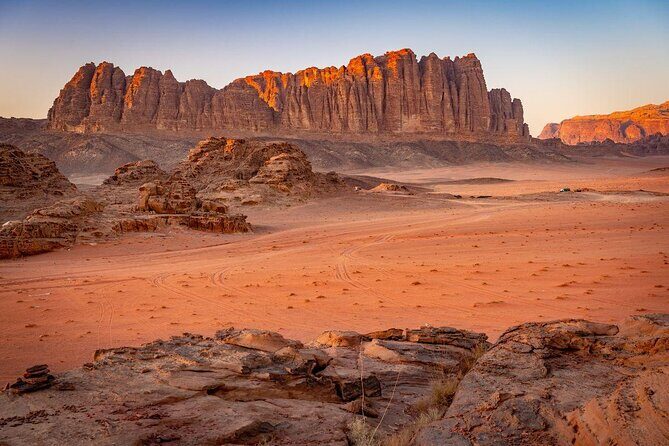
- A stop-heavy route across Wadi Rum: ruins, inscriptions, bridges, springs, and dunes in about 5 hours
- Walking breaks with purpose (like the short siq at Jebel Khazali) rather than just short photo stops
- Coffee/tea, bottled water, and Bedouin lunch included, so you’re not guessing where to eat in the desert
- Free admission at each listed stop, which helps you control costs
Wadi Rum, the Lawrence-of-Arabia connection, and why this route works
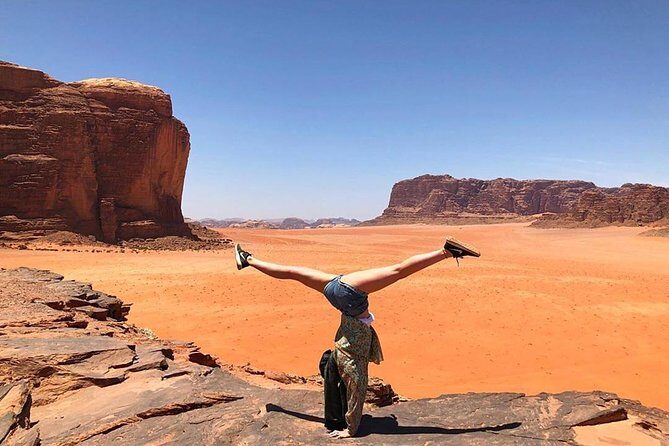
Wadi Rum is famous for a reason: it looks like nothing else you’ve seen, and then it keeps revealing more layers as you move. This jeep loop is built to do exactly that. You start in the settlement side of Rum, then you work your way through ancient carved places, natural rock architecture, and finally a red sand dune with room to breathe.
What I like most is the balance. You get cultural stops that explain the Nabateans and earlier peoples, but you also get “stand here and stare” desert moments like Little Bridge and Um Frouth. If you like your scenery with context, this is a strong match.
The best mindset for this tour is simple: plan to walk a little, take photos a lot, and keep your expectations realistic about time. You’ll be outdoors the whole way, and the desert always sets the pace.
You can also read our reviews of more tours and experiences in Aqaba.
The “5 hours” reality: private jeep pace, walking, and comfort
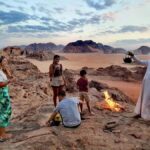
On paper it’s a 5-hour experience. In practice, you’ll feel it as a series of short driving legs plus focused stops. Many stops are around 10 to 30 minutes, so you don’t linger too long, but you also don’t feel like you’re trapped in a vehicle for every second.
Because it’s private, you’re not dealing with a huge mixed group shuffling on and off. That matters in Wadi Rum, where the ground can be uneven and the timing between stops affects how crowded a viewpoint feels.
Two practical notes:
- Some people report a jeep that feels older and less cushioned, so if you’re sensitive to rough rides, wear something supportive and brace for bumps.
- If you’re hoping for a sunset payoff, pick your departure time carefully. There can be an operator cutoff, and a cloudy sky can also shift whether a sunset moment happens.
Comfort is also helped by the included basics: bottled water and warm drinks. Hot tea in cool weather can be a bigger deal than you think.
Stop-by-stop: from Nabatean Temple to Lawrence’s Spring
This route is smart because it starts with human traces—places people used, lived around, and carved into the rock—before pushing deeper into the dramatic geology.
Nabatean Temple (Lat) in Rum village
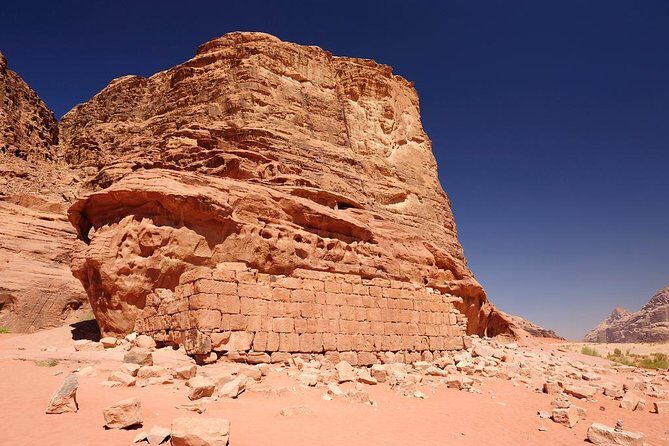
The first stop is a small hill in Rum village with limited ruins of a temple dedicated to Lat. The value here isn’t that it’s huge and polished like a museum. It’s that you’re seeing evidence of a permanent Nabataean settlement in this area. The site is also described as built on earlier foundations linked to the Arab tribe of Ad.
What you’ll feel: a sense of anchoring. Before you get blown away by dunes and bridges, you understand that this wasn’t just a passing landscape for caravans—it was lived in.
Lawrence’s Spring: water, echoes, and the Seven Pillars link
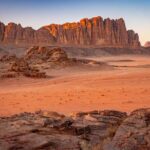
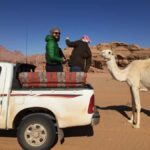
Next is Lawrence’s Spring, named in connection with the way T.E. Lawrence described the sounds of Arabs watering camels at springs high above the ground. Even if you don’t quote the book, the spring stop gives you a strong “how did people survive here?” perspective.
You’ll get a short break to take in the spring area and its surrounding rock—about long enough for a few photos and a moment of quiet.



Jebel Khazali: the siq walk and the carved clues
Then comes Jebel Khazali, which is one of those stops that rewards short walking. You’ll explore an easy siq, a narrow fissure, for about 150 meters on foot. The point isn’t a long hike. It’s stepping into that cool shade and seeing ancient inscriptions made by people who used the siq in much the same way.
Keep an eye out for drawings described around the area, including ostriches, pairs of feet, and even a scene of a woman giving birth. This is the kind of stop where your guide’s pointing matters. Even if you’re not a “history person,” you’ll start noticing details you’d miss from the jeep.
Little Bridge: climb for photos
After the inscriptions, the tour switches gears to pure rock drama: Little Bridge. It’s a natural rock bridge sitting in the Mars-like desert. You’re given time to climb it and take photos at your pace.
The practical tip here is footwear. If you want good footing on the climb, bring sturdy shoes. Not hiking boots, not ballet flats—just something with grip.
Lawrence House and Anfeshyah inscriptions: seeing layers of use
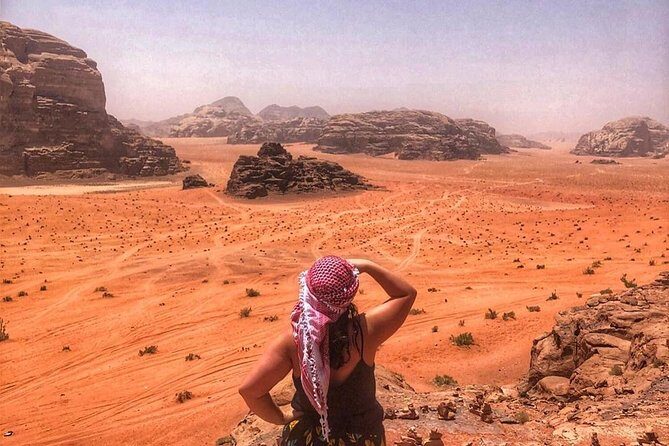
This part of the day is where the tour feels most “Wadi Rum specific,” because it connects famous names to real remains—and then adds a deeper layer through inscriptions.
Lawrence House: ruins linked to Lawrence of Arabia
Next is the Lawrence House area, within the Wadi Rum protected zone. Historians believe the building ruins connect to Lawrence of Arabia during his short stay in the desert. Expect ruins, not a fully restored site. The value is in the story and the atmosphere: you’re standing where a legend overlapped with real desert life.
I’d treat this stop like a conversation starter. Standing there, you’ll likely understand why Lawrence’s words stuck. The desert makes stories feel physical.
Anfeshyah inscriptions: Thamudic and Nabatean carving
The final “ancient writing” stop is Anfeshyah inscriptions, where you can see Thamudic and Nabatean carvings, plus drawings described as animals and humans. The theme is continuity: caravans and passersby left marks, and you’re seeing evidence of different periods.
Even in a short 15-minute slot, it’s meaningful. It’s like reading a timeline, but in stone.
Rock bridges and the Al Ramal red sand dune climb

After you’ve handled temples and carvings, the tour turns into scenery you can feel in your camera settings.
Um Frouth rock arch: popular and easiest to climb
Um Frouth Rock Arch is the second biggest rock bridge in Wadi Rum desert, and it’s described as the easiest to climb. That means you’re more likely to actually get to the best viewing angle without feeling like you need a full hiking day.
If you’re traveling with someone who prefers “see it, don’t stress,” this is a good match.
Al Ramal Red Sand Dune: the soft-sand walk
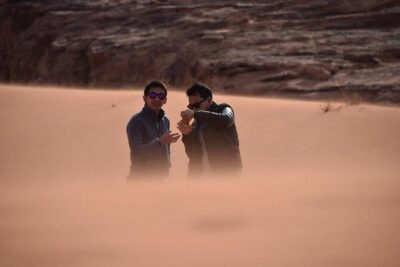
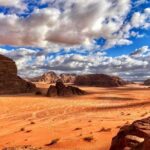
Then you’ll hit Al Ramal Red Sand Dune. This is a soft, silk-like dune, and you’re given time to walk up it and enjoy wide views.
Here’s how to make this stop work:
- Go slow on the sand—fast footsteps tire you out quickly.
- If it’s sunny, sunglasses and sunscreen matter. The included water doesn’t replace sun protection.
- Bring a light layer if the air feels cool, because desert temperature swings can happen fast.
Wadi Rum Ancient Map: quick but useful
You’ll also stop at the Wadi Rum Ancient Map area. It’s brief, but it helps you orient your brain. After seeing several landmarks, the map gives your mental routing something to anchor to.
Bedouin lunch, coffee or tea, and desert comfort that actually matters

Food in the desert has two jobs: keep you fueled and keep the day from feeling like survival mode. This tour includes a Bedouin lunch, plus coffee or tea, and bottled water.
What I take from the way this day is run is that breaks are built in for comfort, not just ticking boxes. One reported moment was hot tea being offered when it was cold. That’s not fluff. It changes how you feel after you’ve been sitting in the jeep and stepping into open sun.
If you’re picky about timing, you’ll like this setup. Lunch happens after you’ve seen enough that you’re ready for it, not before you’ve warmed up your appetite.
Also, if you’re bringing kids, the pacing is short-stop friendly. The total day tends to feel like it moves quickly because you’re always arriving at something new.
Price and value: what $72 buys in Wadi Rum
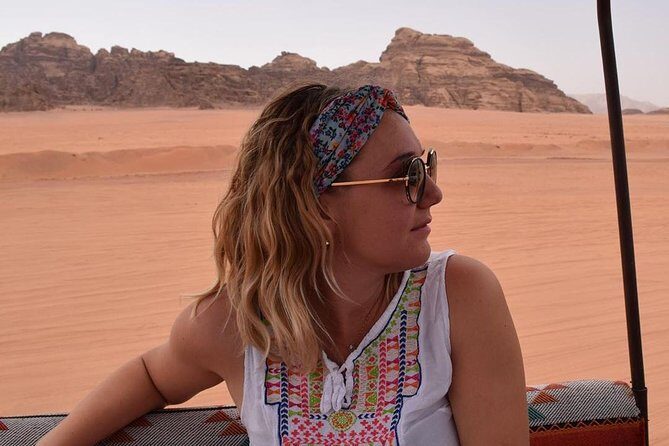
At $72 per person, this tour isn’t the cheapest way to get into Wadi Rum. But it’s also not just a basic drive-by.
You’re paying for:
- a private jeep experience for your group
- multiple named stops across Wadi Rum’s highlights
- included lunch plus coffee/tea and bottled water
- free admission at the listed sites
Value often comes down to what’s included versus what you’d otherwise pay for. In this case, your food and drink are handled, and the stop sequence hits a lot of the classic locations people come for in a single half-day.
If you were to hire a vehicle and coordinate stops yourself, the logistics would likely eat time and stress. Here, the structure does that work for you.
Departure times, sunset plans, and how to choose your slot
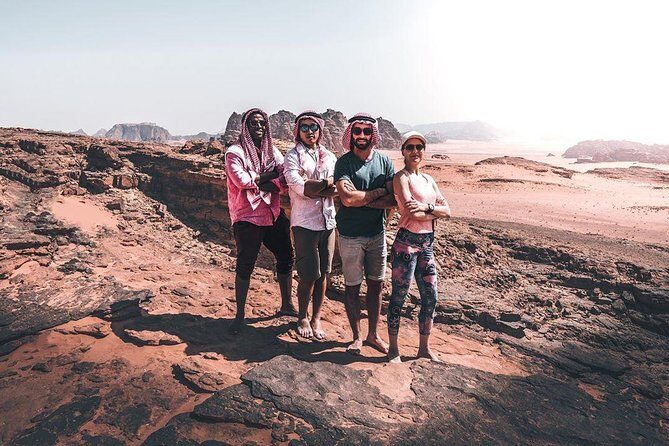
One of the real perks is that you can choose from numerous departure times during the day. That flexibility helps you match the day to your energy level and weather.
A practical approach:
- If you’re chasing softer light and a sunset finish, ask yourself whether you can handle an earlier cutoff. Some people expected a long sunset and were limited by an end-time rule.
- If skies look unstable, don’t assume you’ll wait out perfect timing. Cloudy conditions can change plans fast, and the day will still move.
Also, if you arrive late, the tour may adjust. There’s at least one example where the company customized the route to fit a shorter window. That’s a useful backup plan if your schedule is tight.
Guides you might meet and what good guiding looks like here
The guides can make this kind of tour feel personal. In the experiences tied to this operator, guides have included people named Muhammad, Suliman, Suleman, Eid, and Lafe. What matters more than the name is the style: helping you at the stops, pointing out carvings and viewpoints, and managing the timing so you’re not rushing your own photos.
You’ll also notice that guides are willing to tailor small things when the day needs it—like adding an extra hike because someone seemed to enjoy walking, or shifting the day if conditions aren’t ideal.
If you want maximum value, come with two or three questions ready:
- Which stop is the best for inscriptions today?
- Where should I stand for the strongest view at the bridges?
- If I want a short extra walk, is it possible within our time?
Who should book this Lawrence’s House Jeep Tour
Book this if you want a structured Wadi Rum day with:
- a private format
- both Lawrence-of-Arabia connections and Nabatean/Thamudic sites
- included lunch and drinks
- multiple iconic stops without planning your own route
It’s also a strong fit for families, because the pacing is built around short segments. If you can handle a few climbs (Little Bridge, Um Frouth) and a short walk in Jebel Khazali’s siq, you’ll be fine.
Consider another style of outing if:
- you’re extremely sensitive to rough jeep rides (some reports mention an uncomfortable vehicle)
- you’re dead set on a long sunset watch and need a guarantee that the light will last
- you want a slow, deep exploration of just one area rather than a “greatest hits” route
Should you book the Lawrence’s House Jeep Tour?
I think this is a smart booking for most people visiting Aqaba who want Wadi Rum in one afternoon. It hits the big named places, includes the food and drinks that keep the day comfortable, and gives you enough time at each stop to actually see what you came for.
If your top priority is an extremely smooth ride or a guaranteed sunset finish, be a bit cautious and pick your departure time with the operator’s end-time in mind. But if you like your desert days with context, photos, and a proper meal waiting at the right moment, this is a solid choice with real value at $72.
FAQ
How long is the Lawrence’s House Jeep Tour?
The tour runs about 5 hours.
How much does the tour cost?
It’s listed at $72.00 per person.
What’s included during the tour?
The tour includes Bedouin lunch, coffee and/or tea, bottled water, and stops at the highlighted Wadi Rum sites.
Is this tour private or shared?
This is a private tour/activity. Only your group participates.
Where does the tour start and end?
The tour starts at Wadi Rum Road, Wadi Rum Rd, Jordan and ends back at the same meeting point.
Which stops are included?
The stops include the Nabatean Temple, Lawrence’s Spring, Jebel Khazali, Little Bridge, Um Frouth Rock Arch, Lawrence House, Anfeshyah inscriptions, Al Ramal Red Sand Dune, and the Wadi Rum Ancient Map.
Are entrance tickets needed for the stops?
The listed stops are marked as admission ticket free.