REVIEW · AMMAN
Exceptional Jordan Tour 9 Days 8 Nights Tour
Book on Viator →Operated by Jordan Horizons Tours - private & custom Jordan Tours & Trips · Bookable on Viator
Jordan hits different when your logistics are handled. This 9-day route strings together major sites in a way that feels efficient, not rushed, with real guiding in the two big-ticket places (Petra and Jerash). I like how the trip includes a smooth airport-to-hotel start plus site entrance fees so you are not doing math all day.
Two things I’d especially watch for: you get English-speaking guidance where it counts most, and you also get a proper Bedouin-led Wadi Rum jeep day, not just a photo stop. The one consideration is pace and walking: Petra has long routes and options like climbs, and Dana also includes hiking.
If you want a big Jordan sampler with less hassle and good human support, this is a strong match.
In This Review
- Key highlights you’ll feel from day one
- Arrival in Amman: visa help and an easy start
- Jerash and Ajloun: Roman scale, Crusader-era views, and fast context
- Umm Qais: border views and a New Testament location
- Umayyad desert castles day: Qusayr Amra, Qasr Kharana, Qasr al-Azraq
- Madaba mosaics and Mount Nebo: art you can’t fake and a view you’ll remember
- Dana Village hike and Shobak’s cliff castle stop
- Little Petra: Nabatean dining rooms instead of crowds
- Petra with an English-speaking guide: the Siq, the Treasury, and smart pacing
- Wadi Rum 4×4: Bedouin hospitality and a box lunch that keeps you moving
- Dead Sea day: float time with an overnight hotel
- Hotels, meals, and guides: what the package includes (and what it doesn’t)
- Who this tour fits best (and who might want something else)
- Should you book this 9-day Jordan route?
- FAQ
- How do they handle the free Jordan visa on arrival?
- Which parts of the tour include an English-speaking guide?
- What is included in the price?
- Is this tour private?
- How physically demanding is the trip?
- What if I need to cancel?
Key highlights you’ll feel from day one
- Name-sign airport meet-up plus help with free Jordan visa paperwork before you reach the desk
- Jerash + Petra with English-speaking guides where ruins are complex and context matters
- Umayyad desert castles in one long day (Qusayr Amra, Qasr Kharana, Qasr al-Azraq)
- Dana Village hike through terraced gardens and local craft workshops
- Wadi Rum 4×4 with a Bedouin guide and box lunch plus tea and sunset time
- Dead Sea overnight so you can float with fewer time pressures
Arrival in Amman: visa help and an easy start
The tour begins the way you hope a Jordan trip starts: you’re met at Queen Alia Airport with a sign holding your name before you hit Visa Control. The team handles the paperwork for the free Jordanian visa as long as you provide your passport details in advance, which removes the usual stress of forms after a flight.
From there, you transfer about 30 minutes to Amman. This first day matters more than it sounds, because it sets the tone—clear instructions, less wandering, and a driver ready when you are still in jet-lag mode.
You can also read our reviews of more tours and experiences in Amman.
Jerash and Ajloun: Roman scale, Crusader-era views, and fast context
Day 2 is a great example of smart timing: you get a guided visit in Jerash, then you shift to self-exploration for the parts that work well on your own.
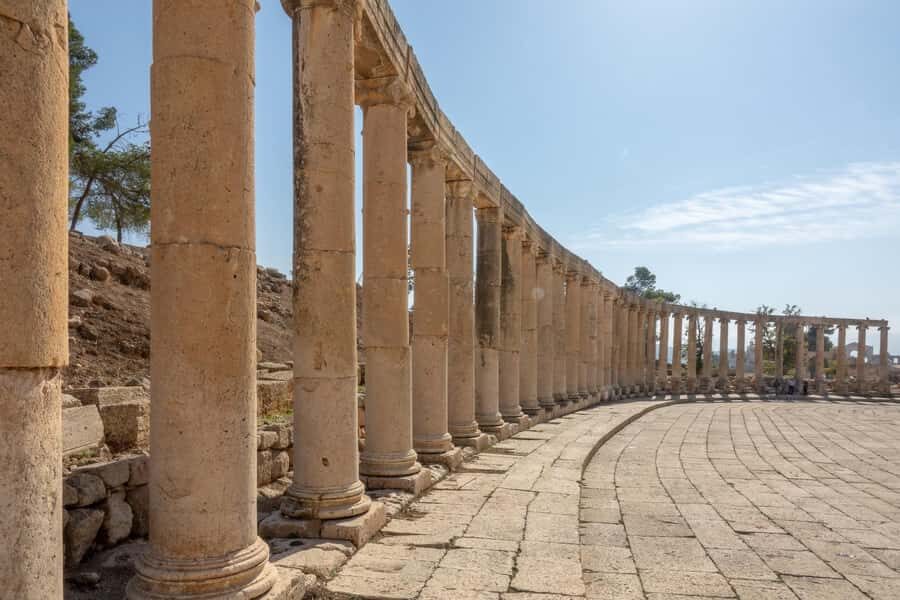
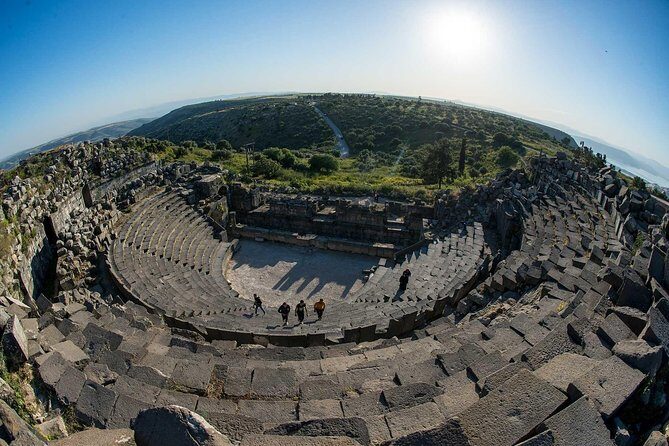
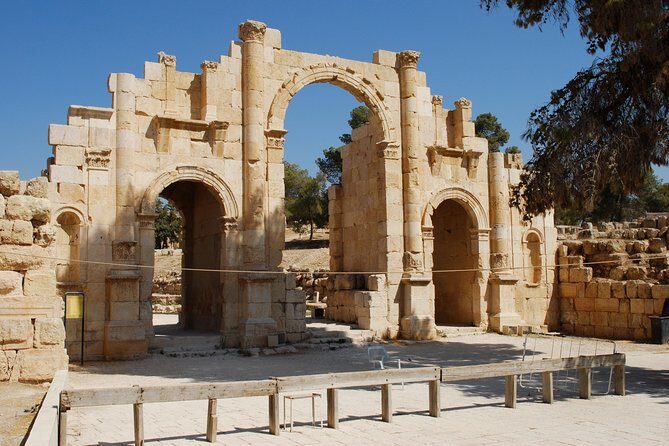
Jerash is often called the Pompeii of the East, and the guide helps you read what you’re seeing. You focus on Hadrian’s Arch (built in 130 AD), the Hippodrome (about 15,000 seats), the Forum, and the Temple of Artemis with its huge column drums. You’ll also move through the Colonnaded Street and the Nymphaeum, which gives you that sense of how a Roman city flowed day to day—not just scattered stones.
After Jerash, you head to Ajloun Castle (Al-Rabid Castle) through pine forest and olive groves. This is a simpler, self-paced stop, built in the 12th century by a lieutenant of Saladin during campaigns against the Crusaders. The payoff here is twofold: you get a working understanding of fort architecture, and you also get views you can take your time over.
If you prefer your big ruin days to include someone who can connect the dots, the structure here is a win.
Umm Qais: border views and a New Testament location
Umm Qais is one of those places where the scenery and the site history feed each other. It sits near the border with Israel and offers big views over the Golan Heights and the Sea of Galilee.
This is the ancient Greco-Roman city of Gadara, a Decapolis city. You’ll explore ruins like the colonnaded street, a vaulted terrace, and the remains of two theatres. It’s also tied to the New Testament story about Jesus casting out demons and sending them into pigs—something you’ll likely notice referenced around the site.
This portion is designed for independent exploring. The good news is navigation is straightforward, with information boards that help you get oriented quickly.
Umayyad desert castles day: Qusayr Amra, Qasr Kharana, Qasr al-Azraq
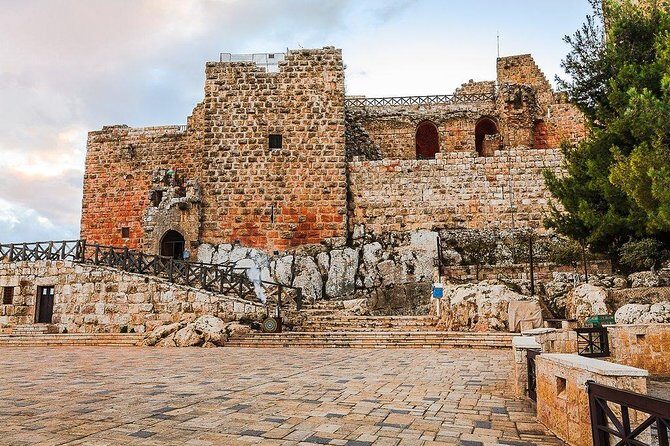
Day 3 is a long travel day in the best way. You head to the Eastern Desert and visit three Umayyad dynasty castles in one stretch, which is the efficient way to do this region without burning half your trip on back-and-forth.
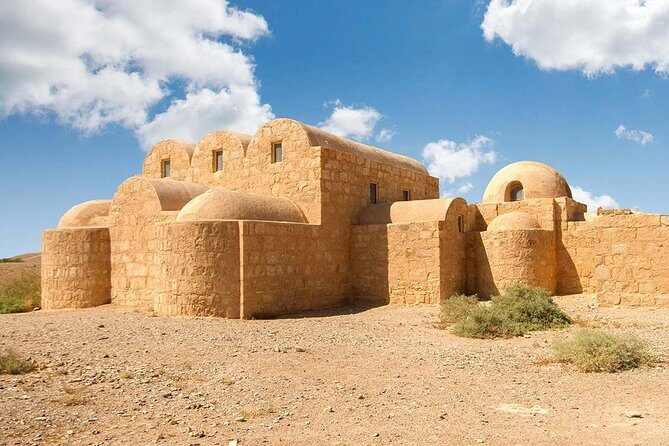
At Qusayr Amra, you’re looking at an impeccably preserved hunting hideaway, famous for its 8th-century frescoes showing scenes of wine, wild life, and nude figures. It’s art as much as archaeology here, and that makes the guided context useful even if you explore at your own pace inside.
Next is Qasr Kharana, a two-story structure where Mesopotamian, Arabic, and Greek influences show up in the walls and design. It feels different from Amra—less party hideout, more fort-like presence.
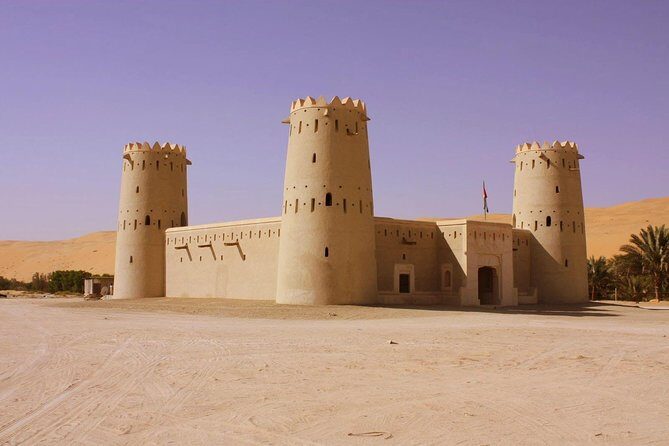
Finally, Qasr al-Azraq is built from black basalt and worked as a hunting lodge. This one also has a strong association with T. E. Lawrence, which adds a modern layer to the ancient setting. If you like your history with a sense of place, this day delivers.
Madaba mosaics and Mount Nebo: art you can’t fake and a view you’ll remember
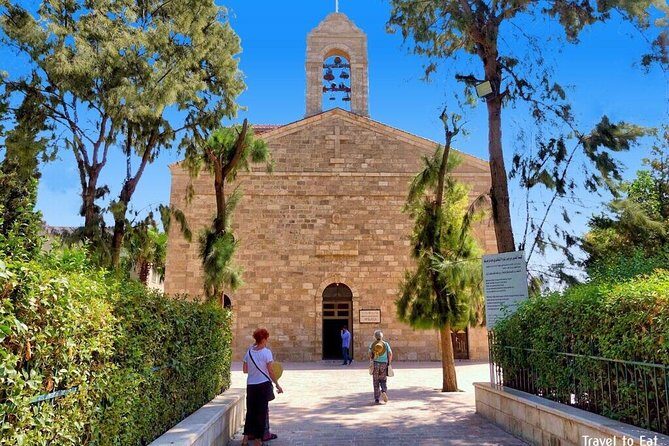
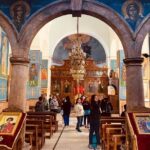
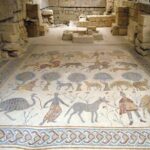
Day 4 starts with Madaba, home to some of Jordan’s most famous mosaics. You’ll visit the Greek Orthodox Church of St. George, where the 6th-century Mosaic Map of Jerusalem and the Holy Land covers part of the church floor. You can see how two million pieces of local stone were used to depict hills, valleys, towns, and villages far beyond Madaba.
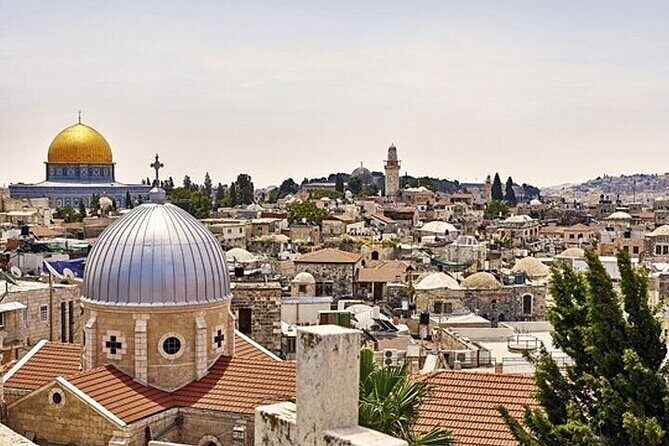
Then you move on to Mount Nebo, traditionally connected with Moses seeing the Promised Land. On a clear day, the view can stretch toward the Dead Sea and all the way toward Jerusalem, which is exactly why Nebo feels worth the effort even if you’re not a religious-history traveler.
This day works because it mixes detailed craft (the mosaic map) with a big, open horizon (Nebo). If you want a break from long ruin circuits, this is a good palate cleanser.
Dana Village hike and Shobak’s cliff castle stop
After Mount Nebo, the trip goes to Dana Village, where you’ll have a Dana hiking option. The trail winds above the village through terraced gardens and past local craft workshops. You also have the chance to meet local residents and see Ottoman architecture in the area.
There’s an optional local guide in Dana if you want more storytelling, and it’s priced as an add-on. If you’re the kind of traveler who likes to hear how locals describe their own home, paying for a guide here can be worth it.
Then you roll toward Shobak Castle, perched high above valleys in the surrounding area. Even without a full guided deep dive, the location makes it easy to understand the defensive logic—high ground, controlled routes, and dramatic sight lines.
This mix of gentle hike plus a scenic stop gives you a more human-scale day than the big-ticket ruins.
Little Petra: Nabatean dining rooms instead of crowds
Day 5 leans into a clever idea: go beyond Petra without trying to replicate Petra.
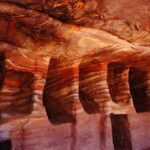
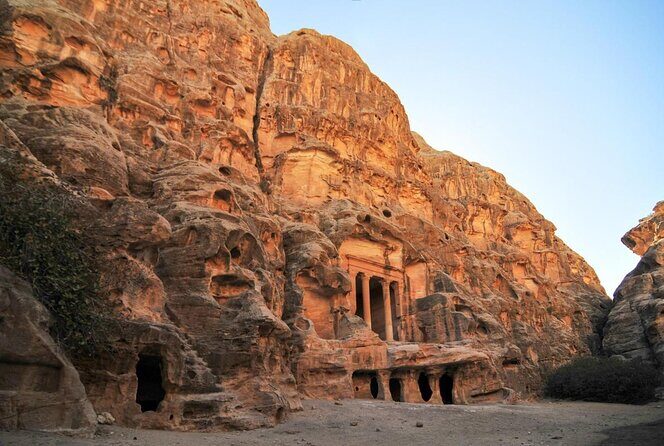
You’ll stop at Little Petra (Al-Beidha), where you can explore Nabatean dining rooms like triclinia and biclinia. The standout detail is the last known surviving Nabatean fresco work on the ceilings of one of the bicliniums.
The value here is contrast. Petra can be overwhelming, and Little Petra gives you a quieter, more intimate way to understand Nabatean life, including how people gathered and ate. If you want to feel the craftsmanship instead of just walk through the main trail, you’ll probably enjoy this stop.
Petra with an English-speaking guide: the Siq, the Treasury, and smart pacing
Petra is the headline, and the tour treats it like one. You’ll visit with an English-speaking guide for about 3 hours, walking the 1.2 km Siq first.
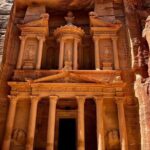
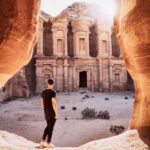
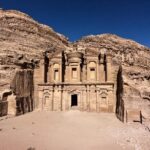
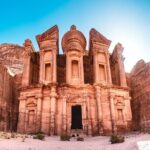
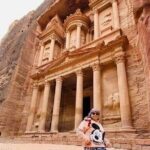
The route matters: you pass shrines, tombs, and carvings in the gorge, and then the Treasury appears as you exit the Siq. After that, you continue through the Street of Facades, the Roman Theatre, the Colonnaded Street, and you end your guided time at Qasr Bint. This guide structure helps you avoid the common issue of standing in front of Petra’s famous spots with no idea what you’re looking at.
After the guide ends, you get free time. That’s where you can choose your own Petra adventure: you might explore additional structures like the Byzantine Church or the Temple of the Winged Lions. If you want a workout, there’s an 800-step climb to the Monastery option, or you can choose shorter climbs like the High Place of Sacrifice route.
One practical thought: Petra is spread out. Plan for dust, sun, and steady walking, even if you stick to the main areas.
Wadi Rum 4×4: Bedouin hospitality and a box lunch that keeps you moving
On Day 7, you transfer about two hours to Wadi Rum, where you meet your English-speaking Bedouin guide at the village. Before you head out, there’s Bedouin hospitality with tea and coffee, and you have time to meet the Bedouin family, since the guide brings you into their world rather than treating you like a drive-by tourist.
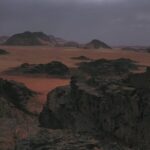
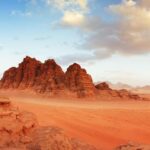
Your jeep tour runs about 4 to 5 hours with a box lunch. Your route includes stops such as the Nabatean Temple, Lawrence Spring, Khazali Canyon, Little Bridge, Um Frouth Rock Bridge, Lawrence House, and Burdah Rock Bridge/Burdah Arch among other sites.
This is the day that turns Jordan from a history trip into a sense-of-place trip. The terrain does half the storytelling for you, and the guide ties it back to Lawrence of Arabia and the Nabatean layer beneath the sand.
You’ll also get sunset and star time, which makes this day feel like an event, not just transportation to the next hotel.
Dead Sea day: float time with an overnight hotel
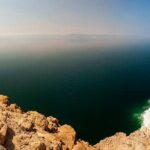
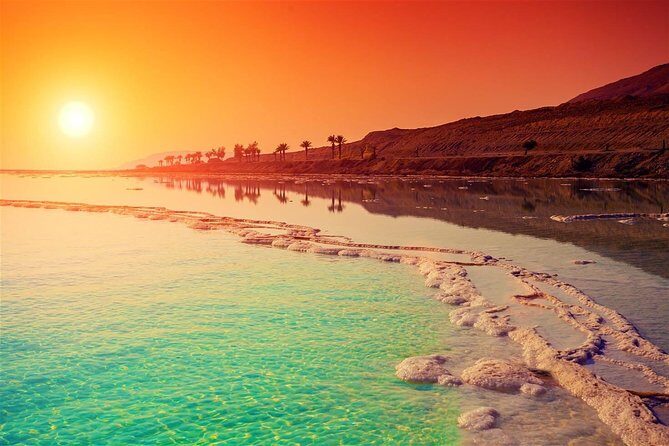
Dead Sea days can either feel rushed or relaxing. Here, you transfer about 3.5 hours to the Dead Sea region and then spend the rest of the day using the hotel facilities, including access for floating in the salty water.
Because it’s an overnight stop, you’re not forced to cram everything into a half-day window. You can rinse off, let your skin feel normal again (the salt has a way of doing its thing), and enjoy the slower pace.
The practical value is simple: you get enough time for the Dead Sea experience to be more than a quick dip.
Hotels, meals, and guides: what the package includes (and what it doesn’t)
This tour is priced at $1,589.75 per person, and the value comes from how many parts are pre-built for you: multiple nights in set locations, multiple transfers by modern vehicle, and entrance fees for the main sites.
The included meals are a mix of lunch and dinners plus breakfast throughout. Petra, Wadi Rum, and the final Dead Sea night each include overnight stays with breakfast. Wadi Rum also includes a BBQ dinner.
Guiding is also a big slice of the value:
- Jerash includes an English-speaking guide for about 1.5 hours
- Petra includes an English-speaking guide for about 3 hours
- Wadi Rum includes an English-speaking Bedouin guide for the jeep tour
Not included items are mostly what you’d expect: tips, travel insurance, and personal spending. Lunches and dinners not listed as included are on you. Also, if you want a Dana Village local guide, that’s an add-on.
Who this tour fits best (and who might want something else)
This route fits you if you want a high-coverage Jordan trip where you still get real guidance in the most confusing places. It’s especially good if you like Roman ruins with explanations, want Petra without guessing, and don’t want to plan transportation between regions.
It’s also a decent match if you enjoy varied landscapes and building styles: Roman Jerash, Crusader-era fort at Ajloun, Umayyad desert castles, Byzantine-era mosaics in Madaba, Nabatean Petra and Little Petra, then Bedouin sand country in Wadi Rum.
The one caution is physical effort. You should have moderate fitness. Petra includes optional climbs, and Dana includes hiking time. If you know stairs and long walking drain you fast, you can still tailor Petra time, but this itinerary does not feel built for fully minimal walking.
Should you book this 9-day Jordan route?
I’d book it if you want a structured, guided-first approach to Jordan’s top highlights: visa help on arrival, included entrances, English-speaking guides at Jerash and Petra, and a real Wadi Rum jeep day with Bedouin hosting. For most people, the biggest win is that you spend less energy on logistics and more time actually seeing things.
I’d think twice if you want a slower, more free-form trip, or if you strongly dislike stairs and hikes. Petra alone can be a lot, even when you do the “standard” route.
If your goal is the classic Jordan hit list with strong guidance and smooth handoffs, this tour is an easy yes.
FAQ
How do they handle the free Jordan visa on arrival?
The representative meets you at Queen Alia Airport before Visa Control with a sign showing your name. They take care of the paperwork for the free Jordanian visa, as long as you provide your passport details in advance.
Which parts of the tour include an English-speaking guide?
Jerash includes an English-speaking guide (about 1.30 hours), Petra includes an English-speaking guide (about 3 hours), and Wadi Rum includes an English-speaking Bedouin guide for the jeep tour (about 4 hours).
What is included in the price?
The package includes meet-and-assist on arrival and departure, airport transfers and all transfers by modern vehicle, entrance fees for sites listed in the itinerary, hotel stays for multiple nights (including breakfast), and meals listed as included (lunch and dinners such as the Wadi Rum BBQ).
Is this tour private?
Yes. It’s described as a private tour/activity, with only your group participating.
How physically demanding is the trip?
It’s best suited to people with moderate physical fitness. Petra involves long walking and optional climbs, and Dana includes a hike.
What if I need to cancel?
You can cancel up to 6 days in advance for a full refund. Canceling less than 6 days before the start time follows a reduced-refund schedule, and cancellations within 2 days of the start are not refunded.