REVIEW · PETRA
Private Indiana-Jones Archeological Trail Tour
Book on Viator →Operated by Petra Horse Ride Adventure · Bookable on Viator
One wrong turn can change the whole Petra story. This private trail tour is built for a different viewpoint: you start off the main approach, then later you get to walk through Al Siq on your way back. I especially like the way the route gives you variety in a short window, and I like having a guide who can point out what you are looking at instead of just moving you along.
The main thing to plan for is that the admission ticket isn’t included, so you’ll want that sorted before the tour begins. If you show up without it, you will lose time at Petra, and this is the kind of experience where every hour matters.
In This Review
- Key highlights I think matter most
- Why this Petra route feels like a new movie
- Meeting at the horse riding point in Wadi Musa
- The side trail plan: entering before Al Siq, then returning through it
- Stop 1: The Treasury and the first sweep of Al Siq
- Stop 2: Qasr al-Bint, a temple set in a paved enclosure
- Stop 3: Street of Facades and the tombs carved on the southern cliff
- Stop 4: The Urn Tomb and the courtyard-to-church transformation
- Your guide’s maps and the Indiana-Jones style advantage
- Price and logistics: is $100 per person worth it?
- When you should book this Petra private trail tour
- Should you book it?
- FAQ
- FAQ
- Where does the tour start and end?
- What time does the tour begin, and how long is it?
- Is the Petra admission ticket included?
- Will I enter Petra through Al Siq?
- Is this a private tour?
- What stops are included during the tour?
- Can I cancel for a full refund?
- Are service animals allowed?
Key highlights I think matter most
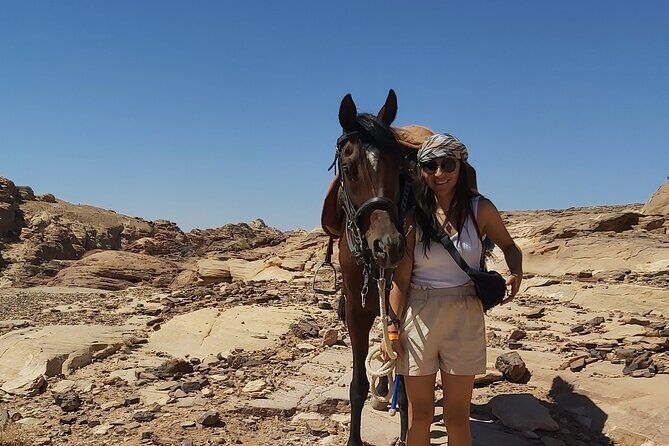
- Side-trail entry into Petra before you hit Al Siq, so you do not just repeat the usual main-route walk.
- You get Al Siq twice in one day, first as part of the experience, then again on the return, for huge sightseeing coverage.
- Clear, practical maps that help you connect monuments to what you are actually seeing on the ground.
- A guide who explains Petra’s Nabataean world while you move between key carved stops.
- Four big visual stops packed into about 2–3 hours: the Treasury, Qasr al-Bint, Street of Facades, and the Urn Tomb.
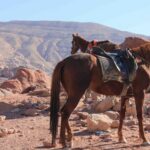
- Horse-riding friendly setup, and the experience has a track record of making it work even if you are not planning to ride.
Why this Petra route feels like a new movie
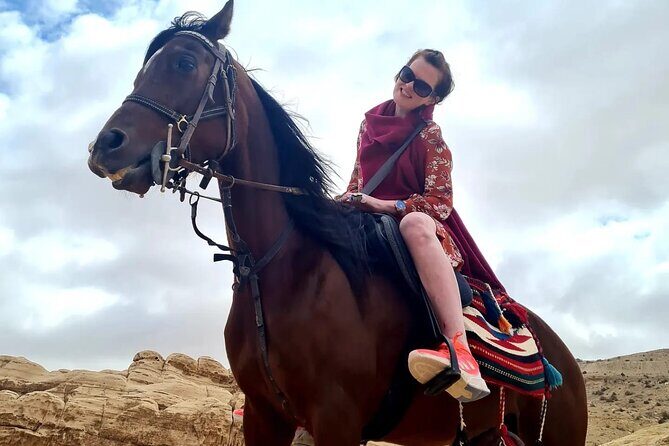
Most Petra days funnel you into the same first impressions: Al Siq, the Treasury, then onward with everyone else. This tour rearranges that rhythm. You start from the horse-riding point and enter the ancient city via a different trail, then you have the chance to explore Al Siq again on the way back, which can mean seeing almost 80% of the archaeological park in one day.
What makes this valuable for you is simple: time. A guided loop like this helps you avoid the common problem of spending your energy just reaching the next landmark. Instead, you spend your energy looking, learning, and choosing the pace you want inside the sights that matter most.
There is also a practical benefit to the guide’s style. I like when someone can read the carvings and explain what you are seeing in plain language. Here, that is part of the experience, and it makes the stone feel like a message, not just a backdrop.
You can also read our reviews of more private tours in Petra

Meeting at the horse riding point in Wadi Musa
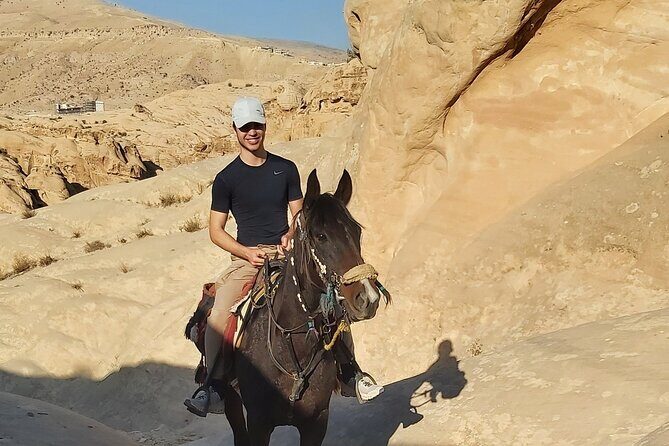
Your morning starts at 8:00 am in Wadi Musa, with the meeting point listed as 8FF8+CWJ. From there, you begin the tour and work your way toward the ancient entry route.
This is listed as a private tour, meaning it is only your group. That matters because Petra is not the place to wait on slow-moving logistics. A private setup also gives you room to ask questions as you go, especially if you want help matching what you see to the names you hear.
The format uses a mobile ticket, which is convenient if you prefer not to juggle paperwork. And since the tour is designed for most people to participate and allows service animals, you can think of it as a flexible, guided way to experience major monuments without trying to piece everything together solo.
The side trail plan: entering before Al Siq, then returning through it
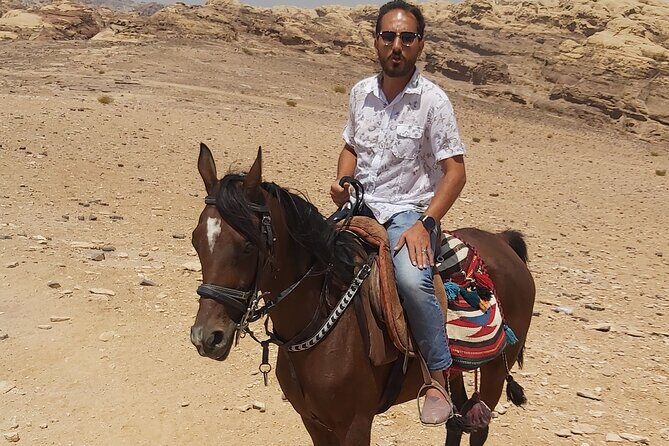
Let’s talk about the route logic. You do not begin by marching straight through Al Siq. Instead, you travel into Petra along another trail, and then Al Siq becomes part of what you experience more than once.
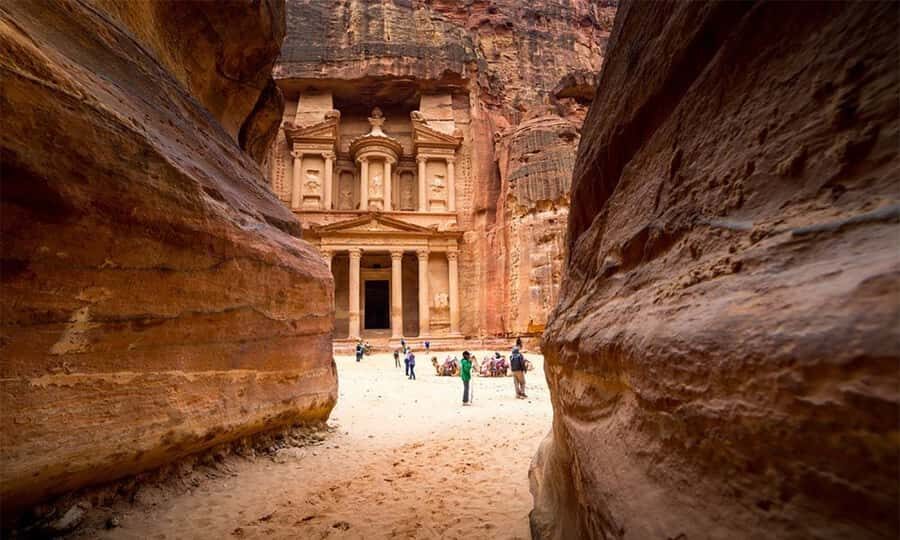
Al Siq itself is not just a corridor. It is the ancient main entrance to the city, starting at the Dam and ending at the opposite side of the vault. It is a split rock passage about 1200 meters long, with width that can be around 3 to 12 meters and a height up to about 80 meters. If you have ever wondered why Petra feels so dramatic when you finally reach open space, this is why: scale and tight geometry do the emotional work for you.
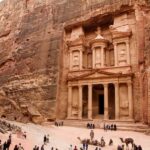
At the beginning of Al Siq, you can still view remains of the city’s gate, and there are channels on both sides used to draw water from Wadi Musa. When the siq opens out, you hit Al-Khazneh, the Treasury scene, described here as almost 40 meters high and intricately decorated with Corinthian capitals, friezes, figures, and more.
Even if you already know the famous names, the value of this route is that it helps you learn the sequence. You will see how the passage funnels you forward, then how it releases you into the big monumental view—then you get to do that rhythm again on the return.
Stop 1: The Treasury and the first sweep of Al Siq
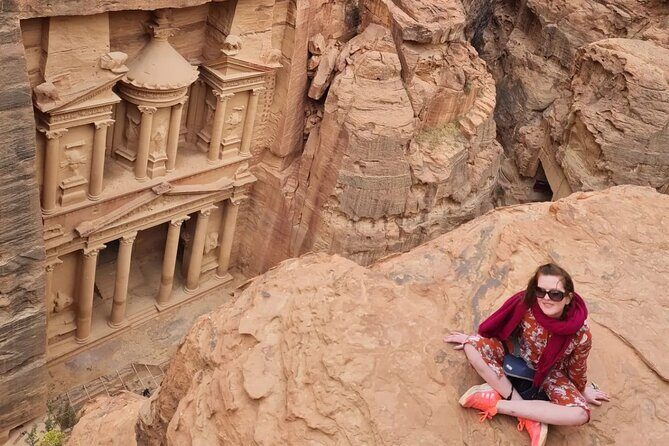
Your first major stop is the Treasury area. The tour meets you at the horse riding point and then you move along the way, passing Petra caves and attractions before you reach Al Siq, the ancient main entrance.
What I like about doing the Treasury as Stop 1 in this context is that it does not feel like a random photo moment. You arrive with the right framing: the passage, the water channels, the sense of a gate that leads into something older than your imagination.
You are given about 1 hour 20 minutes at this stage, with admission not included for the site. That time window is enough to slow down, study carvings, and catch the architectural details that people often miss when they only stop for a quick picture.
When you emerge into Al-Khazneh, take a moment to look up. The description here notes Corinthian capitals, friezes, and figure-like decoration. Those details matter because they show how Nabataean monument builders worked with styles and motifs in ways that were more complex than simple desert stone art.
A possible drawback at this stop is practical: it is a busy, iconic area, so if you prefer long quiet pauses, keep your expectations realistic. The fix is to use the guide’s context cues so you can spend your time intelligently, not just waiting for the crowd to move.
Stop 2: Qasr al-Bint, a temple set in a paved enclosure
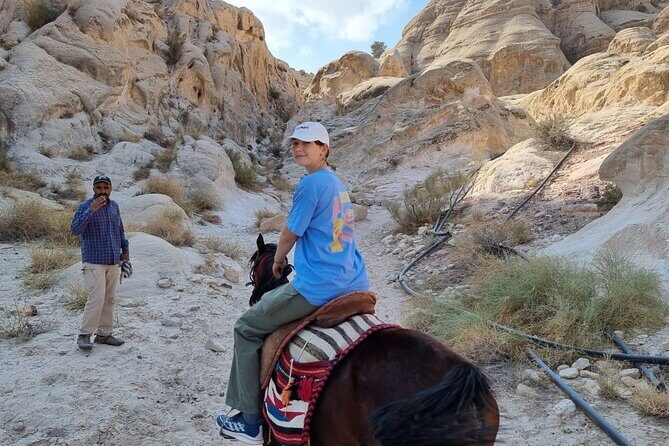
Next you head to Qasr al-Bint. This is a Nabataean temple standing inside a large paved temenos, and it reaches about 23 meters high. It is surrounded by a peribolos, which is an enclosure wall.
One of the more interesting details is that seats were added during the time of King Aretas IV. That means the site is not just preserved as an original design; it also reflects later layers of use. So while you might be thinking, This is a temple, you can also think, This place kept serving people as time went on.
You are given about 30 minutes here, again with admission not included. Use that half hour to look at the temple’s setting and the surrounding structure, not only the big facade. The chambers had balcony roofs accessible through stairways that were logged in the walls, and understanding that layout helps you picture how people moved through the space.
If you want a “why this matters” takeaway: this stop reminds you that Petra was not only tombs and showy facades. It was also built for worship and public life, with architecture that shaped movement.
Stop 3: Street of Facades and the tombs carved on the southern cliff
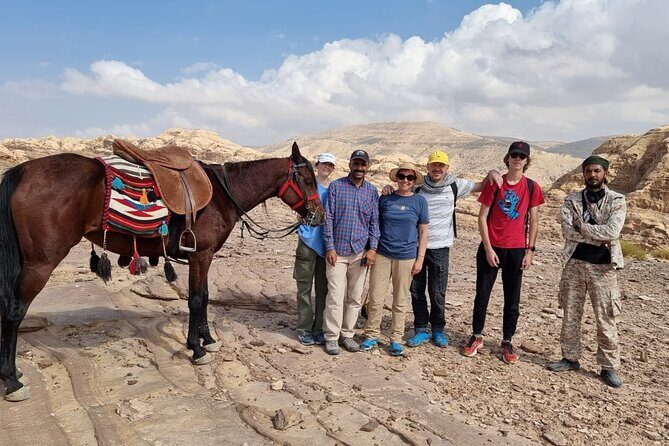
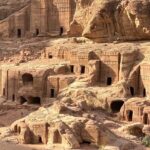
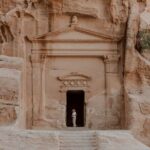
After the Treasury area, the route continues toward the Street of Facades. This name refers to a row of monumental Nabataean tombs carved into the southern cliff face that lies past the Treasury and adjacent to the outer Siq.
The key visual shift here is that Al Siq widens gradually as it reaches into an open area. When the corridor expands, the architecture feels less like a funnel and more like a street of monuments. That change helps you understand how Petra manages your attention: narrow and powerful first, then a wider stage for elaborate carving.
You get about 40 minutes for this stop, with admission not included. As you walk, pay attention to the burial features on both sides. The description includes Nabataean burial interfaces decorated with grindstones and other decorations.
Those grindstones are a small detail, but they are exactly the kind of thing a guide can help you notice. Without explanation, a tomb wall can look like decoration. With explanation, the carvings become clues about daily life, ritual, and symbolism.
A practical consideration: you may want a slower pace here if you like reading stonework. If you rush, you risk just getting scenery. Let the guide point out specific marks so your time turns into learning.
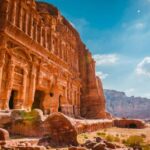
Stop 4: The Urn Tomb and the courtyard-to-church transformation
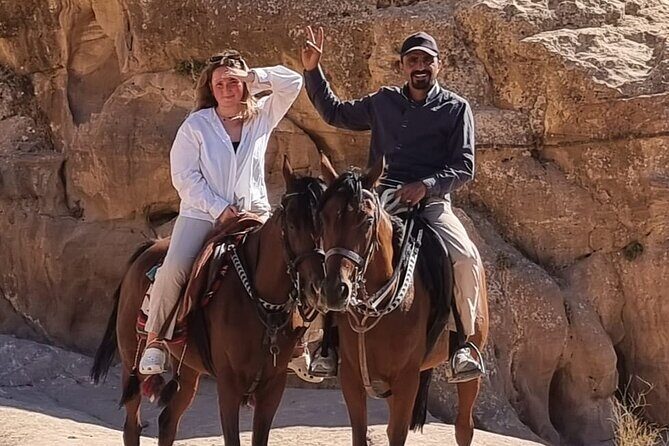
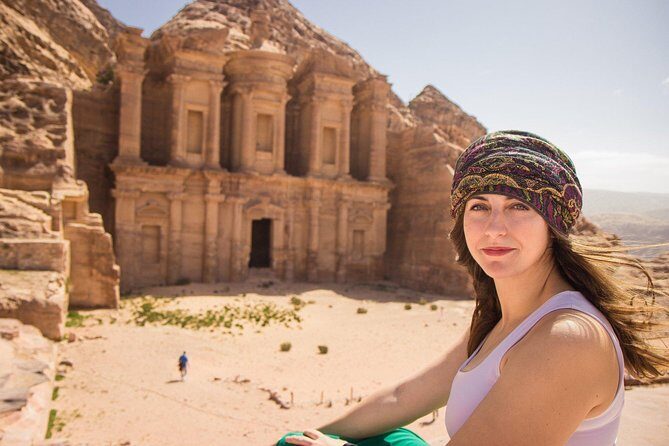
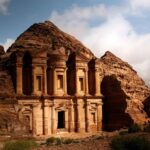
Your final stop is the Urn Tomb, preceded by a deep courtyard with colonnades on two sides. That courtyard setup matters because it gives the tomb a dramatic stage. You are not just looking at a facade; you are stepping into a built sequence: court, then facade, then niches.
On the facade, there are three niches high up that give on to small burial chambers. What makes this stop especially interesting is the adaptation: it was adapted in 446 AD to serve as a Byzantine church. So the tomb did not freeze in time. It changed roles as cultures and needs shifted.
You have about 20 minutes here, with admission not included. That can feel short for such a layered site, so focus on the niches and the transition from burial to later religious use. Even in a brief visit, you can learn a lot if you know what to look for.
If you’re the type who likes “story in the stones,” this is one of the best stops. You finish the tour with a sense that Petra’s monuments are not static museum pieces. They are buildings that kept being used, repurposed, and reinterpreted.
Your guide’s maps and the Indiana-Jones style advantage
A big part of the value here is the combination of movement and interpretation. You are not only riding or walking a route. You are also getting history explained and receiving comprehensive maps that show many archaeological marks.
That detail matters more than it sounds. When you have a map that highlights features, you can connect what you are seeing to names like Al Siq, Al-Khazneh, Qasr al-Bint, the Street of Facades, and the Urn Tomb. Without that, you might leave with photos but fewer mental anchors.
The guide is also a key reason people book again. In the feedback you provided, Muhammad stands out for being service-minded and for helping people make the experience work even if they are not planning to ride. That is a real travel problem in Petra-adjacent activities. Here, the setup includes support so people do not abandon the plan just because they have different comfort levels.
I also like the sense of pacing. The tour timing is built to hit the big monuments in a 2–3 hour window, so you can still continue on your own afterward.
Price and logistics: is $100 per person worth it?
At $100 per person, this is not a budget activity, but it does not price itself like a luxury private day either. The best way to judge value is by what you actually gain.
First, you get a private guide and a structured route that reorders how you enter Petra. Second, you get guided time at four major stops rather than wandering and hoping you find the right buildings quickly. Third, the guide provides maps showing many archaeological marks and offers explanations of Petra’s ancient city.
The admission ticket not being included is the one cost factor you must account for separately. If you are comparing against self-guided tickets plus an unstructured stroll, this tour often wins because it compresses decision-making. You do not need to guess what is important or where to spend your time.
Booking is also an indicator of demand. The average booking window is about 56 days in advance, so if you have a fixed travel date, treat it as a sign to lock it in early rather than waiting.
The duration is listed as about 2 to 3 hours. That is a strong fit if you want major Petra moments without committing to a full day locked into one plan.
When you should book this Petra private trail tour
This one is a good match if you want:
- A guided route that gives you a different way into Petra, not just the most famous corridor.
- Help understanding what you see, using maps and on-the-spot explanations.
- A short, private program that still leaves time for more exploration after.
It is especially appealing for people who like structure. You are not just thrown into Petra with a phone and a hope. You get a clear sequence: Treasury, Qasr al-Bint, Street of Facades, Urn Tomb, then you end with an easy path forward.
If you hate walking, this may require thinking. The tour ends near the High Place of Sacrifice Mountain, and then you can carry on by foot to explore the ancient city. You might love that, or you might prefer to keep your own walking light and stop where you feel done.
Should you book it?
Yes, if your goal is to see Petra’s big architectural highlights fast and in a more varied route than the single-track Al Siq approach. The $100 price makes sense when you factor in private guiding, the map help, and the route logic that lets you experience Al Siq during the day rather than treating it as a one-time entry hallway.
Book it if you value interpretation. Petra rewards you when you understand what you are looking at. With a guide like Muhammad and the added map cues, you’re more likely to leave with real clarity, not just a pile of photos.
Skip it only if you already plan to spend your time independently and you do not want to pay for guiding, or if you strongly prefer a slow, do-it-your-own-way day with no fixed sequence.
FAQ
FAQ
Where does the tour start and end?
It starts in Wadi Musa at 8FF8+CWJ, Jordan. It ends near the High Place of Sacrifice, listed as 8CCW+HQQ, Al Madbah, Jordan.
What time does the tour begin, and how long is it?
The start time is 8:00 am, and the tour runs about 2 to 3 hours.
Is the Petra admission ticket included?
No. The stops listed include admission ticket not included for the sites.
Will I enter Petra through Al Siq?
You enter Petra via a different trail rather than using the main trail Al Siq at the start. You can also explore Al Siq on your way back.
Is this a private tour?
Yes. It is private, meaning only your group participates.
What stops are included during the tour?
You visit the Treasury, Qasr al-Bint, the Street of Facades, and the Urn Tomb.
Can I cancel for a full refund?
Yes. You can cancel up to 24 hours in advance for a full refund, and the experience is subject to good weather. If it’s canceled due to poor weather, you are offered a different date or a full refund.
Are service animals allowed?
Yes, service animals are allowed.