REVIEW · AMMAN
Jerusalem and Bethlehem Private Guided Tour
Book on Viator →Operated by Tour Experts · Bookable on Viator
One day, three holy hills. This private tour strings together Mount of Olives, the Jerusalem Old City, and Bethlehem into one long, tightly planned day. If you’re short on time but want the big pilgrimage stops, this is the kind of route that actually makes sense.
I like two things right away: the comfort of an air-conditioned private vehicle with pickup, and the way an English-speaking driver sets context as you move from site to site instead of just dropping you off. If you choose the VIP service between borders option, the border process is also handled in a more structured way than trying to figure it out on your own.
The main drawback to plan for is timing. Border checks and re-entry logistics can slow the day down, and the tour notes that entry can be refused or delayed by Israeli border police, with no responsibility from the operator if that happens. In other words: bring patience, and don’t book anything tight right after.
In This Review
- Key highlights to watch for
- Private car, borders, and what you’re really paying for
- Mount of Olives: the best start for views and pilgrim context
- Temple Mount and Haram al-Sharif: iconic views with real sensitivity
- Church of the Holy Sepulchre: where the route ends
- Via Dolorosa: following the Stations without getting lost
- Tower of David and Mount Zion: history you can walk through
- Old City ramparts: a quick way to get oriented
- Bethlehem in one hour: Church of the Nativity and beit lechem context
- Price and value: $519.99 for a full-day, border-crossing private tour
- Border reality and add-on caution: how to avoid a frustrating ending
- Who this tour fits best (and who should skip it)
- Should you book this Jerusalem and Bethlehem private day?
- FAQ
- How long is the Jerusalem and Bethlehem private guided tour?
- Is pickup offered from Amman?
- Is this tour private?
- Are entrance tickets included for all stops?
- What border help is included?
- Do I need to provide my passport copy in advance?
- What if I’m refused entry or delayed at the border?
- Can I cancel for a full refund?
Key highlights to watch for
- Mount of Olives panoramas first: start high, see Jerusalem laid out, then walk downhill through classic pilgrimage sites.
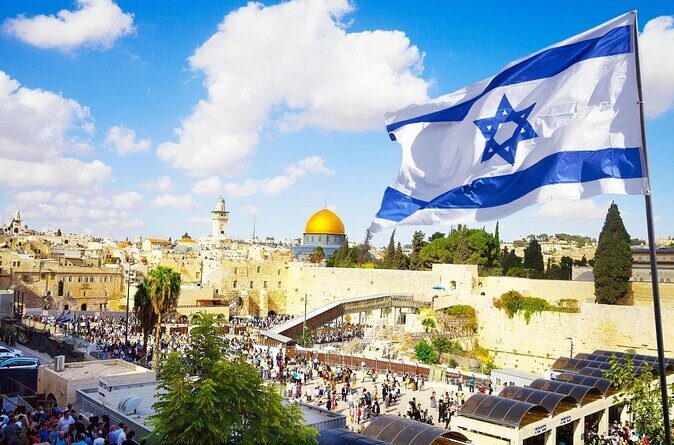
- Temple Mount top icon: quick access to the area centered on the Dome of the Rock and the sacred plaza below.
- Church of the Holy Sepulchre + Via Dolorosa link: the route’s ending point means fewer coordination headaches.
- Tower of David museum stop: a Jerusalem story inside a real fort with layers from Herod through later rulers.
- Bethlehem in one hour: Church of the Nativity focus plus Rachel’s Tomb and the beit lechem meaning.
Private car, borders, and what you’re really paying for
This is a private guided day built around one simple goal: get you from Amman to Jerusalem and Bethlehem, then back, without you playing transport planner all day. Expect about 11 to 12 hours total, with pickup offered and an air-conditioned vehicle doing the heavy lifting.
You’re paying for the package, not just the driving. Included basics cover private transportation, the vehicle, and a VIP-style option for the border crossing between Jordan and Israel (when you select it). There’s also a mobile ticket, which is handy when lines, paperwork, and cross-border logistics already make the day feel like a project.
That said, your total cost doesn’t equal your total out-of-pocket. Tips for the driver aren’t included, and the tour specifically lists visa and departure taxes as not included. Entrance tickets are also not included for key sites like the Temple Mount and the Church of the Holy Sepulchre (while a few stops are listed as free). So when you evaluate value, think: you’re buying organization and time saved, not all fees.
If you’re the type who wants to see a lot in limited hours—especially for a first Jerusalem trip—this structure is a good fit. If you prefer a slow, wandering day where you control every minute, this is more of a guided sprint.
You can also read our reviews of more guided tours in Amman

Mount of Olives: the best start for views and pilgrim context
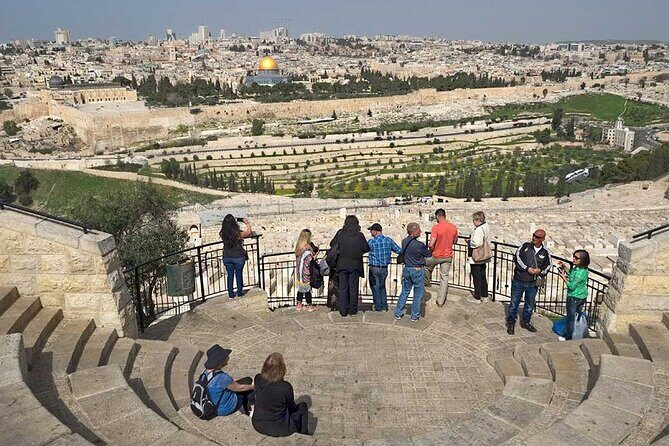
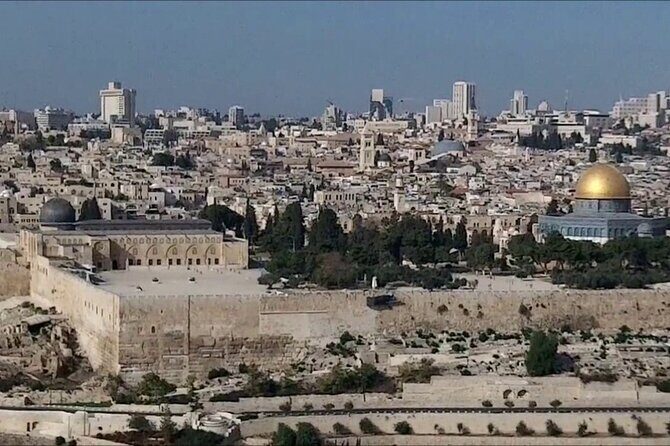
The day begins on Mount of Olives, and that’s smart. You start at one of the highest points in the area, so you get a quick mental map of Jerusalem before you hit the Old City maze. The hill is strongly tied to Christian tradition, including the belief about Judgment Day, and also to the story of Jesus ascending after the crucifixion and resurrection.
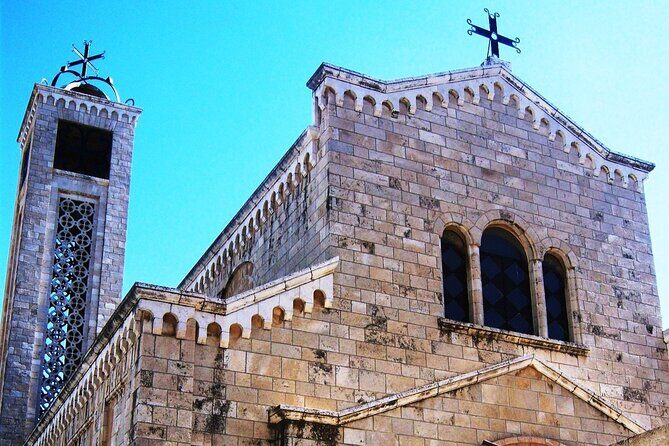
You’ll be looking at a cluster of sites in a compact stretch, including the Church of the Ascension. The church dates from 1910, and the tour notes it as the spot with some of the best views across Jerusalem. Even if you’re not leaning heavily devotional, the viewpoint matters. It helps you understand where the Old City sits relative to the surrounding hills and why pilgrim routes keep looping around these same elevations.
Walking downhill, you’ll also pass the Church of the Pater Noster, connected to tradition about where Jesus taught his disciples. Timing here is short (about 30 minutes and admission ticket free), so treat it as a “get oriented, take in the big moments” stop rather than a long devotional visit. Expect steps and uneven walking. Comfortable shoes aren’t optional.
My practical take: starting here reduces that classic first-day problem—showing up low in the Old City and feeling disoriented for hours. Mount of Olives gives you bearings fast.
Temple Mount and Haram al-Sharif: iconic views with real sensitivity
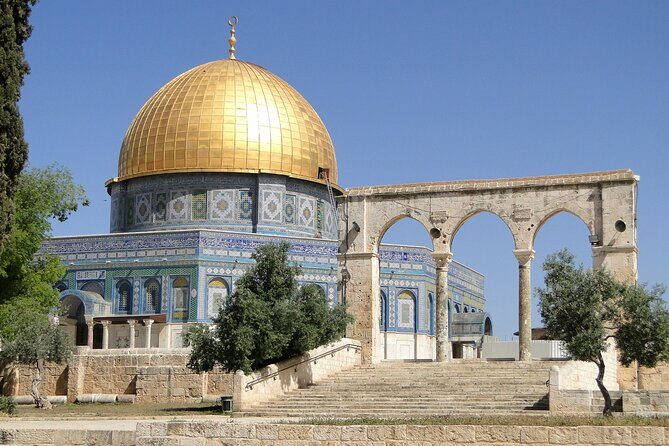
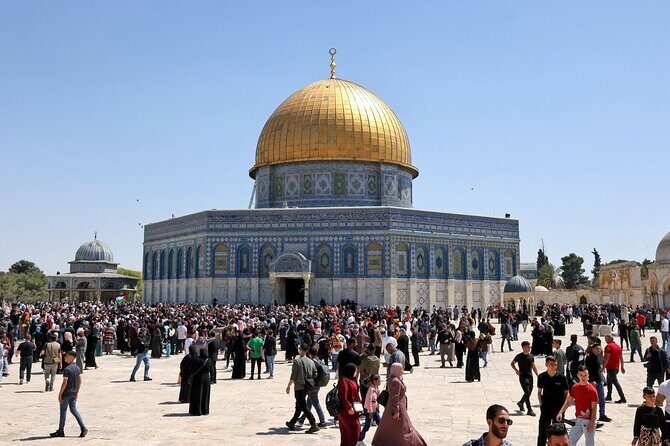
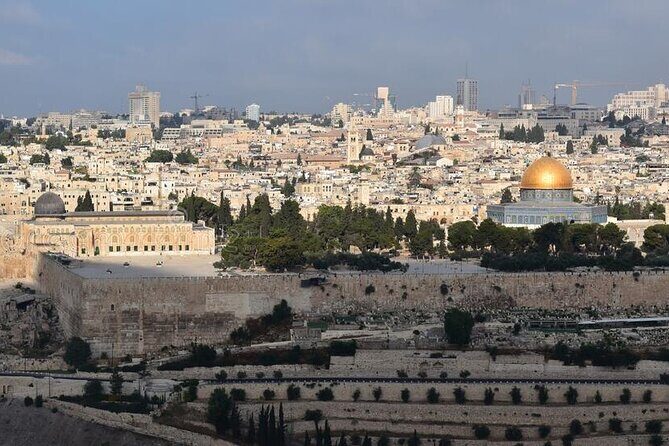
Next comes the Temple Mount area, also known as Haram al-Sharif. This is one of the most significant places for multiple faiths, and it’s also one of the more contested spaces in the region. The tour’s framing hits the big traditional links: Abraham’s near-sacrifice story, the idea of Solomon’s First Temple, and the tradition about Muhammad’s ascension.
The centerpiece is the Dome of the Rock, which is Jerusalem’s most recognizable landmark. The plaza above the Old City is the visual “wow,” and the sacred stone under the dome is also central to both Jewish and Muslim belief.
Your time here is about 30 minutes, and the tour lists admission as not included. That means your schedule is tight by design. You’ll likely want to move with purpose: decide in advance what you want out of the stop—views, landmark photos, or a quick sense of the religious geography—and then don’t get stuck waiting around for the perfect moment.
One consideration: because this is shared sacred space with deep contention, access and on-the-ground rules can vary depending on conditions set by authorities that day. This is one of the few stops where you shouldn’t assume everything will run exactly like a museum visit.
Church of the Holy Sepulchre: where the route ends
After the Temple Mount, you’ll be in Old City territory, and the emotional temperature rises fast—especially if you’re following Christian pilgrimage tradition. The Church of the Holy Sepulchre is described as Jerusalem’s holiest site for Christian pilgrims, said to be built on the crucifixion (Calvary/Golgotha) site. The tour also notes the role of Saint Helena and Constantine in identifying the spot, with the current church dating to the 11th century after the original church was destroyed in 1009.
Inside, the tour highlights the church’s opulent architecture. It can be crowded, and it can feel confusing because the space is layered and complex. But as a visitor, you’re getting something rare: multiple pilgrimage “stories” stacked in one structure.
Admission is not included here, and the stop is about 30 minutes. So think of it as a fast, meaningful pass through a huge symbol—less about long reflection, more about connecting the dots between Christian tradition and a physical site you can actually stand in.
Via Dolorosa: following the Stations without getting lost
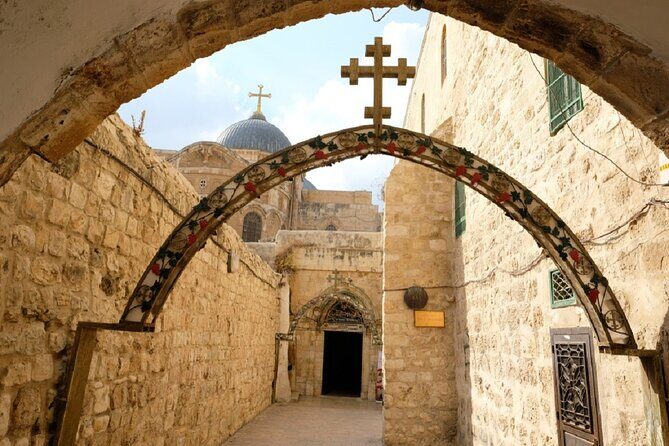
Right after that comes Via Dolorosa Street—the Way of Sorrow. For many Christian visitors, it’s the highlight of the Jerusalem Old City for exactly one reason: the route is structured around the 14 Stations of the Cross. Some stations match Gospel accounts, and some come from tradition, but the walking path is the point.
The tour explains the flow. It begins on Via Dolorosa Street at the first station, then you continue through a mix of streets including Al-Wad Street, working through eight stations until you reach the ninth station at the Church of the Holy Sepulchre—where the last five stations are located. In other words, the route is built to feed you into the church, and the tour keeps that connection efficient.
One useful extra detail: if you’re here on a Friday, the tour notes you can join a procession led by Italian Franciscan monks. That can add atmosphere, though Friday crowds can also mean slower walking.
Practical reality: these streets are narrow. A “30-minute” walk can feel longer when groups compress around you. If you want calm photos, you’ll have better luck moving early in the route and not stopping at every side doorway.
My advice: decide how “complete” you want your Via Dolorosa experience to be. If you’re here for the main path, follow the stations markers and save deep photo-hunting for later. The day is long.
You can also read our reviews of more private tours in Amman




Tower of David and Mount Zion: history you can walk through
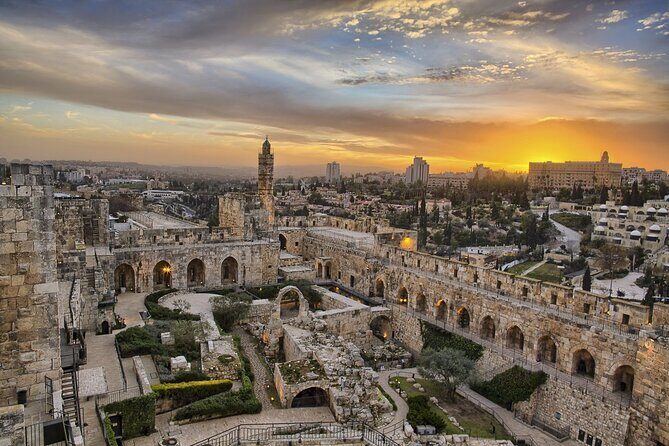
After the religious route, the tour shifts to Jerusalem’s broader history, and that balance is a win. First up is the Tower of David, also called the Citadel. The name can mislead—this fort has no connection to King David. It was erected by King Herod around 24 BCE to protect the palace he built.
The tour notes the original citadel had three towers named after Herod’s brother Phasael, his wife Mariamne, and his friend Hippicus. Later, the Romans stationed a garrison after Titus’ conquest in 70 CE. After that, it fell into disrepair and was rebuilt again and again by later powers: Crusaders, Mamelukes, and Ottomans.
The building you see now dates to the 14th century on earlier foundations. Inside is the Tower of David Museum, which tells the story of Jerusalem through archaeological exhibits. This stop helps you cool down after the dense spiritual intensity of the Old City. It’s also a good option if you want a more educational break from temples and churches.
Admission isn’t included, and the visit is about 30 minutes, so it’s more of a highlight pass than a full museum afternoon.
Then you move to Mount Zion, a small hill just south of the Old City’s Zion Gate. Here, the tour connects multiple traditions: Byzantine-era reverence tied to Christ’s Last Supper and Virgin Mary’s last years (with a note that another tradition places her later life in Ephesus). For Jewish visitors, Mount Zion is linked to King David’s Tomb. Climbing the stairs from the tomb’s courtyard brings you toward the Last Supper Room, which has served as both church and mosque across history.
Nearby are the Church of the Dormition and the Church of St. Peter of Gallicantu, connected to the story of Peter’s denial. Again, admission isn’t included, and the stop is about 30 minutes.
The takeaway: Mount Zion gives you a change of pace while still staying inside the same religious geography. It’s a compact way to understand how layered the city is—not just religiously, but historically.
Old City ramparts: a quick way to get oriented
After the major sites, the tour gives you Old City fortifications time. The fortifications are described as Ottoman period, and the walls have nine gates positioned along the ring. The tour mentions several key entrances: Damascus Gate, Lion’s Gate, Zion Gate, and Jaffa Gate. Walking the ramparts is presented as a wonderful way to experience the Old City.
There are two walkable rampart sections: from Jaffa Gate north to Lion’s Gate, or from Jaffa Gate south to Dung Gate. This is one of those underrated “value” ideas. When you’re inside Old City streets, everything feels tight and repetitive. On the walls, you get context. You also get a break from the flow of groups in doorways and alleys.
Admission isn’t included for this segment, and the stop is about 30 minutes. Expect time to move slowly—stairs up and down plus crowding can stretch it.
If you’re picturing your day: this rampart walk is a good “re-center” moment between churches and forts, and it helps you understand why those streets lead where they do.
Bethlehem in one hour: Church of the Nativity and beit lechem context
Then you head to Bethlehem, about 10 km south of Jerusalem. The tour includes the basic essentials: the meaning of beit lechem as House of Bread, and the city’s role in Christmas-season pilgrimages to the Church of the Nativity.
The standout site is the Church of the Nativity, where the exact place of Jesus’ birth is marked in an underground grotto. The tour doesn’t waste time telling you the story—you get the physical focal point.
The tour also mentions Rachel’s Tomb at the northern entrance of Bethlehem. And it links Bethlehem to the Old Testament through King David, including that David was from Bethlehem and was crowned there.
Stop time is about 1 hour, and it lists admission as free for this segment. In a city with lots to see, one hour can feel short. But this tour is clearly built for people who want the key sites without turning the day into a two-city marathon.
My practical suggestion: treat Bethlehem as your “anchor stop.” Get the Nativity grotto experience, take a moment with Rachel’s Tomb if time allows, and don’t try to cram extra neighborhoods into your mental budget.
Price and value: $519.99 for a full-day, border-crossing private tour
At $519.99 per person, this isn’t a budget option. But it also isn’t just about sightseeing. You’re paying for a private vehicle, a driver, and optional structured support around the Jordan–Israel border crossing.
To judge value, focus on what’s hard to DIY:
- A full-day drive that covers multiple sites across two cities.
- An English-speaking guide component that helps connect what you see to what it means.
- The border piece, especially if you choose the VIP-style option (guide/entry/VIP service).
Also check what’s not included:
- Driver tips
- Visa and departure taxes
- The shuttle bus between borders for basic service
- Entrance tickets for certain sites like the Temple Mount and Holy Sepulchre
So yes, you’ll still budget extra money. But you may save time and stress—two things that get expensive when you’re stuck in lines or trying to coordinate pickup after hours.
One extra detail from the experience context: it’s widely booked far in advance (on average, about 107 days). That often hints at consistent demand for this exact route, likely because it’s one of the more time-efficient ways to hit Jerusalem and Bethlehem in a single day from Amman.
Border reality and add-on caution: how to avoid a frustrating ending
Here’s the part that can make or break your day, even when the sightseeing plan looks great.
The tour emphasizes that a passport copy must be provided before 48 hours to arrange a permit so the car and driver can meet you inside the border. That means your prep matters. If you’re slow with paperwork, you can lose the advantage you paid for.
It also states that if Israeli border police refuse traveler entry or delay them, the agency is not responsible. That’s an important heads-up. You’re not just buying a tour—you’re crossing an international boundary with real-world controls.
There’s also a practical risk to watch: getting back to your return transport cleanly. One past traveler experience mentions confusion when re-entering Jordan and waiting for a ride back to Amman. I’d treat this as a cue to do two things:
- Confirm your exact pickup point and return timing with your driver before you leave Israel.
- Keep your expectations flexible so you don’t end up negotiating in a crowd at the last minute.
Finally, the VIP border option can bring add-on charges if you’re not clear on what you’re buying. If you’re considering VIP service, ask what’s included and what the price is tied to before the day starts. Simple questions now can prevent awkward surprises later.
Who this tour fits best (and who should skip it)
This tour is a strong match if:
- You want a one-day hit list: Mount of Olives, Old City major sites, and Bethlehem.
- You prefer private pacing over joining multiple groups.
- You want help with the border process and logistics, especially if you’re not comfortable arranging it yourself.
It may not be the best fit if:
- You hate tight schedules and can’t handle border delays.
- You’re the type who wants hours inside one site for deep slow study.
- You’re trying to keep costs ultra-low, since entrance fees, visas, and tips can add up.
A note on guides: one positive experience highlights guides named Abu and Ahmer, praising professionalism and a smooth border crossing. You might not get those exact names, but it’s a useful signal that strong guide-driver teamwork can make a big difference on this kind of day.
Should you book this Jerusalem and Bethlehem private day?
Book it if you want a practical, structured way to see Jerusalem’s biggest pilgrimage stops plus Bethlehem without turning the trip into a logistics headache. The route is efficient, and the order helps: start high for orientation on Mount of Olives, then move through the Old City’s spiritual core, then finish with Bethlehem’s Nativity focus.
Skip or reconsider if you have a hard time with uncertainty at borders, or if you’d rather spend your time more slowly and less tightly. In that case, you might prefer a different plan that doesn’t depend on a long border day.
If you do book, prep well: send the passport copy on time, review what’s included versus paid separately, and confirm your return pickup details before you cross.
FAQ
How long is the Jerusalem and Bethlehem private guided tour?
It runs about 11 to 12 hours total.
Is pickup offered from Amman?
Yes. Pickup is offered.
Is this tour private?
Yes. It’s private, meaning only your group participates.
Are entrance tickets included for all stops?
No. Some stops are listed as free, but key areas like the Temple Mount and the Church of the Holy Sepulchre are listed as not included.
What border help is included?
You get private transportation, and there is an option for VIP service between borders (guide, entry, and VIP service). A shuttle between borders for basic service is not included.
Do I need to provide my passport copy in advance?
Yes. The tour states you must provide a passport copy before 48 hours to arrange the permit for the car and driver to meet you inside the border.
What if I’m refused entry or delayed at the border?
The tour notes that the agency is not responsible if Israeli border police refuse entry or delay you.
Can I cancel for a full refund?
Yes. Free cancellation is offered up to 24 hours in advance for a full refund.