REVIEW · AMMAN
Jerash Ajloun and Umm Qais Private Tour
Book on Viator →Operated by Tour Experts · Bookable on Viator
Greco-Roman, medieval, and sweeping views—one day. I like the private, air-conditioned ride that keeps this long road day from feeling like hard work, and I also love how Jerash’s Oval Colonnade makes Roman street life feel real instead of dusty-on-a-map. One thing to consider: there’s no separate guide included, so you’ll rely on your driver’s explanations, and admission tickets aren’t included.
This tour is built around three very different stops in northern Jordan. You’ll start at Umm Qais, famous for its proximity to ancient Gadara, then head to Ajloun Castle, a well-preserved medieval fortress tied to Saladin’s forces, and finally spend real time among the major ruins at Jerash, sometimes called the City of a Thousand Columns and even described as the Pompeii of the East.
At $59.99 per person, the value is mostly in the transportation and time-saving convenience: pickup offered, private vehicle, and a mobile ticket. If you want an expert lecturer walking you through every temple and arch, you may prefer a tour that includes a dedicated licensed guide. If you want a smooth, do-it-yourself style day with helpful narration from the driver, this fits well.
In This Review
- Key highlights to know before you go
- Why these three sites work together in one northern Jordan day
- Amman pickup and the comfort factor on a 4-to-10 hour schedule
- Umm Qais: a short stop tied to ancient Gadara
- Ajloun Castle: Saladin-era fortress views you’ll actually remember
- Jerash ruins: making Roman city life feel close-up
- The real value: your driver as the day’s storyteller
- Price and logistics: where the $59.99 really goes
- How long is enough time at each stop?
- Who should book this tour?
- Practical tips for a smoother Jerash–Ajloun–Umm Qais day
- Should you book this private tour?
- FAQ
- What is included in the Jerash Ajloun and Umm Qais private tour?
- Are admission tickets included for Umm Qais, Ajloun Castle, and Jerash?
- Is a guide included with the tour?
- Is pickup offered from Amman?
- How long is the tour?
- Is this tour private or shared?
- How far in advance is this tour usually booked?
- What is the cancellation policy?
Key highlights to know before you go
- Private air-conditioned transportation for the full northern circuit
- Umm Qais (about 1 hour) with its close link to ancient Gadara
- Ajloun Castle built by Saladin’s forces, with a Jordan Valley viewpoint
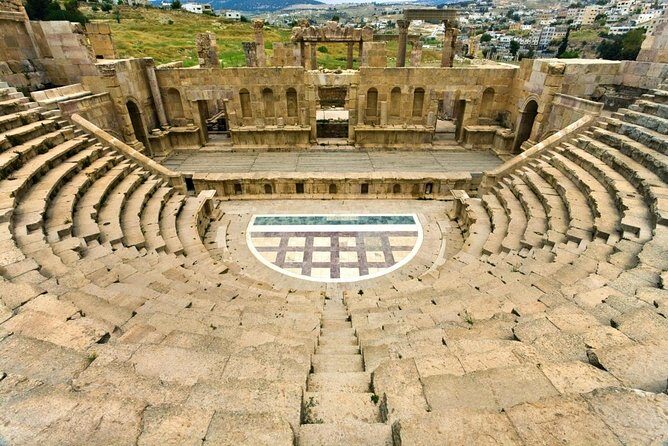
- Jerash with the Oval Colonnade and the colonnaded main street feel
- Driver-led storytelling since no guide is included
- Admission tickets extra, so plan a bit of cash in advance
Why these three sites work together in one northern Jordan day
Putting Jerash, Ajloun, and Umm Qais into a single day isn’t random. They each show a different layer of northern Jordan’s identity, and the geography helps you feel how the region connects.
Jerash is your anchor. It’s one of the largest and best preserved Roman architecture sites outside Italy, and it reads like a whole city plan rather than isolated ruins. The references you’ll hear—Decapolis (the ten Greek cities), the City of a Thousand Columns, the Pompeii of the East—are less marketing and more a way to describe how legible the streets and public areas still are. When you see the colonnaded main street and the Oval Piazza, Roman urban design clicks into place fast.
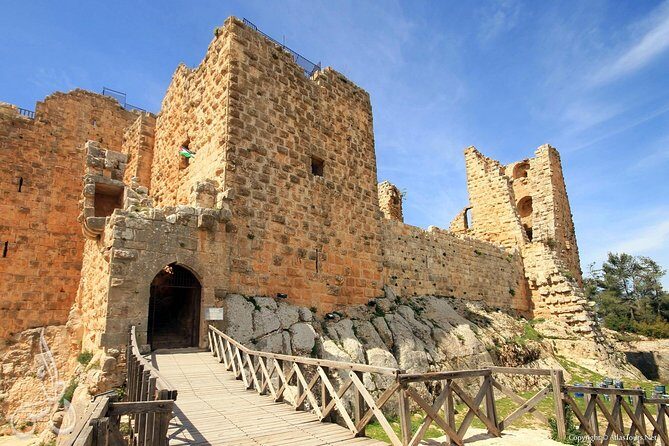
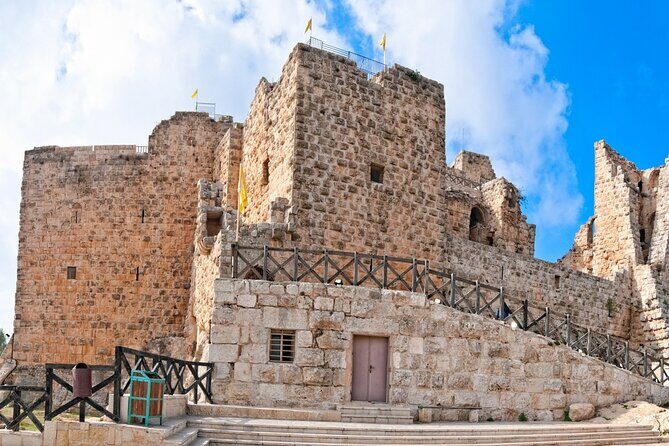
Ajloun Castle adds a totally different mood. This is medieval Arab military architecture, and it was governed by Saladin. The key payoff is the fortress perspective: you’re going to stand somewhere designed for looking out and staying aware, not just for taking photos.
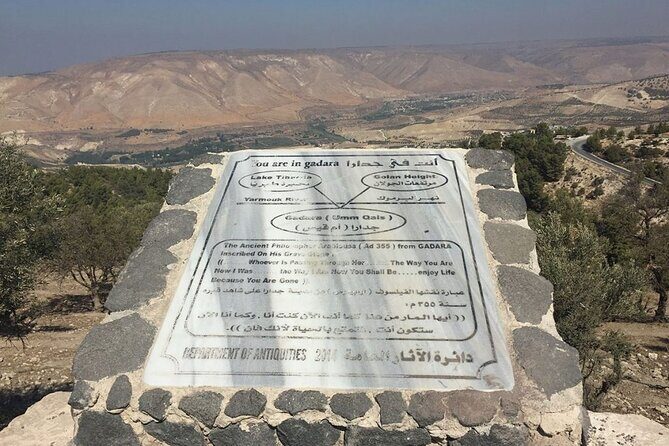
Then Umm Qais brings you back to the ancient northwestern border area. It’s known for being near the ruins of Gadara. Even if you only have about an hour there, it’s a good “different angle” stop: you’re shifting from Roman city scale to another set of ruins tied to a bigger regional story.
You can also read our reviews of more private tours in Amman


Amman pickup and the comfort factor on a 4-to-10 hour schedule
This is one of those tours where the logistics matter more than the brochure. You’re traveling north from Amman, moving between three sites, and spending time walking uneven terrain.
The tour includes an air-conditioned vehicle and private transportation, which helps a lot when the day stretches long (the duration is listed as roughly 4 to 10 hours depending on timing). You don’t have to coordinate buses or hunt for meeting points. And because it’s private, you can typically match your pace to your group rather than being pulled along by the slowest schedule on the route.
You also get a mobile ticket, which means you’re set up for simple entry—though the important part is that tickets for the sights themselves are not included. So think of the mobile ticket as your tour ticket, not your archaeology admission.
Finally, the tour is usually booked well ahead—on average about 75 days. That’s a clue: if you’re traveling in a busy season or on a specific weekday, earlier booking makes your life easier.
Umm Qais: a short stop tied to ancient Gadara
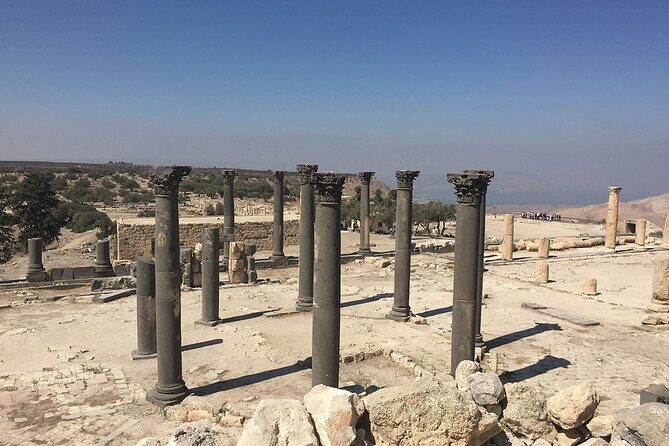
Umm Qais is scheduled for about 1 hour, and that time constraint is worth planning around. This stop is best if you want a quick, focused taste of the Gadara connection rather than a long archaeological day.
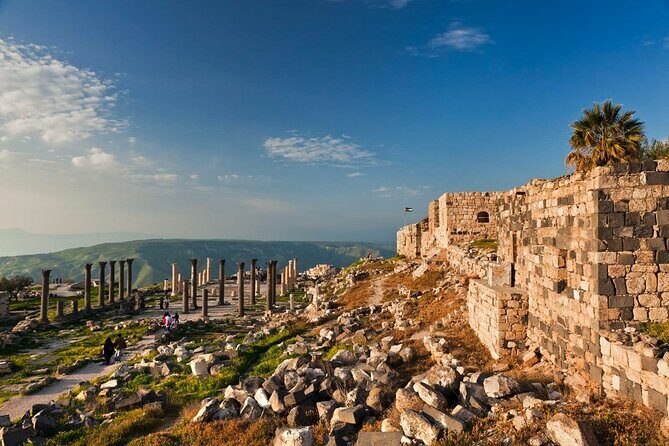
Umm Qais is described as known mainly for its proximity to the ruins of ancient Gadara. In other words, the value here is partly location: you’re visiting a town area tied to a larger ancient story, and you’re doing it on a route that already includes other Roman-world highlights.
The region matters, too. Umm Qais sits in extreme northwest Jordan near the borders with Israel and Syria. That gives the area a borderland feel, and it helps explain why this part of the country has always been important for trade and movement.
A practical drawback: with only about an hour, you may have to choose between a deeper walk and just enough time to take in the key remains. If you’re the type who needs lots of context, go in ready to ask your driver questions and don’t expect full guided interpretation here.
Ajloun Castle: Saladin-era fortress views you’ll actually remember
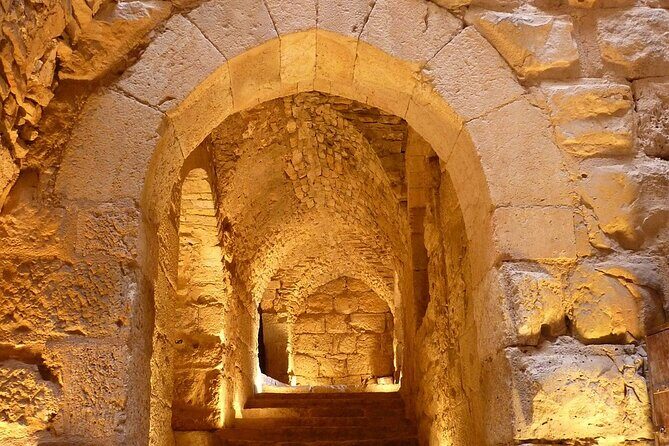
Ajloun Castle is given about 1 hour, and it’s the kind of stop where the time makes sense. Fortresses are built for watching. Even without a long lecture, the experience is visual and immediate.
This is one of the best preserved examples of medieval Arab military architecture in the Middle East. It was once governed by Saladin’s forces, and standing in and around the fortress lets you feel how defensive architecture was designed to control movement.
The standout feature is the magnificent view into the Jordan Valley. This is the moment where the day changes from “walk among ruins” to “look across a landscape for meaning.” You’re in a place where sightlines were part of the strategy, so your photos won’t just be scenery—they’ll feel tied to the purpose of the site.
One thing to consider: because the tour keeps moving after Ajloun, you’ll likely want comfortable footwear and quick decision-making about how much exploring you do within that 1-hour window.
Jerash ruins: making Roman city life feel close-up
Jerash is scheduled for about 3 hours, and that’s enough time to do more than a quick glance. This is the stop where you’ll get your biggest payoff.
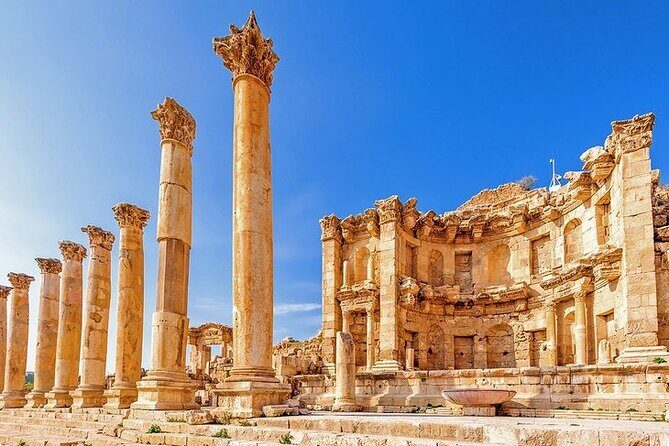
Jerash is described as a Jordanian city and the capital and largest city of Jerash province. But the draw for most people is the Roman section—often described as the City of a Thousand Columns. You’ll see major public-space planning: the colonnaded main street and the Oval Piazza are the best-known, easiest-to-imagine highlights.
You’ll also hear about the Oval Colonnade, which is the kind of detail that makes a place feel designed, not accidental. The ruins have enough structure that you can picture how crowds moved through temples and civic areas.
If you’re wondering why people call it the Pompeii of the East, the answer is scale and preservation. It’s considered one of the largest and most well preserved Roman architecture sites in the world outside Italy. That combination is rare: you get the feeling of a complete urban environment, not just a few dramatic arches.
Potential drawback: Jerash is a big site. Even with a driver and private pacing, you’ll want to be ready for walking on uneven surfaces and shifting light. If you’re sensitive to heat, plan your photo stops and don’t treat this as a marathon.


The real value: your driver as the day’s storyteller
No guide is included, but the experience doesn’t feel silent. The driver function here is practical and personal: getting you from place to place plus explaining the key details you’d otherwise miss.
From past departures, you may be paired with a driver who truly leans into the educational part. Names that have come up include Hassan, Omar, Jasem, and Ahmad. In several accounts, the driver didn’t just drive—they walked you through important details during the trip.
One of my favorite practical themes in those notes is that the driver helped with small decisions that make the day smoother. For example, Ahmad is mentioned as recommending lunch in Jerash, and the food experience is part of what made the day feel complete rather than rushed. Another driver, Omar, is described as taking great care of the group, with the day feeling worth repeating.
So if you go into the tour with a friendly, curious mindset—asking questions when something catches your eye—you’ll likely get more value than just transportation.
Price and logistics: where the $59.99 really goes
The headline price is $59.99 per person. For Jordan, that’s not a bad deal when you compare it to what you’d spend on getting around independently—especially when you add in the included air-conditioned vehicle and private transportation.
What’s not included is just as important. Admission tickets for the stops are not included, and you should expect to pay entry separately. There’s also a tip for the driver not included, so you’ll want to factor that into your total budget if you enjoyed the explanations and comfort level.
The good news is that this structure keeps the base price lower and makes your spending adjustable. If you already know you want to spend time at every major area, you’ll budget admissions once and move on. If you want only core viewing, your driver can help you focus your time—especially at places like Umm Qais where the visit is short.
Group discounts are listed as available, which is a nice bonus if you’re traveling with friends or family and can split the cost while keeping the private-ride advantage.
How long is enough time at each stop?
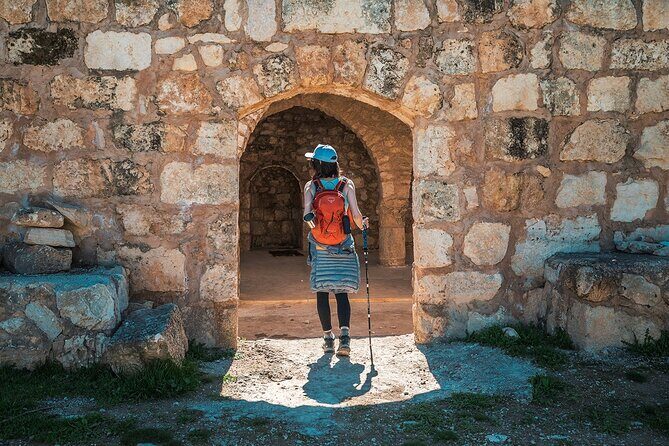
The tour gives you these on-site durations: about 1 hour at Umm Qais, about 1 hour at Ajloun Castle, and about 3 hours at Jerash. Then you’ll have travel time between them.
That mix creates a clear pacing style:
- Umm Qais is a quick, location-based stop.
- Ajloun is a short fortress visit with a big payoff view.
- Jerash is the main event with time to walk and absorb.
It’s a smart structure for people who want to see a lot but don’t want a full two-site marathon plus a third stop. It also matches the reality that Jerash is the site where you’ll naturally spend longer once you start walking the ruins.
Who should book this tour?
This tour makes the most sense for:
- First-timers doing northern Jordan without juggling transport
- People who want a private car and a manageable day structure
- History fans who like the Roman world (Jerash) and medieval architecture (Ajloun)
- Small groups who prefer to move at their pace rather than joining a crowded schedule
It might not be ideal if:
- You specifically want a professional, licensed guide for deep, line-by-line interpretation
- You’re expecting admissions to be included
- You want a full-day archaeology focus rather than a three-stop sampler
If you like your travel practical—car, stops, clear highlights—this is a good fit.
Practical tips for a smoother Jerash–Ajloun–Umm Qais day
A few simple things make a big difference on a day like this.
First, wear shoes that handle uneven ground. Roman ruins and fortress areas are not flat, polished museum floors. Second, bring water and plan your sun time. Even if your vehicle is comfortable, you’ll spend chunks outside at Jerash and Ajloun.
Third, budget for admission tickets ahead of time. Since tickets aren’t included, you’ll avoid the awkward moment of trying to work out payments on the spot.
Finally, use the driver’s knowledge. Since no guide is part of the package, the best way to get value is to ask questions at Jerash, like what area to focus on first or which landmarks matter most for photos.
Should you book this private tour?
I think you should book this tour if you want a clean, efficient way to see three northern highlights with minimal stress. The private AC transportation alone makes it feel civilized, and the Jerash time gives you a real chance to enjoy the Roman streetscape rather than treating it like a stop-and-snap.
I’d hesitate if you’re the type who wants a full guided lecture with admissions rolled into the price. Since there’s no guide included and entry tickets are extra, your experience will depend more on what your driver shares and how comfortable you are exploring with flexible interpretation.
If you’re aiming for value, convenience, and major sights in a single day, this one is a solid choice.
FAQ
What is included in the Jerash Ajloun and Umm Qais private tour?
The tour includes an air-conditioned vehicle and private transportation.
Are admission tickets included for Umm Qais, Ajloun Castle, and Jerash?
No. Admission tickets are not included.
Is a guide included with the tour?
No guide is included in the tour.
Is pickup offered from Amman?
Yes, pickup is offered.
How long is the tour?
The duration is listed as approximately 4 to 10 hours.
Is this tour private or shared?
This is a private tour/activity. Only your group will participate.
How far in advance is this tour usually booked?
On average, it’s booked 75 days in advance.
What is the cancellation policy?
You can cancel for a full refund up to 24 hours in advance. If you cancel less than 24 hours before the start time, the amount paid isn’t refunded.