REVIEW · EILAT
From Eilat: Petra Day Group Tour
Book on GetYourGuide →Operated by booking-tours.com · Bookable on GetYourGuide
Petra hits hard in one day. This group tour turns the basics into a guided walk through Petra’s key monuments with a licensed guide and a practical skip-the-line route that keeps more time for the views.
My favorite part is how the walk connects the big icons like the Treasury of Petra to what the Nabataens built—especially their water system that powered a thriving city. The main drawback to plan around is that the day can run tight, with border timing and a limited window for independent wandering.
In This Review
- Key things that make this Petra tour worth your attention
- Petra in one day from Eilat: why this format works
- Border crossing logistics: where the day can stretch
- The drive and Wadi Rum viewpoints on the way to Petra
- Entering Petra with skip-the-line: saving your energy
- The Nabataens made Petra work: water, power, and prosperity
- The Treasury and the facades: the big moment with context
- Roman theater, tombs, and crypts: what to look for as you walk
- Optional horseback ride: short, scenic, and tip-based
- Lunch during the day: plan around a real schedule break
- Price and value: what $383 buys you (and what it doesn’t)
- Group tour pacing: comfort, children, and language clarity
- Shopping stops and tourist traps: how to handle them smartly
- Who should book this Petra day tour, and who should rethink it
- Should you book this Petra day group tour?
- FAQ
- How long is the Petra tour from Eilat?
- Is hotel pickup and drop-off included?
- Does the tour include skip-the-line entry to Petra?
- Is the guide available in English?
- Is horseback riding included?
- What should I bring for Petra?
- Are meals included?
- What are the Jordan visa and other border costs?
- What is not included besides visa and border tax?
- Is the tour wheelchair accessible and suitable for children?
Key things that make this Petra tour worth your attention

- Skip-the-line access into Petra via a separate entrance, so you start seeing sights faster
- Licensed, live guiding in English (some departures may vary), which helps you understand what you’re looking at
- The Nabataean water system story: cisterns, flash-flood collection, and how it supported over 20,000 people
- A smart route through the big hits: Treasury, Roman theater, tombs, temples, crypts, cisterns, and facades
- Optional horseback ride for the first 200 meters, with a tip to the carrier you control
Petra in one day from Eilat: why this format works
A Petra day trip is popular for a reason. If Petra is your only big target in Jordan, this kind of group day keeps logistics simple: pickup, air-conditioned transport, guided walking inside the site, lunch, and a return transfer.
What makes this specific tour workable is the mix of guided structure and “you-time” after. You get a licensed guide who can explain what you’re seeing while you walk through the main areas—tombs, temples, crypts, and the famous facades cut into sandstone. Then you get lunch, plus a short period to take your own photos and slow down a bit.
You should also know the pace is built around getting you through the highlights without turning the day into a marathon. That can be great if you like clarity and convenience. It can feel rushed if your dream is spending hours near the Treasury with no timetable pressure.
You can also read our reviews of more tours and experiences in Eilat.
Border crossing logistics: where the day can stretch
Your day starts with travel from Eilat toward the Jordan border, followed by the crossing and then the drive onward. The tour includes transportation with air-conditioning plus guides and assistance, which matters because border procedures can be confusing when you’re tired and hot.
One practical thing to plan for: border time can fluctuate. On some days, people can be seated quickly on the bus and move on fast; on other days there may be a wait while the right buses are organized, including language-sorted seating. The best approach is mindset, not math: assume the schedule can swing a bit.
If you’re thinking like a strategist, this is where your packing list helps. Bring your passport and keep it accessible. Wear comfortable shoes, because even when the itinerary is “one day,” the walking inside Petra adds up fast.
The drive and Wadi Rum viewpoints on the way to Petra
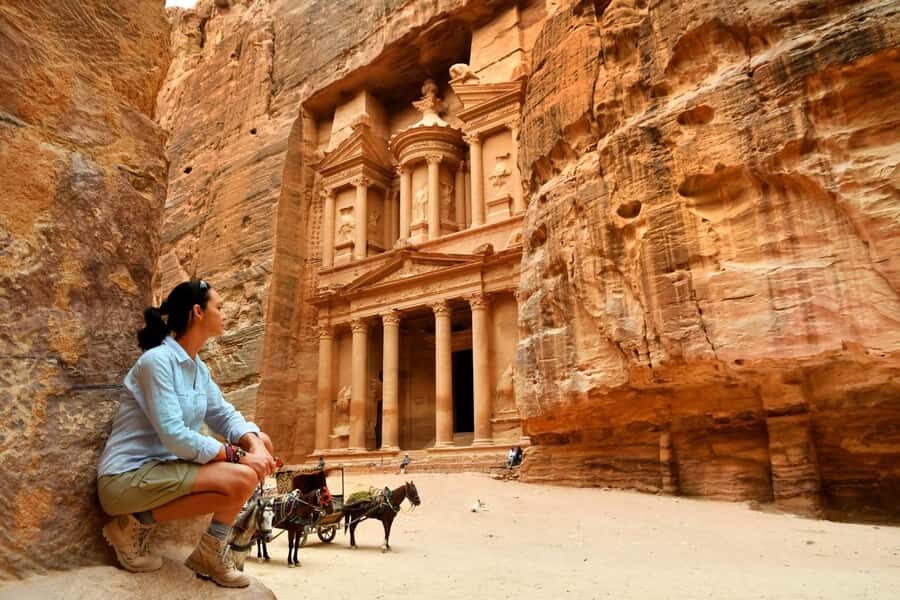
Between the border and Petra, the route includes stops at observation points with views tied to Wadi Ram. You’ll be stopping not just for the drive, but for those in-between moments that make the transfer feel less like dead time.
These viewpoint stops matter because they break up the sensory shift—from border to desert roads to the carved sandstone walls of Petra. Even if you don’t stay long, getting out for a few minutes helps you refocus before Petra’s scale hits you.
There’s also a quick stop at a viewpoint shop area on some schedules. This can be handy if you want water or a snack before Petra. But it’s also a place where shopping pressure can be strong, and exchange rates can change fast once you’re inside someone else’s setup.
My practical advice: if you buy anything, decide first what you want, and don’t let the exchange rate steal your deal. One solid tip you can use—pay in Jordanian dinar rather than switching currencies mid-process, so you don’t lose the price you thought you negotiated.
Entering Petra with skip-the-line: saving your energy
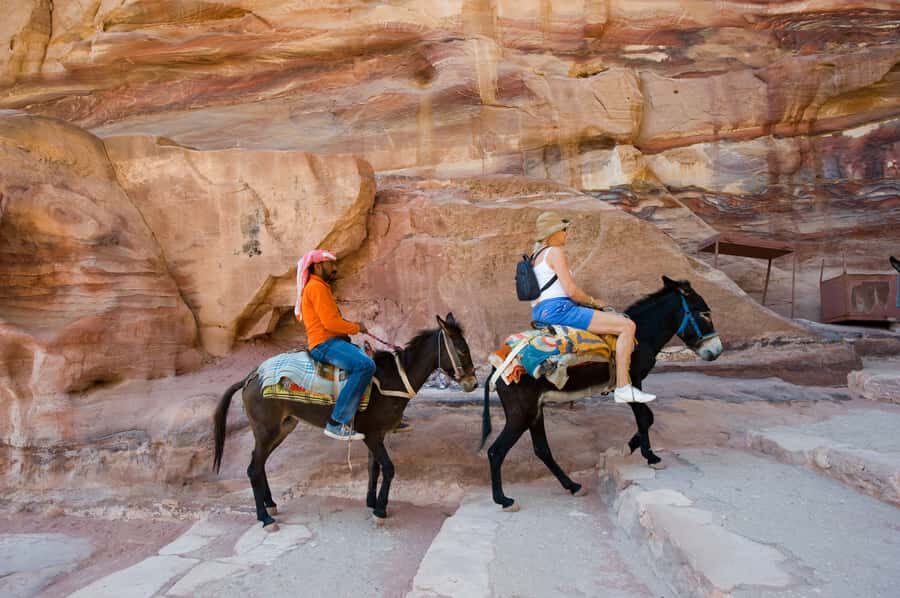
Inside Petra, the tour includes entrance fees and a skip-the-line ticket through a separate entrance. That’s not a small perk. In Petra, time saved before you even reach the first big sight is time you can spend looking closely—watching the cliffs, reading the carved details, and adjusting your plan once you see how the site feels in real life.
You’re going in as part of a group, so you’ll likely walk in a steady rhythm. This is good if you want momentum and don’t want to guess where to go first. It can be less ideal if you’re the type who wants to wander off immediately for your own version of the route.
Still, the main value here is that your guide can steer the walk so you hit the most important sections efficiently: Roman theater, major facades, tombs, cisterns, crypts, and temples.
The Nabataens made Petra work: water, power, and prosperity
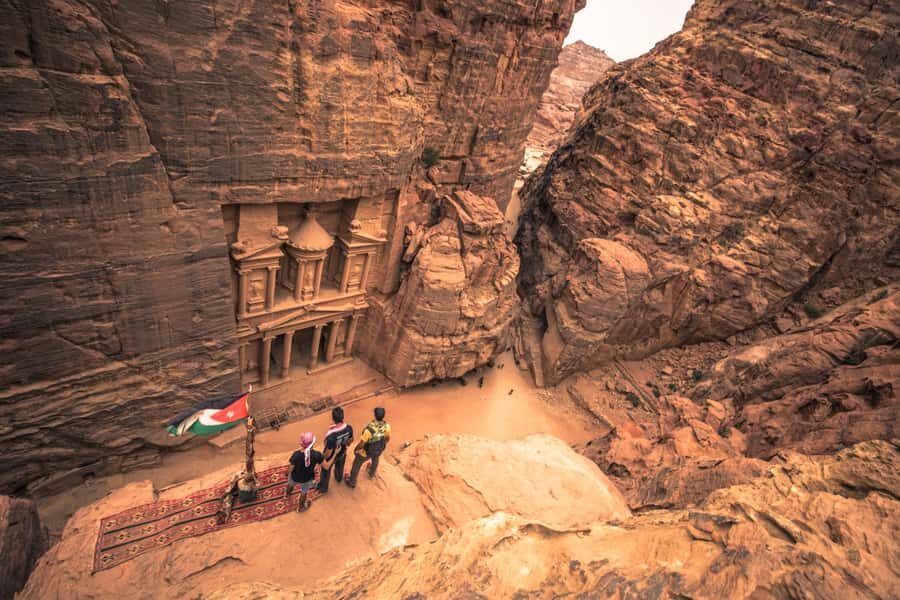
The best guides don’t just point at ruins—they explain why the place existed at all. In Petra, the big story is the Nabataens, who built and ran this city over 2,000 years ago.
Here’s what you’ll learn as you move through the site: the Nabataens were industrious builders who created one of the most unique water systems of their time. They built cisterns and collected water from flash floods, then sold that water to caravans and merchants. With more than 20,000 inhabitants, Petra became prosperous—not because it was easy to live there, but because they made it reliable.
When you understand that, the carvings make more sense. The facades that look Roman in style weren’t random decoration—they were statements built into the sandstone. The guide’s job is to connect the physical details (cisterns, crypts, tomb entrances, architectural facades) to the real city life behind them.

The Treasury and the facades: the big moment with context
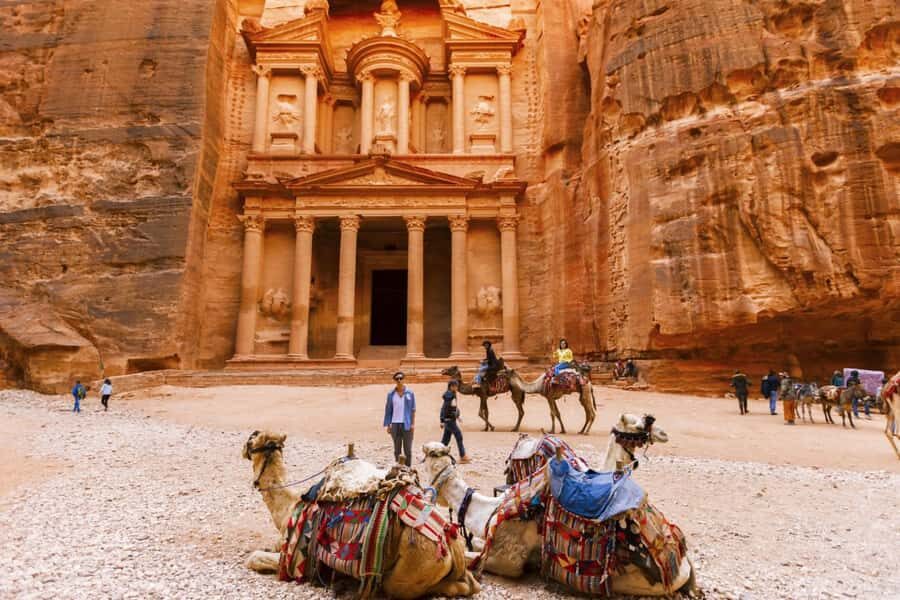
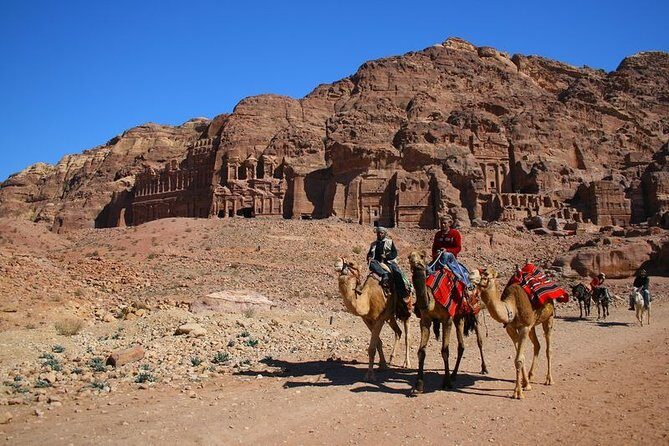
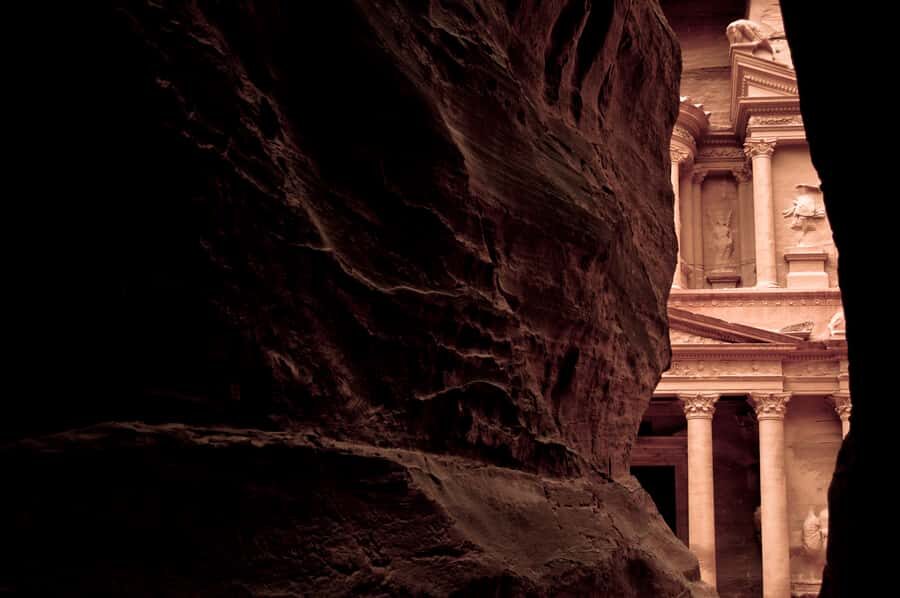
The Treasury of Petra is the famous face you’ve probably seen on postcards. On this tour, you’re guided toward it as part of a wider set of facades, tombs, and temples rather than treating it like a one-photo stop.
The Treasury is powerful because it’s monumental and perfectly staged by the canyon setting. But it’s even better when you know what you’re looking at: sandstone architecture in the Roman architectural manner, created by the Nabataens as their famous façade.
After the guided portion, there’s typically a short window for independent wandering. That’s where some travelers feel the schedule squeeze—especially if you want extra time near the Treasury for photos from multiple angles. If that’s you, go in with a plan: pick your must-have photo spots first, then relax.
Roman theater, tombs, and crypts: what to look for as you walk
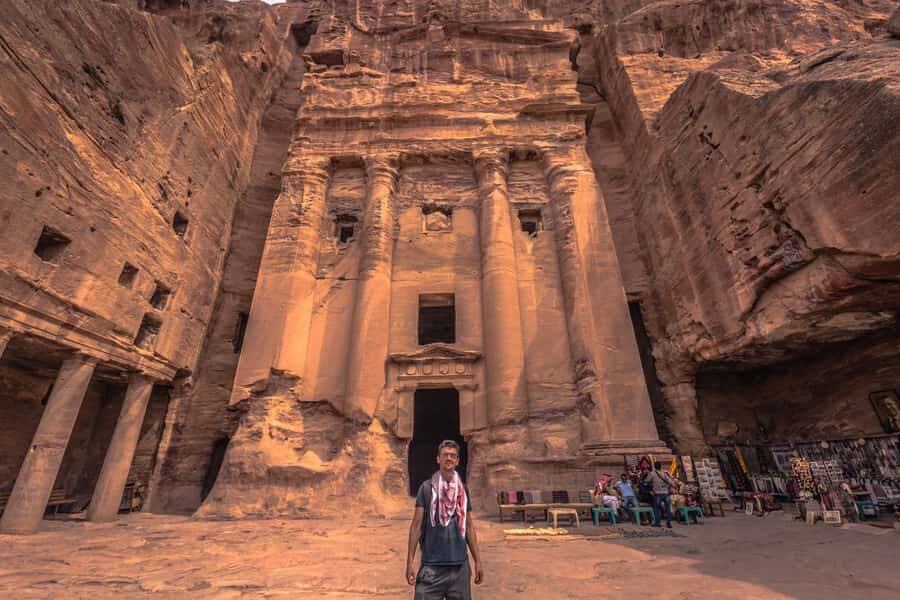
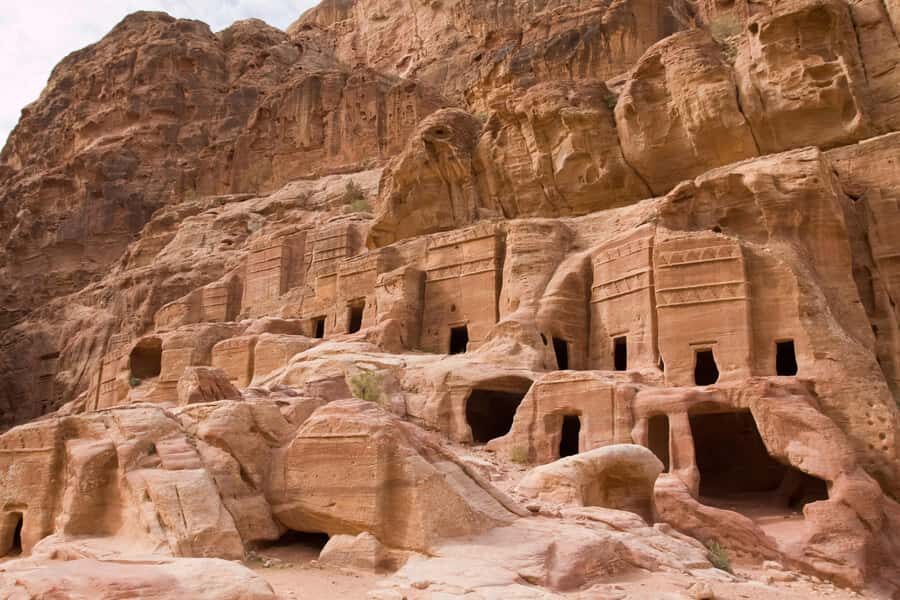
Petra is often described as a city of tombs, and the tour route reflects that. You’ll see tomb areas and multiple types of carved spaces, including crypts and temple structures.
The Roman theater is another key stop. It’s not just a cool ruin; it helps you understand how Petra’s design and use evolved under different influences. With a guide, you can connect the “wow” factor to the architecture’s function—where people gathered and how the space shaped public life.
As you walk, keep your eyes moving: look for how the carvings sit in the sandstone, notice the different shapes of openings and recesses, and try to spot the logic behind the layout. A good licensed guide makes this much easier, because you don’t waste time guessing what matters.
Optional horseback ride: short, scenic, and tip-based
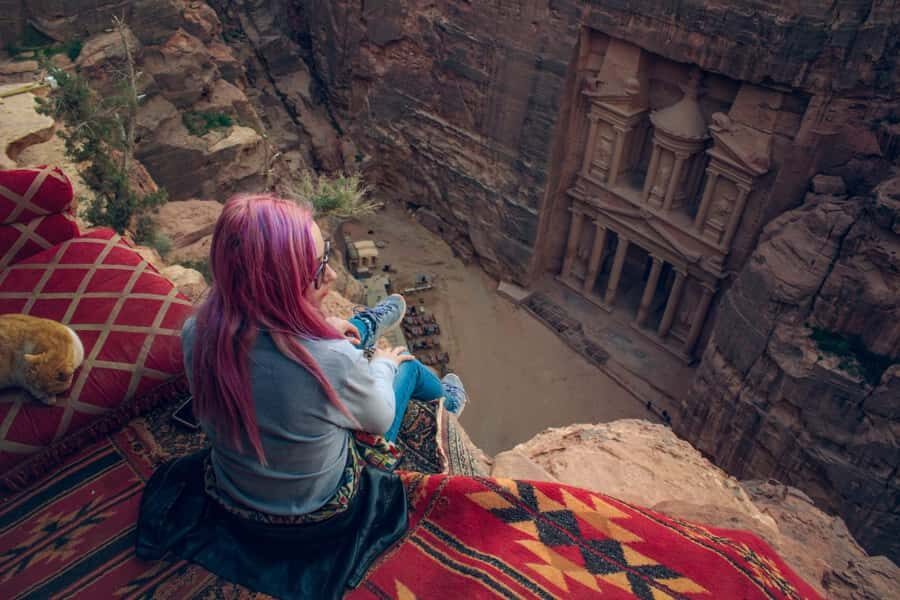
This tour offers an optional horseback ride. The idea is simple: you ride for the first 200 meters of the route, then you continue the tour on foot.
Two practical notes:
- Tipping the carrier is required, and the typical range is 2–15 dollars at your discretion.
- Because it’s only for about the first stretch, don’t expect it to replace the walking. This is more of a fun start than a shortcut that changes the whole day.
If you’re nervous about horses or prefer a steady walk, skip it. If you’re comfortable and want a memorable entry moment, it can add a bit of excitement without derailing the schedule.
Lunch during the day: plan around a real schedule break
Lunch is included in the package and served after the guided portion. That’s important because Petra can be hot and tiring, and a scheduled meal keeps you from turning into a snack-foraging person.
The lunch timing can also shape your free time afterward. On tighter schedules, your independent time in the most popular areas can feel limited. So treat the meal as both a recharge and a checkpoint: once you’ve eaten, decide quickly where you want those extra minutes.
When you’re choosing what to eat, go for something you can digest comfortably while walking back and forth. You’ll be glad you did once the adrenaline wears off and your feet start asking for mercy.
Price and value: what $383 buys you (and what it doesn’t)
At $383 per person for a one-day Petra group tour, this isn’t the cheapest way to do Petra. But it includes several cost-killing items that add up quickly if you do it independently: transportation with air-conditioning, a licensed guide, hotel pickup and drop-off, entrance fees, a skip-the-line Petra ticket, and meals as per itinerary.
Where the price needs honesty is on the extras you’ll still pay. Visa charges for Jordan are not included (listed at 75 dollars), as is border tax (65 dollars). Insurance and personal expenses aren’t included either.
So here’s the value math in plain terms:
- You’re paying for convenience and guidance: transport, guide, entrances, and the time-saving entrance route.
- You still need to budget for paperwork and fees at the border.
- If you get short independent time due to border or pacing, you’re paying for a structured day rather than a flexible one.
If you want Petra understood with minimal stress, the package pricing can feel fair. If you want maximum freedom and slow wandering, you might find the group schedule limiting.
Group tour pacing: comfort, children, and language clarity
This is a group tour with hotel pickup and drop-off, and it’s listed as suitable for children and wheelchair accessible. The practical win is that it’s built to move people through the day without everyone needing to plan their own route.
One watch-out is language consistency. Even though the tour is described as English with a live guide, the reality of group logistics can mean different language coverage at different points of the day. A couple of schedules have reported that the spoken language shifted, which can be frustrating if you booked specifically for one language.
What you can do: before you go, confirm the language and meeting details so there are no surprises once you’re traveling. When in doubt, aim to travel early in the day, and ask the guide at the start what language will be used during the main Petra walk.
In terms of guide quality, there are strong examples. Some departures have featured an English-speaking guide named Kareem, and other groups have had a Spanish-speaking guide named Sulaime (as reported by a past participant). Either way, the best tours are the ones where the guide keeps the story clear and the walking organized.
Shopping stops and tourist traps: how to handle them smartly
Some days include a stop at a shop area before Petra with viewpoint appeal. This can be useful for last-minute needs. It can also become a sales push where you feel pressured to buy quickly or do awkward exchanges.
Here’s the simple strategy I recommend:
- Set a spending limit before you arrive.
- Don’t let multiple exchange steps change your final price.
- If you see price confusion, pause and ask what currency the price is actually quoted in.
One practical tip that’s worth repeating: if you’re doing any currency exchange for purchases, try to pay in Jordanian dinar so you don’t lose your deal to unfavorable conversion on the spot.
Who should book this Petra day tour, and who should rethink it
This is a great match if:
- You want the major Petra sights in a single day without heavy planning.
- You like having a licensed guide connect the carvings to the Nabataens’ real story.
- You prefer a structured flow with transport, entrances, and lunch handled for you.
It might not be the best match if:
- You want long, quiet time near the Treasury with no schedule pressure.
- You’re sensitive to border delays and don’t want your day shaped by them.
- You need very strict language coverage at every moment. In that case, confirm details before booking.
The tour is also suitable for families, but still remember: Petra walking is real. Even with guidance and group pace, you’ll want solid shoes and enough water.
Should you book this Petra day group tour?
If you’re visiting Jordan with limited time and you want Petra’s highlights with a story you can follow, this tour is a strong, practical option. The skip-the-line entrance, licensed guidance, included meals, and transport from Eilat give you a smoother day than most DIY versions.
Just go in with your eyes open. Budget the Jordan visa and border tax separately, expect border timing to vary, and plan for the possibility that your independent time inside Petra could be shorter than you hoped. If that trade-off is okay, you’ll likely come away feeling like you got the essentials—well guided and in the right order.
FAQ
How long is the Petra tour from Eilat?
It’s a one-day experience, with activity timing dependent on availability and starting times.
Is hotel pickup and drop-off included?
Yes. Pickup and drop-off are included, and you should wait in your hotel lobby about 15 minutes before the activity starts.
Does the tour include skip-the-line entry to Petra?
Yes. You get a skip-the-line ticket to Petra via a separate entrance.
Is the guide available in English?
The tour is listed with a live tour guide in English.
Is horseback riding included?
Horseback riding is optional. If you choose it, you ride for the first 200 meters and then continue the tour on foot.
What should I bring for Petra?
Bring your passport, comfortable shoes, and water.
Are meals included?
Yes. Meals are included as per the itinerary, including lunch in a local restaurant.
What are the Jordan visa and other border costs?
Visa charges for Jordan are not included and are listed at 75 dollars. A border tax is also not included and is listed at 65 dollars.
What is not included besides visa and border tax?
Insurance and personal expenses are not included.
Is the tour wheelchair accessible and suitable for children?
Yes. The tour is listed as wheelchair accessible and suitable for children.