REVIEW · AMMAN
6 Day Tour: Amman Petra Jerash Baptism Site Karak Castle Wadi Rum Red & Dead Sea
Book on Viator →Operated by Jordan Private Tours and Travel · Bookable on Viator
Six days in Jordan can feel like a sprint. Still, this route stays fun because you get a private A/C vehicle and an overnight Bedouin camp built into the plan, not tacked on at the end. I like that the pacing spreads the big hitters—Petra, Rum, and the Dead Sea—across separate days. One thing to keep in mind: the itinerary is full, and site entry fees and meals aren’t included, so your total spend depends on what you pay on the ground.
What makes this tour especially practical is the way it’s designed for smooth logistics: hotel-to-hotel pickups, an English-speaking driver with you throughout, and no mixing with strangers since it’s private. If you’re lucky enough to get drivers like Murad or Jafar, you’ll likely get clear explanations that help the ruins make sense, plus they can handle groups with different ages and energy levels. If you’re thinking about Jordan Pass, I agree with the recommendation—just budget time to use it wisely for the stops that match your day-to-day plans.
In This Review
- Key points worth knowing before you go
- Why this Jordan loop works (even with tight days)
- Day 1: Amman, Madaba mosaics, Mount Nebo, and Bethany beyond Jordan
- Day 2: Umm Qais and Jerash without the chaos
- Day 3: Karak Castle via Kings Way, then Little Petra
- Day 4: Petra morning freedom, then Wadi Rum camp and sunset
- Day 5: Wadi Rum jeep safari and Dead Sea buoyancy night
- Day 6: Amman flexibility before you head home
- Guide quality and what “English-speaking driver” really means
- Price and logistics: is $999 a fair deal?
- Who this tour is best for (and who should look elsewhere)
- Should you book this 6-day Jordan route?
- FAQ
- What’s included in the $999 per-person price?
- Where will I sleep during the tour?
- Is Petra guided on this tour?
- What’s included in Wadi Rum besides the jeep safari?
- Are entry fees included?
- Do you visit Aqaba?
- What time does the tour start and is pickup provided?
- What if I need a single room, or want to cancel?
Key points worth knowing before you go
- Private, A/C transport keeps transfers comfortable, especially after long sightseeing blocks.
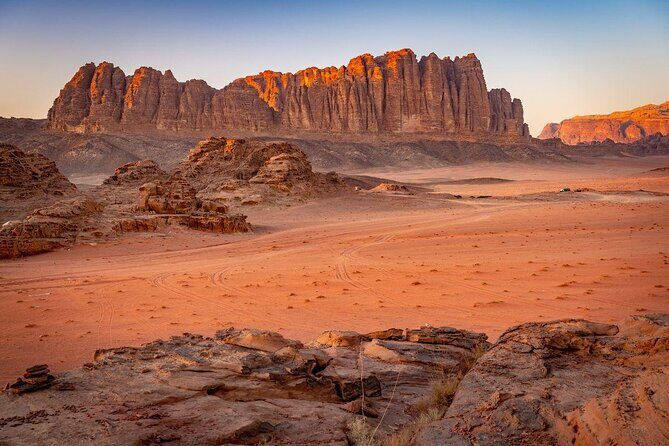
- Bedouin camp in Wadi Rum includes dinner and breakfast, plus a sunset moment at a set viewpoint.
- Petra is self-guided, so you’ll need to be ready to manage your own pace and ticket time on that day.
- A 2-hour jeep safari in Wadi Rum is included with bottled water.
- Aqaba can be skipped in Nov–Mar, so check your season expectations.
- Entry fees aren’t included, but Jordan Pass may help reduce what you pay on site.
Why this Jordan loop works (even with tight days)
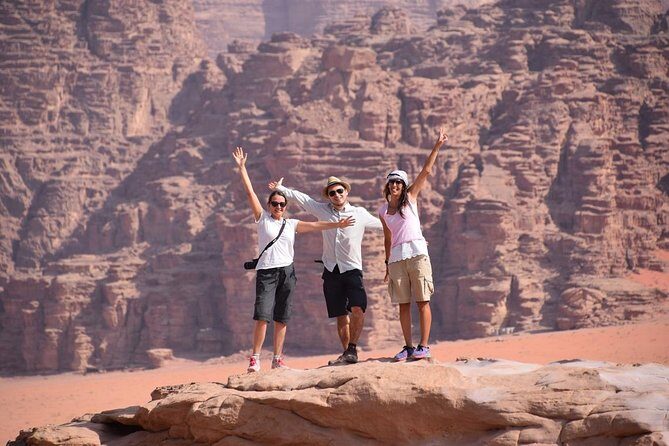
This itinerary covers the places most people come to Jordan for: Amman, Madaba/Mount Nebo, Bethany beyond the Jordan, Jerash, Karak Castle, Petra, Wadi Rum, the Dead Sea, and an optional day in Amman. The trick is that it avoids doing all the heavy walking in one day. You still walk at sites, but you’re not hopping between every attraction back-to-back with no recovery time.
Value is the big question with any Jordan tour, and here the math is mostly about what’s included. Your price covers a private A/C vehicle, an English-speaking driver, multiple nights in hotels, and the Wadi Rum camp with both dinner and breakfast. It also includes the jeep safari portion in Wadi Rum. What’s missing is equally important: entry fees and meals (outside of what’s listed for hotels and the Rum camp) aren’t covered, and those costs can add up.
Finally, this is best for people who like structure but still want some freedom. Petra is self-guided, and Day 6 has a flexible add-on based on your choices. If you’d rather have a constant live guide inside every site, you might prefer a different setup. If you enjoy asking questions of a driver between stops and handling site time on your own, this fits well.
A few more Amman tours and experiences worth a look
Day 1: Amman, Madaba mosaics, Mount Nebo, and Bethany beyond Jordan
You start at 8:00 with a tour of Amman’s highlights, then you move into Madaba and the religious/history stops.
In Amman, the plan focuses on the key viewpoints and landmarks: the Roman Theater and the Citadel. If you’ve ever felt lost in a big city like Amman, you’ll probably like this approach. It gives you orientation fast, so later you’re not just staring at random buildings—you understand where the city’s power centers were.
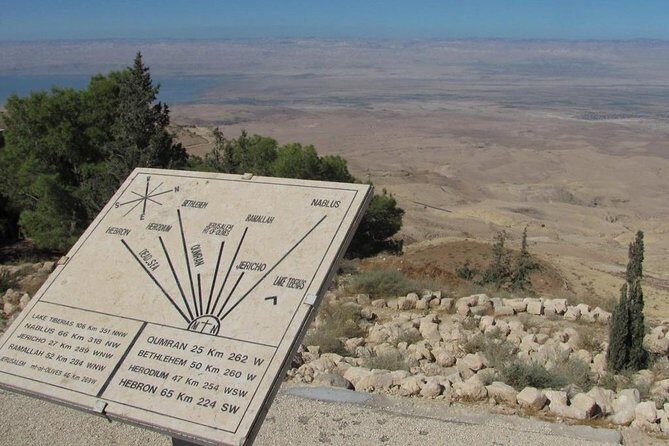
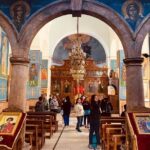
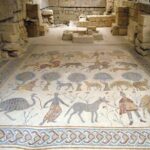
After lunch, the tour shifts to Madaba, where the famous mosaic tradition is front and center. The stop list includes the Map Church and other sights around town. Then you head for Mount Nebo and the Baptism site at Bethany beyond Jordan. These aren’t “quick photo stops.” Even without a local guide included, the timing works because you’re moving from one meaningful location to the next, rather than breaking your day into dozens of tiny hops.
Practical notes:
- You’ll be on the move most of the day. Comfortable shoes help.
- Admission is listed as free for some segments, but the tour also states entry fees aren’t included overall—so don’t assume every ticket will be handled for you. If you use Jordan Pass, it may reduce what you pay for some stops, but always confirm what applies to your chosen route.
Day 2: Umm Qais and Jerash without the chaos
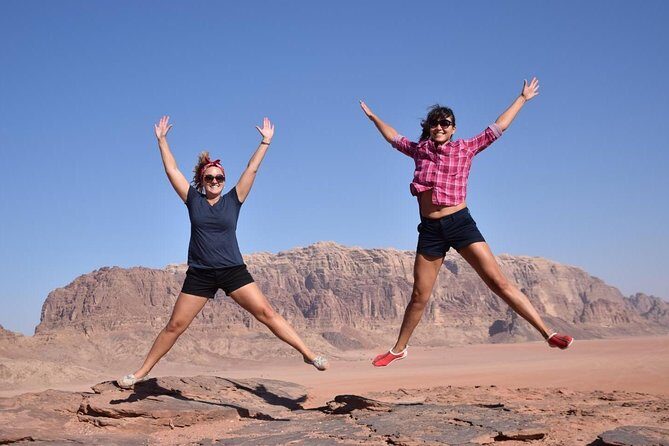
Day 2 starts with pickup and heads to Umm Qais, then brings you to Jerash.
Umm Qais is a classic Jordan “ancient city with big views” kind of stop. You get a different feel than the Amman–Madaba corridor because it’s focused on a distinct archaeological setting. The schedule gives you a window from 10:00 to about 11:30 for the Umm Qais tour, then lunch, then Jerash in the afternoon (roughly 14:00 to 17:00).
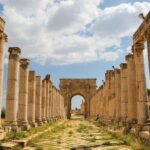
Jerash is the headline. It’s known for its Roman ruins, and the time block is long enough to feel like you’re actually seeing the place instead of sprinting through gates. The driving back to Amman at the end makes the day feel complete—no late-night “where do we sleep?” scramble.
One drawback to consider: this day is sightseeing-heavy, but it’s also a good test of your stamina. The tour notes moderate physical fitness is recommended. If you’re planning on spending extra time for photos at Jerash, you’ll want energy left in the tank.
Day 3: Karak Castle via Kings Way, then Little Petra
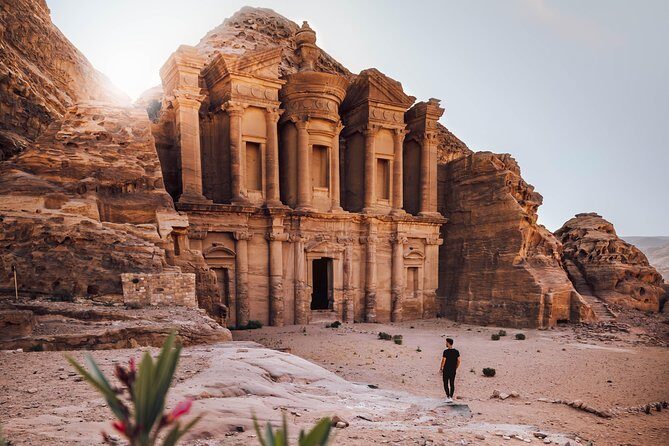
Day 3 is a nice break from the “just go to Petra already” mindset because it adds Karak Castle and a stop at Little Petra.
The route goes toward Al-Karak castle, and you’ll travel via Kings Way, with a pass by Wadi Al-Mujib along the drive. You arrive in time for Castle time, then you move toward Petra with a stop for Little Petra. The day is timed so you can see both “big fortress” and “mini-Petra” without feeling like you’re cramming everything into Petra proper.
A couple of things I like about this arrangement:
- Karak gives you a different type of Jordan story than Jerash and Petra. It’s about fortifications and control of routes.
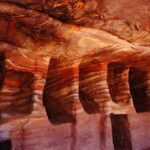
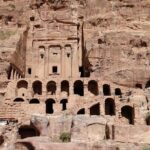
- Little Petra acts like a warm-up. Even if you don’t fully explore it, it helps you understand how Petra’s rock-cut style works.
You’ll then check in at your Petra area hotel in Wadi Mousa for the night. That matters. Sleeping close to Petra means you’re not losing half a day to transportation on Petra Day.
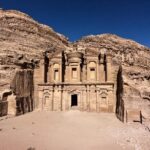
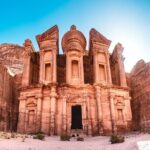
Day 4: Petra morning freedom, then Wadi Rum camp and sunset
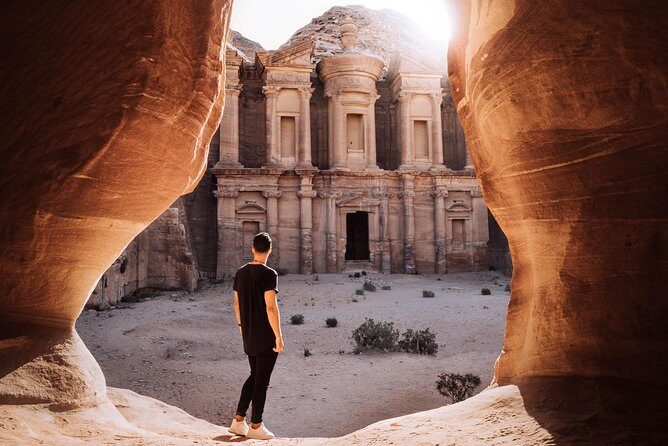
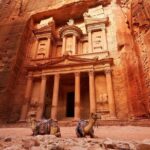
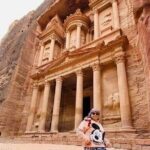
This is the most important day of the trip, and the biggest shift in experience: Petra is self-guided.
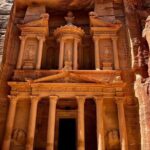
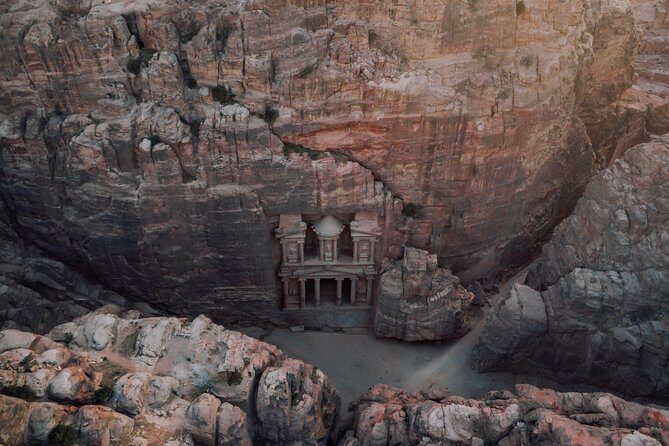
You’re picked up early (around 07:00), then you start Petra on your own. That can sound scary if you like strict planning. But in practice, it’s often the best way to experience Petra because your interests control your pace. If you want to slow down for details, you can. If you want to hit the highlights and move on, you can do that too.
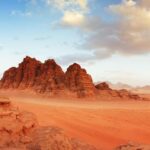
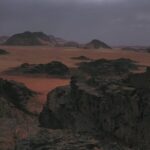
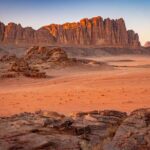
The tour then has you leaving Petra around 16:00. Timing may shift by season; it notes that in winter you may travel to Wadi Rum around 14:00. Arriving in Wadi Rum, you head to a Bedouin campsite inside Rum Valley, about 12 km from Rum Village.
That evening is built for atmosphere:
- A sunset activity at a designated sunset site (season timing differs).
- Dinner at the camp (Bedouin Zarp: chicken, grilled vegetables, and salads).
- Then sleep at the camp.
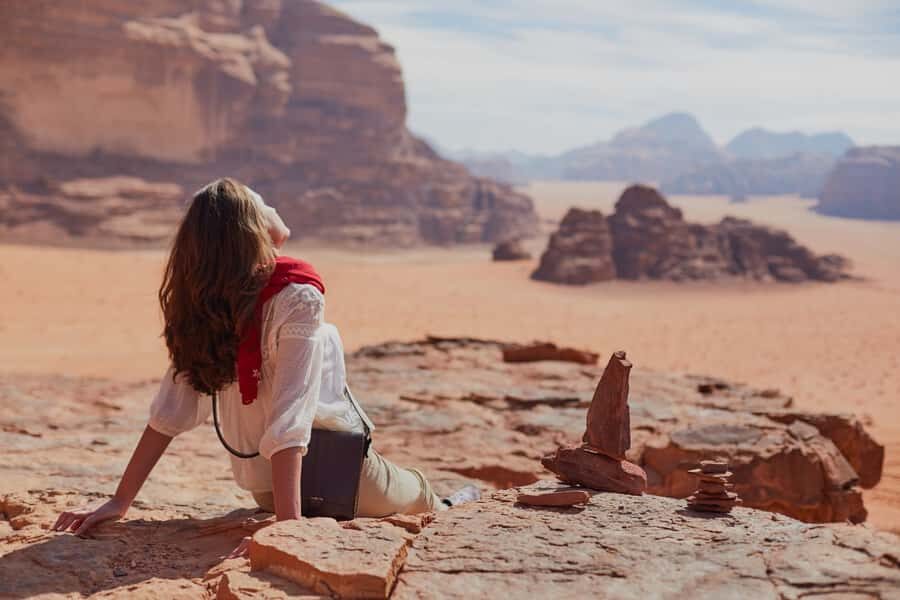
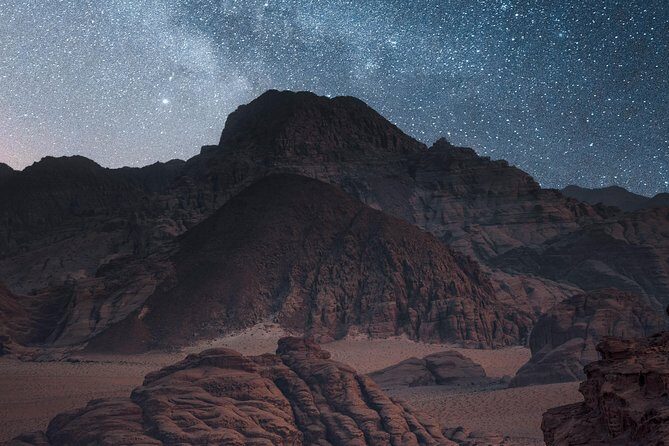
This is the part of the itinerary that usually makes people remember Jordan. The ruins are dramatic, sure. But Wadi Rum at night has a different kind of pull—still, remember this is time outdoors and the camp is part of the experience, not a hotel substitute.
Petra tip for your planning: because Petra is self-guided here, give yourself permission to choose. You don’t need to see every carved corner to feel the magic. If you try to do everything, you’ll spend the day moving and not absorbing.
Day 5: Wadi Rum jeep safari and Dead Sea buoyancy night
Day 5 keeps things moving but gives you a clear structure.
Morning starts with breakfast at the camp. Then you head out for your morning jeep tour at 08:00, visiting spots around Wadi Rum’s valley area. The included portion is 2 hours of jeep safari, plus bottled water.
After the jeep time, the route moves toward the Gulf of Aqaba, including a city and public beach tour. There’s an important reality check: the tour notes that Aqaba city is skipped during season time (Nov–March) due to short time. So in those months, you should expect a straight shot toward the Dead Sea rather than a beach stop.
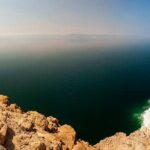
Then you end the day at the Dead Sea, where you’ll sleep in a 4-star hotel. The Dead Sea portion is one of those “you’ll feel it instantly” experiences, even if you’re just standing on the shore and watching people float. This is also your recovery buffer day. After Petra and Rum, you’ll likely welcome the calmer pace (and the fact that the hotel night is sorted).
What to watch for: your schedule can feel full, and Dead Sea time can go fast depending on how long you want to stay in the water. If you want more time in the water, plan to arrive with a clear intention for how long you’ll stay.
Day 6: Amman flexibility before you head home
Day 6 is lighter by design: you’re back in Amman, and the itinerary allows for selective activities based on your choices. This is handy because it gives you a chance to balance out the previous days.
If you loved something on Day 1 (like the mosaic stops in Madaba area) you can steer the final day toward similar interests. If you want a shopping-and-café day, this is your chance. If you want to revisit a viewpoint you missed, Day 6 is built for that.
Because the schedule is flexible, the exact plan depends on your preferences. The big benefit is that you aren’t forced into another “drive for hours, see one stop, drive again” routine on your last day.
Guide quality and what “English-speaking driver” really means
This tour includes an English-speaking driver throughout. That sounds standard until you see what it changes in your day.
A driver is with you from the moment you leave the hotel to the moment you check back in. That means questions don’t have to wait. And the explanations can help you connect the dots—especially for places like Petra, Jerash, and the religious-history stops where context matters.
One thing I took from the experience feedback I saw is that drivers like Murad and Jafar are praised for going out of their way to explain sites and for managing different ages in a group. If you’re traveling with mixed-energy people—teens, parents, grandparents—this is exactly the kind of setup that can keep everyone from getting bored or frustrated.
Still, local guides and entry tickets are not included. So inside the biggest sites, if you want a licensed guide experience, you may need to arrange it with the provider or pay locally (depending on what’s available).
Price and logistics: is $999 a fair deal?
At $999 per person, you’re paying for a lot of structure: private A/C transport, an English-speaking driver, included hotel nights with breakfast, a Bedouin camp night in Wadi Rum with dinner and breakfast, and a 2-hour jeep safari. For a route that covers multiple regions, this is where the value lives.
What isn’t included matters because it affects your real total cost:
- Local tour guides at the sites
- Entry fees
- Meals and other expenses (beyond what’s explicitly included at hotels and the Rum camp)
So the honest way to think about value is this: the price is strong if you’re okay handling entry fees yourself and you’re not expecting all meals to be covered. It’s especially good if you don’t want to piece together transport, because private A/C transfers across Jordan take the stress out of the trip.
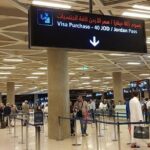
Jordan Pass is recommended before you arrive. The data says it waives visa entry fees and includes 41 sites. That can reduce the number of tickets you buy separately. Just treat it as a tool, not a magic wand—verify which sites line up with the stops on your exact route.
Who this tour is best for (and who should look elsewhere)
This tour fits best if you want:
- A private, no-fuss ride across the major Jordan stops
- A built-in Wadi Rum overnight rather than a quick visit
- The freedom to explore Petra at your own pace on self-guided time
It may be less ideal if you:
- Want a fully guided experience at every site (local guides aren’t included)
- Hate early starts or long days between stops
- Have mobility challenges beyond moderate walking (the tour suggests moderate physical fitness)
If you like the blend of guided driving and self-paced site time, this itinerary matches that style well.
Should you book this 6-day Jordan route?
I’d book it if your priority list looks like this: Petra, Wadi Rum camp, Jerash, a fort stop at Karak, and the Dead Sea—all in one trip with private transport and fewer planning headaches.
I’d hesitate if your priority is a fully guided tour inside every major site, or if you really dislike paying extra for entries and meals once you land. The tour includes some big experiences, but it doesn’t pretend that every ticket is covered.
If you’re the type who plans ahead (Jordan Pass, shoes, realistic pace), this trip is a smart way to see a lot of Jordan without turning your vacation into a logistics project.
FAQ
What’s included in the $999 per-person price?
It includes an English-speaking driver in a modern private A/C vehicle, hotel stays (two nights in Amman, one night in Petra/Wadi Mousa, one night at the Dead Sea, plus breakfast at all hotels), one night in a Bedouin camp in Wadi Rum with dinner and breakfast, and a 2-hour jeep safari tour in Wadi Rum with bottled water. Site entry fees and meals are not included.
Where will I sleep during the tour?
You’ll sleep two nights in Amman, one night in the Petra (Wadi Mousa) area, one night in a Bedouin camp in Wadi Rum, and one night at a 4-star Dead Sea hotel. Breakfast is included at the hotels.
Is Petra guided on this tour?
Petra is listed as self-guided on Day 4. You’ll be picked up for the day, but the Petra time itself is not described as guided in the itinerary.
What’s included in Wadi Rum besides the jeep safari?
You’ll have breakfast at the camp, a morning 2-hour jeep safari (with bottled water), and you’ll sleep at a Bedouin camp in Rum Valley. Dinner at the camp is included, along with a sunset activity.
Are entry fees included?
No. The tour notes that local tour guides and entry fees are not included. The tour also recommends getting Jordan Pass before arriving, which can waive visa entry fees and includes 41 sites.
Do you visit Aqaba?
The plan includes a Gulf of Aqaba city and public beach tour, but it also notes that Aqaba city is skipped during season time (Nov–March) due to short time.
What time does the tour start and is pickup provided?
The tour start time is 8:00 am, and pickup is offered. The itinerary includes hotel pickup on multiple days.
What if I need a single room, or want to cancel?
A single supplement applies if you need one room/tent for just one traveler (the standard arrangement is for up to 3 travelers). For refunds, you can cancel up to 6 days in advance for a full refund, with reduced refunds for cancellations made 2–6 days before the start time, and no refund if you cancel less than 2 days before.