REVIEW · AMMAN
Private Tour: Jerash and Umm Qais Day Trip from Amman
Book on Viator →Operated by Zaid Tours and Travel · Bookable on Viator
Jerash in Jordan hits you fast. This private day trip bundles two Decapolis cities—Jerash (Gerasa) and Umm Qais (Gadara)—with guided time, museum stops, and a comfortable ride north.
What I like most is the local guide time at Jerash and the fact you get to see the big Roman set pieces in a single day. The drive is handled in an air-conditioned minivan with on-board Wi‑Fi, and you’re dropped back at your hotel.
One heads-up: Jerash is vast and you’ll do serious walking. If your group has limited mobility, plan carefully and ask before you go.
In This Review
- Key things to know before you go
- Why Jerash and Umm Qais works so well from Amman
- Getting from Amman: private pickup, Wi‑Fi, and a long-enough schedule
- Jerash ruins with a local guide: Hadrian’s Arch sets the tone
- What to watch for at Jerash
- The Oval Plaza and Hippodrome: where Roman city life shows up
- The one drawback to plan around
- Umm Qais and Gadara views: ruins, theaters, and the museum inside town
- Don’t miss the viewpoint part
- A practical consideration: guidance at Umm Qais
- Lunch, water, and comfort: how to make the day feel easier
- What I’d pack for this route
- Price and value: is $126.67 per person fair for what you get?
- What’s not included (and what that means)
- Who should book this private Jerash and Umm Qais tour
- Should you book this Jerash and Umm Qais private day trip?
- FAQ
- What time does the tour start?
- How long is the Jerash and Umm Qais day trip?
- Is hotel pickup and drop-off included?
- Are entrance fees included?
- Is there a local guide at Umm Qais?
- Is lunch included?
- What languages are available?
Key things to know before you go
- Private, just your group tour: only your party rides and tours together.
- Hotel pickup and drop-off in central Amman, starting at 9:00 am.
- Jerash guided time with an English-speaking local guide (classic visit).
- Umm Qais includes museum time, plus plenty of free time at the ruins.
- Entrance fees are covered unless you use Jordan Pass, with a reimbursement option described for Jordan Pass holders.
- Bring walking comfort: Jerash is large, and the day is long (about 8 hours).
Why Jerash and Umm Qais works so well from Amman
If your days in Jordan are limited, this pairing makes a lot of sense. Jerash gives you one of the best-preserved Roman city experiences in the region, while Umm Qais lets you stack Roman and earlier layers on top of dramatic views toward the Sea of Galilee and the Golan Heights.
You also get variety without the hassle of moving hotels or planning multiple timed tickets. The route is simple: head north, spend focused time on major ruins, then finish with a quieter archaeological town stop before returning to Amman.
And you’re not just looking at stones. You get guided context that helps the ruins stop being random columns and start reading like a real city—gateway, plazas, theaters, and the busy public life that went with them.
You can also read our reviews of more private tours in Amman


Getting from Amman: private pickup, Wi‑Fi, and a long-enough schedule
The day starts at 9:00 am with pickup from your central Amman hotel. You ride in an air-conditioned minivan, and your driver is English-speaking, with the option for a local English-speaking guide at Jerash.
The total duration is listed at about 8 hours, which is enough time to see both sites without feeling constantly rushed, but not so long that you can ignore walking and heat. If you’re the type who likes to linger at photo spots, you’ll want comfortable shoes so your legs don’t turn that “linger” into a crawl.
One practical perk here: the van includes on-board Wi‑Fi. It’s not the reason to book, but it helps on that stretch of drive when you want to check messages or plan the rest of the day.
Jerash ruins with a local guide: Hadrian’s Arch sets the tone
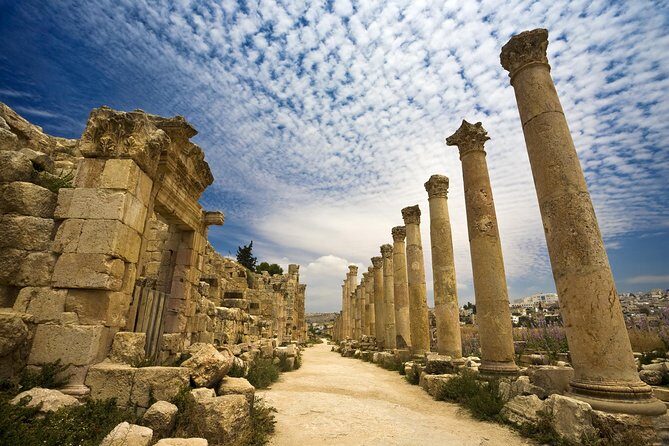
Jerash is where the trip earns its reputation. You’ll start with guided time at the entrance and move toward the city’s monumental gateway, including Hadrian’s Arch, which was the main entry point. It’s the kind of moment that gives you immediate scale: this wasn’t a small frontier town—it was built to impress.
Your Jerash portion includes about 2 hours with a local English-speaking guide (classic visit). That’s the sweet spot for real orientation. With a guide, you learn what you’re looking at and why it mattered—especially when the ruins can look similar if you don’t know what’s what.
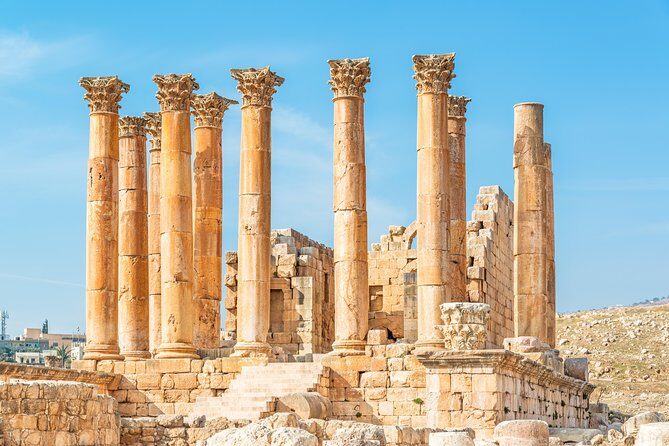
From there, the tour focuses on the city’s major Roman urban features, including the colonnaded avenue and key religious structures such as the Temple of Zeus and the Temple of Artemis. You’ll also be in the zone where the Hippodrome sits—chariot racing energy turned to quiet stone.
What to watch for at Jerash
- Gateway to street logic: notice how the arch leads into a ceremonial flow toward civic spaces.
- Public-life layout: theaters, plazas, and sports venues show how Romans organized daily entertainment.
- Scale of the walk: Jerash covers a lot of ground, so your pace matters.
A helpful note from real-world experience: Jerash is impressive, but it’s also big. If your group is tight on mobility, plan on slowing down and building in resting spots.
The Oval Plaza and Hippodrome: where Roman city life shows up
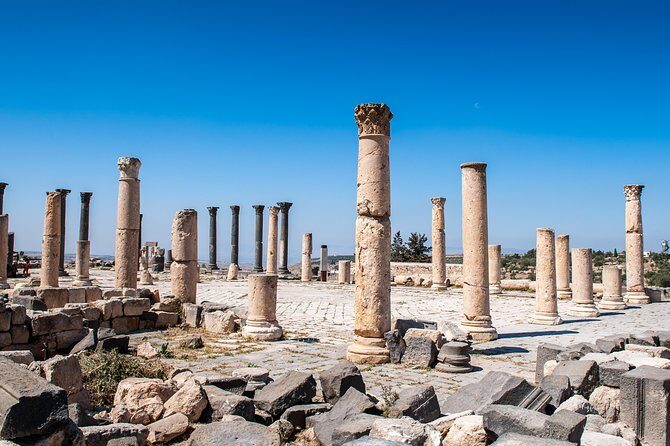
Next comes the Oval Plaza, framed by a ring of standing columns. This is the egg-shaped forum area, and it’s a great place to pause and get your bearings. It’s one thing to see ruins; it’s another to understand how citizens gathered for announcements, commerce, and public life.
This stop is about 1 hour and includes highlighted sights such as the Hippodrome (the chariot-racing arena). Seeing the Hippodrome as a chariot-racing venue helps the site come alive. Even if you don’t picture the crowds perfectly, you can at least grasp that this was a place built for spectacle.
The guided part also adds a few useful historical anchors. You’ll hear how Alexander the Great conquered Jerash in the 2nd century BC, and later how local farmers cultivated fruits and vegetables that could be sold to wealthy Roman residents. That detail helps you connect the ruins to the land and the economy—not just empire propaganda.
A few more Amman tours and experiences worth a look


The one drawback to plan around
This portion works best if you’re comfortable with walking and standing. The tour is designed for classic highlights, not for slow “wandering without stopping” sightseeing. If you want long, independent museum-style reading time, Jerash may feel more like a guided walk than a relaxed browse.
Umm Qais and Gadara views: ruins, theaters, and the museum inside town
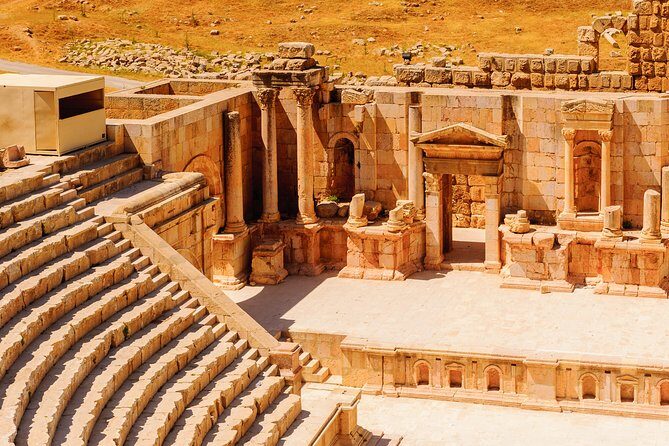
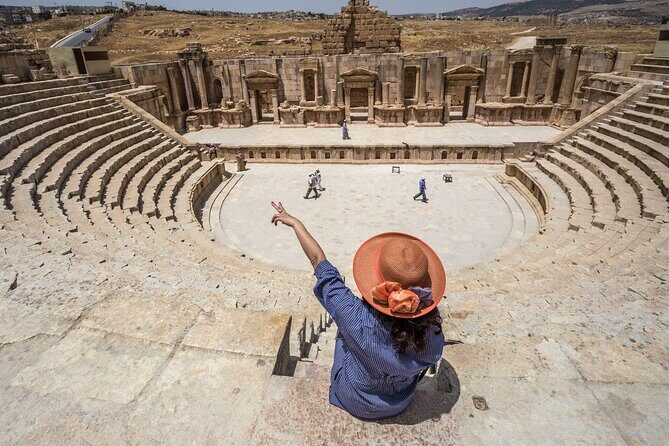
After Jerash, you head to Umm Qais, a village overlooking the ruins of the Roman city known as Gadara. Here, the experience shifts from big-city stone sets to a more scenic ruin setting where the views help you understand why people built here.
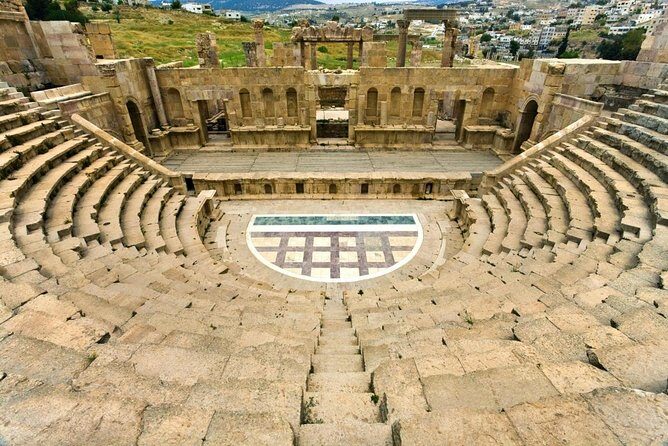
You’ll spend around 4 hours total at Umm Qais, including time to explore the ruins and visit the town museum. The tour description calls out key elements like the amphitheater, a crumbled mausoleum, and the basilica terrace, along with other theaters and remaining structures.
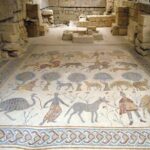
Then there’s the museum, which adds value beyond the outdoor site. You can see artifacts recovered from the area, including mosaics and marble statues. Even if you’re not the world’s biggest mosaic fan, it helps you connect what you saw outside to what was actually used and collected.
Don’t miss the viewpoint part
Umm Qais is one of those places where the viewpoint changes how you read the ruins. You get wide sightlines toward the Sea of Galilee and the Golan Heights, which makes the city feel less like a random archaeological stop and more like a strategic place with watching, trading, and status built into the geography.
A practical consideration: guidance at Umm Qais
The tour data doesn’t include a local guide at Umm Qais. If local guides are available, your driver can assist you in hiring one on-site, with payment handled directly by you.
So if your ideal tour includes heavy commentary at both ruins, you should budget for that possibility at Umm Qais. If you’re happy with guided context at Jerash and self-exploration afterward, this works nicely.
Lunch, water, and comfort: how to make the day feel easier
Lunch is not included unless you choose an option that includes it. If you do want lunch, you can request a vegetarian meal, but the default setup is that you’ll cover your own food.
Beverages aren’t included either, so plan on buying water when you need it. This matters because both sites involve walking, and the day runs long enough that you don’t want to be hunting for shade and hydration late.
Also, local tourist restaurants in Jordan do not always serve alcohol. If you prefer a specific kind of meal experience, it’s smart to check in advance with the operator so you don’t get stuck in a dry-restaurant situation.
What I’d pack for this route
Bring hats and sunscreen, and wear comfortable walking shoes. The tour data also recommends those items for a reason: you’ll be in outdoor ruins with minimal shelter in many spots.
Price and value: is $126.67 per person fair for what you get?
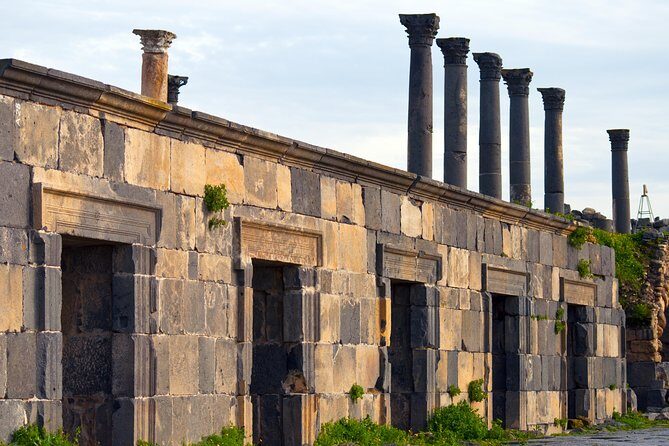
At $126.67 per person, the value depends on how you compare it to DIY travel. This price includes more than transportation: you get hotel pickup and drop-off, private transfer in an air-conditioned vehicle, an English-speaking driver, and Jerash entrance/guiding support.
Entrance fees are included for Jerash and Umm Qais if you don’t use Jordan Pass. If you do use Jordan Pass and still purchased an option that includes entrance fees, the operator notes you should inform them so you can be reimbursed in destination.
The best value piece here is the Jerash guide time. Jerash is too big to “wing it” unless you’re using apps constantly. A guide helps you hit the highlights and understand what you’re standing in front of, which is exactly what you want on a day trip when you don’t have time for slow exploring.
What’s not included (and what that means)
You’ll pay for meals unless you choose the lunch option. Also, tipping is not included and is recommended for the driver and local guide. For most people, that’s a normal part of a private tour and not a surprise cost, but I’d still mention it so you don’t feel blindsided.
Who should book this private Jerash and Umm Qais tour
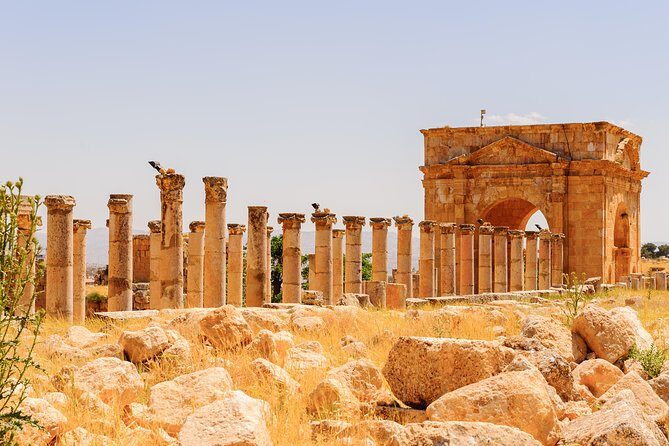
This tour fits best if you want two major archaeological stops with private logistics and guided Jerash context. It’s especially good for first-timers to Roman Jordan who want to see big names like Hadrian’s Arch and the Oval Plaza without doing the planning grind.
It’s less ideal if:
- Your group has limited mobility, since Jerash involves extensive walking.
- You want a guided, structured lecture experience at Umm Qais as well; guidance there is not guaranteed, though your driver can help you hire a guide if one is available.
- You expect everything to feel slow and deeply detailed—this is classic-highlight sightseeing in a full day.
If you do book, consider setting a realistic pace. This tour works best when you walk with purpose for the big sights, then use your free time at Umm Qais to linger and look outward.
Should you book this Jerash and Umm Qais private day trip?
Yes, if Jerash is on your Jordan bucket list and you’d like Umm Qais added without extra hassle. The combination of private comfort, guided highlights at Jerash, and museum time at Umm Qais makes this a solid “one-day Roman Jordan” option.
I’d book it especially if you appreciate a day that’s planned enough to feel efficient, but not so tightly scheduled that you can’t breathe. And if you’re sensitive to walking distances, contact the operator first and be honest about mobility needs—Jerash is the part that usually decides whether the day feels fun or punishing.
If you’re ready for big ruins, good views, and a long but rewarding day, this private trip is a strong choice.
FAQ
What time does the tour start?
The start time is 9:00 am.
How long is the Jerash and Umm Qais day trip?
It runs for about 8 hours (approx.).
Is hotel pickup and drop-off included?
Yes. The tour includes hotel pick up and drop off from central Amman.
Are entrance fees included?
Entrance fees for Jerash, Umm Qais, and its museum are included if you do not select the Jordan Pass option. If you hold Jordan Pass and purchased an option with entrance fees, you should inform the operator so entrance fees can be reimbursed in destination.
Is there a local guide at Umm Qais?
A local guide at Umm Qais is not included. If local guides are available, the driver can assist with hiring one, with payment handled directly by you in destination.
Is lunch included?
Meals are not included unless you choose an option with lunch selected. Vegetarian lunch can be requested.
What languages are available?
The tour activity is provided in English. Other languages may be available by request, depending on availability. Jerash includes a local English-speaking guide for the classic visit.