REVIEW · AMMAN
Jordan Pass 7-Day Tour Roman Ruins of Jerash, Petra, Wadi Rum, and the Dead Sea
Book on Viator →Operated by Zaid Tours and Travel · Bookable on Viator
Jordan hits hard in seven days. You’ll mix Roman drama in Jerash, spellbinding rock-cut architecture in Petra, and the surreal swim time of the Dead Sea, all with guided stops and included dinners.
Two things I really like about this tour style: you get local English-speaking guidance at the big-ticket sites, and your days are built around real time in places like the Siq and the Dead Sea rather than endless bus sightseeing.
One thing to watch: the schedule is active and there are extra costs for key experiences and entrances, including the Dead Sea beach area and the Wadi Rum jeep time, plus Jordan Pass is something you arrange directly for entrance/visa coverage.
In This Review
- Key highlights worth your attention
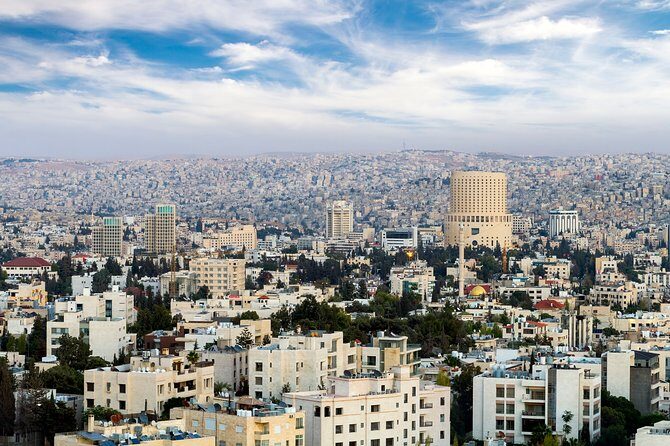
- Getting started in Amman: airport transfer and your first evening
- Jerash’s Roman streets and Ajloun’s hilltop fortress
- Desert castles before the Dead Sea: Quseir Amra, Qasr Kharaneh, Qaser Azraq
- Madaba’s Church of St. George mosaics and Mount Nebo’s viewpoint
- Heading into Petra: Karak Castle to a Red-Rose arrival
- Petra with a local guide: Siq, Treasury, tombs, theater, and optional climbs
- Wadi Rum in a 4×4: the valley of moon ride
- Driving back toward Amman: dinner and a final night
- Wrapping up in Amman: breakfast then airport drop-off
- Price and logistics: what $831.06 per person really covers
- Who this Jordan 7-day Petra and Roman ruins tour fits best
- Should you book this tour?
- FAQ
- Is this a private tour or a shared group?
- How many nights are included?
- What meals are included?
- Does the tour include airport transfers?
- Are Jordan Pass and entrance fees included?
- Is there a guide included for Petra and Jerash?
- What should I pack for the Dead Sea and Petra?
- What is the cancellation window?
Key highlights worth your attention
- Private group feel with only your party on the route
- Guides in Jerash and Petra using English-speaking locals for the classic walks
- 4×4 Wadi Rum safari on an easy, set plan (the jeep visit is timed and short)
- Dead Sea swim time built in as free leisure once you’re at the water
- Plenty of included meals with breakfast and six included dinners
- Historic stop chain that connects Roman, Islamic, Crusader, Nabataean, and desert sites
Getting started in Amman: airport transfer and your first evening
Your tour begins the moment you land. You’ll use a meet-and-assist style service at Queen Alia International Airport, then transfer to your Amman hotel so you can check in, grab dinner, and sleep without scrambling.
What I like here is how it reduces day-one stress. After a long flight, you don’t want a second round of logistics before you even start seeing Jordan. Dinner on Day 1 is also a small but smart win, because it means you’re not hunting for food while you’re still tired.
Possible drawback: meet-and-assist is listed as not included, while the itinerary describes meet-and-assist at the airport. In practice, you’ll want to confirm what you actually receive based on your voucher and Jordan Pass status, since the tour notes different treatment for Jordan Pass holders.
A few more Amman tours and experiences worth a look

Jerash’s Roman streets and Ajloun’s hilltop fortress
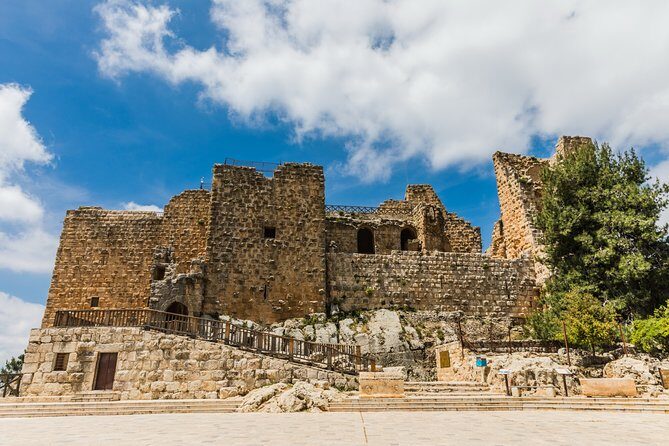
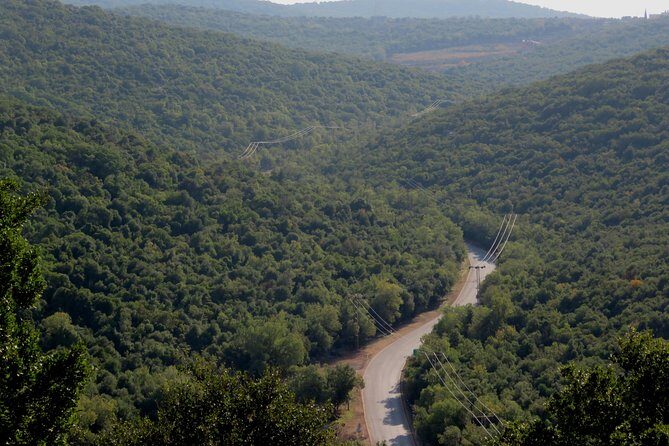
Day 2 is a strong historical one-two punch. You start with a drive to Jerash, one of the best-preserved Roman cities in the region, then head up to Ajloun for a fortress view that feels like you’re looking over old trade routes.
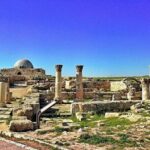
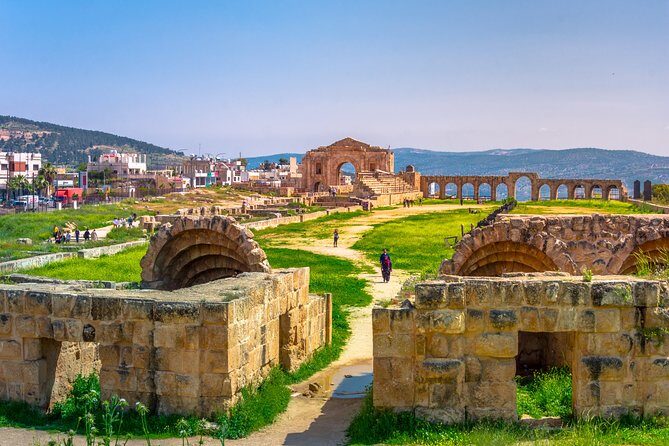
At Jerash, you’ll walk the main public spaces: the Great Colonnade, the Arc of Triumph, the Oval Plaza, and major temples connected with Zeus and Artemis. You’re not just looking from a distance here. The visit is built for getting your bearings in the city layout so the ruins make sense as a functioning place rather than random stone piles.
Then the tour shifts to Ajloun. You’ll visit the Islamic Fortress of Ajloun on a hill, built by one of Saladin’s generals in 1185 to control local activity and secure routes, then rebuilt later in the 13th century under the Mamluks. The hilltop location is a big part of the payoff, because you see why defense mattered in this part of Jordan.
Finally, you’ll have Ajloun Castle time. That extra hour can be worth it if you like military architecture and regional history, since the fortress area connects into the wider story of protection of routes in the Crusader era.
What you’ll enjoy most: this day mixes big-scale Roman public life with later Islamic military design. If your travel style likes “different eras, same geography,” you’ll feel that here.
Desert castles before the Dead Sea: Quseir Amra, Qasr Kharaneh, Qaser Azraq
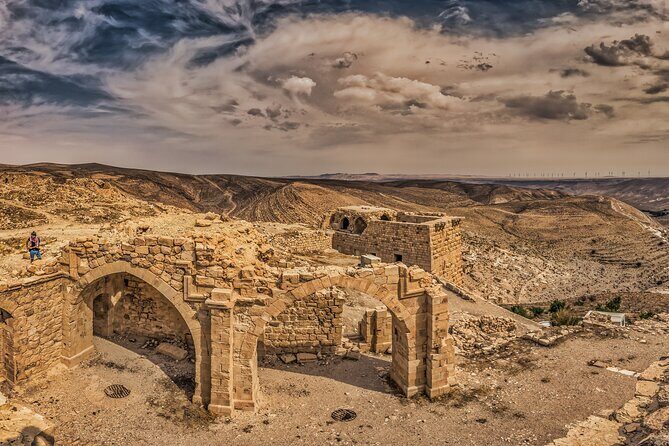
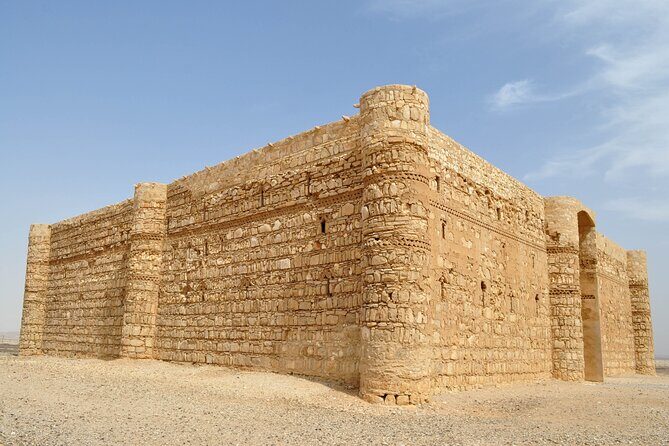
Day 3 is where the tour turns atmospheric. Instead of jumping straight to the Dead Sea, you stop at three medieval desert sites with fresco decoration and stories tied to early Islamic and Roman layers.
You’ll visit:
- Quseir Amra: an Umayyad-era desert castle known for fresco art and a zodiac dome motif
- Qasr Al-Harranah (also listed as Kharaneh): a Roman then Umayyad fortress completed in 710
- Qsar Al-Azraq: Qaser Azraq, linked with T.E. Lawrence of Arabia having headquarters time there
Each stop is short, typically around 30 minutes, so you get a taste without losing the day to long wandering. That works well on a multi-site route because you still end with a proper “Jordan moment” at the end.
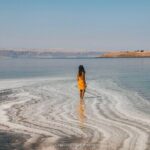
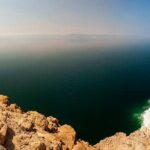
Then comes the star reset: the Dead Sea region. You’ll drive there and get about four hours total at the water area, with free time to swim. The Dead Sea sits about 400 meters below sea level, and the salt-and-mineral concentration is the main reason it’s so buoyant and so different from any other swim spot.
Real-world tip: bring a swimsuit (it’s required), and plan for rinsing after. The experience is fun, but you’ll want to protect your skin and keep your day comfortable.
Possible drawback: lunch isn’t included. The tour includes breakfast and dinner, but during the day you may need to budget for meals on your own, especially if you’re still hungry between castle stops and the Dead Sea.
Madaba’s Church of St. George mosaics and Mount Nebo’s viewpoint
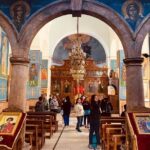
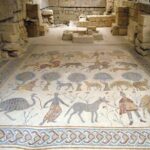
Day 4 feels like Jordan’s spiritual and scenic interlude. You’ll head first to Madaba, famous for mosaics. The tour focuses on the Church of St. George, where you’ll see the map of the Holy Land dating to 571 AD.
This is one of those visits that can be surprisingly rewarding even if you’re not deeply into religious sites. The mosaic map is a practical artifact: it shows how people mapped the world they lived in. You come away with a better sense of how the Holy Land was imagined and organized on the ground.
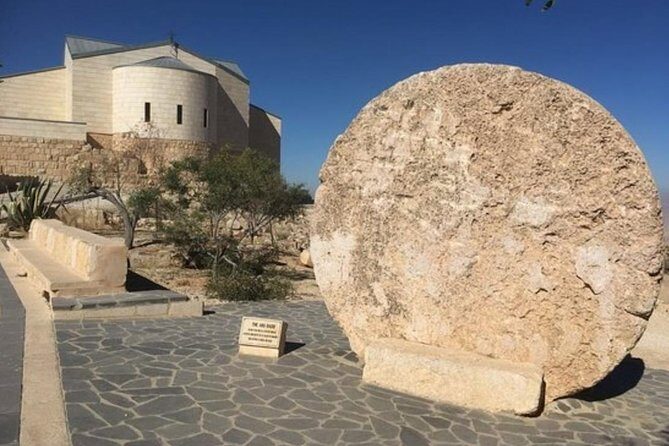
Next you’ll go to Mount Nebo, described as the tomb of Moses, with a church and a viewpoint over the Jordan Valley. The value here is that you get a “from above” perspective after days of ruins and fortresses. On clear days, the overlook makes the region feel connected rather than scattered.
Then you continue to Karak for Crusader-era castle time. Karak is described as the largest Crusaders Castle in the Levant, built in 1142. If you like big stone structures and strategic design, this stop adds weight to the day. If you’re tired, it can also feel like one more fortress after Ajloun.
The day ends with dinner and overnight in Petra.
What I like about this sequence: it reduces fatigue by changing the type of seeing each time. Mosaic art, a panoramic viewpoint, then castle stonework is a nice rhythm.
Heading into Petra: Karak Castle to a Red-Rose arrival
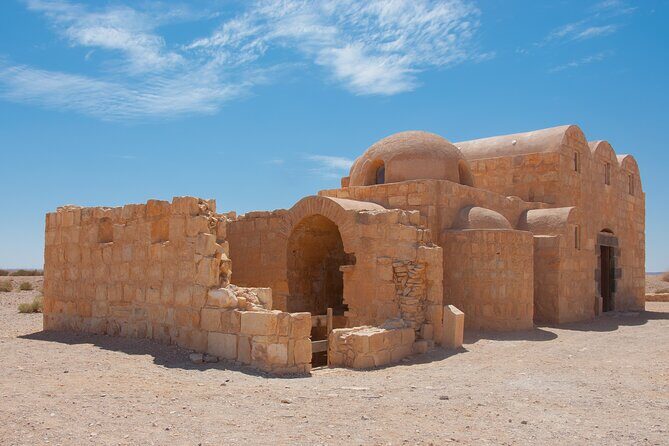
Even if you only think of Petra as a single sight, arriving through the surrounding region helps it feel real. Karak’s fortress stops the day from feeling like a straight run to Petra, and it sets you up for the Nabataean “wow factor” that follows.
You’ll reach Petra area by Day 4 evening, then settle into your hotel for dinner and overnight. The included dinners matter here, because Petra days can be long and you don’t want the stress of finding a solid meal after a big arrival.
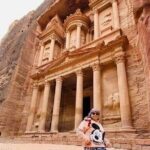
Petra with a local guide: Siq, Treasury, tombs, theater, and optional climbs
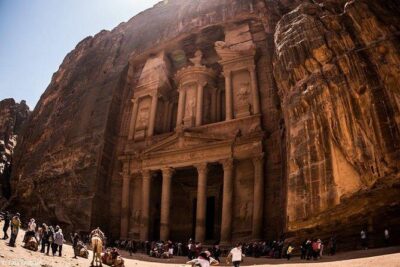
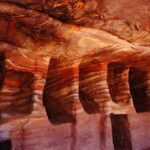
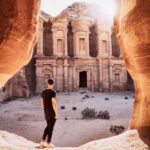
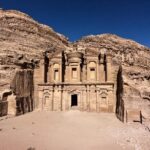
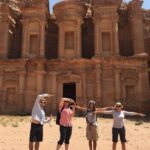
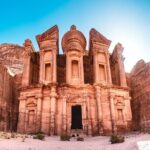
Day 5 is the heart of the itinerary. You’ll do Petra with a local English-speaking guide during the classic time. The tour frames Petra as a UNESCO World Heritage site and highlights its role as a Nabataean trading hub with rock-cut monuments carved over 2,000 years.
Your timing is built around the main walking chain:
- a walk through the Siq, the narrow canyon corridor that leads into the city
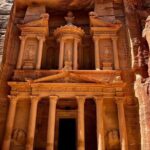
- the first big stop: the Treasury, locally called El-Khazneh
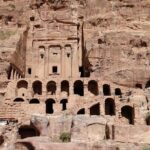
- then onward to ornate tombs, plus the theater area that once seated up to 3,000 people
The guide time is what makes this more than a self-guided wander. When someone can explain why Nabataean builders carved in this exact spot, and how the city worked as a system, you feel the place instead of just seeing it.
After the first half, you’ll have additional time for more features: a Byzantine church, and optional climbs depending on timing. The tour specifically mentions the Monastery or the High Place of Sacrifice, plus Petra Museum time if time permits. Lunch is on your own, so plan for snacks or a meal budget.
Practical note: Petra is walk-heavy. Even if your feet handle it fine, it can still be tiring because the walking is uneven and the light changes fast. Comfortable shoes and water are non-negotiable.
Possible drawback: the itinerary gives you a set guided window and then free time. If you’re the type who wants to linger at every carved detail for longer than planned, you might feel the pace. This tour is designed to cover the classics, not to do an all-day, slow-photo mission.
Wadi Rum in a 4×4: the valley of moon ride
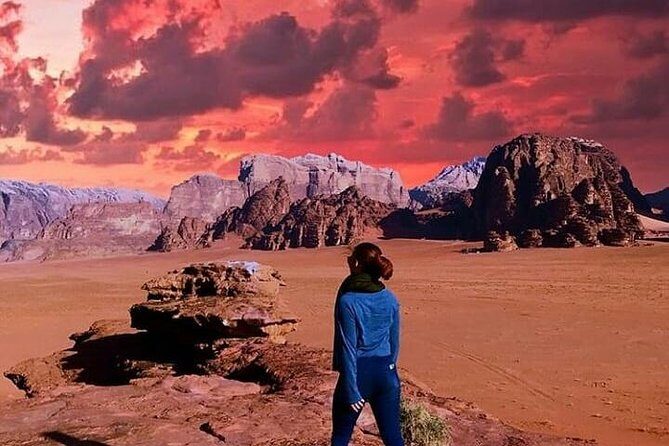
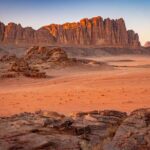
Day 6 is your desert break. You’ll head from Petra area toward Wadi Rum, described as the valley of moon, and known from film locations like Lawrence of Arabia, The Martian, and Star Wars: The Rise of Skywalker.
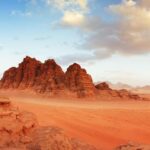
Your Wadi Rum experience is a classic short visit by local 4×4 jeeps, about two hours. The setting is red sand and towering cliffs in brown, reddish, and golden colors. Even in a short time, you’ll get the big “Wadi Rum” shapes that make the region famous.
This is one place where your planning matters because entrance fees and the jeep tour visit are listed as not included. The itinerary treats it as a timed stop, but you should budget for what’s still payable after you account for Jordan Pass coverage.
What I like about this version: it’s time-efficient. You get the signature desert feeling without losing an entire day to travel logistics.
Driving back toward Amman: dinner and a final night
Day 6 ends with the safe drive back to Amman for dinner and overnight. This is a useful buffer day because you’re not squeezed into another multi-hour hike or a late-night site visit right after Petra.
It’s also a chance to do small practical chores: laundry, charging devices, picking up water and snacks for your last morning. The tour’s included dinner gives you a predictable finish line for the day.
Wrapping up in Amman: breakfast then airport drop-off
On Day 7, you check out after breakfast and use an airport drop-off timed to fit your flight. That’s the clean ending you want after seven days of ruins and driving.
If your flight is later: you might still feel rushed because check-out usually happens in the morning. If you have flexibility, check with your hotel about leaving luggage on-site.
Price and logistics: what $831.06 per person really covers
At $831.06 per person, this is not a budget-only tour. It’s a mid-range private setup that tries to save you from the heavy planning.
Here’s what’s covered per your program:
- arrival and departure airport transfers
- private air-conditioned vehicle with an English-speaking driver
- six nights of accommodation (four in Amman, two in Petra)
- six breakfasts and six dinners
- local English-speaking guides specifically for Jerash and Petra classic visits
- free Wi‑Fi on board
Where costs can pop up:
- Jordan Pass isn’t included, and you buy it directly
- entrance fees and the classic 2-hour jeep tour visit at Wadi Rum aren’t included
- Dead Sea beach area private entrance is listed as not included
- beverages and gratuities are not included
So the value depends on how you handle Jordan Pass and on how many paid entrances you expect. If you already planned to use Jordan Pass for Petra and major sites, the package becomes more reasonable. If you’re not using it, the missing entrances can add up.
My practical take: this tour is a good fit if you want a smooth route with guided highlights and you don’t want to manage intercity transport, hotels, and site-day timing on your own. If you like flexible pacing, you may feel boxed in by the classic itinerary approach.
Who this Jordan 7-day Petra and Roman ruins tour fits best
This itinerary suits you if:
- you want a first-time Jordan plan that hits Jerash, Petra, Wadi Rum, and the Dead Sea
- you prefer private transport with an English-speaking driver and guides at the key ruins
- you like history across eras: Roman public spaces, Islamic forts, Crusader castles, Nabataean carving
- you’d rather pay for organization than spend days figuring out schedules and entrances
It might be less ideal if you:
- hate packed days and prefer long, slow stays in one place
- want lunch included every day
- plan to skip Jordan Pass and still expect all entrances to be covered
Should you book this tour?
If you want Jordan without the headache of planning each leg, I’d seriously consider booking this 7-day private tour. The combination of included hotels, transfers, dinner coverage, and guided time at Jerash and Petra is exactly what makes multi-site trips feel doable.
Book with confidence if you’re okay handling a few extra payments on top (especially Wadi Rum jeep time and the Dead Sea beach entry) and you’re happy following a classic route with limited on-your-own wandering.
If your priority is ultra-slow travel or deep detours off the main trail, you may find the pace a bit tight. But for most first timers, this is a smart way to see Jordan’s biggest name sites while keeping the logistics under control.
FAQ
Is this a private tour or a shared group?
This is listed as a private tour/activity, meaning only your group participates.
How many nights are included?
The package includes six nights total: four nights in Amman and two nights in Petra.
What meals are included?
Breakfast is included for six days, and dinner is included for six days. Lunch is not included.
Does the tour include airport transfers?
Yes. Arrival and departure airport transfers are included.
Are Jordan Pass and entrance fees included?
Jordan Pass is not included, and entrance fees plus the classic 2-hour jeep tour visit at Wadi Rum are listed as not included. Dead Sea beach area private entrance is also not included.
Is there a guide included for Petra and Jerash?
Yes. Local English-speaking guides are included for the Petra classic visit and the Jerash visit.
What should I pack for the Dead Sea and Petra?
A swimsuit is required for the Dead Sea, and you should bring hats, sunscreen, and comfortable walking shoes for the heavy walking.
What is the cancellation window?
The policy states you can cancel up to 3 days in advance for a full refund, and it notes the experience requires good weather.