REVIEW · AMMAN
Jordan Essentials
Book on Viator →Operated by Axis Destination Management · Bookable on Viator
The best kind of Jordan trip starts fast. This 5-day Jordan Essentials tour stitches together Amman’s ancient layers with the big cinematic hit of Petra, plus Wadi Rum nights under real darkness. I especially like the way Wadi Rum zarb dinner and stargazing turn a travel day into a memory, and how the tour keeps you moving without leaving you to figure out logistics. One consideration: you’ll be on the road a lot, and Petra plus Dead Sea time means a full-day pace on more than one day.
You’re paying $1,885 per person, but the value is in what’s included: modern air-conditioned transportation with onboard Wi‑Fi, airport/border assistance, entrance fees, a Petra guide, and even the Jordan visa. You also get 4 breakfasts and 4 dinners, plus a 2-hour jeep tour in Wadi Rum. If you’re the type who likes to minimize decisions and maximize time on the ground, this format tends to work well.
In This Review
- Key highlights worth planning around
- The Big Picture: how this route makes Jordan feel logical
- Amman first: Citadel views, Roman theater, and old souks
- Jerash ruins day: Roman civilization outside Italy
- Mount Nebo and Madaba mosaics: the Holy Land seen through stone
- Wadi Rum: zarb dinner, stargazing, and a jeep through Martian terrain
- Petra with a guide: focusing your time in the right places
- Dead Sea slowdown: rest at Earth’s lowest point
- The “free day” factor: how to use your last 24 hours well
- Price and value: what $1,885 per person buys you (and why it matters)
- Who this tour fits best
- Should you book Jordan Essentials?
- FAQ
- Where does the tour start?
- How long is Jordan Essentials?
- What major stops are included?
- Is there a guide included for Petra?
- Do you get a jeep tour in Wadi Rum?
- Are entrance fees included?
- Is the Jordan visa included?
- Are meals included?
- Is Wi‑Fi provided during transport?
Key highlights worth planning around
- Private, group-only touring: you travel with your own group, not a big shared scramble.
- Airport and border help: professional staff guide you through arrival and crossings.
- Jerash beyond the brochure: Roman-era ruins that feel major, not secondary.
- Madaba’s mosaic clue trail: the St George Church mosaic is a standout stop.
- Wadi Rum at night: a Bedouin-style Zarb meal plus stargazing away from city lights.
- Petra guided on-site: a guide helps you focus on what matters most.
The Big Picture: how this route makes Jordan feel logical
Jordan can be a lot. You’ve got biblical sites, Roman ruins, desert scenery, and one very salty dip at the lowest point on Earth. This tour keeps it readable by grouping regions: you start in Amman, then move through central sites (Jerash, Mount Nebo, Madaba), then hit the desert (Wadi Rum), and finish with the signature showdown of Petra before easing into the Dead Sea.
What I like is the balance between “look at that” moments and “slow down and stay awhile” time. Jerash and Amman’s hilltop sights give you context. Wadi Rum gives you atmosphere. Petra gives you the wow. Then the Dead Sea acts like a reset button for tired legs.
The other value play: inclusion. When entrance fees, the visa, and key guides are already handled, you spend less mental energy and more energy paying attention.
You can also read our reviews of more tours and experiences in Amman.
Amman first: Citadel views, Roman theater, and old souks
Amman is a great opening act because it’s not just a stopover. You begin on the highest hill at the Citadel of Amman, tied to ancient Rabbath-Ammon and occupied since the Bronze Age. Even if you don’t get lost in dates, you’ll feel how the city has shifted over time while still keeping its main geometry.
From there, you descend to the Roman theater, which is the most obvious and impressive Roman remnant in Amman for most visitors. It’s the kind of sight that helps you understand why Jordan has so much overlap with the Roman world. The scale is real, and it’s easy to imagine performances happening there even now.
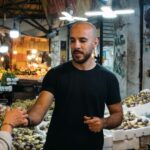
Then you finish in Al Balad (downtown Amman), walking the old souks and shops. This is a good time to pause and eat something local, and one snack to look for is kunafa, the Jordanian pastry built around sweet goat cheese.
Practical note: downtown walking is usually easy compared with Petra, but it’s still foot-worn shoes time. If you tend to get blisters, bring a small plan for blister control.
Jerash ruins day: Roman civilization outside Italy
Jerash sits about an hour from Amman, and it’s one reason people get addicted to Jordan fast. The ruins are linked to Gerasa, a walled Greco-Roman settlement that’s been inhabited since the Bronze Age. That mixture matters: you’re not just seeing Roman stones, you’re seeing a place that layers eras.
If Petra is the headline, Jerash is the strong supporting act. You’ll be walking through a large, coherent city layout, which helps you visualize how Roman public life worked away from the Italian center. It’s also a calmer environment than the most crowded times in Petra, so you can actually look around.
Timing tip: go in ready to slow down. Jerash rewards a steady pace because it’s not just one viewpoint—it’s a whole set of streets and civic spaces.
Mount Nebo and Madaba mosaics: the Holy Land seen through stone
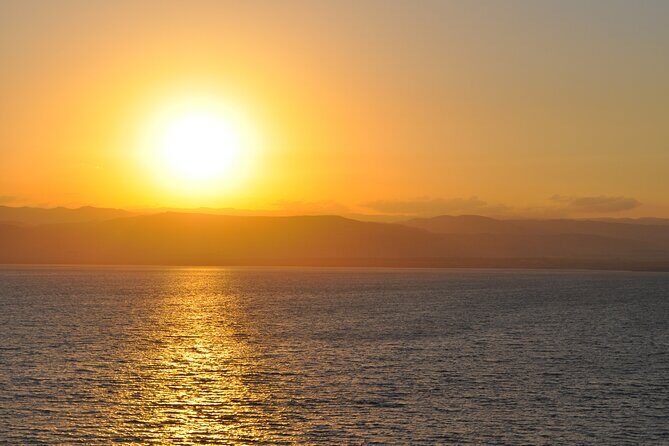
Day three moves south toward two stops that feel small on the map but big in meaning.
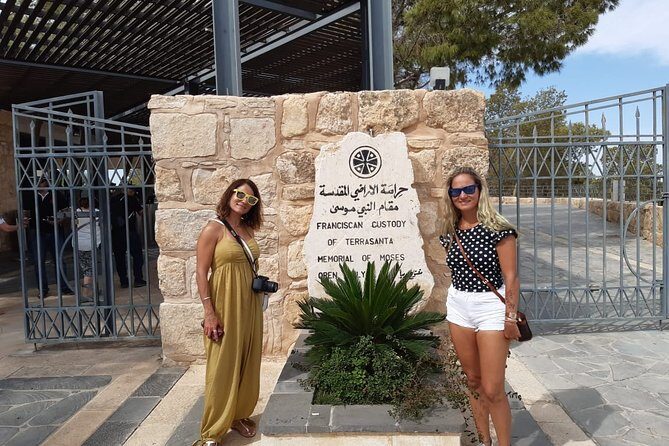
First is Mount Nebo, where the Bible places Moses viewing the promised land. The ridge sits about 700 meters above sea level, so it naturally gives you a sense of distance. Even if you’re not visiting for religious reasons, a ridge like this does a good job of teaching you geography.
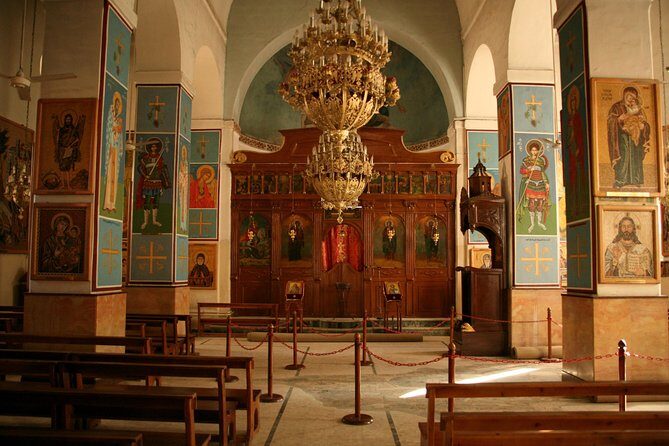
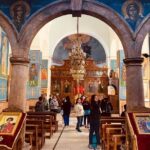
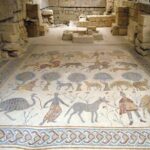
Next comes Madaba, known for its mosaic work. The stop here is the St George Church, which holds the oldest surviving original cartographic depiction of the Holy Land, with Jerusalem shown in mosaic. This is not a decorative afterthought. It’s a way of seeing how people once laid out the world visually—through craft, memory, and careful placement.
If you like details, Madaba is great. If you like big scenery, it may feel quieter by comparison. Either way, it helps you connect the dots between Jordan’s sites and the way they’ve been interpreted over centuries.
Wadi Rum: zarb dinner, stargazing, and a jeep through Martian terrain
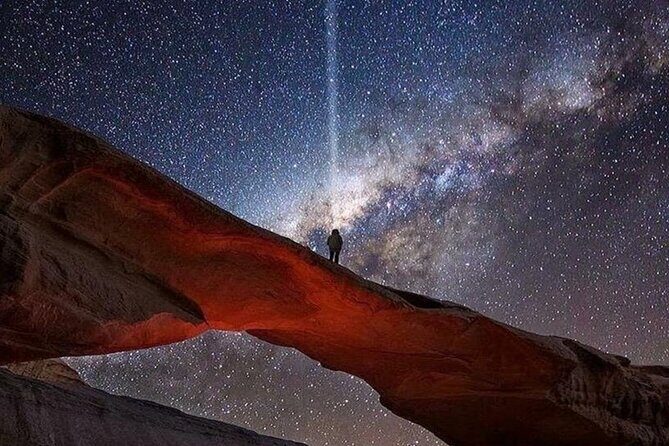
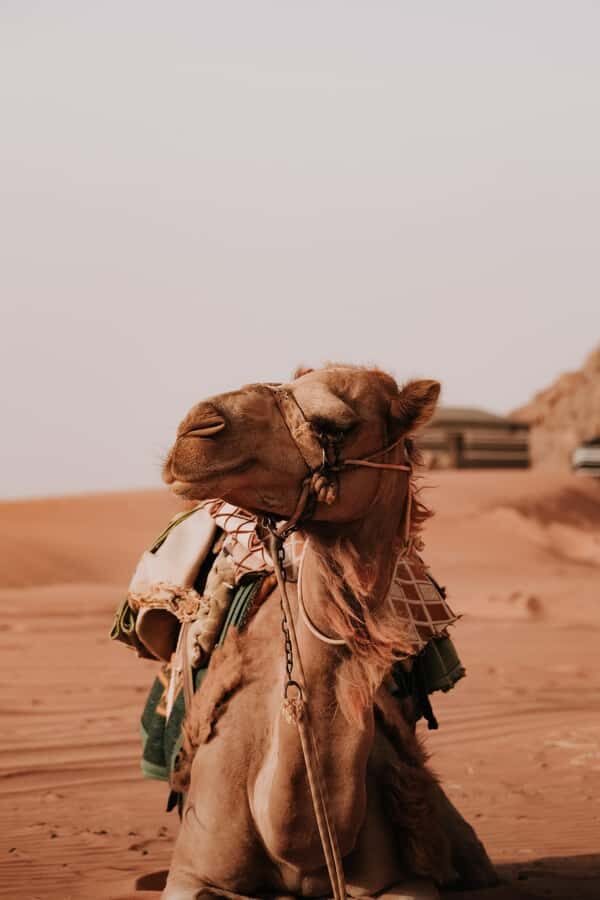
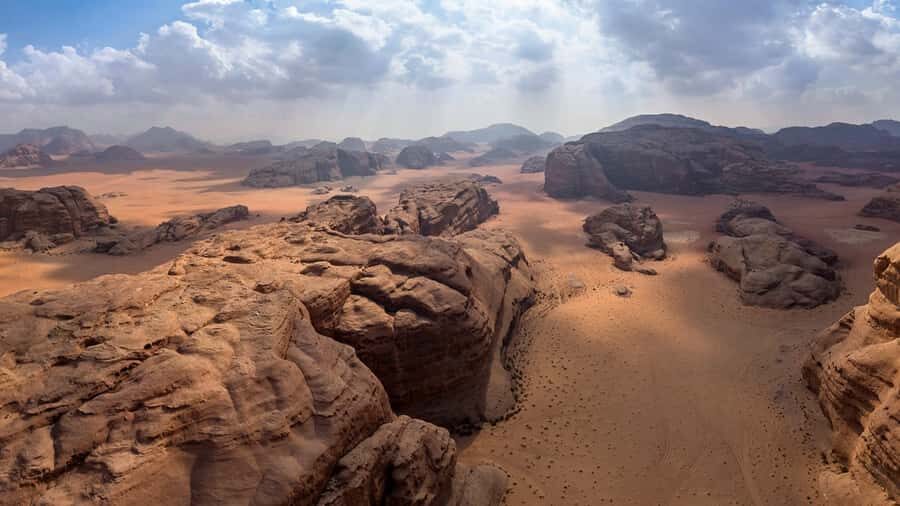
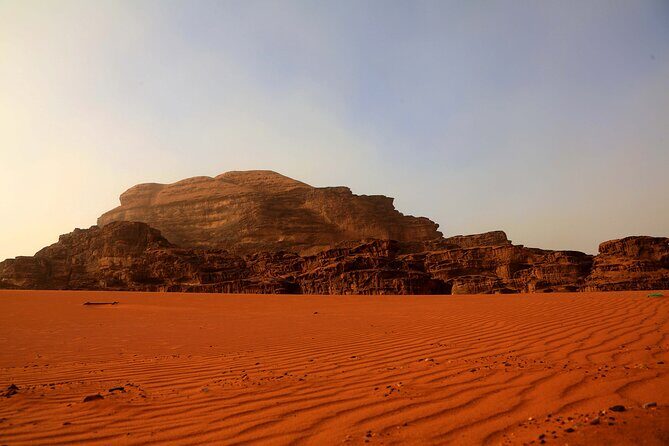
Wadi Rum is where Jordan turns cinematic. You travel from Madaba/Mount Nebo area down into the desert, reaching the camp where you’ll eat and sleep under the night sky.
The meal is Bedouin Zarb: meat like lamb and chicken, rice, potatoes, and carrots cooked in a hole in the ground with flaming coals, then covered so it smokes and steams as it cooks. Translation: it’s hearty, different from typical restaurant food, and it’s built for a camp night rather than a quick bite.
After dinner, you get stargazing because the area has no light pollution. This is one of those inclusions that feels worth it because stargazing needs the right conditions. Desert darkness is doing the heavy lifting here.
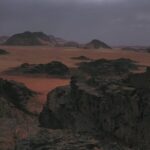
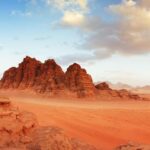
The tour also includes a 2-hour jeep adventure in Wadi Rum exploring Martian-like terrain. I like that the jeep time is scheduled—so you’re not improvising routes. You’ll get variety in the scenery without spending the day lost in the desert.
What to pack for this day: a layer. Desert nights can feel cold even when the day was warm.
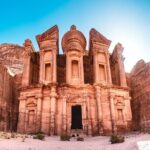
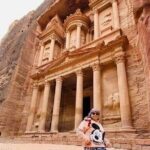
Petra with a guide: focusing your time in the right places
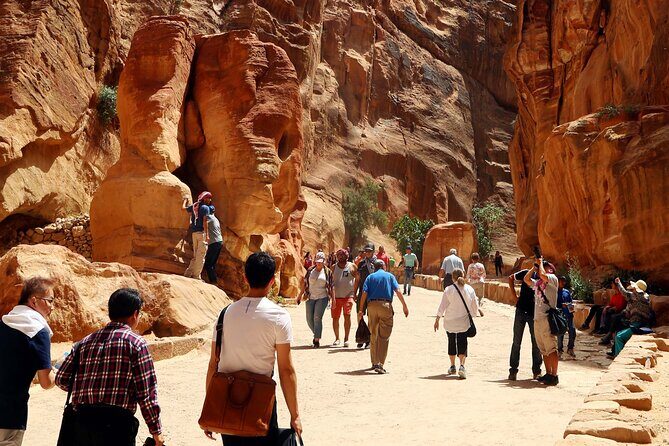
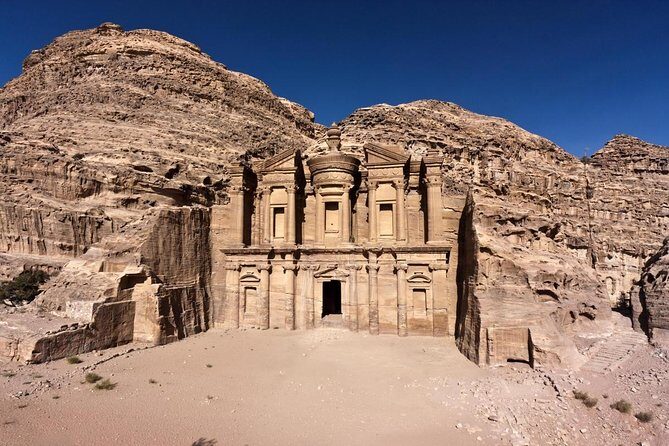
Petra is UNESCO World Heritage status, and it earns that label. But it’s also a place where time can vanish if you don’t know what to prioritize. That’s why you get a guide in Petra.
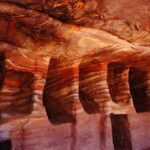
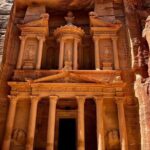
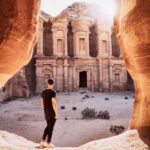
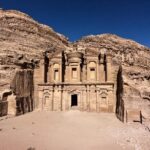
With a guide, you can spend less time guessing and more time understanding what you’re seeing: the cut-stone engineering, how the walkways guide you through changing views, and where the most iconic structures sit in the overall layout. The famous stop is the Treasury, but the real benefit of a guide is context—so the rest of the site doesn’t feel like random ruins next to a postcard view.
Logistics-wise, Petra is the kind of destination where comfort decisions matter. Plan for walking, sun, and breaks. If you’re sensitive to heat, start early when you can.
Dead Sea slowdown: rest at Earth’s lowest point
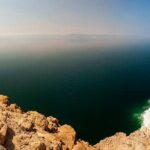
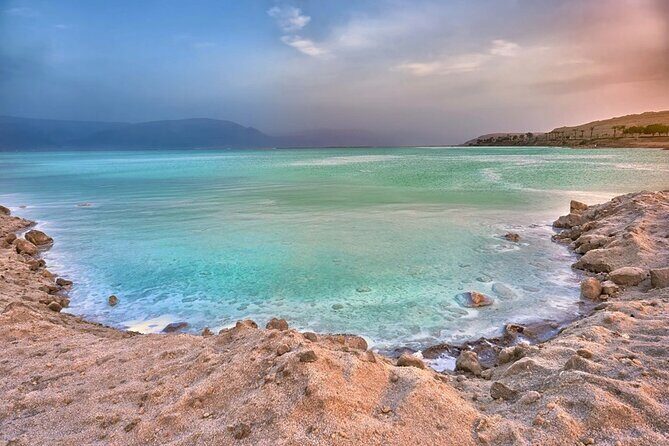
After Petra, you transition into the Dead Sea region for a long chunk of time by the beach. The Dead Sea is famous as the lowest point on Earth, and the experience is mostly about letting your body relax and letting the environment do something different than the rest of the trip.
This is a smart placement in the itinerary. You’ve spent days on stone and desert terrain. A beach day gives your legs and mind a break without forcing another major sightseeing sprint.
Practical reality: the Dead Sea can be intense on skin and eyes, so take basic water safety seriously. Keep it simple, protect yourself, and treat it like a recovery day.
If you’re feeling good, this is a great place to wander slowly near the shoreline and watch how light behaves on the water.
The “free day” factor: how to use your last 24 hours well
This tour is designed with a lighter final day for leisure or customization. That matters because Jordan isn’t a place you want to rush through until you’re sick of logistics.
Use the extra time in a way that supports your travel style:
- If you love photos and wandering, this is where you pad your schedule for Amman or any area you want to revisit.
- If you prefer comfort, build in downtime after Petra and the Dead Sea so you don’t end your trip feeling cooked.
- If you have a special interest like food stops or a slower museum visit, this is the slot that helps you add it without breaking the core route.
The main thing is to keep your energy for your departure day. With transfer time built into the end of the program, you don’t want to schedule anything that runs long and leaves you stressed.
Price and value: what $1,885 per person buys you (and why it matters)
At $1,885 per person, this is not a budget shuttle tour. The value comes from stacking inclusions that usually cost extra or require planning.
Here’s what’s doing the work:
- Transportation: modern air-conditioned vehicle with onboard Wi‑Fi and refreshment
- People: professional assistance at the airport and borders
- Key access: entrance fees covered and visa to Jordan included
- Guiding: guide in Petra plus jeep time in Wadi Rum
- Food: 4 breakfasts and 4 dinners (lunches not included, and tips are not included)
When those pieces are included, you avoid the common travel friction: ticket queues, payment surprises, and the mental overhead of coordinating separate transfers.
Where you might adjust your expectations: lunches are on you, and tipping is not included. Also, because the itinerary hits multiple regions, you should expect a more active schedule than a single-city vacation.
If you want a trip where someone else handles the big moves and you focus on the sights, the price can feel fair.
Who this tour fits best
I’d point this tour toward three kinds of travelers:
- First-timers to Jordan who want the top sites in a logical order without juggling details.
- Small groups who like a more personal feel than big coach travel.
- People who value on-the-ground guidance, especially in complex sites like Petra and in desert driving like Wadi Rum.
If you’re the type who hates long drives, you’ll need to be realistic about the day-to-day pace. But if you like a trip that mixes big icons with grounding stops, this route clicks.
One more thing I pay attention to: staffing quality. In past experiences connected to this operator, named team members like Muhammad have been praised for guiding through arrival smoothly, and professionals such as Abdurachman with Sameer have been noted for professionalism. Other staff names like Anaas, Mohamad, and Yostina also show up in feedback, with Ziad mentioned for in-depth knowledge. That doesn’t guarantee who you get, but it does match the overall vibe of the service: helpful, organized, and attentive.
Should you book Jordan Essentials?
Yes, if you want a 5-day Jordan highlights trip with the big-name sites handled in a clear sequence, and you’d rather spend your energy on photos, history context, and desert nights than on tickets and logistics.
Skip it or rethink if you want a slow, one-region vacation or you’re very sensitive to extended travel days. Petra and the Dead Sea are worth it, but the trip is structured for momentum.
If you’re flexible, pack a couple layers for Wadi Rum nights, wear shoes that can handle Petra walking, and keep an open mind for how different Jordan feels from Amman stone to Wadi Rum dark to Dead Sea salt. That’s where this tour earns its money.
FAQ
Where does the tour start?
The meeting point listed is Queen Alia Intl Airport in Amman, Jordan.
How long is Jordan Essentials?
It runs for 5 days, approximately.
What major stops are included?
The tour includes Jerash, Amman’s Citadel and downtown Al Balad, Mount Nebo, Madaba (including St George Church), Wadi Rum, Petra, and the Dead Sea region.
Is there a guide included for Petra?
Yes. A guide in Petra is included.
Do you get a jeep tour in Wadi Rum?
Yes. A 2-hour jeep tour in Wadi Rum is included.
Are entrance fees included?
Yes. Entrance fees are included.
Is the Jordan visa included?
Yes. Visa to Jordan is included.
Are meals included?
Yes. Breakfast is included 4 times and dinner is included 4 times. Lunches are not included.
Is Wi‑Fi provided during transport?
Yes. The transportation includes onboard Wi‑Fi.