REVIEW · AMMAN
From Amman: Desert Castles of Eastern Jordan Tour
Book on GetYourGuide →Operated by Zaid Tours and Travel Jordan · Bookable on GetYourGuide
One desert day, three forgotten palaces. This private Amman tour takes you to Umayyad desert castles that served as hunting lodges and rural retreats, built in the 7th and 8th centuries and set in a wide, quiet landscape east of the city. I like how the drive is part of the story: your English-speaking driver-guide shares the political backstory of early Muslim rulers while you’re moving between sites. I also love the mix of destinations: UNESCO-listed frescoes at Quseir Amra, architectural puzzle pieces at Qasr Al-Kharanah, and T.E. Lawrence’s working base at Qasr Al-Azraq. One drawback to plan for: you’ll spend time walking in sun and dust, so your hat, sunscreen, and comfortable shoes are not optional.
The best part is how quickly these castles come into view after you leave Amman’s streets. It’s a focused 4–6 hour outing (often around 5 hours), with hotel pickup and drop-off and entrance tickets included for the three main sites. If you want extra depth at each ruin, there’s also an option for an additional guide at the castles, which can make the details click faster. The main consideration: the itinerary is set, and if you add the optional Azraq Wetland Reserve marsh trail, the day can feel more active.
In This Review
- Key highlights that make this trip worth your time
- Why Umayyad desert castles hit harder than you expect
- The Amman-to-desert drive: comfort, timing, and story time
- Quseir Amra UNESCO stop: frescoes, hunting-palace vibe, and what to watch for
- Qasr Al-Kharanah: the fortress in the huge plain
- Qasr Al-Azraq and Lawrence of Arabia HQ: courtyards and desert operations
- Optional Azraq Wetland Reserve upgrade: water buffalo and birdlife in a desert oasis
- Price and value: what $93 buys you in the real world
- Comfort and what to bring for desert walking
- Driver-guide strengths: what to expect from English explanations
- Choosing the guide-at-the-castles upgrade
- Who should book this tour (and who might skip it)
- Should you book the Desert Castles of Eastern Jordan from Amman?
- FAQ
- How long is the Desert Castles of Eastern Jordan tour from Amman?
- Is this tour private and does it include hotel pickup?
- What are the main sites visited during the tour?
- Are entrance fees included?
- Are meals included?
- Do I need to bring anything for the day?
Key highlights that make this trip worth your time
- Three Desert Castles, one smart route: Quseir Amra, Qasr Al-Kharanah, and Qasr Al-Azraq are close enough to fit into a half-day without rushing.
- UNESCO Quseir Amra fresco shock (in a good way): 8th-century wall paintings with scenes of wine, parties, and nude figures.
- Architecture with multiple influences: Qasr Al-Kharanah is thought to sit on Roman foundations and shows Mesopotamian, Arabic, and Greek touches.
- Lawrence of Arabia’s HQ at Azraq: you’ll see the courtyards, towers, and mosque connected to operations in 1917–1918.
- Private vehicle + English driver-guide: you get air-conditioned comfort and real conversation, not a noisy group scramble.
- Optional Azraq Wetland Reserve: water buffalo and a self-guided marsh trail, best enjoyed in late autumn or spring.
Why Umayyad desert castles hit harder than you expect
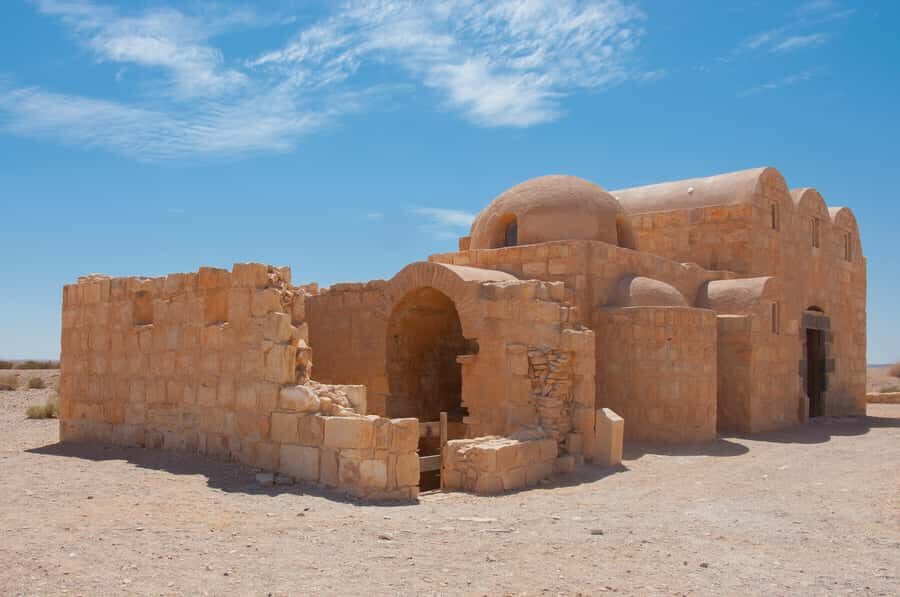
Most people come to eastern Jordan for the dramatic setting, and yes, the emptiness is real. But what makes these castles stick in your mind is the intent behind them. The Umayyad rulers built them as rural retreats and hunting lodges—places where power could relax, impress guests, and control the region from a distance.
This tour gives you a rare three-stop comparison in a single day. You’ll see how a desert palace can be both ceremonial and practical. One moment you’re staring at UNESCO-ranked fresco scenes at Quseir Amra; the next you’re in open plain with a fortress shaped by earlier Roman foundations at Qasr Al-Kharanah. Then you’re at Azraq, where the castle becomes a 20th-century command post through T.E. Lawrence’s 1917–1918 presence.
And because the transport is private, you can ask your driver-guide to slow down at the site you care about most. That matters here. If you’re the type who hates being herded through ruins like it’s a conveyor belt, this format helps.
You can also read our reviews of more tours and experiences in Amman.
The Amman-to-desert drive: comfort, timing, and story time
Your day starts with hotel pickup in central Amman, using a private air-conditioned vehicle. Duration is listed as 4–6 hours, and the typical flow fits a morning or afternoon half-day. Expect about an hour on the road before your first major stop, which is long enough to settle in—but not long enough to turn the day into a bus ride slog.
A big reason this works is that your driver is also your guide in English. They don’t just point; they explain. You’ll hear tales about the first Muslim rulers of the Arab kingdom and the Umayyad dynasty—often with notes on extravagance and even moral contradictions. The tone can feel like a human drama, not a textbook.
I also appreciate the practical setup: there’s on-board Wi‑Fi, so you can quickly look up context or save photos. One more plus: the operator mentions that this is a private group, and you can request extra focus on a castle you want to see more of, or even add another castle at your own expense. That flexibility is rare for a short day trip.
Quseir Amra UNESCO stop: frescoes, hunting-palace vibe, and what to watch for
Quseir Amra is usually the first site people remember because it’s the most visually surprising. This UNESCO-listed castle was originally a hunting palace of the Umayyads, and it’s been restored in a way that keeps the feel of a lived-in space.
What you’ll notice right away is the shift from “ruins in the desert” to something closer to an indoor story wall. The highlights here are the 8th-century frescoes, including scenes that feature nude women, wine, and party-like gatherings. If you’re sensitive about graphic or adult imagery, it’s worth mentally preparing for that. For most visitors, though, it’s exactly what makes the site fascinating: it challenges the simplistic idea that early desert palaces were only about austerity.
Time-wise, you’ll have enough room to wander and take it in without feeling like you’re speed-running. The site is set up for visits, and because this is included in your route from Amman, you avoid the headache of arranging separate transport or entrance tickets.
Practical tip: bring sunscreen and a hat before you reach the site. The desert sun is not shy, and shade can be limited depending on the angle of the day.
Qasr Al-Kharanah: the fortress in the huge plain
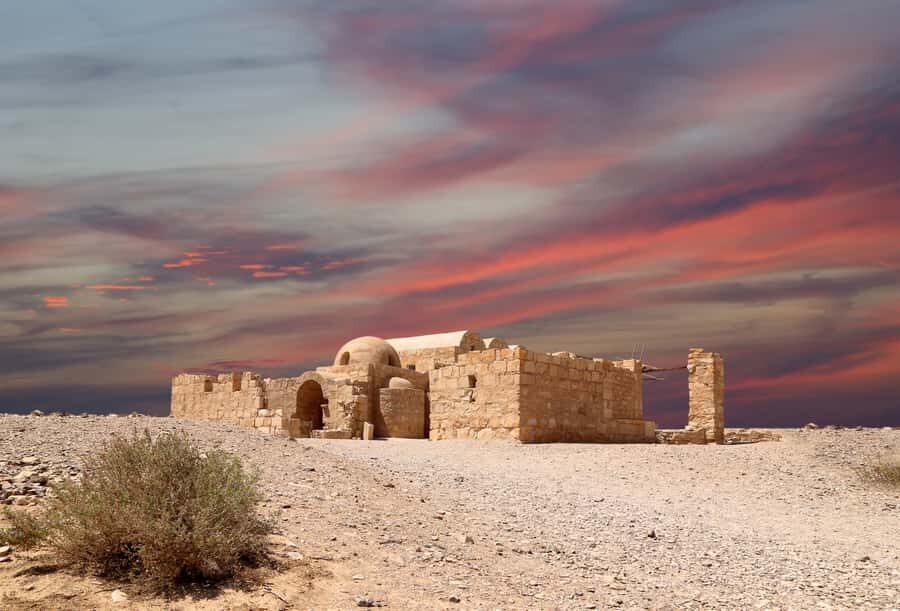
After Quseir Amra, you head to Qasr Al-Kharanah, described as an imperious two-level fortress standing out in a vast plain. This is where the trip turns from “spectacle” into “structure and influence.”
A key detail here is that it’s thought to have been built on Roman foundations. On top of that base, the castle displays architectural influences described as Mesopotamian, Arabic, and Greek. That mix matters because you start to see the region as connected. Ideas traveled. Techniques traveled. Even desert fortresses weren’t designed in a cultural vacuum.
This stop is also a nice pacing break. Qasr Al-Kharanah doesn’t rely on fresco drama; it relies on scale, symmetry, and the feeling of a stronghold sitting in open land. You’ll likely spend more time looking at walls and levels, imagining how the fortress functioned as a retreat and hunting base for rulers.
If you like “why is it built this way?” questions, this is the best place in the itinerary for that kind of thinking.
Qasr Al-Azraq and Lawrence of Arabia HQ: courtyards and desert operations
Qasr Al-Azraq is the emotional payoff for a lot of history-minded travelers. The castle began as an Umayyad hunting retreat, and later it became an important headquarters for T.E. Lawrence—the British soldier and Arab Revolt leader commonly known as Lawrence of Arabia—during 1917 to 1918.
What you’ll do here is wander the sun-burnished courtyards and towers, with a stop that includes the mosque. The tour’s focus is on how Lawrence based operations here and what the site meant in that period. Even if you don’t know every detail of the revolt story, the physical spaces help you grasp how headquarters life worked: open courtyards for movement and coordination, towers for visibility, and the mosque as a daily anchor.
I like that this stop ties the ancient desert palace theme to a much more recent chapter of the region’s story. It turns the day into a timeline instead of three unrelated ruins.
Also, since the tour is private, you can ask questions as you walk. If you choose the option with an additional guide at the castles, you’ll often get faster context when you’re standing in the exact spot tied to Lawrence’s activities.
Optional Azraq Wetland Reserve upgrade: water buffalo and birdlife in a desert oasis
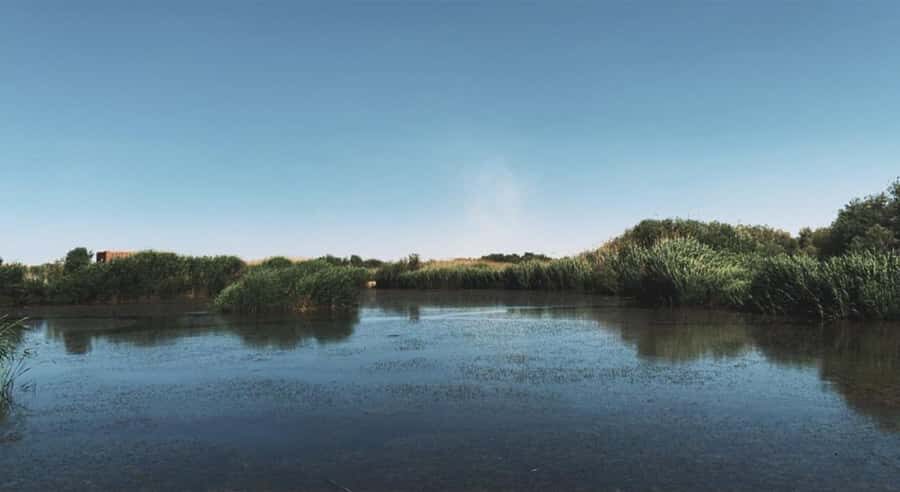
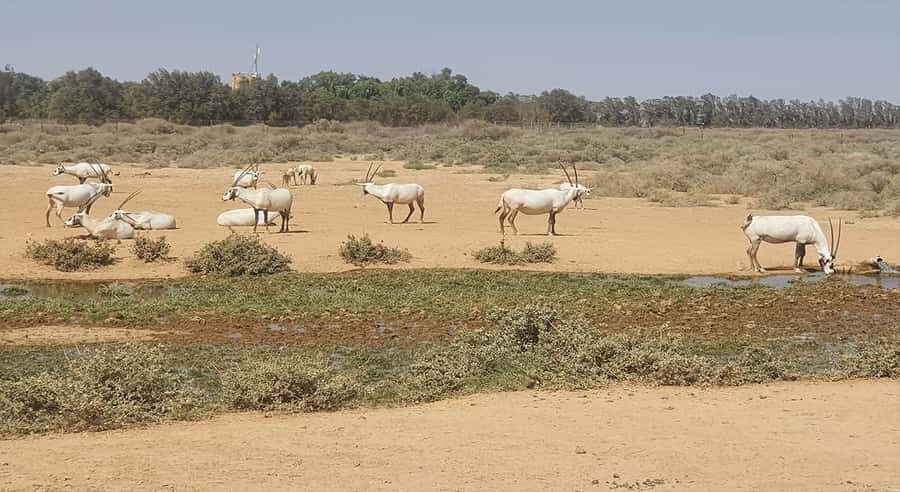
If you add the upgrade, you’ll go to the Azraq Wetland Reserve, established in 1978. This is a water nature reserve and oasis for migratory birds near the desert castles.
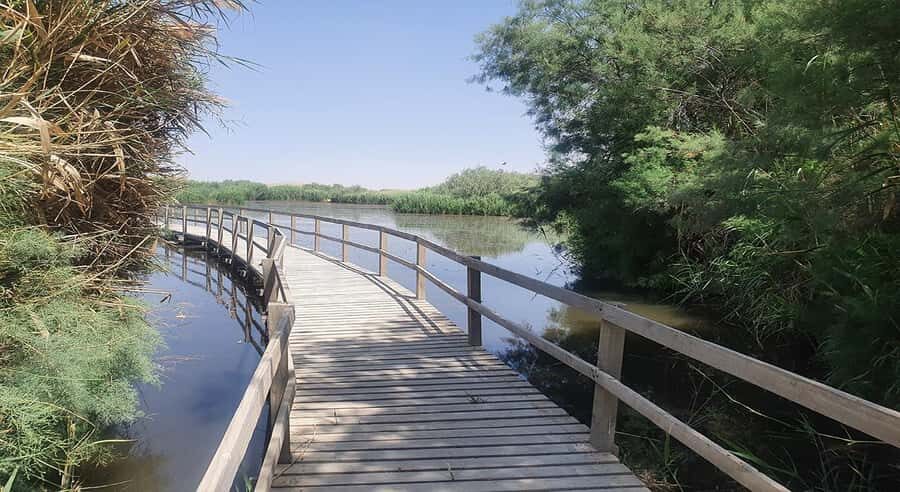
The upgrade includes entrance fees for the reserve plus a self-guided marsh trail. The information provided says it’s a self-guided trail with water buffalo and that the trail covers about 12 kilometers. Since it’s self-guided, you control your pace—slow and photo-friendly, or faster if you’re trying to keep the day efficient.
The best time to enjoy the scenery is stated as late autumn or spring, which makes sense if you’re hoping for the most bird activity and comfortable walking temperatures.
One caution: because it’s self-guided and the reserve trail is long, you’ll want a realistic plan for how much walking you’re comfortable with. Don’t assume you’ll stroll it casually if you’re not used to hot-weather walking.
Price and value: what $93 buys you in the real world
At $93 per person, this is priced for a half-day private experience with real inclusions: hotel pickup/drop-off, a private air-conditioned transfer, an English-speaking driver-guide, entrance tickets for all three castles, and Wi‑Fi on board.
Here’s how I think about value for a day like this:
- You save time by grouping the three castles into one logical route instead of piecing it together yourself.
- Entrances are included for the main sites, so you’re not juggling ticket logistics on the spot.
- The private vehicle means you can tailor attention to your interests, which is hard to do on bus tours.
The cost can feel higher if you’re the kind of traveler who already knows the historical context and doesn’t care much about guiding. But if you want the story explained while you’re driving and walking—especially about the Umayyads and Lawrence—this price starts to look like a bargain.
Comfort and what to bring for desert walking
This tour is only part “sitting in the van.” You’ll get out to wander at each castle. The most practical packing list from the operator is simple: comfortable shoes, a sun hat, and sunscreen.
I’d add two behavior tips based on how these sites usually feel in eastern Jordan: hydrate before you feel thirsty, and pace your photos. The sun can flatten contrast quickly. Give yourself a couple of slow minutes at each stop so you’re not only rushing for the next viewpoint.
If you’re thinking about lunch, meals are not included unless you choose an option that includes lunch (vegetarian by request). On-site food quality varies, and you’ll often do better by planning what you’ll eat and when rather than assuming something will magically appear right at the gate.
Driver-guide strengths: what to expect from English explanations
One reason people rate this trip highly is how human the explanations can feel. The tour uses an English-speaking driver who acts as a guide. In particular, some guides are specifically noted for being punctual and safe, with clear historical and political explanations and a calm, patient tone.
Names that come up include Hassan and Amer Ramouni. Hassan is described as efficient, empathetic, and highly professional, and Amer Ramouni is praised for patient, calm guidance, plus thoughtful little gestures—like offering a Jordanian coffee to help start the morning.
That matters because desert sites can be visually “cool” without being automatically meaningful. Good guiding turns stones into story.
Choosing the guide-at-the-castles upgrade
There’s an option to add an additional guide at the desert castles. If you love details, this can be the difference between seeing a wall and understanding why the wall is important.
I’d choose the guided upgrade if:
- you’re interested in architectural influences (Roman foundations, Greek/Arabic/Mesopotamian references),
- you want Lawrence of Arabia context anchored to what you’re physically seeing,
- or you just prefer a back-and-forth Q&A style during the walk.
If you’re short on time or you enjoy self-reading, you can still do plenty with the driver-guide alone, because that core narration is part of the experience.
Who should book this tour (and who might skip it)
This is a great fit if you want:
- a focused, manageable day out of Amman,
- an easy private setup with entrances handled,
- and a history blend: Umayyads in the 7th–8th centuries plus Lawrence in the 1917–1918 era.
You might reconsider if:
- you strongly dislike adult-themed fresco imagery like the scenes at Quseir Amra,
- you’re not comfortable walking in open desert areas,
- or you prefer a full-day itinerary with no driving between multiple sites.
If you’re the “I want three meaningful stops without wasting time” type of traveler, this matches your style.
Should you book the Desert Castles of Eastern Jordan from Amman?
I’d book it if you’re curious about how power operated in the desert—then you want it explained in plain language while you travel between sites. The route is efficient, the entrances for the big three castles are included, and the optional Azraq Wetland Reserve can add a totally different kind of desert experience (birdlife and marsh trail walking) if you’re up for it.
If you book, do yourself a favor: choose the option with extra guidance at the castles only if you love details. Otherwise, the driver-guide approach already does the job. And please, pack the hat and sunscreen. The desert doesn’t negotiate.
FAQ
How long is the Desert Castles of Eastern Jordan tour from Amman?
The duration is listed as 4–6 hours, with the trip described as about a 5-hour outing.
Is this tour private and does it include hotel pickup?
Yes. It’s a private group tour with hotel pickup and drop-off in central Amman, using a private air-conditioned vehicle.
What are the main sites visited during the tour?
You visit three desert castles: Quseir Amra, Qasr Al-Kharanah, and Qasr Al-Azraq.
Are entrance fees included?
Entrance to Amra Castle, Al Kharanah Castle, and Al–Azraq Castle is included. The optional Azraq Wetland Reserve entrance fee is also included if you choose that upgrade.
Are meals included?
Meals are not included unless you select an option with lunch. Vegetarian meals can be requested.
Do I need to bring anything for the day?
Yes—bring comfortable shoes, a sun hat, and sunscreen, since you’ll be walking around the sites in desert conditions.