REVIEW · AMMAN
Day Tour To Desert Castles & Cave of the Seven Sleepers
Book on Viator →Operated by R&H VIP Transportation Services · Bookable on Viator
Desert castles and a holy cave in one day. This private Amman outing strings together three Umayyad desert forts plus the Cave of the Seven Sleepers, so you get two eras of Jordan’s story without the stress of planning or transfers.
What I like most is the simple, door-to-door approach: you’re in an air-conditioned private vehicle with pickup and on-board WiFi, then you explore each site at your own pace. I also love the mix of famous and lesser-noticed details, especially Qusayr Amra’s UNESCO ceiling frescoes and the Seven Sleepers legend that keeps drawing pilgrims.
One thing to watch: admissions and lunch aren’t automatically covered. Plan for extra costs at each stop (entry fees may be available if you select them), and there’s no dedicated local guide included—so if you want long, guided explanations inside every room, you may feel a bit time-limited.
In This Review
- Key Things You’ll Notice on This Desert Castles Day Trip
- Why This Route Feels Like a Smart Day Trip From Amman
- Getting There: Private Chauffeur, WiFi, and a Smooth Start
- Stop 1: Qsar Al-Azraq and the Umayyad Desert Castle World
- Stop 2: Qusayr Amra UNESCO Frescoes and the Zodiac Ceiling
- Stop 3: Qasr al Kharrana’s Square Fortress and the Big Historical Question
- Stop 4: Cave of the Seven Sleepers (Ashabul Kahf) and the 309-Year Legend
- Pacing That Works: 30 Minutes Per Site and a Full-Value Day
- Price and Value: What $83.57 Covers and What You’ll Still Pay
- Who Should Book This Tour (and Who Might Want More Guidance)
- Should You Book This Desert Castles & Seven Sleepers Day Trip?
- FAQ
- How long is the day tour?
- Does the tour include hotel pickup in Amman?
- What sites are included on the tour?
- Is the Cave of the Seven Sleepers included?
- Are entry fees included in the price?
- Is lunch included?
- Is WiFi available during the drive?
- Is this a private tour?
- What is the cancellation policy?
Key Things You’ll Notice on This Desert Castles Day Trip
- Door-to-door private transport with bottled water and on-board WiFi, so the day stays easy
- Three different desert forts in one outing: Qsar Al-Azraq, Qusayr Amra, and Qasr al Kharrana
- UNESCO Qusayr Amra with major fresco work, including zodiac imagery tied to early map traditions
- Cave of the Seven Sleepers (Ashabul Kahf) where the legend is part of the physical site
- Self-paced stops led by an English-speaking driver, not a separate site-by-site guide
Why This Route Feels Like a Smart Day Trip From Amman
This itinerary works because it’s built around compact “hit points.” You’re not spending hours chasing logistics; you’re using a private car to jump between ruins that each tell a different chapter of early Islamic and Roman-era life in eastern Jordan.
The overall theme is classic Jordan: people built for trade routes, power, rest, faith, and survival—then the desert kept the evidence. You’ll end up with photos that aren’t just scenic. They show how different cultures used similar stone and space in very different ways.
You can also read our reviews of more tours and experiences in Amman.

Getting There: Private Chauffeur, WiFi, and a Smooth Start
You’ll ride in a private chauffeured vehicle with hotel pickup in Amman, which is a big deal when the day starts early. You get air-conditioning (crucial in the desert heat) and on-board WiFi, so it’s not a full-day detour you can’t handle if you’re working between sightseeing moments.
The driver is listed as English-speaking, and the best feedback highlights drivers who keep the day moving and explain what you’re seeing without making it feel like a lecture. Names that came up in positive feedback include Mohammad Bardaghawi, Danny, Mohammed, and Ali Abu Hani—so you can expect someone comfortable answering questions as you go.
Practical tip: since lunch isn’t included, consider asking the driver what a simple, local option looks like before you head back. One reviewed day mentioned the driver helping with breakfast ideas and pointing to a low-cost, culturally local spot.
Stop 1: Qsar Al-Azraq and the Umayyad Desert Castle World
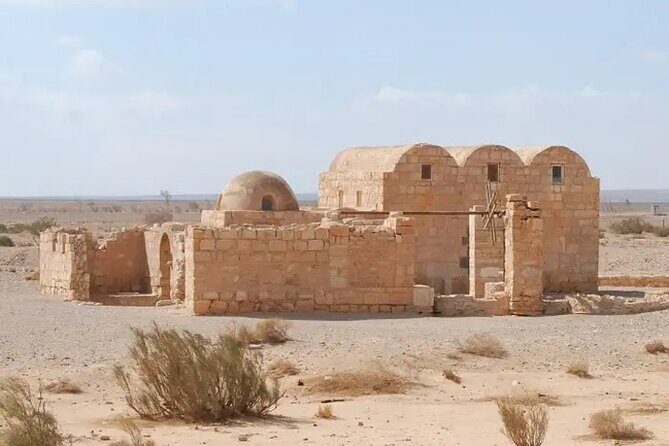
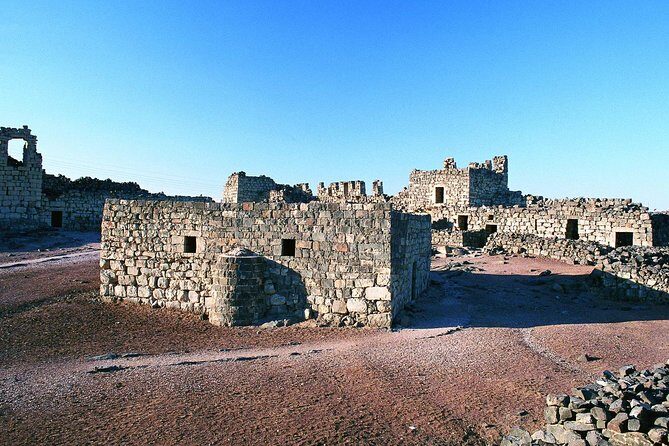
Qsar Al-Azraq (spelled in the tour details as Qsar Al-Azraq) is your first taste of the Umayyad era in eastern Jordan. These desert castles and fortified ruins were built during the 7th and 8th centuries CE, when architecture flourished alongside major trade routes and cultural exchange.
This site also connects to a more modern story: it’s described as once tied to Lawrence of Arabia, when it served as a headquarters. That blend—early Islamic architecture plus a later 20th-century literary-and-historical legend—can make the ruins feel more immediate.
What you’ll like here is the sense of scale and purpose. Even when you’re looking at remains instead of restored buildings, the structure still suggests how people lived, traveled, and governed at the edge of the desert.
A consideration: the time you spend is independent exploration, and the tour pacing is built for seeing several sites. If you want a long, room-by-room reading, you may wish you had a local guide for this stop specifically.
Stop 2: Qusayr Amra UNESCO Frescoes and the Zodiac Ceiling
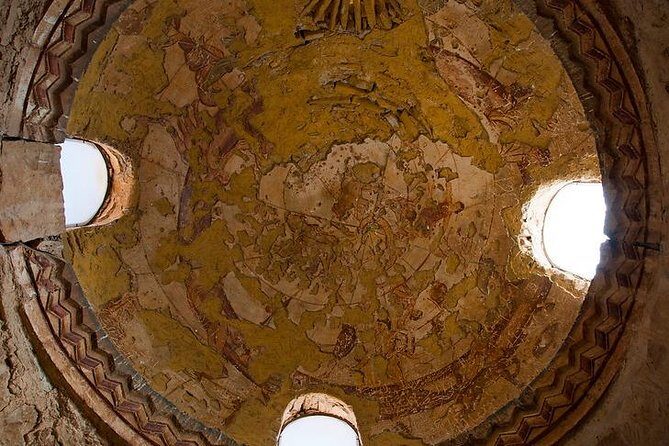
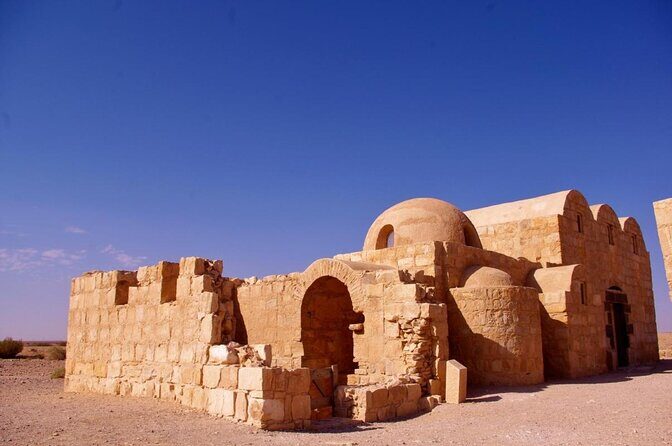
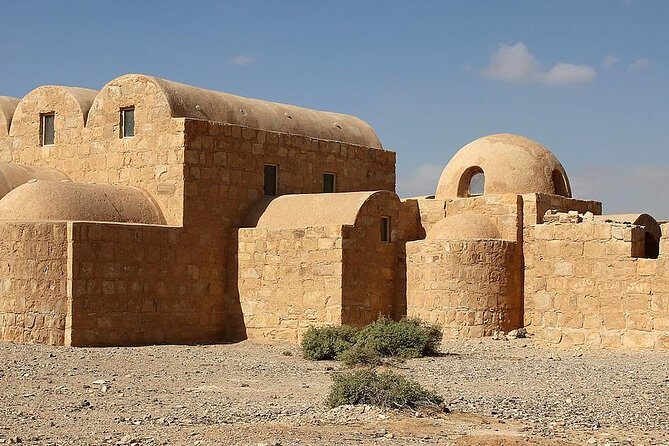
Qusayr Amra is the star for many people, and it’s easy to see why. It’s listed as a UNESCO World Heritage site, famous for its frescoes—hunting scenes, animals and birds, and portraits that fill interior spaces.
One of the most interesting details in the tour description is the zodiac on the domed ceiling of the hot room. It’s described as an early surviving portrayal of a map, even though it was part of a larger complex. What remains today is more like a small desert building than a fortress, which helps explain why the art grabs so much attention here.
You’re essentially visiting a “decorated room in the desert.” That contrast can be striking: outer walls and desert quiet on one side, vivid painting on the other. It’s also a good place to slow down, take your time, and watch how the images guide your eye.
A consideration: entry fees for this stop are listed as not included in the tour inclusions. Depending on what you select when booking, you’ll want to budget accordingly.
Stop 3: Qasr al Kharrana’s Square Fortress and the Big Historical Question
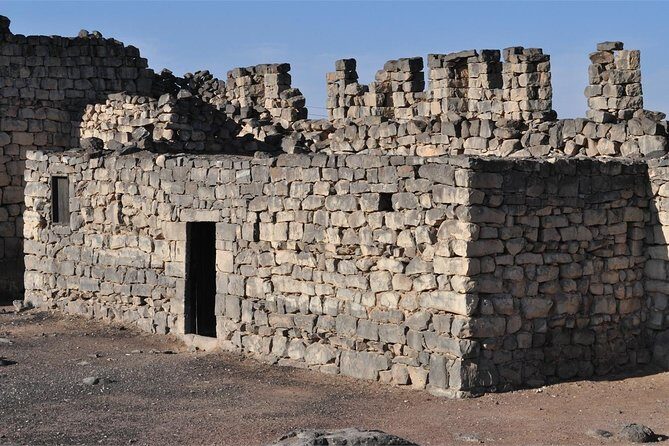
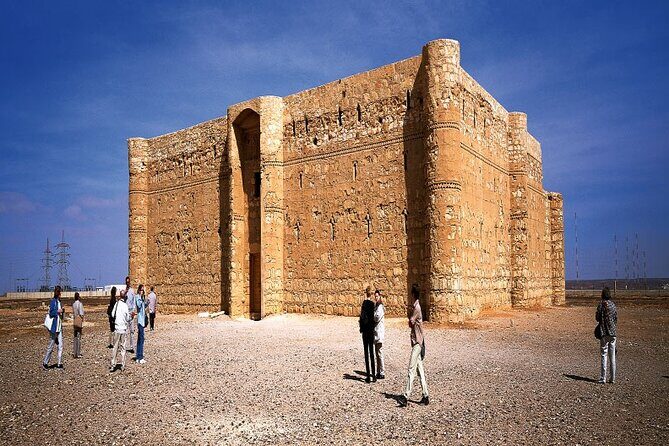
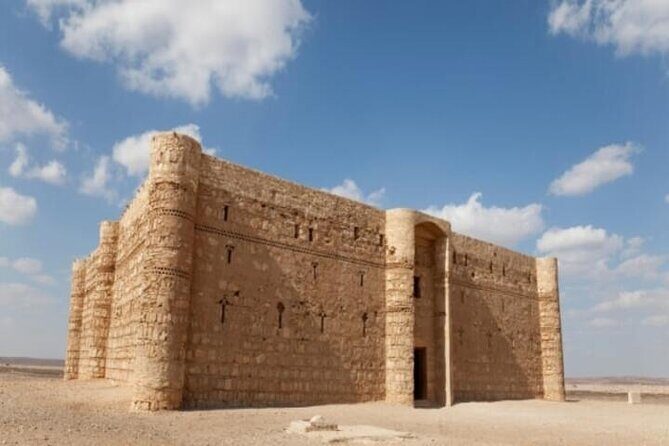
Next comes Qasr al Kharrana (also shown as Qasr Al-Harranah in the itinerary). This one feels different right away. The tour description calls it a picturesque squared fortress with rounded turrets and a central courtyard—an atmospheric ancient building that still contains interior spaces.
This site is presented as something of an archaeological riddle. Historians and archaeologists debate whether it served as a defensive fort, a resting place for travelers, or a caravanserai where people gathered. What makes that uncertainty fascinating is that the structure itself still offers clues, like rooms edging the courtyard and ornamental features.
Even without a long guided history lecture, you’ll likely notice the attention to detail. The tour description mentions ornamental niches and pilasters inside, which are the kind of touches you don’t usually get from simple military construction.
The trade-off: like the other stops, you’re exploring independently with a driver on hand. If you’re the type who loves a sustained explanation of why a site was used in a particular way, consider pairing the trip with additional guidance at one stop—or ask the driver to focus on the “what was it for” question.


Stop 4: Cave of the Seven Sleepers (Ashabul Kahf) and the 309-Year Legend
The Cave of the Seven Sleepers (Ashabul Kahf) is where the day shifts tone. Instead of focusing mainly on art and architecture, you’re stepping into a religious and historic legend tied to the Roman era.
Here’s the story as the tour frames it: seven Christian men (and their dog) fled persecution under Roman Emperor Trajan. They took refuge in the cave, slept for 309 years, and then woke at a time when persecution was no longer happening. Today, the cave is surrounded by ruins, and the description notes that the tombs of the men and some remains are visible inside.
What I like about stopping here is that it shows how Jordan holds layered meaning. The site isn’t only a piece of ancient stone; it’s also a place people connect to spiritually and historically. That can make even a short visit feel more substantial than the size of the cave might suggest.
A consideration: this is described as small but meaningful. If you’re expecting a huge underground complex, you might end up focusing more on interpretation and legend than scale.
Pacing That Works: 30 Minutes Per Site and a Full-Value Day
The itinerary pacing is built around short, focused visits: about 30 minutes at each main stop, then reconvening with your driver for the next segment. That can be perfect if you want a “see it, absorb it, move on” day.
It also means you should come with a plan for your own attention span. I’d treat each location like a mini mission:
- Spend the first few minutes orienting yourself to the building layout or main room.
- Then pick one theme to watch for—frescoes at Qusayr Amra, courtyard layout at Qasr al Kharrana, the overall fortress feel at Qsar Al-Azraq, and the legend-relic connection inside Ashabul Kahf.
- Ask the driver one or two targeted questions while you’re there.
This helps because there’s no local guide included, and you’re not getting the kind of guided marathon where every corner gets explained. On the flip side, short independent time can prevent “ruin fatigue.”
Price and Value: What $83.57 Covers and What You’ll Still Pay
At $83.57 per person, this is positioned as a private Amman day tour with hotel pickup, private chauffeured transport, air-conditioning, bottled water, on-board WiFi, and an English-speaking driver. For a day that hops across eastern Jordan ruins, the transport value is real. You’re not renting a car, plotting routes, or handling parking and navigation.
Then there’s the part that affects your true total: admissions. The tour description says entry fees are at your expense, though it also notes that entry fees can be included if you select them. In other words, you should check what your booking includes for each stop, because the itinerary lists ticket details inconsistently across locations.
Lunch isn’t included, and that’s the other typical cost. If you’re trying to keep the day budget-friendly, pack snacks you can eat in the car or plan a simple meal before or after the return to Amman. The driver may be able to point you toward a lower-cost local option, based on reviews mentioning helpful restaurant advice.
Net value: this feels worth it when you want a stress-free day, private transport, and a clear “great hits” route through Umayyad desert castles plus the Seven Sleepers cave.
Who Should Book This Tour (and Who Might Want More Guidance)
This tour is ideal if you:
- want a private day trip without doing car logistics
- like architectural sites but also want the story behind them
- enjoy self-paced exploration for about half a day at a time
- are happy to learn through a driver’s explanations rather than a separate local guide at each stop
You might want to add extra guidance if you’re:
- the type who expects long, detailed walkthroughs inside every structure
- traveling with a strong interest in archaeology that requires deeper site-specific interpretation
- hoping for big indoor spaces like a full museum experience
A small example from the feedback points in the same direction: one review felt like the day was more about being driven between castles than getting a full guided deep dive at each place. That doesn’t make the tour bad—it just means you should set expectations. This is built for seeing several key sites efficiently, not for extended lecturing inside every room.
Should You Book This Desert Castles & Seven Sleepers Day Trip?
If you’re short on time in Amman and want a day that mixes Umayyad architecture with a famous legend-driven site, I’d book it. The private transport, door-to-door convenience, and the UNESCO-level stop at Qusayr Amra make it a strong value for what you get.
Book it with your eyes open about costs and pacing. Plan for admission fees unless you’ve selected them, and don’t expect lunch to be handled for you. If you want deeper interpretive detail, bring your curiosity and ask the driver focused questions—then consider adding a local guide elsewhere if that’s your style.
FAQ
How long is the day tour?
It runs for about 5 to 8 hours.
Does the tour include hotel pickup in Amman?
Yes, pickup is offered, and the tour includes transportation with hotel pickup and drop-off in Amman.
What sites are included on the tour?
You visit Qsar Al-Azraq, Qusayr Amra, Qasr al Kharrana (listed as Qasr Al-Harranah), and the Cave of the Seven Sleepers (Ashabul Kahf).
Is the Cave of the Seven Sleepers included?
Yes, it’s the final stop before the return journey.
Are entry fees included in the price?
Admissions are at your expense, but entry fees may be included if you select them when booking. Some sites may require separate payment.
Is lunch included?
No, lunch isn’t included.
Is WiFi available during the drive?
Yes, on-board WiFi is included with the transportation.
Is this a private tour?
Yes. It’s a private tour/activity, and only your group participates.
What is the cancellation policy?
Free cancellation is available up to 24 hours in advance for a full refund.