REVIEW · AMMAN
Amman and Jerash Private Tour
Book on Viator →Operated by Tour Experts · Bookable on Viator
Big ruins and blue domes in one day. This private Amman-and-Jerash route strings together major landmarks of the capital and then pushes north to a second Roman powerhouse, so you get ancient and modern Jordan in a single, efficient day. I love the air-conditioned private vehicle and the fact that it keeps the pace calm. I also love the contrast between the Citadel hilltop and the full-scale sweep of Jerash.
One possible drawback: this is a driver-only experience, so you need to be comfortable learning on the road instead of expecting a guide to walk you through details at every stop. Also, admission tickets aren’t included, so plan on paying site fees as you go.
If you want a smooth day with pickup offered and a flexible total duration (from about 3 to 7 hours depending on timing), this is a good fit—especially if your goal is seeing the big hitters without public-transport hassles.
In This Review
- Key Highlights to Look For
- How the 3–7 Hour Private Route Actually Feels
- King Abdullah I Mosque: A Modern Masterpiece You Can Visit
- Citadel Hill (Jabal al-Qala): Where Amman’s Eras Stack Up
- The Roman Theatre: Fast Stop, Strong Detail
- Old City Center and Al-Husseini Mosque: A Breather Stop
- Jerash Ruins: Why This Second Roman City Hits Hard
- Price and Logistics: Is $39.99 Good Value?
- The Driver Makes or Breaks the Day
- Planning Tips to Avoid Common Snags
- Should You Book This Amman and Jerash Private Tour?
Key Highlights to Look For
- A driver-powered day: The best version includes a talkative, safe driver like Nabil, who explained Jordan during drives and answered questions with detail.
- King Abdullah I Mosque access for non-Muslim visitors: A blue-domed, modern landmark built as a memorial, open to visitors.
- Citadel time travel on one hill: Ammonians, then Greek/Roman/Byzantine layers, then the Umayyad Palace era after the Islamic conquest.
- A quick Roman Theatre stop with an Emperor connection: Greek writing links the theatre to Emperor Antonius Pius and his 130 AD visit.
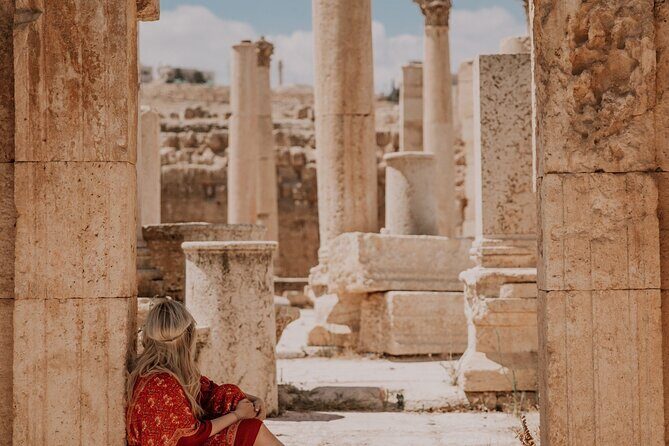
- Jerash’s unique mix: Greco-Roman and Oriental influences feel different from the Amman ruins.
- Seasonal payoff in spring (and festival energy in summer): Jerash is especially pleasant with green hills in spring, and it hosts a 3-week arts festival in summer.
How the 3–7 Hour Private Route Actually Feels
This tour is private, which matters more than you’d think in Amman. You’re in an air-conditioned vehicle, you don’t have to coordinate with other groups, and your stops can stay efficient instead of turning into a waiting game.
Total time runs roughly 3 to 7 hours. That range usually comes down to how long you want at each site and how much time you spend on the drive between Amman and Jerash. If you’re trying to pack in multiple major stops without getting exhausted, the private format is a big part of the value.
Pickup is offered, which helps a lot if you’re not staying in the perfect location. And since it’s only your group, you won’t be rushed by strangers or stuck waiting for someone else’s pace.
You can also read our reviews of more private tours in Amman


King Abdullah I Mosque: A Modern Masterpiece You Can Visit
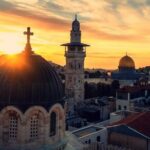
The King Abdullah I Mosque is the kind of place where you’ll notice design choices right away. It’s a blue-domed memorial built in the 1980s by King Hussein, honoring his grandfather. It’s open to non-Muslim visitors, which is a major plus if you’re building a varied itinerary.
Inside, the nave covers about 1,615 m² and can hold up to 3,000 worshippers. It’s octagonal, and there are no pillars inside—so the space feels open and clear rather than chopped up.
The scale is also impressive: the dome is 35 meters in diameter and sits about 31 meters high. There’s a radiation source in the middle presented as a golden star, with the Ninety Nine Most Beautiful Names of Allah surrounding the dome’s neck. The chandelier has 168 lanterns arranged in three circles, with Quranic wording featuring the word Allah repeated on each lantern.
You’ll spend about an hour here. That’s enough time to look slowly, not just snap photos and run. Admission isn’t included, so budget for the entry fee. And because it’s an active place of worship, you’ll want to follow whatever visitor rules are posted on-site.
Citadel Hill (Jabal al-Qala): Where Amman’s Eras Stack Up
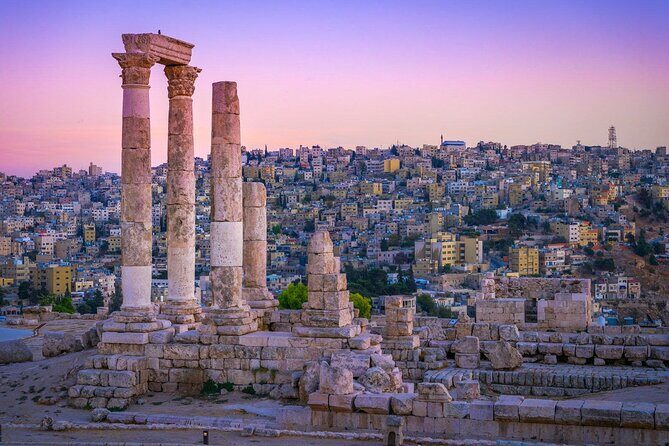
If you like history you can actually see, the Citadel is the anchor stop. Jabal al-Qala is one of Amman’s seven mountains, and it served as the seat of rule for the Ammonians. After them came Greek and Roman control, then the Byzantines, and later the Islamic conquest in the 7th century AD.
On top of this hill, the Umayyad Palace was built. That single sentence—Ammonians to Greeks to Romans to Byzantines to Umayyads—explains why the Citadel works so well on a short tour. It’s not just ruins scattered around; it’s layers you can conceptually connect while you look.
You’ll spend about an hour at the Citadel. In that time, you can get the big picture without turning it into a museum marathon. Also, because it’s on a hilltop, it’s one of the better places for photos where you can actually see the city’s shape below.
Admission isn’t included here either. Plan to pay on arrival and keep moving at a pace that lets you take in the view, not just read labels.
The Roman Theatre: Fast Stop, Strong Detail
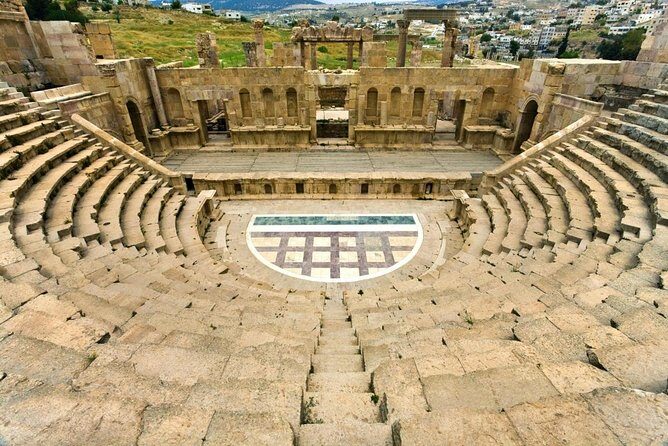
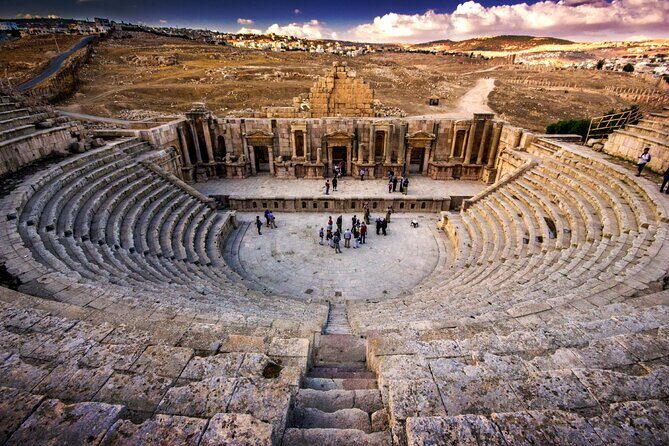
The Roman Amphitheatre is smaller than some “major” Roman sites, but it’s sharp and readable. It sits in the eastern part of Amman at the foot of Mount Jufa, on a hill opposite Amman Castle.
There’s also a specific link to time: Greek writing on a pillar indicates it was built in honor of Emperor Antonius Pius. He visited Amman in 130 AD, and that date gives you a real handle on when this structure mattered.
This stop is timed at about 30 minutes. That short window is intentional—it gives you the highlight without eating your day. If you’re the type who wants to watch your timeline, this is a good design choice. If you’re the type who loves extended photo sessions, you might wish you had more than half an hour.
Admission tickets aren’t included, so you’ll need to budget for that entry cost as well.
Old City Center and Al-Husseini Mosque: A Breather Stop
After the more “monument” style sites, you’ll shift into the old city center and visit Al-Husseini Mosque. This stop acts like a bridge between eras—less of a single landmark and more of a chance to feel the neighborhood rhythm.
The details here are less technical than the earlier stops, which is a nice change when you’ve been staring at dates and architectural features. You’ll likely use this time for simple orientation: what the streets feel like, how the city is laid out, and where the old core sits in relation to everything else.
How long you spend isn’t spelled out as clearly as the other stops, so treat it as a flexible segment in the day. If you’re hoping to shop or pause for a drink here, keep your expectations realistic—this tour is built around seeing major sights, not lingering all day in one area.

Jerash Ruins: Why This Second Roman City Hits Hard
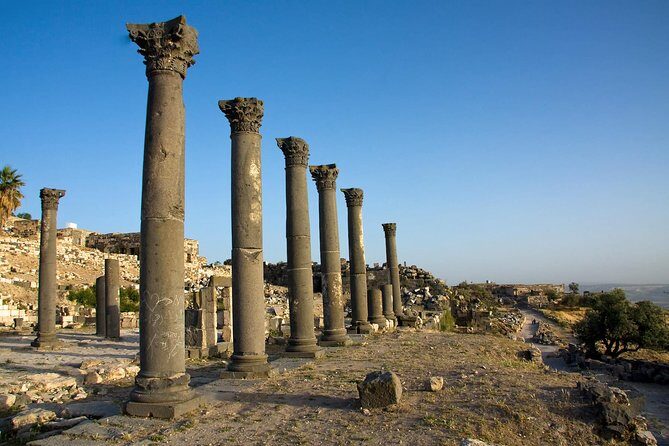
Jerash is the payoff. This is the visit north of Amman to a massive Greco-Roman city with Oriental influences, and it has its own rhythm that feels different from Amman’s ruins.
One practical reason Jerash is loved is the setting. In spring, the rolling hills and greenery make the walking more pleasant than it is in hotter months. It’s not just “historic stuff to see”; it’s also a place where the environment supports a longer stroll.
Jerash also has a calendar moment. Every year it hosts the Jerash Festival of Culture and Arts—a three-week summer program with folk dance, music, and theatrical performances. If you’re traveling around the festival period, the atmosphere can feel more lively than a typical day at a ruin site. (And if you’re not there then, it’s still impressive on a normal day.)
You’ll have about 3 hours in Jerash. That’s a solid amount of time to see key areas without feeling like you’re sprinting. Admission tickets aren’t included, so factor in the entry fee when you plan your overall budget.
Price and Logistics: Is $39.99 Good Value?
At $39.99 per person, the price is mostly paying for one thing: private transportation. You get an air-conditioned vehicle and private transportation, which is a big deal in a city where you’ll be moving between sites and beyond.
What makes the math tricky is what’s not included. Tips for the driver aren’t included, and there is no guide included in this tour format. Admission tickets also aren’t included. So your total day cost can rise once you add site fees.
Still, it can be great value if you’re comfortable with driver-led commentary and you mainly want to see the key sights efficiently. The reviews also point to one standout benefit: a great driver can turn the drives into a useful learning layer. Nabil is specifically praised for being excellent, answering questions with details, and driving safely. That kind of in-car knowledge helps when there isn’t a guide.
If you’re the kind of traveler who wants someone to lead you at each stop—pointing out what to look for, explaining context on the spot—this particular setup may feel thin. In that case, you’ll likely want a version that explicitly includes a guide, or you’ll need to bring your own motivation to ask questions as you go.
The Driver Makes or Breaks the Day
Because a guide isn’t included, your driver becomes your de facto interpreter. And that’s why the quality of the driver matters so much. One strong example from past experiences is Nabil, described as going beyond expectations: safe driving, lots of information about Jordan during the rides, and detailed answers when questions came up.
Even if you’re not with Nabil, the lesson is simple: treat the car ride as part of the tour, not just transportation. Ask questions like:
- What am I looking at when we pass certain areas?
- Why do these sites matter to Jordan’s story?
- If I had to prioritize what I see first, what should it be?
A good driver will help you “build meaning” as you move through Amman and then out to Jerash. A less engaged one can make the day feel like a checklist. So if this tour is important to you, choose it with the expectation that you’re buying comfort and access, then using questions to get the context.
Planning Tips to Avoid Common Snags
Here’s how to make this day feel smooth, not rushed:
First, plan for extra spending on entry tickets. Since admission isn’t included at the major sites, you’ll want to carry enough cash/card for on-site fees.
Second, expect a more “drive-and-see” rhythm than a guided lecture. With no guide included, you’ll spend time on-site looking around, but the deeper explanations will depend on your driver’s style and how curious you are.
Third, build in flexibility. The tour duration is listed as about 3 to 7 hours, so give yourself buffer time on either end of the day. That way you’re not stressed if Jerash runs long or if you want a bit more time at the mosque or Citadel.
Finally, dress and shoes matter. You’ll be walking through ruins and stepping around uneven ground in places like the Citadel and Jerash. Wear comfortable shoes you’d trust on stone and dirt.
Should You Book This Amman and Jerash Private Tour?
Book it if you want a comfortable private day that hits Amman’s biggest landmarks and then delivers Jerash in a realistic time window. It’s especially a good match if you’re happy with driver-led context and you like seeing architecture and ruins at a steady pace without coordinating with other travelers.
Skip it or look for an add-on if you expect a dedicated on-the-ground guide at each site. In this format, you’ll be learning through the drive and your own looking—not through a guide walking you through every stop.
If you’re visiting around spring, you’ll likely enjoy Jerash more thanks to the rolling hills and green surroundings. And if your timing lines up with the summer festival, Jerash can feel like more than ruins—it can feel like a cultural event with history in the background.
Bottom line: for the price, this is a solid way to get the highlights with comfort. Just make peace with the fact that the storytelling role mostly falls to the driver.