REVIEW · AMMAN
7 Days Jordan and Jerusalem Private Tour
Book on Viator →Operated by Tour Experts · Bookable on Viator
A seven-day route with big names and zero chaos. I like the way this trip strings together medieval Jordan sites, Roman-era ruins, and then flips into a holy-city day without wasting your time. Two things I really like are the included private transportation with an English-speaking driver and the built-in relaxation time at the Dead Sea.
You also get a strong mix of viewpoints: castle and city walls in the north, mountain views from Mount Nebo, and the layered “many-faith, many-stories” feel of Jerusalem. One thing to think about: several of the Jerusalem and Bethlehem entrances are not included, and you’ll also need to budget for Israel entry steps and the Jordan Pass timing.
In This Review
- Key points before you plan your days
- Amman arrival and the advantage of starting with a human plan
- Northern Jordan: Ajloun Castle and Jerash without the rush job
- Madaba mosaic map, Mount Nebo, and Al-Maghtas to set up the Dead Sea night
- Dead Sea relaxation and the quiet flex of time
- Crossing toward Jerusalem: Mount of Olives and the big Old City panoramas
- Temple Mount, Holy Sepulchre, and Via Dolorosa without the “one more stop” fatigue
- Mount Zion, Old City walls, and the value of having gates named for you
- Petra in the desert: the world-wonder day with time to breathe
- Wadi Rum Protected Area and the Moon Valley sunset payoff
- Price and value: what $1,009.99 buys and what you still need to plan
- How pacing feels across the week (and who it fits best)
- Practical tips for making this tour feel smooth
- Should you book this private 7-day Jordan and Jerusalem tour?
- FAQ
- What’s included in the tour price?
- Are the Jerusalem and Bethlehem entrance fees included?
- Do I need to buy the Jordan Pass before I travel?
- How does the tour handle the border between Jordan and Israel?
- Is a visa to Israel included?
- Is this a private tour?
- What’s the main pickup point in Jordan?
Key points before you plan your days
- Private door-to-door feel: pickup is offered, and you’re not sharing vehicles with strangers.
- Driver-led simplicity: an English-speaking driver keeps transfers and timing straightforward, and past drivers named Ramadan and Mohammad have been called out for being helpful.
- Dead Sea built in as real downtime: after the religious stop at Al-Maghtas, you head to the Dead Sea region and get a long rest window.
- One major holy-city day, not scattered: Jerusalem highlights are grouped so you’re not bouncing around all week.
- South Jordan payoff: Petra and Wadi Rum are included with time for a standout desert sunset.
- You’ll manage some entry costs yourself: Jordan Pass and Israel-related items aren’t bundled the way Jordan-site admissions often are.
Amman arrival and the advantage of starting with a human plan
The tour opens with a standard, low-stress arrival flow. After you clear customs at Queen Alia Airport, a representative meets you with your name, then you transfer about 30 minutes to your Amman hotel. That first handoff matters more than it sounds—Amman traffic and airport logistics can be stressful, and you want that first evening to feel like you’re already part of the trip.
Once you check in, Day 1 is essentially a reset: you get the overnight in Amman and nothing crammed on top. That’s a smart move for jet lag. It also sets the tone for the whole trip: you have a private setup, and the plan tries to keep each day from turning into a sprint.
One more small but useful detail: this is sold as a private activity, so your group is the only group moving through the schedule. That usually translates to less waiting and less “shoehorning” your pace.
You can also read our reviews of more private tours in Amman

Northern Jordan: Ajloun Castle and Jerash without the rush job

Your northern day hits two very different moods, and that contrast is a big part of why the route works.
Ajloun Castle is paired with nature. The castle sits in a region known for pine forests near Ajlun-Dibbin, and the site connects medieval Arab military architecture with the idea of a cool break from city life. The castle’s role in history—helping defeat the Crusaders centuries ago—is the reason the structure matters, but the setting is the reason it feels pleasant. You get about an hour there, and the time window is realistic: it’s enough to see the highlights without turning it into a photo marathon.
Then comes Jerash Ruins, one of Jordan’s best-known ancient cities. What I like about Jerash in this plan is the built-in expectation that you’ll see a blend: Greco-Roman influence alongside Oriental influences. It’s not just columns and arches. The time allowance is about three hours, which gives you room to wander and actually read the space. Jerash also ties into seasonal programming—there’s a Jerash Festival of Culture and Arts held every year in summer, with music, folk dance, and theatrical performances—so even if you’re not there during the festival, the cultural “layer” is part of the story.
Potential drawback: this is still a full day of sightseeing after travel and hotel check-in. If you’re arriving already tired, prioritize sleep in Amman, because both stops are outside the city rhythm.
Madaba mosaic map, Mount Nebo, and Al-Maghtas to set up the Dead Sea night
This is one of the better-structured days because it moves from art to viewpoint to spiritual site, and then ends in a literal and physical reset.
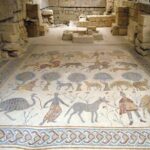
Madaba is known for mosaics, and the day starts with the Madaba Mosaic Map. It’s described as the “City of Mosaics,” and the focus is on Byzantine and Umayyad mosaic heritage. Even if mosaics aren’t your hobby, Madaba’s charm is that it’s a place where daily life and religious tourism overlap. The time here is short—about 30 minutes—so it feels like a meaningful stop, not a commitment.
From there, Mount Nebo adds the panoramic payoff. It’s nearly 1,000 meters high, and from the top you can see the Dead Sea, Bethlehem, and even Jerusalem on a clear day. The viewpoint matters on a practical level: it gives you scale for what you’ll be traveling to next. This stop is about an hour, which is enough to take in the view, soak up the setting, and move on before fatigue sets in.
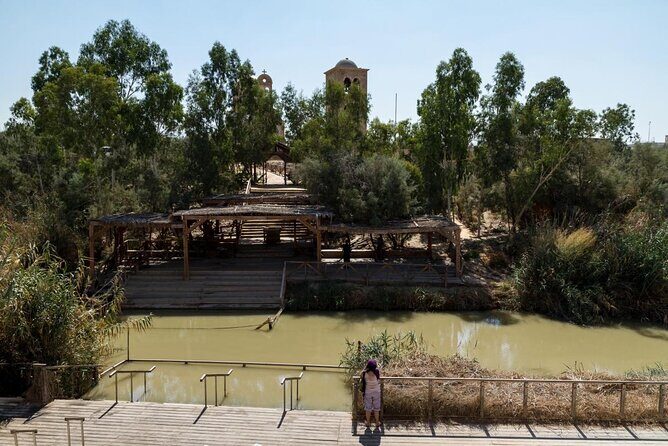
Then you head to the Baptism Site of Jesus Christ, also known as Al-Maghtas, and the timing is key. The plan notes that after visiting Al-Maghtas, you head to the Dead Sea at night. That night shift is helpful because the Dead Sea region becomes more about atmosphere and relaxation than midday heat.
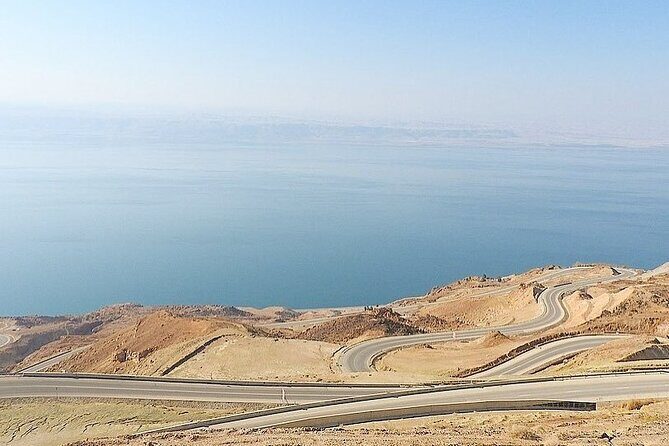
You finish the day by arriving at the Dead Sea region and spending the rest of the day at your hotel—about 12 hours. This is where the tour earns its reputation for being “easy.” You’re not stuck in a car for the whole evening.
Dead Sea relaxation and the quiet flex of time
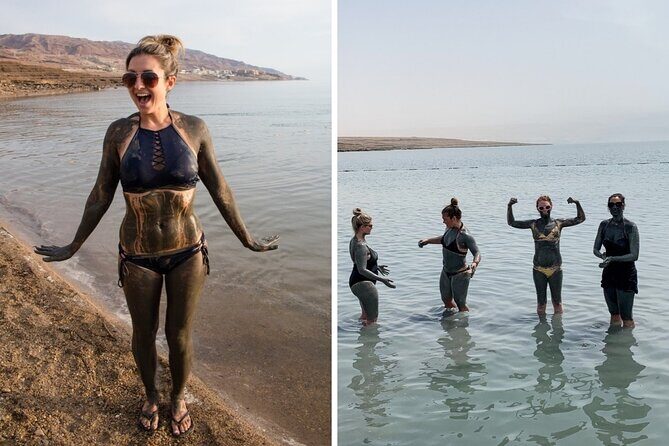
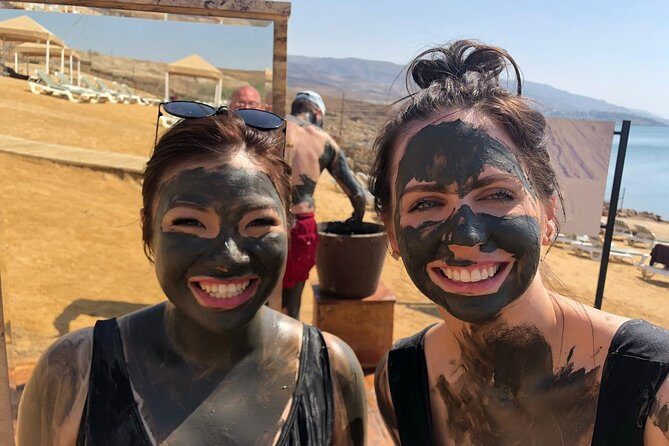
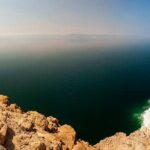
The Dead Sea isn’t just a stop; it’s the decompression. You get a full day in the region, with a long hotel block so you can actually take it slow. That matters because most Israel-and-Jordan combinations pack the itinerary too tightly. Here, the plan gives you time to do the simple things: rest, wander at your own pace, and let your body recover after earlier days.
Also, the Dead Sea leg is built right into the schedule as a transfer point for Jerusalem. The next day starts with driving to King Hussein Bridge to head toward Jerusalem. So your Dead Sea day isn’t just scenic; it’s positioned to make the cross-border portion feel less like a scramble.
One consideration: the Dead Sea day is long, so if you’re the type who wants constant action, this might feel slower than other tours. But if your goal is to mix “major sights” with a true break, it’s a strong fit.
Crossing toward Jerusalem: Mount of Olives and the big Old City panoramas
Moving from the Dead Sea region to Jerusalem is a major shift in both geography and mood. You leave after breakfast and drive about two hours to King Hussein Bridge to go onward. That’s a clear, time-boxed move—helpful because border procedures can be unpredictable even when your transfer is planned.
Once you’re in Jerusalem, Mount of Olives is one of those high-value stops because it gives you context for the Old City. The tour notes it’s overloaded with churches and tied to the oldest continuously used cemetery in the world. Even for non-religious visitors, the reason it earns its place on the list is the panorama: you get Old City views from the peak, which helps your brain connect streets and buildings to the bigger story.
It’s about one hour, so again: enough time to see, not enough time to drag. That pacing is important on a day that later becomes a walking-heavy religious route.
A few more Amman tours and experiences worth a look


Temple Mount, Holy Sepulchre, and Via Dolorosa without the “one more stop” fatigue
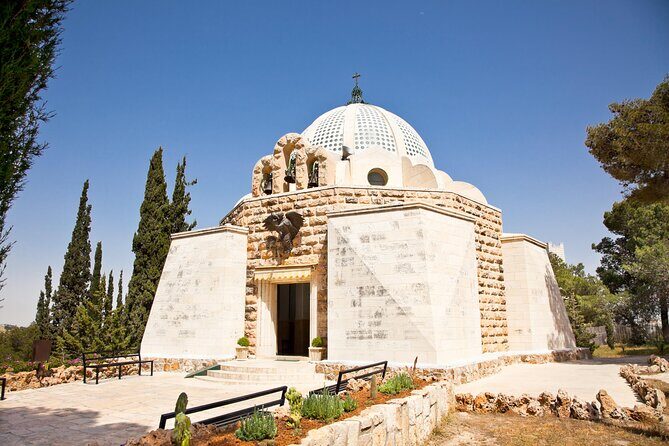
This day is where people either love the intensity or feel overwhelmed. The trick here is that the plan gives you a route that flows.
Temple Mount (Haram Al-Sharif) is the centerpiece. The tour description is clear about why it’s significant to multiple faiths, including Abraham’s story, Solomon and the First Temple, and Muhammad’s ascension. It also notes the Dome of the Rock and the sacred stone believed by both Jews and Muslims to be the place of Abraham’s offering. Admission for Temple Mount is not included, so you’ll want to plan for that cost separately.
Then it moves to the Church of the Holy Sepulchre, Jerusalem’s holiest site for Christian pilgrims, associated with crucifixion and burial (Calvary and Golgotha). The tour description includes meaningful historical anchors: the original church built in 335 CE, destruction in 1009, and the grand church dating to the 11th century. This stop is about one hour, and it’s not just about relics—it’s about architecture and the way the site channels centuries of pilgrimage.
Via Dolorosa is where the walk becomes a living map. The tour spells out the concept: you follow Jesus’s route after condemnation, marked by the 14 Stations of the Cross. It also tells you how the route works in practice: it starts on Via Dolorosa Street at the first station, loops through Al-Wad Street and back, and reaches the ninth station at the Church of the Holy Sepulchre, where the last five stations are within the church. That kind of guidance helps you avoid aimless wandering.
A detail I’d keep in mind: if you’re here on a Friday, you can join a procession led by Italian Franciscan monks along this route. That doesn’t mean you should chase it at the expense of time, but it’s a meaningful option if your schedule lines up.
Mount Zion, Old City walls, and the value of having gates named for you
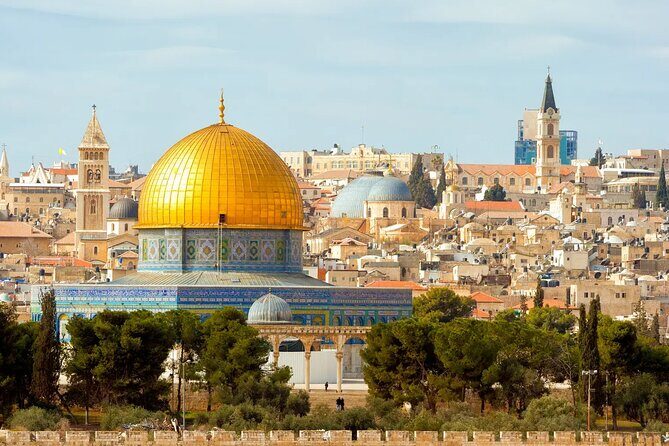
If the earlier day sections lean heavily into iconic worship sites, Mount Zion adds a different kind of connection—more hill, more layers, more shrines.
Mount Zion includes Jewish and Muslim shrines and several churches. The tour notes it’s revered (in Christian tradition) for the Last Supper and the Virgin Mary’s later years, alongside the tradition that her last days were in Ephesus. For Jews, it points to King David’s Tomb, and it notes the Last Supper Room is accessed by climbing stairs from the tomb’s courtyard. It also lists nearby locations like the Church of the Dormition and the Church of St. Peter of Gallicantu. Admission here is not included, so you’ll likely treat this as time spent on-site with whatever entrance costs apply.
Then you shift to the Old City itself, where the practical advantage is that the tour tells you about the nine Ottoman-era gates and which ones matter. You’ll hear about Damascus Gate, Lion’s Gate, Zion Gate, and Jaffa Gate, plus the idea that you can walk sections of the walls—either heading north from Jaffa Gate to Lion’s Gate, or heading south to Dung Gate. That wall-walk suggestion is one of the easiest ways to make the Old City feel like more than a list of churches and markets.
Potential drawback: the Old City day is not just spiritual; it’s physical. You’re moving through tight areas and uneven surfaces. If you have knee or foot issues, I’d plan ahead and wear shoes you trust.
Petra in the desert: the world-wonder day with time to breathe
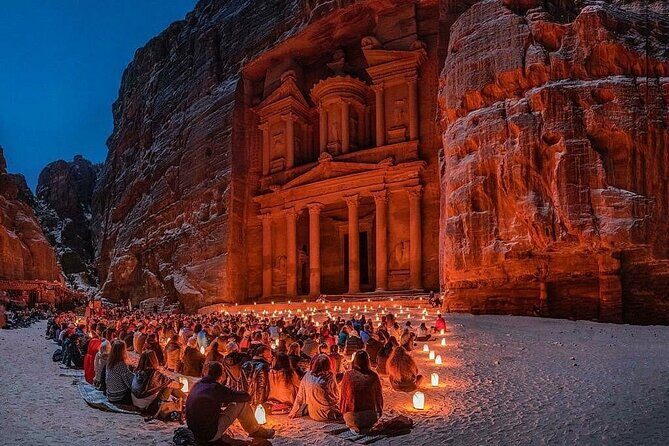
After Jerusalem, the trip transitions back to Jordan’s dramatic scale. The plan spends a day getting to Petra (and overnight in Wadi Musa). That overnight is a practical choice: it reduces the feeling of arriving exhausted just to see the first light, and it sets you up for a full exploring window.
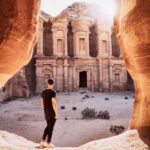
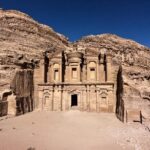
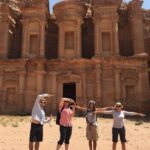
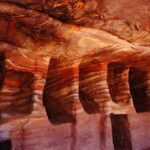
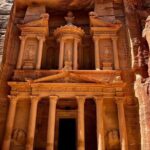
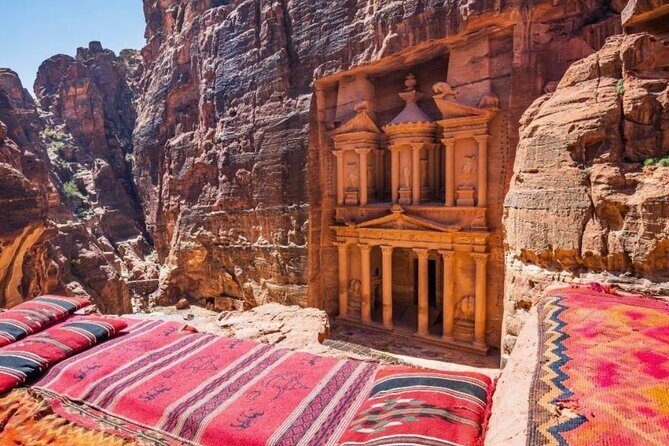
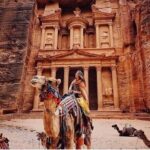
Petra itself is described as one of the world wonders, and the time you get is about six hours. That’s enough to walk a major portion of the site without feeling trapped in a tiny time box. The tour description focuses on the south of Jordan and the experience of the desert and rocks—so think of Petra as both architecture and geology, the way the stone shapes the mood as you move through the site.
One thing I like about this structure: it doesn’t try to “sell” Petra as nonstop entertainment. It gives you time to slow down, get your bearings, and actually enjoy the feel of the place.
Wadi Rum Protected Area and the Moon Valley sunset payoff
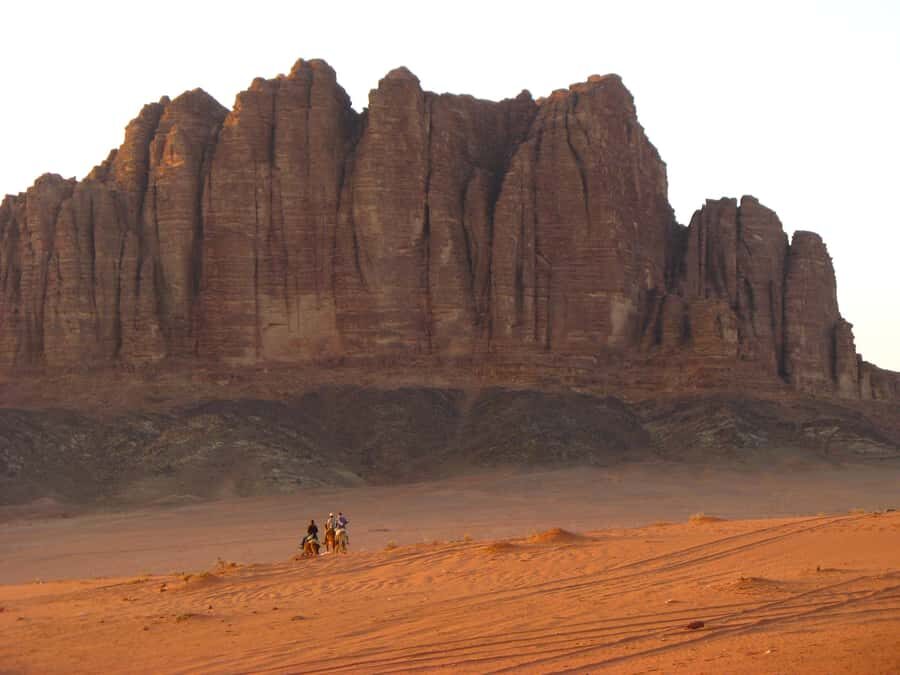
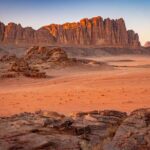
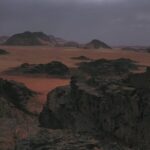
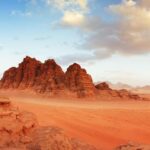
Wadi Rum is where the trip gives you a clean visual finale. The plan moves you to Wadi Rum Protected Area, with a note about the Moon Valley and time to see an incredible sunset.
You’re given a longer time window here—about 14 hours—so it’s not just a quick drop-off. It’s meant to be a full experience day rather than a drive-by photo stop. The description is simple on purpose: desert rock shapes at dusk can do a lot of the work for you.
Practical note: desert days can vary in comfort depending on season and temperature, so treat the day as a “layer and plan” outing. The good news is that the entire point of the long window is to let you enjoy the sunset without sprinting.
Price and value: what $1,009.99 buys and what you still need to plan
The price is listed as $1,009.99 per person for a private 7-day Jordan and Jerusalem tour. On paper, that sounds steep until you line up what’s included and what isn’t.
Included:
- English-speaking driver and private transportation in an air-conditioned vehicle
- Bottled water
- Dinner included, plus breakfast (6)
- Admission tickets are included for several Jordan-side stops (Ajloun Castle, Jerash Ruins, Madaba Mosaic Map, Mount Nebo, Baptism Site/Al-Maghtas, Dead Sea region, Petra, and Wadi Rum)
- Mobile ticket and pickup offered
- Group discounts are mentioned
Not included (items you should budget early):
- Tip for driver
- Personal expenses
- Jordan Pass purchase required before travel date: 78 JOD (you’ll pay this yourself)
- Shuttle bus at the border between immigration (Jordan and Israel)
- Visa to Israel and departure taxes
- Entrance fees to Jerusalem and Bethlehem sites (Temple Mount, Holy Sepulchre, Mount Zion, and Old City are listed as not included for admission)
This is the key value math: Jordan-site admissions are largely covered, but Jerusalem entrances and Israel entry steps are not. That can still be a great deal if you’re ready for those added costs, but you shouldn’t assume the price covers everything across borders.
Also, the fact that the tour is private tends to justify a higher per-person cost. You’re paying for less waiting, fewer coordination headaches, and an English-speaking driver who keeps you moving.
How pacing feels across the week (and who it fits best)
This tour has a clear rhythm: north sights, then a religious-and-nature day that ends in Dead Sea downtime, then one concentrated Jerusalem/Old City day, then south toward Petra and Wadi Rum.
That makes it a good match for:
- You want a lot of “name places” without living on a bus all day
- You value relaxation time rather than nonstop sightseeing
- You’re comfortable with a day that’s both spiritual and physical (Jerusalem walking)
- You appreciate having context built into the stops, like Mount Nebo views and the Old City wall gate options
It may feel less ideal if:
- You only want free time with no structured stops
- You hate planning extra entry fees for Jerusalem
- You have trouble with long walking days in tight historic areas
As for the people-handling side: the private nature and the mention of drivers like Ramadan and Mohammad being helpful suggests the operator leans into service, not just transportation.
Practical tips for making this tour feel smooth
This is where you can make small choices that matter.
- For Jerusalem day, plan for modest clothing and comfortable footwear. The route involves Temple Mount area time, Holy Sepulchre, Via Dolorosa walking, and Old City exploration.
- For the Dead Sea-to-Jerusalem transition, treat the day as long and logistically active. You’ll be crossing via King Hussein Bridge, and timing shifts happen with border procedures.
- For Petra and Wadi Rum, bring a “desert mindset”: water planning, layers, and sun protection. Even if the vehicle is air-conditioned, you’ll still be outside for major portions of the day.
One more note: this experience is non-refundable and cannot be changed for any reason. If your dates are flexible, lock them in early and plan your budget carefully.
Should you book this private 7-day Jordan and Jerusalem tour?
If you want a well-paced route that balances major sights with real recovery time, I’d say this is worth serious consideration. The strongest reasons are the Dead Sea downtime plus the fact that so many Jordan-side admissions are included, while the private setup keeps the experience from feeling chaotic.
I’d book if:
- You’re excited about Petra and Wadi Rum, but also want Jerusalem without juggling DIY logistics
- You prefer an English-speaking driver and private transport over public transit juggling
- You’re okay budgeting separately for Jerusalem/Bethlehem entrances and Israel entry steps
I’d pause if:
- You hate the idea of added costs for Jerusalem and Israel procedures
- You want a tour that is fully bundled end-to-end across borders
- Your group is very sensitive to walking time in the Old City
FAQ
What’s included in the tour price?
The tour includes dinner, an English-speaking driver, bottled water, air-conditioned vehicle, private transportation, and breakfast for 6 days.
Are the Jerusalem and Bethlehem entrance fees included?
No. Entrance fees to Jerusalem and Bethlehem sites are listed as not included, including items like Temple Mount and the Church of the Holy Sepulchre.
Do I need to buy the Jordan Pass before I travel?
Yes. The Jordan Pass must be purchased before the travel date, and it is listed as costing 78 JOD.
How does the tour handle the border between Jordan and Israel?
A shuttle bus at the border between immigration (Jordan and Israel) is listed as not included.
Is a visa to Israel included?
No. Visa to Israel and departure taxes are listed as not included.
Is this a private tour?
Yes. It’s described as a private tour/activity, and only your group participates.
What’s the main pickup point in Jordan?
The start is Queen Alia Intl Airport in Amman, Jordan, with a representative meeting you after customs with a welcome sign showing your name.